

Rear End Collision
$2,300,000
Insurer offered$85,000
Spinal cord injury after a rear end crash. The insurer offered $85,000.
Serving New Mexico
Hurt in a crash? The insurance company already has a team working on your claim. You should too. A free call tells you where you stand.
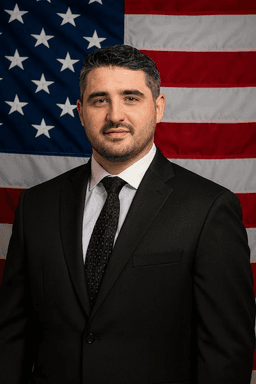 Your attorneyAndranik "Andy" Boyadzhyan, Esq.Founding Attorney. Licensed in New Mexico.
Attorney advertising. Services are not available in all states.
By Andranik "Andy" Boyadzhyan, Attorney at Law. Meet the team
In New Mexico, a car accident settlement is worth the total of your medical costs, your lost income, your future care and your pain and suffering, reduced only by your own share of fault and limited by the insurance that can be found. Top USA Law values each category from records before any number is discussed.
A settlement is not a single number pulled from a chart. It is a stack of separate losses, each proved on its own, added together, then adjusted for fault and tested against the insurance available. Anyone who quotes a figure before reading your medical records is guessing, and online calculators know nothing about your MRI, your job or the other driver's policy.
New Mexico keeps the stack simpler than many places. There is no personal injury protection to subtract and no injury threshold to clear, so the claim against the at fault driver includes everything the crash cost you. Your health insurer or Medicaid may have paid the bills along the way; those payers are reimbursed from the settlement, and how well their liens are negotiated changes what you keep.
The categories are economic damages, meaning bills, wages and future costs that can be added up on paper; non economic damages, meaning pain, lost enjoyment of life, scarring and the strain on a family; and, where a drunk or reckless driver caused the crash, punitive damages meant to punish. New Mexico places no general cap on any of these in a claim against a private driver.
Six things, each proved with documents rather than argued with adjectives. Past results do not guarantee a similar outcome; no two files combine these factors the same way.
The injury sets the tier. A strain that resolves after a course of therapy sits at the bottom. A disc herniation confirmed on imaging, treated with injections and leaving a lasting restriction sits well above it. Surgery moves a claim into a higher tier again, and a brain injury, a spinal cord injury or a death is measured against every policy that can be found rather than against any tier. Within each tier, proof decides where a case lands: a same day medical visit, treatment without gaps, and a treating doctor who ties the injury to the crash and describes the future.
Fault trims the number. Under pure comparative negligence from Scott v. Rizzo, a person found one quarter responsible recovers three quarters of the damages, so a careless recorded statement costs real money. Coverage sets the ceiling. A driver carrying the minimum policy pays that limit and nothing more, which is why the search for underinsured motorist coverage, an owner's policy on a borrowed car or an employer's policy often matters more than the injury. Venue moves the number as well: adjusters value a case headed for the Second Judicial District Court in Bernalillo County differently from one bound for a rural county, based on the juries there.
Picture a warehouse worker with a fractured wrist, surgery, four months off work and a full recovery: large, documented economic losses, real but time limited non economic losses, and full value if the other driver carries an adequate policy. Now picture a retiree with a neck strain, no lost wages, a two month gap before her first doctor visit and a driver with no insurance: a genuine injury whose value rests on her own uninsured motorist coverage and on explaining the gap. Top USA Law builds the economic loss from bills, pay stubs and a doctor's statement of future care, documents the non economic loss in your words, resolves the liens and sends a demand the insurer cannot dismiss as a round number. A death claim is valued under the Wrongful Death Act, NMSA 41-2-1, which includes the value of the life lost.
See if you have a case
Three answers and a phone number. An attorney reviews your situation and calls you back, free.
Rear End Collision
$2,300,000
Insurer offered$85,000
Spinal cord injury after a rear end crash. The insurer offered $85,000.
T Bone Accident
$1,800,000
Insurer offered$120,000
Broken pelvis and internal bleeding at an intersection. The insurer offered $120,000.
Drunk Driver Victim
$1,500,000
Insurer offered$50,000
Traumatic brain injury caused by an impaired driver. The insurer offered $50,000.
Every case is different. Past results do not guarantee, warrant, or predict a similar outcome.
We do not name a figure on the first call; a number given before the medical picture is clear is a guess. The first call is free: we listen, find every policy that may pay and explain which categories apply. Andranik "Andy" Boyadzhyan, the firm's founding attorney, is licensed in New Mexico; we have no office in the state and work by phone, by video, at home or at the hospital, including University of New Mexico Hospital, the state's only Level I trauma center. Suit, when needed, is filed in the district court for the county, most often the Second Judicial District Court in Bernalillo County. Read the New Mexico car accident lawyer page or call (877) 411-5291.
We serve New Mexico clients by phone, video and in person appointments arranged case by case.
Hurt in a crash? Talk it through for free.
New Mexico filing deadlines and insurance notice rules can be short. A free call tells you where your clock stands.
Last reviewed by Andranik "Andy" Boyadzhyan, Esq., September 2026.
Three fields. We respond fast, day or night.
Top USA Law took over everything after my car accident. They got me $450,000 when insurance only offered $15,000. I recommend them to everyone.
Client testimonials. Testimonials are not a guarantee, warranty, or prediction of the outcome of your case.
Top USA Law. Services are not available in all states.
Takes 30 seconds. No obligation.