

Rear End Collision
$2,300,000
Insurer offered$85,000
Spinal cord injury after a rear end crash. The insurer offered $85,000.
Serving Missouri
Hurt in a crash? The insurance company already has a team working on your claim. You should too. A free call tells you where you stand.
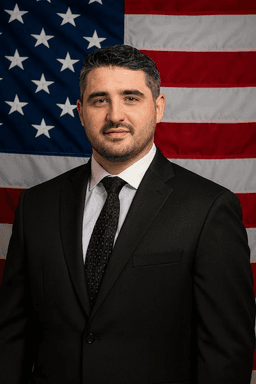 Your attorneyAndranik "Andy" Boyadzhyan, Esq.Founding Attorney. Licensed in Missouri.
Attorney advertising. Services are not available in all states.
By Andranik "Andy" Boyadzhyan, Attorney at Law. Meet the team
In Missouri, being partly at fault for a car accident does not end your claim. Your recovery is reduced by your percentage of blame and nothing more, so a driver assigned a quarter of the fault still collects three quarters. Top USA Law keeps that percentage small with evidence gathered before the insurer sets it.
Missouri follows pure comparative fault. In plain terms, the jury or the adjuster assigns each person involved a percentage of responsibility for the crash, the percentages add up to one hundred, and your recovery is cut by your own share. There is no cutoff. A person who bears most of the blame still recovers the remaining fraction from the person who bears the rest.
The rule comes from the Missouri Supreme Court's decision in Gustafson v. Benda, which replaced the old all or nothing contributory negligence rule, and it is now reflected in RSMo 537.765. The statute directs that the fault of every person involved, including the injured person, be compared, and that damages be reduced in proportion.
Because the rule never bars a claim, insurers in Missouri fight over the percentage instead. An adjuster who cannot deny that the other driver ran the light will argue you were speeding, distracted or slow to brake, because every point of fault shifted to you is a point off the payout. The claim is won or lost on how that percentage is built, and it is built from evidence that exists only in the first days after the crash.
No instrument measures fault. It is argued from the police report, the physical evidence, the statements each driver gave and whatever footage and witnesses can be found. Consider a driver making a left turn across traffic on Kingshighway who is struck by an oncoming car traveling above the limit. The turning driver failed to yield; the oncoming driver was speeding. Where the split lands depends on who can prove speed, sight lines and timing, which is why footage from a nearby storefront and data from both vehicles matter more than either driver's memory.
A second example: a driver stopped at a red light on Glenstone Avenue is rear ended by a driver looking at a phone. The stopped car's brake lights were out. The insurer will argue the dead lights contributed. The answer is that a driver watching the road would have seen a stopped vehicle in daylight regardless, so the defect played no real part, and a share of fault that did not cause the collision should not reduce the recovery.
We start with the evidence that disappears first: camera footage from businesses, traffic signals and transit buses, often gone within days, and the contact details of witnesses who stopped. We request the crash report from the Missouri State Highway Patrol or the local department and correct factual errors through the agency's process when the report is wrong. We decline the other insurer's recorded statement on your behalf, because the sentence that becomes your fault percentage is usually spoken in that call. Where speed or braking is disputed, we preserve the event data from both vehicles. And we treat shared fault as a defense the insurer must prove, not a fact to be accepted.
A claim under your own uninsured or underinsured motorist coverage pays what you would have been entitled to recover from the driver, so the same percentage applies there. A fault dispute never extends the five year deadline to file under RSMo 516.120.
See if you have a case
Three answers and a phone number. An attorney reviews your situation and calls you back, free.
Rear End Collision
$2,300,000
Insurer offered$85,000
Spinal cord injury after a rear end crash. The insurer offered $85,000.
T Bone Accident
$1,800,000
Insurer offered$120,000
Broken pelvis and internal bleeding at an intersection. The insurer offered $120,000.
Drunk Driver Victim
$1,500,000
Insurer offered$50,000
Traumatic brain injury caused by an impaired driver. The insurer offered $50,000.
Every case is different. Past results do not guarantee, warrant, or predict a similar outcome.
Fault in a Missouri crash is decided by a jury in the circuit court for the county where the crash happened: the Circuit Court of Jackson County, the Circuit Court of the City of St. Louis or the Greene County Circuit Court in Springfield. We prepare every fault dispute as if that jury will hear it, and we pull records from the Level I trauma centers that treated you, from University Health Truman Medical Center to Barnes-Jewish Hospital. Missouri matters are handled by Andranik "Andy" Boyadzhyan, who is licensed in the state. Read the Missouri car accident lawyer page or call (877) 411-5291 to talk through your crash.
We serve Missouri clients by phone, video and in person appointments arranged case by case.
Hurt in a crash? Talk it through for free.
Missouri filing deadlines and insurance notice rules can be short. A free call tells you where your clock stands.
Last reviewed by Andranik "Andy" Boyadzhyan, Esq., September 2026.
Three fields. We respond fast, day or night.
My wife was killed by a drunk driver. Top USA Law handled our wrongful death case with such compassion. They got us $1.2 million.
Client testimonials. Testimonials are not a guarantee, warranty, or prediction of the outcome of your case.
Top USA Law. Services are not available in all states.
Takes 30 seconds. No obligation.