

Rear End Collision
$2,300,000
Insurer offered$85,000
Spinal cord injury after a rear end crash. The insurer offered $85,000.
Serving Missouri
Hurt in a crash? The insurance company already has a team working on your claim. You should too. A free call tells you where you stand.
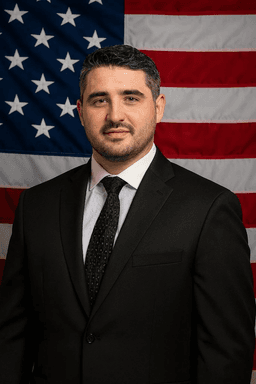 Your attorneyAndranik "Andy" Boyadzhyan, Esq.Founding Attorney. Licensed in Missouri.
Attorney advertising. Services are not available in all states.
By Andranik "Andy" Boyadzhyan, Attorney at Law. Meet the team
Hurt in a car crash in Missouri? You claim directly against the driver who caused it. There is no no-fault insurance step and no injury threshold to meet. If you were partly at fault, your award goes down, but your claim does not end. Top USA Law gathers the proof of who was at fault.
Rear ended on I-70 or hit by someone glued to a phone near Glenstone Avenue? That careless driver owes for your injuries in Missouri.
Yes, if another driver's carelessness caused the crash and you were hurt. A driver who rear ended you in the merge lanes on I-70 through downtown Kansas City, ran a light on Kingshighway, cut across your lane on I-44 in St. Louis, or looked at a phone on Glenstone Avenue in Springfield was negligent, and Missouri law lets you recover what that negligence cost you.
A police report helps but does not decide fault. The Missouri State Highway Patrol handles interstate crashes and its troopers can arrive after the vehicles have been moved, so the report records each driver's account rather than a finding. Fault is proved with what we collect afterward: the damage to both vehicles, where the debris came to rest, footage from businesses, traffic cameras and buses, the other driver's phone records, and the witnesses who pulled over.
You do not have to be the driver. Passengers, pedestrians, cyclists and the people in the other car all have claims against whoever caused the crash. A passenger whose own driver was at fault claims against that driver, and when both drivers share the blame a passenger can have claims against both at once. The same is true for a family riding together, where each person's injuries are a separate claim.
A question people ask is whether their own mistake ends the case. In Missouri it does not. Under the Missouri Supreme Court's decision in Gustafson v. Benda, your share of fault reduces your recovery but never bars it. A driver who was going a little fast when someone turned across the lane still has a case. How that share gets argued, and how we keep it small, is covered below.
Missouri does not require PIP coverage. So your bills, lost income and pain go in one claim to the careless driver's insurer.
The driver who caused the crash pays, through that driver's liability insurance. Missouri is an at fault state with no personal injury protection layer, so your claim for medical bills, lost income and pain and suffering goes straight to the at fault driver's insurer in one package. If the driver was working at the time, the employer's policy is on the line as well.
While the claim is pending, your health insurance covers treatment, and the settlement reimburses what it paid along with everything else. Some Missouri policies carry optional medical payments coverage, which pays some bills regardless of fault; your declarations page shows whether you bought it. If you have no health coverage, some providers in the Kansas City and St. Louis areas will treat under an agreement to be paid from the recovery.
RSMo 303.025 requires every Missouri driver to carry liability insurance, and every policy sold in the state must include uninsured motorist coverage. It responds when the driver who hit you had no insurance or was never found. Underinsured motorist coverage, which pays when the other driver's limits are too low for your injuries, is optional in Missouri. A household relative's policy can sometimes respond too, so the policies in your home are part of any estimate of what the case is worth.
Missouri has no public fund for a victim whose household carries no coverage at all. In that situation the claim rests on finding the driver and every policy behind that driver, which is why identifying the vehicle and its owner is the first job on a hit and run. Leaving the scene of a crash is a crime under RSMo 577.060, and once the driver is found a conviction is strong evidence in the civil case.
Value comes from your bills, future care, lost overtime and earning power, plus pain and scarring. Whether the injury is permanent moves the number most.
A claim is worth what the crash took from you, added up one category at a time. Economic damages are the measurable losses: hospital and doctor bills, future treatment your physicians expect, lost wages and overtime, lost benefits, the drop in what you can earn if you cannot go back to your old work, and out of pocket costs like rides to therapy and help at home. Non economic damages cover pain, scarring, the activities you have lost and the strain a serious injury puts on a marriage.
How badly you were hurt, and whether it is permanent, moves the number more than anything else. A strain that resolves with a few months of physical therapy sits at the low end. A herniated disc with injections and a lasting restriction sits well above it. Surgery puts a claim in a different tier. A brain injury, a spinal cord injury or a death is valued in a category of its own, against every policy that can be found.
In practice the cap comes from fault and from coverage. A 20 percent fault finding means the claim pays 80 percent, a real cut even though it is not a bar. And a driver carrying the state minimum can pay no more than that limit, however serious the injury. So the review extends past the driver: to whoever owned the car, to an employer if the driver was working, to a rideshare company's commercial policy if a trip was active, and to your own underinsured coverage if you purchased it.
Venue counts too. A case is generally tried in the county where the crash happened, and an adjuster prices a file bound for the Circuit Court of the City of St. Louis or the Circuit Court of Jackson County differently from one bound for a rural county, based on how local juries have decided injury cases before. Which court your case belongs in is part of the first conversation.
Do not expect a number on the first call. Before your doctors know how the injury will heal, any figure is a guess, and guesses favor the insurer. The work goes in order: explain each category, collect the records, then, with the medical picture settled, send a written demand supported by evidence. Past results do not guarantee a similar outcome. Each case is decided on its own facts.
See if you have a case
Three answers and a phone number. An attorney reviews your situation and calls you back, free.
Seven Missouri cities, from Kansas City to Springfield, have a local crash page naming the interstates, the county circuit court and the closest hospitals.
On the Kansas City side, the Kansas City car crash lawyer page covers I-435, I-70 and I-35 and Truman Medical Center, with the Circuit Court of Jackson County. The Independence car accident attorney page covers Noland Road, Little Blue Parkway and I-470 near Centerpoint Medical Center, and the Lee's Summit auto accident lawyer page covers US 50, Chipman Road and Douglas Street near Lee's Summit Medical Center.
In the east, the St. Louis car wreck attorney page covers I-64, I-44 and the Poplar Street Bridge, the courthouse at 10 North Tucker Boulevard and Barnes-Jewish Hospital, and the O'Fallon car accident lawyer page covers I-70, I-64 and Mexico Road near Progress West Hospital. Two county pages cover wider ground: the St. Louis County car accident lawyer page explains a crash outside the city limits and the circuit court in Clayton, and the Jackson County car accident lawyer page covers the county's Kansas City and Independence courthouses. In the middle of the state, the Columbia auto accident attorney page covers US 63, Providence Road and Stadium Boulevard and the Boone County Circuit Court, and the Springfield car crash attorney page covers I-44, Glenstone Avenue and the James River Freeway and the Greene County Circuit Court.
Missouri adjusters may blame you, blame something else for your injury, or say you treated too long. Records, scans and witnesses can answer each.
Expect it. A denial or a low first offer is where the insurer starts, not where it ends. Missouri adjusters lean on three arguments: that you share a large part of the fault, that your injuries came from something other than the crash, and that your treatment went on longer than it needed to. Each one has an answer, and the answer is evidence.
The fault fight is really a fight over a number. Missouri's pure comparative fault rule cuts the recovery by whatever share is yours, so when denial is off the table the adjuster works to make your share bigger, and the recorded statement requested in the first days supplies the material. Say "I looked down for a second" and that line becomes a 30 percent argument that stays in the file for years. Decline the statement.
On causation, the insurer will point to age related findings on your MRI, an old back complaint in your records or a gap between the crash and your first doctor visit. We answer with your treating physicians, objective imaging, and, where needed, a narrative report tying the injury to the crash. A causation argument is a medical question, so the medical record has to answer it.
On treatment, expect a request that you see a doctor the insurer chooses. Missouri has no no fault arbitration system for fighting bill denials, so the dispute over what care was reasonable happens inside the injury claim itself, and it is won with your doctors' notes explaining why each step was ordered. Keep going to your appointments. A gap in care is the insurer's favorite exhibit.
If the insurer will not pay a fair number once treatment is complete, we file suit in the circuit court for the county where you were hurt and use discovery to put the other driver, the footage and the medical experts on the record. A Missouri case can still settle before trial. The chance that a circuit court jury hears it is part of what the insurer prices.
Five years to file sounds like a lot, but camera footage can vanish in days. Witnesses move, and damaged cars get repaired.
Five years from the date of the crash, under RSMo 516.120. That is a long deadline, and it is also a reason Missouri crash victims can wait too long. Five years to file a lawsuit is not five years to gather evidence. Camera footage is overwritten in days, witnesses move, vehicles are repaired or scrapped, and phone records are purged. The deadline protects the right to sue; it does nothing to protect the proof.
When a crash kills someone, the family's deadline is shorter: RSMo 537.100 allows three years, counted from the death. If the person lived for weeks after the collision, the crash date and the death date are different, and both get calendared. A spouse, child or parent can file directly. The damages include lost companionship, comfort, guidance and support, the pain the person endured before dying, funeral expenses and the financial support the family lost.
A government defendant changes the timeline. When the other vehicle was a RideKC or Metro Transit bus, a city police car, a county truck or a state highway crew, Missouri's sovereign immunity rules govern the claim, and it proceeds through their exceptions for operating motor vehicles and for dangerous conditions of public property. A claim against a city over a street or sidewalk defect can also need written notice to the mayor within 90 days under RSMo 82.210. That is why the intake call asks who owned every vehicle involved.
Your policy's own deadlines come first. Each one calls for prompt notice of a crash. Before you settle with the at fault driver, uninsured and underinsured coverage can require you to tell your own carrier and get its consent, and a settlement made without that consent can void the coverage. People who wait to see how they feel can lose benefits they already paid premiums for.
See a doctor the day of the wreck, even if you feel fine. Tell them the crash caused it, and get the police report number.
Get checked by a doctor on the day of the wreck, even if you mostly feel rattled. Get examined even if you feel fine, because any delay before your first visit becomes the adjuster's argument that the pain started somewhere else. If you were taken from an I-70 or I-44 crash by ambulance, you may land at one of Missouri's Level I trauma centers: Research Medical Center or University Health Truman Medical Center in Kansas City, SSM Health Saint Louis University Hospital or Barnes-Jewish Hospital in St. Louis, CoxHealth or Mercy Hospital Springfield in Springfield, or University of Missouri Health Care in Columbia. Make sure each provider writes down that a car accident caused the injury.
Make sure a police report exists and get the report number. The Missouri State Highway Patrol investigates crashes on I-70, I-44, I-64, I-435, I-35 and I-29, and its reports can be requested online. Inside the cities, the Kansas City Police Department and the St. Louis Metropolitan Police Department write the report. Photograph both vehicles, the road, the signals, the weather, skid marks, debris and any visible injuries. Get the other driver's name, license, plate and insurance card, and the names and numbers of everyone who stopped.
Look for cameras before you leave. Gas stations, storefronts, apartment lobbies, doorbells, traffic signals and RideKC and Metro Transit buses record the road, and that footage can be gone within days. Tell us where the crash happened so we can send preservation letters immediately. If the other driver seemed impaired, say so to the officer. Driving while intoxicated is a crime under RSMo 577.010, and a conviction can be used in your civil case.
Call your own carrier and report the wreck and your injuries. Give the other driver's insurer no recorded statement and sign none of its forms. Keep the crash and your recovery off Facebook, Instagram and every other social account. Start a folder the same week with each bill, each appointment, each missed shift and a few lines a day about pain and the things you could not do. That folder is what the claim is built on months later.
These Missouri guides take one question each, from the five year deadline and shared fault to uninsured drivers, early offers and injury value.
The filing clock is on the RSMo 516.120 deadline card, a family has the RSMo 537.100 wrongful death deadline and the RSMo 537.080 list of who can sue, and court guides cover Case.net searches, the St. Louis County Circuit Court, the Jackson County Circuit Court, the Greene County Circuit Court in Springfield, the Clay County Circuit Court in Liberty and the Boone County Circuit Court in Columbia, with police report guides for Kansas City, Columbia, the City of St. Louis, St. Louis County Police and Springfield. Whether fault decides who pays is answered in is Missouri a no-fault state. Shared blame is explained in partly at fault in Missouri. An uninsured driver is covered in hit by an uninsured driver in Missouri. Read the Missouri after-crash checklist, Missouri settlement value factors, the Missouri case timeline, a look at early Missouri offers and Missouri whiplash claims. More guides cover being rear-ended in Missouri, a State Farm claim in Missouri, an Independence police crash report, lost resale value after repairs, a totaled car and what a Missouri car accident lawyer costs. For the rules in one place, read Missouri car accident laws, and for a crash where a defective part played a role, what RSMo 537.765 says about fault in products claims.
Two more Missouri guides answer practical questions: a crash with a delivery truck or van in Missouri and who pays your medical bills after a Missouri crash.
Four more Missouri answers cover your claim as an injured passenger, who pays after an Uber or Lyft crash, getting back the pay you lost and how pain and suffering is valued.
Back injuries have a Missouri guide too: a herniated disc car accident settlement in Missouri explains what drives the value of a disc claim.
Coverage and insurer guides cover the RSMo 379.203 uninsured motorist card, a Progressive claim in Missouri, a GEICO claim in Missouri and an Allstate claim in Missouri.
More Missouri answers cover a recorded statement to an insurer, a concussion after a crash, a rental car while yours is repaired and a crash with no insurance.
In each case, the insurance company made a first offer. Here is what our clients received instead. Past results do not guarantee a similar outcome.
Rear End Collision
$2,300,000
Insurer offered$85,000
Spinal cord injury after a rear end crash. The insurer offered $85,000.
T Bone Accident
$1,800,000
Insurer offered$120,000
Broken pelvis and internal bleeding at an intersection. The insurer offered $120,000.
Drunk Driver Victim
$1,500,000
Insurer offered$50,000
Traumatic brain injury caused by an impaired driver. The insurer offered $50,000.
Every case is different. Past results do not guarantee, warrant, or predict a similar outcome.
My wife was killed by a drunk driver. Top USA Law handled our wrongful death case with such compassion. They got us $1.2 million.
Client testimonials. Testimonials are not a guarantee, warranty, or prediction of the outcome of your case.
You do not need to visit an office in Missouri. We work by phone, video and bedside visits, and our Missouri licensed attorney files locally.
Top USA Law does not keep an office in Missouri. Drivers and passengers meet with us on the phone, over video, at home or at a hospital bed, and a car accident case can run from first call to settlement without an office visit. (877) 411-5291 rings through at any hour. The firm's founding attorney, Andranik "Andy" Boyadzhyan, is licensed in Missouri and handles its Missouri matters.
When a Missouri car crash case goes to suit, it is usually filed in the circuit court of the county where the collision happened. A wreck on Bruce R. Watkins Drive or elsewhere in Kansas City or Independence generally goes to the Circuit Court of Jackson County, which holds court in Kansas City and Independence. Crashes in the City of St. Louis go to the Circuit Court of the City of St. Louis, and those on I-270 or I-170 in the county often go to the St. Louis County Circuit Court in Clayton. Springfield cases are heard in the Greene County Circuit Court, and Columbia cases in the Boone County Circuit Court.
Missouri crashes can happen on roads like these. In Kansas City: rear end and lane change collisions on I-70, I-435, I-35 and I-29, high speed crashes on US 71 and Bruce R. Watkins Drive, and turning crashes along Ward Parkway. In St. Louis: I-70, I-44, and I-64 and US 40 through the city, I-270 and I-170 through St. Louis County, and intersection crashes on Kingshighway. In Springfield: Glenstone Avenue and US 65. In Columbia: Providence Road and the I-70 interchanges.
We handle claims involving RideKC and Metro Transit buses, rideshare vehicles, commercial trucks on the I-70 and I-44 corridors, drunk drivers, hit and run crashes and crashes with out of state drivers passing through, which can happen on the interstates and raise their own insurance questions. Winter ice, construction zones and holiday traffic can cause crashes too.
A crash with a semi brings a trucking company into the case. Our Kansas City truck accident lawyer page covers rigs on I-435 and I-70, and our St. Louis truck crash page covers I-64 and I-270. Smaller cities have pages too, like car accidents in Columbia, Missouri near the I-70 exits and O'Fallon car accident claims in St. Charles County. To see what a claim counts, read what a Missouri car accident settlement is made of.
Your first consultation is free, on the phone, by video, at home or in the hospital.
We serve Missouri clients by phone, video and in person appointments arranged case by case, and calls are answered 24 hours a day.
Fault trims a Missouri award without ending it, a death claim gets three years, and a city street defect claim can need 90 day notice.
Shared fault in a Missouri car crash is governed by the Missouri Supreme Court's decision in Gustafson v. Benda, which together create pure comparative fault. The injured person's percentage comes off the award, but the award never drops to zero because of it. A driver held 40 percent responsible still collects 60 percent of the damages. When an insurer says you share the blame, this is the statute that keeps the claim going.
Missouri gives an injured person five years from the crash to file, under RSMo 516.120, and a family three years from the death to file a wrongful death action, under RSMo 537.100. Those dates preserve the lawsuit, not the proof: highway camera footage, the vehicles and the phone records have much shorter lives. Evidence work starts the week a client hires us. A city street defect claim can add a 90 day notice to the mayor.
RSMo 303.025 requires every Missouri driver to carry liability insurance, and every policy issued in the state carries uninsured motorist coverage. Underinsured motorist coverage, which responds when the other driver's limits are too low, is optional. A driver with only the state minimum cannot pay a serious claim, which is why the coverage on your own policy and on household policies is part of every case review.
Sovereign immunity shields Missouri's public entities, subject to two exceptions: harm caused by operating motor vehicles and harm caused by dangerous conditions of public property. A claim against a RideKC or Metro Transit bus, or against a state highway crew, rests on those exceptions, and a city street or sidewalk defect claim can need written notice to the mayor within 90 days (RSMo 82.210). Because ownership of the vehicle decides which rules apply, it is pinned down in the first week.
Two criminal statutes often surface in car cases. Driving away from a crash scene is a crime under RSMo 577.060, and driving while intoxicated is barred by RSMo 577.010; a driver convicted under either hands the injured person powerful evidence for the civil claim. In narrow situations Missouri also permits a claim against a licensed bar or restaurant, usually one that knowingly served a minor or someone visibly intoxicated, and the standard of proof for that claim is high.
You have five years to sue for an injury and three years after a death. A claim over a broken city street or sidewalk may need written notice to the mayor within 90 days.
A licensed Missouri attorney, Andranik "Andy" Boyadzhyan, Founding Attorney, reviews every Missouri claim, and our team helps you in English or Spanish.

Andranik "Andy" Boyadzhyan, Esq.
Founding Attorney
Licensed in Alabama, Missouri, New Mexico and Washington, D.C.
Featured in CNN, Forbes, Variety

Paul Perkins, Esq.
Of Counsel
Licensed in New Jersey and New York
Certified by the New Jersey Supreme Court as a Civil Trial Attorney. Lawyer of Distinction in Civil Litigation.
Featured in CNBC, Bloomberg, Forbes, The New York Times
Andranik "Andy" Boyadzhyan is the founding attorney of Top USA Law. His background spans business law, civil litigation, and personal injury, and his practice today focuses on motor vehicle accident claims.
Sundas Shafi, Esq., Attorney at Law, Head of Litigation
Rosette Kalayjian, Attorney at Law
Sandra Alves, Case Manager
Four steps from your first call to the close of your claim. You focus on healing while we deal with the insurers and keep you updated.
Free consultation
Call 24/7 or send the short form. An attorney reviews what happened and tells you where you stand. Free, no obligation.
We deal with the insurers
We deal with the insurance companies, request the police report and medical records, and keep you updated.
We build your case
Evidence, witnesses, experts and the medical picture of your injuries, prepared as if the case will go to trial.
You get paid
Medical bills, lost wages, vehicle damage, and pain and suffering. No fee unless we win; costs may apply.
Reviewed by Andranik "Andy" Boyadzhyan, Esq.
Fill in the four short fields in this form, and a licensed attorney reviews your case for free. We respond day or night.
Hit by a semi truck on the highway. Top USA Law knew exactly how to deal with the trucking company. Got me $425,000 after they initially offered $30,000.
Client testimonials. Testimonials are not a guarantee, warranty, or prediction of the outcome of your case. Every case is different. Past results do not guarantee, warrant, or predict a similar outcome.
Top USA Law. Services are not available in all states.
Takes 30 seconds. No obligation.