

Rear End Collision
$2,300,000
Insurer offered$85,000
Spinal cord injury after a rear end crash. The insurer offered $85,000.
Serving Missouri
Hurt in a crash? The insurance company already has a team working on your claim. You should too. A free call tells you where you stand.
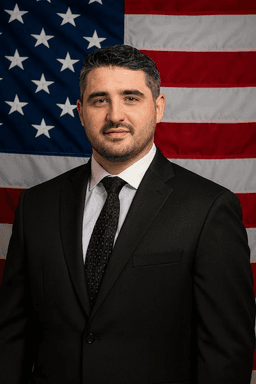 Your attorneyAndranik "Andy" Boyadzhyan, Esq.Founding Attorney. Licensed in Missouri.
Attorney advertising. Services are not available in all states.
By Andranik "Andy" Boyadzhyan, Attorney at Law. Meet the team
In Missouri, a cyclist hit by a car claims directly against the driver's liability insurer for medical bills, lost income, the bike and pain and suffering, with no no fault layer to open first and no injury threshold to clear. Sharing some blame reduces the claim but never ends it. Top USA Law preserves the footage, the ride data and every policy, including your own. The consultation is free.
You have a case if a driver's carelessness put a vehicle into you or your bike and you were hurt. A driver who turned right across the bike lane on Grand Boulevard, turned left across a rider on Kingshighway, opened a door into the lane on Brookside Boulevard, passed a group too close on the two lane roads west of Springfield, or never looked before crossing the Katy Trail at a road crossing in St. Charles County was negligent, and Missouri law lets you recover what that negligence cost you.
A bicycle is a vehicle on Missouri roads, and a driver owes a rider the same care owed to anyone else in traffic: yield when turning across the rider's path, pass at a safe distance, look before opening a door and stay out of a marked bike lane. A driver who says "I never saw the bike" on a clear afternoon on Ward Parkway has described a lookout failure, not a defense. Most of the crashes we see fit four patterns: the right hook, the left cross, the dooring and the close pass from behind.
Sharing some blame does not end the case. Missouri applies pure comparative fault under RSMo 537.765, the rule adopted after the Missouri Supreme Court's decision in Gustafson v. Benda, so a rider the insurer says was outside the bike lane, rolling a stop sign or wearing dark clothing still recovers, reduced by the percentage a jury would assign. A driver who was speeding, texting or turning without looking carries the larger share, and the rider keeps the balance.
Trail riders have claims too. The Katy Trail, the Riverfront Trail and the Forest Park loop in St. Louis, the Trolley Track Trail through Brookside in Kansas City, the Frisco Highline and Galloway Creek trails in Springfield and the MKT Trail in Columbia all cross public streets, and most trail crashes with cars happen at those crossings or on the connecting roads. Where a crossing had no warning, a broken signal or sightlines blocked by overgrowth, the entity responsible for the crossing may share the fault with the driver.
The driver who hit you pays, through that driver's liability insurance, and only after fault is shown. Missouri has no personal injury protection, so no policy pays a cyclist's bills automatically. In the meantime your health insurance covers treatment and is reimbursed out of the settlement, and if you have no coverage, many Missouri providers will treat under an agreement to be paid from the recovery.
Your own household auto insurance matters even though you were on a bike. RSMo 303.025 requires every Missouri driver to carry liability insurance, and every auto policy sold in the state includes uninsured motorist coverage that follows the named insured and resident relatives wherever they are, including on a saddle. If the driver had no insurance or fled and was never found, your policy or a policy belonging to a relative you live with responds. Underinsured motorist coverage is optional in Missouri, so we read every declarations page in your home.
Medical payments coverage is another optional line on many Missouri auto policies, and it pays early bills regardless of fault, which helps a rider with a high deductible or a gap in health coverage. A cyclist who owns no car and lives alone has none of these layers, which makes the driver's policy, and any owner, employer or rideshare policy behind it, the whole recovery. Identifying every policy behind the vehicle is the first week's work.
Hit and run is a cyclist's particular problem, because the rider is often on the pavement before the plate can be read. Leaving the scene of a crash is a crime under RSMo 577.060, and the search for the driver runs through cameras, witnesses and the police investigation. Uninsured motorist coverage on a household policy usually responds to a promptly reported hit and run, and Missouri has no public fund for a rider whose household carries no auto policy, so finding the driver comes first.
The claim is worth what the crash took from you, one category at a time. Economic damages are the measurable losses: the ambulance and emergency bills, surgery, the physical therapy and future care your doctors expect, lost wages and benefits, the drop in earning capacity if you cannot return to your job, and out of pocket costs. The bicycle, the helmet and the gear are property damage, and a well built road bike is worth documenting with receipts and a shop estimate.
Cyclist injuries run serious because nothing sits between you and the vehicle or the pavement. Fractured collarbones, wrists and hips, facial fractures, head injuries and road rash deep enough to need grafts are the pattern. A collarbone that heals in a sling sits at the low end. A hip or wrist fixed with plates, a facial reconstruction, or a concussion with lasting memory and balance problems sits well above it. A spinal cord injury, an amputation or a death is valued in its own category.
Two things set the practical ceiling. The first is the share of fault assigned to you, because the adjuster will argue lane position, lighting or a rolled stop sign to shrink the number. The second is insurance. A driver with a state minimum policy cannot pay for a surgical injury, so we look for the vehicle owner, an employer, a rideshare company's commercial coverage and your own household underinsured coverage before we accept that the limit is the limit.
We do not quote a figure on the first call. A number offered before your doctors know how you will heal is a guess, and the insurer is counting on you to take one. We gather the records, wait for the prognosis and put a demand on paper backed by evidence. Past results do not guarantee a similar outcome. Every case turns on its own injuries, facts and coverage.
Expect it. Insurers treat a rider as someone who can be blamed for being in the road at all. The script is familiar: you were outside the bike lane, you swerved, you had no lights, you rolled the stop sign, the driver could not see you. A denial or a low first offer built on that script is where the adjuster starts, and the recorded statement requested in the first days is where the percentage gets built. Do not give that statement. We take every call once you retain us.
Because RSMo 537.765 reduces recovery by your share of fault, every one of those arguments is aimed at a number, not at the existence of the claim. An adjuster who cannot deny fault will try to push your percentage as high as possible. A sentence like "I thought the car would wait" becomes a 40 percent argument. Our job is to hold that percentage where the evidence puts it.
The evidence in a bicycle case is unusually good. A bike computer or a ride tracking app records your speed, your line and the exact second the ride stopped, which answers the speeding claim. A helmet camera or the driver's dash camera shows the turn. Storefront, doorbell and traffic cameras, and RideKC and Metro Transit buses, record the street. The driver's phone records show where the driver's eyes were. The dent on the fender and the scrape on the frame fix the point of impact, and where the physics are disputed we retain a reconstruction engineer.
The second line of attack is medical. The insurer points to age related findings on an MRI, an old shoulder complaint or a gap between the crash and your first visit, then sends you to a doctor it chooses. We answer with your treating physicians and objective imaging. If the insurer will not pay a fair number once treatment is complete, we file suit in the circuit court for the county where you were hurt and put the driver, the footage and the ride data on the record. Most cases settle, and for more when a jury is the alternative.
Five years from the date of the crash under RSMo 516.120. That deadline protects your right to sue and nothing else. A bicycle case is proved with camera footage that is overwritten within days, ride data that can be lost with a dead battery or a replaced phone, and witnesses who were on the trail or at a bus stop and cannot be found a month later. Five years to file is not five years to investigate.
A wrongful death claim runs on a shorter clock: three years from the date of death under RSMo 537.100. When a rider survives for days or weeks in the hospital before passing, the two dates differ and we calendar both. Missouri lets the spouse, children or parents bring the claim directly, and the recovery covers the loss of the person's companionship, guidance and support, the pain suffered before death, and funeral costs.
Bicycle cases often bring in a public defendant. A RideKC or Metro Transit bus, a police cruiser or a city truck brings in Missouri's sovereign immunity rules and their exception for the operation of motor vehicles. A trail crossing with no warning, a bike lane that ended in a storm grate, or a signal that never detected a bicycle can bring in the exception for dangerous conditions of public property. Some cities require short written notice, so we identify every government defendant at intake.
Insurance deadlines run separately and sooner. Your own auto policy requires prompt notice of the crash even though you were riding, and uninsured or underinsured motorist coverage usually requires that you notify your carrier and get its consent before settling with the driver. Settling without that consent can forfeit the coverage. Reporting a hit and run to the police right away also matters, because insurers require a prompt report before they pay an uninsured claim.
Get medical care the same day, even if you rode home. A concussion, a scaphoid fracture or a slow bleed does not always show at the scene. University Health Truman Medical Center and Research Medical Center in Kansas City, Barnes-Jewish Hospital and SSM Health Saint Louis University Hospital in St. Louis, Mercy Hospital Springfield and CoxHealth, and University of Missouri Health Care in Columbia are the state's Level I trauma centers. Tell every provider that a car hit you while you were riding so the records say so.
Make sure police respond and write a report, and get the report number. Inside the cities that is the Kansas City Police Department, the St. Louis Metropolitan Police Department, or the Springfield or Columbia Police Department; on the highways and county roads it is the Missouri State Highway Patrol. Photograph the vehicle, its plate and damage, the spot where you were hit, the bike lane or its absence, the lighting and your injuries. Get the driver's name, license, plate and insurance card, and the names of everyone who stopped.
Keep the bike and the helmet exactly as they are. Do not repair the frame, do not throw away the cracked helmet and do not wash the clothing. The bent fork and the crack in the shell are physical evidence of where and how hard you were hit. Save the ride: export the file from your bike computer or ride tracking app before it syncs over, and pull the footage from any helmet or handlebar camera. Tell us the location the same day so preservation letters go out before the footage cycles.
Notify your own auto insurer, and the insurer of any relative you live with, that you were struck while cycling so uninsured and underinsured coverage is on notice. Do not give a recorded statement to the driver's insurer, do not sign anything from them and do not accept an early check. If the driver seemed impaired, tell the officer, because driving while intoxicated is a crime under RSMo 577.010 and a conviction becomes evidence in your civil case. Keep a file of every bill, missed shift and a daily note about pain.
See if you have a case
Three answers and a phone number. An attorney reviews your situation and calls you back, free.
Rear End Collision
$2,300,000
Insurer offered$85,000
Spinal cord injury after a rear end crash. The insurer offered $85,000.
T Bone Accident
$1,800,000
Insurer offered$120,000
Broken pelvis and internal bleeding at an intersection. The insurer offered $120,000.
Drunk Driver Victim
$1,500,000
Insurer offered$50,000
Traumatic brain injury caused by an impaired driver. The insurer offered $50,000.
Every case is different. Past results do not guarantee, warrant, or predict a similar outcome.
Top USA Law does not keep an office in Missouri. We meet Missouri cyclists by phone, by video, at home or at the hospital, which for a rider with a broken collarbone and a wrist in a cast is usually the only practical way anyway. One number, (877) 411-5291, is answered around the clock. Andranik "Andy" Boyadzhyan, the firm's founding attorney, is licensed in Missouri and handles Missouri bicycle cases.
Missouri bicycle accident lawsuits are filed in the circuit court, generally in the county where you were hurt. For our clients that is most often the Circuit Court of Jackson County, which sits in Kansas City and Independence, the Circuit Court of the City of St. Louis, the St. Louis County Circuit Court in Clayton, the Greene County Circuit Court in Springfield and the Boone County Circuit Court in Columbia.
The crashes we see follow the places people ride. In St. Louis, the Riverfront Trail and the Forest Park loop and the streets that feed them, Kingshighway, Grand Boulevard and the road crossings along the Katy Trail in St. Charles County. In Kansas City, the Trolley Track Trail and the streets of Brookside, Ward Parkway and Armour Boulevard. In Springfield, the Frisco Highline and Galloway Creek trails and the crossings on Glenstone Avenue and National Avenue. In Columbia, the MKT Trail and Providence Road around the University of Missouri campus.
We handle bicycle claims involving hit and run drivers, doorings, right hooks and left crosses, close passes on rural two lane roads, delivery riders and e-bike riders, children hit near schools, RideKC and Metro Transit buses and rideshare vehicles, and drunk drivers. Dusk and nighttime crashes on unlit arterials and the weekend group ride hit from behind make up a large share of the serious cases.
We serve Missouri clients by phone, video and in person appointments arranged case by case.
RSMo 537.765 is Missouri's comparative fault statute. Together with the Missouri Supreme Court's decision in Gustafson v. Benda, it establishes pure comparative fault: your recovery is reduced by your percentage of fault but is never eliminated. A cyclist found 30 percent responsible for riding outside the bike lane still recovers 70 percent of their damages. It is the rule that keeps the claim alive when the insurer says a bicycle had no business on that road.
RSMo 516.120 sets the five year deadline to file a personal injury lawsuit, measured from the date of the crash. RSMo 537.100 sets the three year deadline for a wrongful death action, measured from the death. Both protect the right to sue and neither protects the footage, the ride data or the witnesses, so we begin gathering proof the week you retain us. Government defendants add their own notice rules.
Missouri law treats a bicycle as a vehicle with the right to the road, and requires drivers to yield when turning across a rider, to pass at a safe distance and to keep a careful lookout everywhere. RSMo 303.025 requires every Missouri driver to carry liability insurance, and every policy issued in the state carries uninsured motorist coverage, which protects you on a bike when the driver had no insurance or was never found.
Missouri public entities have sovereign immunity from suit, with exceptions for injuries caused by the operation of motor vehicles and by dangerous conditions of public property. Those exceptions allow a claim against a RideKC or Metro Transit bus, a police cruiser, or a city responsible for a trail crossing or bike lane that was unsafe by design or neglect, and some cities add short written notice requirements. Separately, RSMo 577.060 makes leaving the scene of a crash a crime and RSMo 577.010 prohibits driving while intoxicated, and a conviction under either is strong evidence in the civil case.
Hurt in a crash? Talk it through for free.
Missouri filing deadlines and insurance notice rules can be short. A free call tells you where your clock stands.
Last reviewed by Andranik "Andy" Boyadzhyan, Esq., October 2026.
Three fields. We respond fast, day or night.
I was in an Uber that got T boned. Both insurance companies were pointing fingers. Top USA Law cut through the mess and got me $875,000.
Client testimonials. Testimonials are not a guarantee, warranty, or prediction of the outcome of your case.
Top USA Law. Services are not available in all states.
Takes 30 seconds. No obligation.