

Pedestrian Hit by Car
$725,000
Insurer offered$25,000
Hip fracture and concussion in a crosswalk. The insurer offered $25,000.
Serving Missouri
Hurt in a crash? The insurance company already has a team working on your claim. You should too. A free call tells you where you stand.
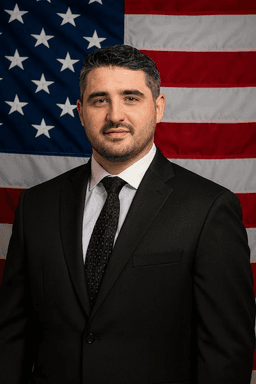 Your attorneyAndranik "Andy" Boyadzhyan, Esq.Founding Attorney. Licensed in Missouri.
Attorney advertising. Services are not available in all states.
By Andranik "Andy" Boyadzhyan, Attorney at Law. Meet the team
In Missouri, a pedestrian hit by a car claims directly against the driver's liability insurer for medical bills, lost income and pain and suffering, with no no fault benefits to open first and no injury threshold to clear. Being outside a crosswalk reduces the claim but does not end it. Top USA Law secures the footage, answers the fault argument and handles every insurer. The consultation is free.
Yes, if a driver's carelessness put a vehicle into you and you were hurt. A driver who turned left across the crosswalk on Grand Boulevard without looking, sped through a dark stretch of Natural Bridge Avenue, backed out of a driveway on Troost Avenue, checked a phone on Glenstone Avenue in Springfield, or rolled a red light on Providence Road in Columbia was negligent, and Missouri law lets you recover what that negligence cost you.
Missouri law and the traffic ordinances of its cities require a driver to yield to a person in a crosswalk, painted or the unmarked extension of a sidewalk across an intersection. The duty does not stop at the curb line. Every driver must keep a careful lookout and drive at a speed that fits the conditions, and a driver who never saw you on a well lit block of Independence Avenue has a lookout problem, not a visibility excuse.
Being outside a crosswalk does not end the case. Missouri applies pure comparative fault under RSMo 537.765, adopted after the Missouri Supreme Court's decision in Gustafson v. Benda, so a person who crossed mid block and was struck by a speeding or distracted driver still recovers, reduced by the share of fault a jury would assign. Long blocks with no marked crossing are common on Prospect Avenue and Kingshighway, and the law does not expect anyone to walk half a mile to cross the street.
Children, older adults and people using wheelchairs and walkers make up a large share of the pedestrians hurt on Missouri's wide arterial streets. A child who steps off a curb near a school, an older person who cannot clear six lanes before the signal changes, or a wheelchair user forced into the road by a broken sidewalk is owed extra care by every driver, and those cases turn on speed, sightlines and what blocked the driver's view.
The driver who hit you pays, through that driver's liability insurance. Missouri has no personal injury protection and no no fault benefits for a pedestrian, so no policy opens automatically to cover your bills. The driver's insurer pays only when fault is shown, which is why proof matters from the first day. Meanwhile your health insurance covers treatment and is reimbursed from the settlement, and if you have no coverage, many providers will treat under an agreement to be paid from the recovery.
The driver is not always the only one who pays. If the vehicle belonged to someone else, the owner's policy is usually the one that responds. If the driver was working, delivering food, driving a rideshare trip or operating a company van, the employer's commercial policy is on the line. If a RideKC or Metro Transit bus, a police car or a city truck struck you, the claim runs through Missouri's sovereign immunity rules and their exceptions, covered below.
RSMo 303.025 requires every Missouri driver to carry liability insurance, and every policy sold in the state includes uninsured motorist coverage. That coverage follows you on foot. If the driver who hit you had no insurance, your own auto policy, or a household relative's policy, responds even though you were not in a car. Underinsured motorist coverage, which pays when the driver's limits are too low, is optional in Missouri, so we read every declarations page in your home.
Hit and run is the pedestrian's particular problem. A driver who leaves the scene commits a crime under RSMo 577.060, and finding that driver is the first job, through cameras, witnesses, paint transfer and the police investigation. If the driver is never found, uninsured motorist coverage on a household policy usually responds to a promptly reported hit and run. Missouri has no public fund for a pedestrian whose household carries no auto policy, so the search for the driver is the priority.
A claim is worth what the crash took from you, added up one category at a time. Economic damages are the measurable losses: emergency and hospital bills, surgery, the physical therapy and future care your doctors expect, lost wages, lost benefits, the drop in what you can earn if you cannot return to your job, and out of pocket costs like rides to appointments and help at home. Non economic damages cover pain, scarring, the activities you have lost and the strain on your marriage and family.
Pedestrian injuries run serious because nothing stands between you and the vehicle. Fractures of the lower leg, pelvis and hip from the bumper, head injuries from the windshield or the pavement, and spinal injuries from the fall are the pattern. A fracture that heals in a cast sits at the low end. A fracture fixed with plates and screws, or a head injury with lasting memory problems, sits well above it. A spinal cord injury, an amputation or a death is valued in its own category.
Two things set the practical ceiling. The first is the share of fault assigned to you, because the insurer will argue you were outside the crosswalk to shrink it. The second is insurance. A driver with a state minimum policy cannot pay for a surgical injury, so we look for the vehicle owner, an employer, a rideshare company's commercial coverage and your own household underinsured coverage before we accept that the limit is the limit.
We do not quote a number on the first call. A figure offered before your doctors know how you will heal is a guess, and the insurer is counting on you to accept one. We explain the categories, gather the records and, once the medical picture is clear, put a demand on paper backed by evidence. Past results do not guarantee a similar outcome. Each case is decided on its own facts.
Expect it. The pedestrian claim is where adjusters lean hardest on fault, because the person on foot cannot point to a second car. The script is familiar: you darted out, you crossed against the signal, you were mid block, you wore dark clothing, you were on your phone. A denial or a low first offer built on that script is where the insurer starts, not where it ends.
The goal of every one of those arguments is a percentage. Because RSMo 537.765 reduces your recovery by your share of fault, an adjuster who cannot deny the claim will try to push your share as high as possible, and the recorded statement requested in the first days is where the number is built. A sentence like "I thought I had time to cross" becomes a 40 percent argument. Do not give that statement. Once you retain us, every call comes through our office.
We answer fault with evidence. The height of the damage on the vehicle and the distance you were thrown say a great deal about speed. Skid marks, lighting, weather and parked cars fix the sightlines. Signal timing records from the city's traffic engineers show whether you had the walk signal. Footage from storefronts, doorbells, traffic cameras and RideKC and Metro Transit buses shows what happened, and the driver's phone records show where the driver's eyes were. Where the physics are disputed we retain a reconstruction engineer.
The second line of attack is medical. The insurer will point to age related findings on an MRI, an old back complaint or a gap between the crash and your first doctor visit, then send you to a physician it chooses. We answer with your treating doctors, objective imaging and, where needed, a report tying each injury to the impact. A negligent driver is responsible for aggravating a condition you already had, so a prior history does not defeat the claim, it just requires careful documentation.
If the insurer will not pay a fair number once treatment is complete, we file suit in the circuit court for the county where you were hurt and put the driver, the footage and the medical experts on the record. Most Missouri pedestrian cases settle before trial. They settle for more when the insurer knows a jury will hear how fast the driver was going.
Five years from the date of the crash, under RSMo 516.120. That deadline protects your right to sue and nothing else. A pedestrian case is proved with footage that is overwritten within days, witnesses who were waiting at a bus stop and cannot be found a month later, and skid marks that wash away in the next rain. Five years to file is not five years to investigate.
A wrongful death claim runs on a shorter clock: three years from the date of death under RSMo 537.100. When a family member survives for days or weeks before passing, the two dates differ and we calendar both. Missouri lets the spouse, children or parents bring the claim directly and allows recovery for the loss of the person's companionship, comfort, guidance and support, for the pain the person suffered before death, and for funeral costs and lost financial support.
Pedestrian cases often involve a public defendant, and those claims follow different rules. A RideKC or Metro Transit bus, a City Utilities bus in Springfield, a police cruiser or a city truck brings in Missouri's sovereign immunity rules and their exception for the operation of motor vehicles. A failed crosswalk signal, an unmarked crossing or an unlit city street can bring in the exception for dangerous conditions of public property. Some cities require short written notice, so we identify every government defendant at intake.
Insurance deadlines run separately and sooner. Your own auto policy requires prompt notice of the crash even though you were on foot, and uninsured or underinsured motorist coverage usually requires that you notify your carrier and get its consent before settling with the driver. Settling without that consent can forfeit the coverage. Reporting a hit and run to the police right away also matters, because insurers require a prompt report before they will pay an uninsured claim.
Get medical care the same day, even if you walked away. A concussion, a hairline fracture or internal bleeding does not always show at the scene. University Health Truman Medical Center and Research Medical Center in Kansas City, Barnes-Jewish Hospital and SSM Health Saint Louis University Hospital in St. Louis, Mercy Hospital Springfield and CoxHealth, and University of Missouri Health Care in Columbia are the state's Level I trauma centers. Children's Mercy and St. Louis Children's Hospital treat children. Tell every provider you were hit by a car.
Make sure police respond and a report is written, and get the report number. Inside the cities that is the Kansas City Police Department, the St. Louis Metropolitan Police Department, the Springfield Police Department or the Columbia Police Department; on the highways it is the Missouri State Highway Patrol. Photograph the spot where you were struck, the crosswalk or the lack of one, the signal, the lighting, the vehicle and its damage, any skid marks and your injuries. Get the driver's name, license, plate and insurance card.
Find the witnesses before they leave. Pedestrians are hit in front of stores, bus stops and schools where people saw what happened, and those people are gone within minutes. Then look for cameras: storefronts, gas stations, doorbells, traffic signals and RideKC and Metro Transit buses record the street, and most of that footage is overwritten within days. Tell us the location so preservation letters go out. If the driver seemed impaired, tell the officer. Driving while intoxicated is a crime under RSMo 577.010, and a conviction can be used in your civil case.
Notify your own auto insurer, if you have one, that you were hit as a pedestrian; that call preserves your uninsured motorist coverage. Do not give a recorded statement to the driver's insurer, do not sign anything from them and do not accept an early check. Keep a simple file of every bill, every appointment, every missed day of work and a short daily note about pain and what you could not do.
See if you have a case
Three answers and a phone number. An attorney reviews your situation and calls you back, free.
Pedestrian Hit by Car
$725,000
Insurer offered$25,000
Hip fracture and concussion in a crosswalk. The insurer offered $25,000.
Rear End Collision
$2,300,000
Insurer offered$85,000
Spinal cord injury after a rear end crash. The insurer offered $85,000.
T Bone Accident
$1,800,000
Insurer offered$120,000
Broken pelvis and internal bleeding at an intersection. The insurer offered $120,000.
Every case is different. Past results do not guarantee, warrant, or predict a similar outcome.
Top USA Law does not keep an office in Missouri. We meet Missouri clients by phone, by video, at home or at the hospital, which for a person with a broken leg is usually the only practical way anyway. One number, (877) 411-5291, is answered around the clock. Andranik "Andy" Boyadzhyan, the firm's founding attorney, is licensed in Missouri and handles Missouri matters.
Missouri pedestrian accident lawsuits are filed in the circuit court, generally in the county where you were hurt. For our clients that is most often the Circuit Court of Jackson County, which sits in Kansas City and Independence, the Circuit Court of the City of St. Louis, the St. Louis County Circuit Court in Clayton, the Greene County Circuit Court in Springfield and the Boone County Circuit Court in Columbia.
Pedestrian crashes cluster on the same wide, fast streets in every Missouri city. In St. Louis: Kingshighway, Grand Boulevard and Natural Bridge Avenue, and the blocks around MetroLink stations. In Kansas City: Independence Avenue, Prospect Avenue and Troost Avenue, where long blocks, high speeds and heavy bus ridership put people in the road. In Springfield: Glenstone Avenue and National Avenue. In Columbia: Providence Road and the streets around the University of Missouri campus.
We handle claims involving hit and run drivers, RideKC and Metro Transit buses, delivery vans and rideshare vehicles, drunk drivers, children struck near schools and bus stops, older adults struck in crosswalks, wheelchair users forced into the street by broken sidewalks, joggers and people hit in parking lots and driveways. Dusk and nighttime crashes on unlit arterials make up a large share of the serious cases we see.
We serve Missouri clients by phone, video and in person appointments arranged case by case.
RSMo 537.765 is Missouri's comparative fault statute. Together with the Missouri Supreme Court's decision in Gustafson v. Benda, it establishes pure comparative fault: your recovery is reduced by your percentage of fault but is never eliminated. A pedestrian found 35 percent responsible for crossing mid block still recovers 65 percent of their damages. It keeps the claim alive when the insurer says you should not have been in the road.
RSMo 516.120 sets the five year deadline to file a personal injury lawsuit, measured from the date of the crash. RSMo 537.100 sets the three year deadline for a wrongful death action, measured from the death. Both protect the right to sue and neither protects the footage, the witnesses or the skid marks, so we begin gathering proof the week you retain us. Government defendants add their own notice rules.
Missouri law and city traffic ordinances require a driver to yield to a pedestrian in a marked or unmarked crosswalk and to keep a careful lookout everywhere else. RSMo 303.025 requires every Missouri driver to carry liability insurance, and every policy issued in the state carries uninsured motorist coverage, which protects you as a pedestrian when the driver had no insurance or was never found. Underinsured coverage is optional and worth checking.
Missouri public entities have sovereign immunity from suit, with exceptions for injuries caused by the operation of motor vehicles and by dangerous conditions of public property. Those exceptions allow a claim against a RideKC or Metro Transit bus, a police cruiser, or a city responsible for a failed signal or an unlit crossing, and some cities add their own short written notice requirements. We identify the owner of the vehicle and the road in the first week.
RSMo 577.060 makes leaving the scene of a crash a crime, and RSMo 577.010 prohibits driving while intoxicated. A conviction under either statute is strong evidence in the civil case. Missouri also allows a claim against a licensed bar or restaurant in narrow circumstances, generally where it knowingly served a visibly intoxicated person or a minor, under a high standard of proof.
Hurt in a crash? Talk it through for free.
Missouri filing deadlines and insurance notice rules can be short. A free call tells you where your clock stands.
Last reviewed by Andranik "Andy" Boyadzhyan, Esq., October 2026.
Three fields. We respond fast, day or night.
My wife was killed by a drunk driver. Top USA Law handled our wrongful death case with such compassion. They got us $1.2 million.
Client testimonials. Testimonials are not a guarantee, warranty, or prediction of the outcome of your case.
Top USA Law. Services are not available in all states.
Takes 30 seconds. No obligation.