

Rear End Collision
$2,300,000
Insurer offered$85,000
Spinal cord injury after a rear end crash. The insurer offered $85,000.
Serving Missouri
Hurt in a crash? The insurance company already has a team working on your claim. You should too. A free call tells you where you stand.
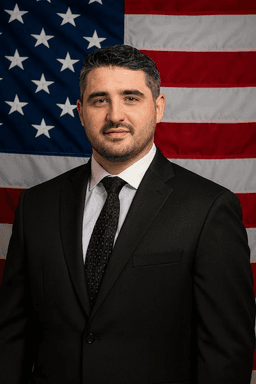 Your attorneyAndranik "Andy" Boyadzhyan, Esq.Founding Attorney. Licensed in Missouri.
Attorney advertising. Services are not available in all states.
By Andranik "Andy" Boyadzhyan, Attorney at Law. Meet the team
In Missouri, a person hurt by a driver who fled the scene still has a claim. When the driver is never found, the uninsured motorist coverage that every Missouri auto policy carries pays the medical bills, lost wages and pain and suffering that driver would have owed. When the driver is found, that driver's insurer pays too. Top USA Law runs both tracks at once. The consultation is free.
Yes. The driver leaving does not take your claim with them. Missouri law treats a driver who cannot be identified as an uninsured driver, and the uninsured motorist coverage on your own auto policy steps into the place the fleeing driver's insurer would have occupied. A driver who clipped you on I-435 and kept going, sideswiped your car on Kingshighway and turned off, or struck you in a crosswalk on Glenstone Avenue and sped away owes the same damages as one who stopped.
The claim rests on two things: proof that a crash happened the way you say it did, and proof of what it cost you. The first is where hit and run cases differ from ordinary crashes, because there is no other driver to admit anything. The police report, the damage on your vehicle, the paint or plastic the other car left behind, footage from a nearby business and the account of anyone who saw it are what stand in for the missing driver.
You do not have to have been driving. A passenger in a car that was hit and abandoned, a pedestrian struck on Ward Parkway, a cyclist knocked down on Providence Road in Columbia and a motorcyclist forced off US 65 in Springfield all have claims. Coverage for a person who was not in a car can come from their own auto policy, a policy in the household or, for a passenger, the policy on the car they were riding in. We read every one before saying there is nothing there.
If you were partly at fault, the claim survives. Missouri's comparative fault rule reduces recovery by your share and never bars it, and a fleeing driver's conduct tends to push the share of fault the other way. The harder question is usually proof, not fault, which is why the first days matter more in these cases than in any other kind of crash.
When the driver is never found, your own insurer pays. RSMo 303.025 requires every Missouri driver to carry liability insurance, and every policy sold in the state includes uninsured motorist coverage, which is the coverage that responds to an unidentified driver. It pays medical bills, lost income and pain and suffering up to its limit. The claim goes to your own company, which evaluates it as an adversary would.
If your household has more than one policy, more than one may respond. Missouri lets a person who lives with a relative look to that relative's uninsured motorist coverage in many situations, and a passenger can look to the policy on the vehicle they were in as well as their own. Whether limits stack depends on the language of each policy, so we collect the declarations pages and the full policy forms from every carrier in the home.
Missouri has no public fund for a victim with no coverage anywhere in the household. That person's claim depends on the driver being found, so the search becomes the case, and we run it alongside the police investigation rather than behind it. Underinsured motorist coverage, which is optional in Missouri, matters once a driver is identified and turns out to carry only the state minimum.
When the driver is found, the picture changes. The driver's liability insurer becomes the primary source of recovery, your uninsured motorist claim converts into an underinsured claim if you bought that coverage and the driver's limits are too low, and the driver personally is exposed for anything above the insurance. Leaving the scene is a crime under RSMo 577.060, and a guilty plea or conviction becomes powerful evidence in the civil case. If the driver was working, the employer's policy is on the line too.
A hit and run claim is measured the same way as any other injury claim: by what was lost. Medical bills already paid, the treatment your doctors expect to order next, wages missed, benefits lost, the drop in earning power if you cannot return to your old job, and expenses like rides to therapy are the economic side. Pain, scarring, sleep lost, activities given up and the strain a long recovery puts on a household are the non economic side.
What is different is the ceiling. When the driver stays unidentified, the ceiling is the uninsured motorist limit on the policies that respond, added together if they stack. A person carrying the state minimum in uninsured motorist coverage has a much smaller ceiling than one who bought higher limits, no matter how serious the injury. That is why we hunt for every policy in the household before anyone talks about a number.
Severity moves the number within that ceiling. A soft tissue injury that resolves with therapy sits low. A fracture, a herniated disc with injections or a concussion with lasting symptoms sits higher. Surgery, a brain injury or a spinal cord injury fills whatever coverage exists and often exceeds it. Identifying the driver adds a second layer of insurance and, if the driver has assets, a third.
Fault is argued even when the other driver ran. Your own insurer can raise your share of fault under RSMo 537.765 and reduce the payment by that percentage. Venue matters as well, since an uninsured motorist dispute that ends up in the Circuit Court of Jackson County or the Circuit Court of the City of St. Louis is valued differently by adjusters than one headed for a small county. We do not put a figure on a case until the medical picture is clear. Past results do not guarantee a similar outcome.
It happens more than people expect. The company you have paid for years treats an uninsured motorist claim the way it would treat a claim from a stranger, because the money comes out of the same pocket. The common denials are that the crash was not reported the way the policy requires, that there is no proof a second vehicle was involved, that your injuries came from somewhere else, and that you share the fault.
On reporting and proof, every Missouri policy has its own conditions for a hit and run claim, and they are written in the policy, not in a statute. Some set hours for a police report, some require written notice, and some describe the proof of the other vehicle they expect. We read the actual form, compare it to what was done and, where a condition was missed for a good reason, argue the reason.
On causation and fault, the answer is the same as in any crash: treating doctors, imaging, a clean timeline of care, and the physical evidence from the scene. The paint transfer on your bumper, the mirror housing found in the gutter and the footage from a gas station on US 71 all prove that a second vehicle existed and how it hit you. The insurer's argument that you drifted or braked late is answered by the same evidence.
Many Missouri policies send uninsured motorist disputes to arbitration rather than to court, and some let either side choose. We handle either path. If the policy allows suit, we file in the circuit court for the county and use discovery to obtain the insurer's file. Missouri law gives a policyholder remedies when an insurer refuses a valid claim without a reasonable basis, and we raise them in writing when the facts support it.
The lawsuit deadline is generous. RSMo 516.120 gives you five years from the crash to sue for injury, and RSMo 537.100 gives a family three years from the death to bring a wrongful death claim when a hit and run kills someone. Those are the outside limits for suing an identified driver. Whether the same five years governs a suit against your own insurer depends on the policy and the nature of the claim, and we calendar the earliest possible date rather than the latest.
The insurance deadlines are the ones that actually end hit and run claims. Policies require that a hit and run be reported to police promptly, often within a day or two, and that the insurer be notified promptly as well. A person who waits a month to see whether the neck pain goes away, then calls the insurer, can hear that the coverage was forfeited. Those deadlines are in your policy, and we read them the day you call.
If the vehicle that hit you turns out to be public, the timeline changes again. A RideKC bus, a Metro Transit vehicle, a city truck or a state highway crew brings Missouri's sovereign immunity rules into play, with their exceptions for the operation of motor vehicles, and some cities require a short written notice before any claim. Public vehicles rarely flee, but their contractors do.
Evidence has the shortest deadline of all. Camera systems at gas stations and storefronts overwrite in days. License plate reader data is retained for a limited period set by each agency. Paint transfer on your car disappears the moment a body shop starts work. None of that is protected by the five year statute, which is why the sooner we are involved, the more of the case there is to prove.
Call 911 from the scene and stay there. Inside Kansas City the Kansas City Police Department will respond, inside St. Louis the St. Louis Metropolitan Police Department, and on the interstates and in most rural counties the Missouri State Highway Patrol. Give the officer every detail while it is fresh: color, make, body style, damage, plate fragments, direction of travel, what the driver looked like. Ask for the report number, because your insurer will ask for that report first.
Get medical care the same day. In Kansas City that means University Health Truman Medical Center or Research Medical Center, in St. Louis Barnes-Jewish Hospital or SSM Health Saint Louis University Hospital, in Springfield Mercy Hospital Springfield or CoxHealth, and in Columbia University of Missouri Health Care, while an urgent care visit is enough to document a minor injury. Tell every provider that a car hit you and left.
Preserve what the other car left behind. Photograph the paint transfer on your vehicle before it is washed or repaired, the pieces of headlight, grille or mirror on the road, and the skid or gouge marks. Those fragments carry part numbers that identify a make and model, and the paint color narrows it further. Do not let a body shop touch the car until it has been photographed and, in a serious case, inspected.
Look for cameras and witnesses while you are still there. Gas stations, storefronts, apartment entrances, traffic signals, RideKC and Metro Transit buses and the doorbells on residential streets record the road, and most of that footage is gone inside a week. Get the name and number of anyone who stopped, because a witness who saw three digits of a plate is often how a driver is found. Police license plate readers log passing vehicles, and an officer can query them if the report is filed quickly.
Notify your own insurer within a day and say the words hit and run. Ask that an uninsured motorist claim be opened and get the claim number. Do not give a recorded statement about fault before speaking with us, do not post about the crash, and keep every bill and note of missed work from that day forward. That file is what the demand is built on months later.
See if you have a case
Three answers and a phone number. An attorney reviews your situation and calls you back, free.
Rear End Collision
$2,300,000
Insurer offered$85,000
Spinal cord injury after a rear end crash. The insurer offered $85,000.
T Bone Accident
$1,800,000
Insurer offered$120,000
Broken pelvis and internal bleeding at an intersection. The insurer offered $120,000.
Drunk Driver Victim
$1,500,000
Insurer offered$50,000
Traumatic brain injury caused by an impaired driver. The insurer offered $50,000.
Every case is different. Past results do not guarantee, warrant, or predict a similar outcome.
Top USA Law does not keep an office in Missouri. Hit and run clients meet us by phone, by video, at home or at the hospital, and one number, (877) 411-5291, reaches us at any hour. Andranik "Andy" Boyadzhyan, the firm's founding attorney, is licensed in Missouri and handles Missouri matters. Nothing in a hit and run case requires a client to travel to a law office, and we do not ask.
Uninsured motorist disputes that go to court are filed in the circuit court, and claims against an identified driver are filed where the crash happened or where the driver lives. For our clients that is most often the Circuit Court of Jackson County in Kansas City and Independence, the Circuit Court of the City of St. Louis, the St. Louis County Circuit Court in Clayton, and the Greene County and Boone County circuit courts in Springfield and Columbia.
Hit and run crashes cluster on the same roads that produce every other kind of crash, with a heavier share at night and on weekends. In Kansas City: sideswipes on I-70, I-435, I-35 and I-29, pedestrians struck on US 71 and Bruce R. Watkins Drive, and parked cars hit along Ward Parkway. In St. Louis: I-70, I-44, I-64 and US 40, I-270 and I-170, and Kingshighway. Springfield's share comes from Glenstone Avenue and US 65, and Columbia's from Providence Road and the I-70 ramps.
We handle hit and run claims involving pedestrians, cyclists and motorcyclists, parked and occupied vehicles, drivers who fled because they were impaired, uninsured or unlicensed, and crashes where the fleeing driver is later identified through a plate reader, a repair shop or a tip. When the driver was drunk, a conviction under RSMo 577.010 adds to the civil case and often explains why the driver left.
We serve Missouri clients by phone, video and in person appointments arranged case by case.
RSMo 577.060 makes leaving the scene of an accident a crime in Missouri. The statute is what turns a fleeing driver's decision into evidence: a plea or conviction is admissible in the civil case, and a jury hears that the driver chose to leave an injured person on the road. The criminal case also produces investigation records that we obtain for the civil claim.
RSMo 303.025 requires liability insurance on every Missouri driver, and every policy issued in the state carries uninsured motorist coverage. That coverage is the backstop for a hit and run, because an unidentified driver is treated as uninsured. Underinsured motorist coverage is optional and matters when a driver is found with low limits. Missouri has no public fund for victims without household coverage.
RSMo 537.765 and the Missouri Supreme Court's decision in Gustafson v. Benda establish pure comparative fault. A hit and run victim found partly responsible recovers a reduced amount rather than nothing, and that rule applies whether the claim is against the driver or against your own uninsured motorist carrier. An adjuster who cannot deny the claim will try to grow your percentage, and the same evidence that proves the other vehicle keeps it small.
RSMo 516.120 gives five years from the crash to file an injury suit and RSMo 537.100 gives three years from the death for a wrongful death action. Policy deadlines for reporting a hit and run and giving notice run far sooner and are set by the policy form, not by statute. RSMo 577.010 prohibits driving while intoxicated, and a conviction under it is used in the civil case when a fleeing driver was impaired.
Hurt in a crash? Talk it through for free.
Missouri filing deadlines and insurance notice rules can be short. A free call tells you where your clock stands.
Last reviewed by Andranik "Andy" Boyadzhyan, Esq., October 2026.
Three fields. We respond fast, day or night.
Top USA Law took over everything after my car accident. They got me $450,000 when insurance only offered $15,000. I recommend them to everyone.
Client testimonials. Testimonials are not a guarantee, warranty, or prediction of the outcome of your case.
Top USA Law. Services are not available in all states.
Takes 30 seconds. No obligation.