

Rear End Collision
$2,300,000
Insurer offered$85,000
Spinal cord injury after a rear end crash. The insurer offered $85,000.
Serving Missouri
Hurt in a crash? The insurance company already has a team working on your claim. You should too. A free call tells you where you stand.
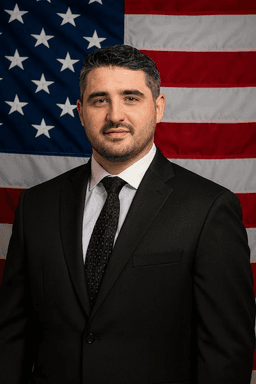 Your attorneyAndranik "Andy" Boyadzhyan, Esq.Founding Attorney. Licensed in Missouri.
Attorney advertising. Services are not available in all states.
By Andranik "Andy" Boyadzhyan, Attorney at Law. Meet the team
In Missouri, a person hurt on a bus, hit by one, or struck at a stop can recover medical bills, lost income and pain and suffering from whoever was at fault, and shared blame reduces the claim without ending it. When the bus is public, notice rules decide the case early. Top USA Law identifies the operator and handles every insurer. The consultation is free.
Yes, if the carelessness of a bus driver, another motorist or the company that runs the bus caused your injury. Missouri treats a bus operator as a common carrier, which means it owes riders a higher degree of care than an ordinary driver owes the car behind it. A RideKC driver who pulled away from a stop on Prospect Avenue before you reached a seat, a Metro Transit operator who braked hard on Grand Boulevard, or a school bus driver who missed a child at the curb all fell short of that duty, and the law lets you recover what the failure cost you.
If you were driving and a bus hit you, the case looks like any other collision with one difference: the person behind the wheel was on the clock for an agency or a company, so the employer answers for the driver's mistake. Buses swinging wide off Main Street across the streetcar tracks, merging from a stop into traffic on Kingshighway, or backing through the City Utilities transfer center in Springfield produce sideswipes and rear end collisions that are decided on the same fault evidence as any crash, plus the bus's own cameras.
Pedestrians struck at or near a stop have the strongest claims of all. A rider stepping off a bus is walking where the bus put them, and a driver who passes the stopped bus on the right or squeezes around it on the left is responsible for what happens next. So is the bus driver who opened the door short of the curb or pulled away with a coat strap caught in it. We see these on Prospect Avenue, along Broadway in St. Louis and outside schools across the state.
Your own share of fault does not end a Missouri claim. Under RSMo 537.765 and the Missouri Supreme Court's decision in Gustafson v. Benda, a rider who was standing when the bus lurched, or a pedestrian who crossed midblock to catch the bus, still recovers the portion of the damages the other side's negligence caused. The percentage is fought over rather than measured, which is why the first statement you give to an agency claims office matters so much. Give it to us instead.
The operator of the bus pays for the driver's negligence, and the identity of that operator decides everything else about the case. A private charter company carrying a church group to Branson, an intercity carrier on I-70, or a contractor driving a school district's routes carries a commercial policy, and the claim runs on ordinary rules and ordinary deadlines. The moment the bus belongs to a public body, the rules change.
RideKC in Kansas City, Metro Transit in St. Louis, City Utilities Transit in Springfield, Go COMO in Columbia and buses run by school districts are public entities. Missouri gives public entities sovereign immunity, with exceptions that matter here: an injury caused by a public employee operating a motor vehicle, and an injury caused by a dangerous condition of public property, such as a broken shelter or a crumbling curb at a transfer point. Those exceptions are what allow a claim against a public bus at all, and some cities layer their own short written notice requirements on top.
When a private car caused the crash, that driver's liability insurer pays your claim as a bus passenger, even though the bus was public. RSMo 303.025 requires liability coverage on every Missouri vehicle and uninsured motorist coverage on every policy, so your own policy or a household relative's can respond when the driver who hit the bus carried nothing or fled. Leaving the scene is a crime under RSMo 577.060, and the bus's forward camera often captures the plate.
A public agency is usually self insured, so there is no adjuster from a familiar company. There is a claims office, often staffed by in house lawyers, and it evaluates your claim with the agency's own video already in hand. Your health insurance covers treatment in the meantime, and the recovery reimburses it. Missouri has no personal injury protection, so nothing is paid as you go, which makes it important to tell every provider that the injury came from a bus crash so the records support the claim later.
It is worth what the injury took from you, added up by category. Economic damages cover the ambulance from the scene, the emergency visit, imaging, surgery, therapy, the future care your doctors expect, wages lost while you healed and the earning capacity lost if you cannot return to your work. Non economic damages cover the pain, the fear of riding again, scarring and the parts of daily life the injury closed off. Missouri sets no general cap on either category in a claim against a private operator.
Bus injuries have their own pattern. Falls inside a bus produce wrist, hip and shoulder fractures and head strikes against poles and seat backs. A car hit by a bus is a small object struck by a heavy one, so neck and back injuries are common even at low speed. A pedestrian struck at a stop is the most serious case we see, with crush injuries, brain injuries and deaths. Each tier is valued differently, and a permanent restriction moves a claim far above a strain that resolves in a few months.
Two things limit the number. Your own percentage of fault reduces the recovery under RSMo 537.765, so a rider found 20 percent responsible for standing before the bus stopped recovers 80 percent. And the identity of the defendant sets the practical ceiling. A public entity's exposure is shaped by immunity rules and by the limits Missouri places on what a public body pays on a tort claim, while a private operator's commercial policy is generally large enough to cover a serious injury in full.
Venue matters. A case against RideKC is tried in the Circuit Court of Jackson County. A Metro Transit case belongs in the Circuit Court of the City of St. Louis or the St. Louis County Circuit Court in Clayton, depending on where the crash happened. City Utilities cases go to the Greene County Circuit Court and Go COMO cases to the Boone County Circuit Court. Claims offices price a case by the jury it would face, and so do we. We do not quote a number before the medical picture is settled. Past results do not guarantee a similar outcome.
A public agency rarely denies that the incident happened, because its own cameras recorded it. It denies that the driver did anything wrong. The argument on a sudden stop claim is that the jolt was ordinary, the kind every rider expects, and that you fell because you were not holding on. The answer is the video: a stop hard enough to throw three riders forward, a start before the doors closed, or a turn taken at speed is not ordinary, and the other passengers on that bus are witnesses.
On a collision, the agency's claims office and a private carrier's insurer both reach for comparative fault. Because RSMo 537.765 reduces the recovery by your share, the goal is to attach a percentage to you: you changed lanes in front of the bus, you crossed against the signal at the stop, you were looking at your phone. We answer with the bus's forward and side cameras, the event recorder, signal timing and the people who saw it. A claim nobody can deny becomes a claim nobody can discount.
Expect an early offer if the injury is obvious and the video is bad for the agency. The offer will come before your doctors know whether you need surgery, and it will come with a release that ends every claim, including the one against the private driver who caused the crash. Do not sign it. Accepting the first number in a bus case usually means paying for the future treatment yourself.
When the offer does not move, we file in the circuit court for the county and use discovery to take the driver's deposition and obtain the training and discipline file, the maintenance records for the bus and the agency's own incident report. Agencies defend with staff counsel and settle late, so we build every bus case as if a jury will see it. Most still resolve before trial, and they resolve for more once the agency's lawyers have read the file.
Against a private operator or another driver, Missouri gives five years from the crash to file a personal injury lawsuit under RSMo 516.120, and three years from the death for a wrongful death claim under RSMo 537.100. Those are the longest deadlines of any state we serve, and they lull people. The video from a RideKC or Metro Transit bus is kept for days or weeks, not years, and once it is overwritten no deadline brings it back.
Against a public entity, the lawsuit deadline is only part of the picture. A claim against RideKC, Metro Transit, City Utilities Transit, Go COMO or a school district lives inside Missouri's sovereign immunity rules, and the motor vehicle exception is what keeps it alive. Some cities require written notice of the claim within a short period after the injury as a condition of suing, and a missed notice can end a claim that had years left on the statute. We do not guess about which rule applies. We identify the owner of the bus in the first week and calendar every date.
A school district bus adds a wrinkle. A child's deadline to sue is generally extended while the child is a minor, but a notice requirement against a public body may not be, and a district that contracted the route to a private company brings the contractor's ordinary deadlines in alongside. Parents have their own claim for the medical expenses, and that claim runs on the adult clock.
Insurance deadlines come first. If a car hit the bus you were riding, your own uninsured and underinsured motorist coverage requires prompt notice and, usually, your carrier's consent before you settle with the driver. Settling with a driver's minimum policy without that consent can forfeit coverage you already paid for, and a bus passenger is often the one person in the crash who needs it most. Call us before you cash anything.
Get medical care the same day, at the scene if the ambulance is offered. Riders often wave off the paramedics because the fall felt like nothing, and by evening the wrist is swollen and the neck will not turn. University Health Truman Medical Center and Research Medical Center in Kansas City, Barnes-Jewish Hospital and SSM Health Saint Louis University Hospital in St. Louis, Mercy Hospital Springfield and CoxHealth, and University of Missouri Health Care in Columbia are the trauma centers we see most. Tell each provider it was a bus crash.
Before you leave the bus, get the bus number, the route and the time. A RideKC or Metro Transit bus carries a fleet number on the front, the rear and beside the door, and the route number is on the destination sign. Those three facts are how the agency finds the right video among hundreds of buses. Ask the driver to make the incident report the agency requires, and confirm it was done. If police responded, the Kansas City Police Department, the St. Louis Metropolitan Police Department or the Missouri State Highway Patrol will have a report number.
The cameras are the case. Transit buses carry several: forward facing, door facing and interior, plus an event recorder that logs braking, speed and door position. That footage is overwritten on a short cycle unless someone asks for it, so give us the bus number and route the day you call and we send a preservation letter to the agency and to the businesses along the stop. Photograph the stop, the shelter, the curb, the bus and your injuries.
Get the names and numbers of every rider near you and every person at the stop. Passengers on a public bus are the witnesses to the sudden stop nobody else saw, and agencies do not collect their names for you. Do not give a recorded statement to the agency's claims office or to any insurer, and do not post about the crash. Keep every bill and a short daily note about pain and what you could not do.
See if you have a case
Three answers and a phone number. An attorney reviews your situation and calls you back, free.
Rear End Collision
$2,300,000
Insurer offered$85,000
Spinal cord injury after a rear end crash. The insurer offered $85,000.
T Bone Accident
$1,800,000
Insurer offered$120,000
Broken pelvis and internal bleeding at an intersection. The insurer offered $120,000.
Drunk Driver Victim
$1,500,000
Insurer offered$50,000
Traumatic brain injury caused by an impaired driver. The insurer offered $50,000.
Every case is different. Past results do not guarantee, warrant, or predict a similar outcome.
Top USA Law does not keep an office in Missouri. Bus cases are built from records, video and medical files, and we handle them for Missouri clients by phone, by video, at home or at the hospital, through one number, (877) 411-5291, answered around the clock. Andranik "Andy" Boyadzhyan, the firm's founding attorney, is licensed in Missouri and handles Missouri matters.
Kansas City bus cases come from the RideKC routes along Main Street and Prospect Avenue, the transfer points downtown and in Midtown, the crossings where cars meet the KC Streetcar on Main Street, and the school routes across the city and its suburbs. Lawsuits are filed in the Circuit Court of Jackson County, which sits in Kansas City and Independence.
St. Louis cases come from Metro Transit buses on Grand Boulevard, Kingshighway and Broadway, the MetroLink stations and their bus connections, and the county routes through Clayton and along I-170. They are filed in the Circuit Court of the City of St. Louis or the St. Louis County Circuit Court in Clayton. Springfield cases involve City Utilities Transit on Glenstone Avenue and around the downtown transfer center and go to the Greene County Circuit Court. Columbia cases involve Go COMO and the routes around the university and go to the Boone County Circuit Court.
We also take claims against private charter and intercity carriers on I-70 and I-44, against contractors who drive school district routes, and against the drivers who strike riders at stops or pass a stopped school bus with its lights flashing, including drunk drivers, where a conviction under RSMo 577.010 becomes evidence in the civil case. Private carriers bring an ordinary insurer to the table, and we handle them the same way.
We serve Missouri clients by phone, video and in person appointments arranged case by case.
RSMo 537.765 is Missouri's pure comparative fault rule, adopted after the Missouri Supreme Court decided Gustafson v. Benda. A rider, driver or pedestrian who shares fault recovers a reduced amount, never nothing. It matters in bus cases because agencies argue that the rider was standing, the driver cut in or the pedestrian crossed midblock, and none of those arguments ends the claim.
RSMo 516.120 gives five years from the crash to file a personal injury suit against a private operator or driver, and RSMo 537.100 gives three years from the death for a wrongful death suit. Missouri's sovereign immunity rules govern public bus operators, with exceptions for the operation of motor vehicles and dangerous conditions of public property, and some cities add a short written notice requirement that runs long before either statute.
RSMo 303.025 requires liability insurance on every Missouri vehicle and uninsured motorist coverage on every policy, which is what pays a bus passenger or a person at a stop when the car that caused the crash carried nothing. RSMo 577.060 makes leaving the scene a crime, and RSMo 577.010 prohibits driving while intoxicated. A conviction under either one is evidence in the civil case.
Missouri also holds a bus operator to the standard of a common carrier, a duty of the highest degree of care toward its passengers that comes from case law rather than a statute. It is the reason a hard stop that would be nobody's fault in a private car can be a claim on a bus, and the reason the onboard video matters more than any other piece of evidence.
Hurt in a crash? Talk it through for free.
Missouri filing deadlines and insurance notice rules can be short. A free call tells you where your clock stands.
Last reviewed by Andranik "Andy" Boyadzhyan, Esq., October 2026.
Three fields. We respond fast, day or night.
Best decision I ever made. My truck accident case settled for $285,000. They were available 24/7 and always kept me updated.
Client testimonials. Testimonials are not a guarantee, warranty, or prediction of the outcome of your case.
Top USA Law. Services are not available in all states.
Takes 30 seconds. No obligation.