

Motorcycle Crash
$875,000
Insurer offered$40,000
Leg amputation after a left turn collision. The insurer offered $40,000.
Serving Missouri
Hurt in a crash? The insurance company already has a team working on your claim. You should too. A free call tells you where you stand.
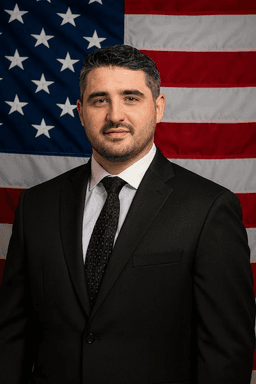 Your attorneyAndranik "Andy" Boyadzhyan, Esq.Founding Attorney. Licensed in Missouri.
Attorney advertising. Services are not available in all states.
By Andranik "Andy" Boyadzhyan, Attorney at Law. Meet the team
In Missouri, an injured motorcyclist claims directly against the driver who caused the crash, with no injury threshold to clear and no no fault layer in between. A rider blamed for part of the crash still recovers the rest. Top USA Law answers the bias against riders with evidence and handles every insurer from the first call. The consultation is free.
Yes, if another driver's carelessness put you on the pavement and you were hurt. The driver who turned left across your lane at a light on Independence Avenue in Kansas City, changed lanes into you on I-44 through south St. Louis County, pulled out of a gas station onto a Route 66 stretch west of Springfield without looking, or followed too closely on the two lane climbs south of the Lake of the Ozarks was negligent, and Missouri law lets you recover what that negligence cost you.
Riders start every claim a step behind. The adjuster who opens the file assumes the motorcyclist was speeding, splitting lanes or showing off. The physical evidence usually says something else. In crashes between a motorcycle and a car, the most common story is a driver who turned left in front of the bike or drifted into its lane because the driver never registered a single headlight. Our first job is to replace the assumption with the record: the point of impact, the crush on the car, the scrape path on the road and the witnesses who saw the turn.
A passenger on the bike has a claim of their own, and so does a rider who went down without contact when a driver's sudden move forced a lay down. Missouri has no injury threshold and no no fault system, so nothing about the severity of the injury decides whether you may claim. Road rash, a broken collarbone, a shattered wrist and a concussion are all compensable from the first dollar.
The question riders ask most is whether their own mistake ends the case. In Missouri it cannot. Under RSMo 537.765, the statute that followed the Missouri Supreme Court's decision in Gustafson v. Benda, a rider's share of fault reduces the recovery and nothing more. A rider who was five over the limit when a driver turned across the lane still has a case. How that share is argued, and how we keep it small, is covered below.
The driver who caused the crash pays, through that driver's liability insurance. Missouri is an at fault state with no personal injury protection, so a rider's medical bills, lost income and pain and suffering go into one claim against the at fault driver's insurer. If the driver was on the clock for a delivery company or a contractor, the employer's commercial policy sits behind the personal one, and we name both.
While the claim is pending, your health insurance pays for treatment and is reimbursed from the settlement. Some motorcycle policies carry medical payments coverage, which pays a set amount of bills regardless of fault, and we pull your declarations page to check. Without health coverage, many orthopedic surgeons and physical therapy practices in Kansas City, St. Louis and Springfield will treat under an agreement to be paid from the recovery, and we set that up so care does not stop.
RSMo 303.025 requires liability insurance on every Missouri vehicle, motorcycles included, and every policy sold in the state carries uninsured motorist coverage. That coverage responds when the driver who hit you had no insurance or fled the scene, which is a crime under RSMo 577.060. Underinsured motorist coverage, which pays when the other driver's limits are too low, is optional in Missouri and is often missing from a motorcycle policy. When it is missing, a household relative's auto policy can sometimes respond, so we read every policy in the home.
Some motorcycle crashes involve no other driver at all. A rider who went down on a pavement seam, loose gravel at a rural intersection or an unmarked drop off may have a claim against the public body that maintains the road. Missouri public entities have sovereign immunity with exceptions for dangerous conditions of public property and the operation of motor vehicles, and some cities require short written notice. We identify the road's owner in the first week.
A claim is worth what the crash took, added up by category. Economic damages are the countable losses: emergency care, surgery and hardware, rehabilitation, the future procedures your surgeon expects, lost wages, lost benefits and the drop in earning capacity if you cannot return to the trade you had. Non economic damages cover pain, scarring, the activities you have lost and, for a rider who will never ride again, the loss of something that organized their weekends.
A motorcycle gives you no crumple zone and no airbag, so a moderate speed collision that would dent a car fractures a leg, a pelvis, a wrist or a collarbone, tears skin deep enough for grafts, and rattles the brain. Several surgeries and months of lost work are normal, and each surgery moves the claim into a higher tier. The bike and the gear that was destroyed, helmet, jacket, gloves and boots, are a separate property claim documented at replacement cost.
Two things set the practical ceiling. The first is your share of fault, because a claim paid at 75 percent after a 25 percent finding is a real reduction even though it is never a bar. The second is insurance. A state minimum policy pays its limit no matter how badly a rider was hurt, so we search for the vehicle owner, an employer, a rideshare company's commercial policy while a trip was active, and any underinsured coverage in your household.
Where the case would be tried matters as well. Adjusters price a case bound for the Circuit Court of the City of St. Louis or the Circuit Court of Jackson County differently from one bound for a rural county along Route 66, because of how juries in each place have treated injured riders before. We do not quote a number on the first call. A figure offered before your surgeon knows how you will heal is a guess, and a guess helps the insurer. Past results do not guarantee a similar outcome. Each case is decided on its own facts.
Expect it. The first offer on a motorcycle claim is where the insurer starts, and it is usually built on the rider caricature: too fast, too aggressive, too hard to see. Missouri adjusters lean on three arguments in particular. That you share a large part of the fault. That a helmet, or the lack of one, explains your injuries. That your treatment ran longer than it needed to. Each has an answer, and the answer is evidence.
On fault, the adjuster's goal is a percentage. Because RSMo 537.765 reduces recovery by your share, an insurer that cannot deny a motorcycle claim will try to inflate your share instead. The recorded statement requested in the first days is where that percentage is built. "I was keeping up with traffic" becomes a speeding argument that follows the file for years. Do not give that statement. We answer with the crush profile on the car, the scrape marks, the signal timing, the driver's phone records and the witnesses who saw the turn, and where the physics are disputed we retain a reconstruction engineer.
On helmets, Missouri requires them for younger riders and for riders who do not carry the insurance the law requires for riding without one. If a helmet was required and you were not wearing it, the insurer will argue it made your injuries worse. That argument reaches only injuries a helmet would have prevented. A helmet does nothing for a shattered femur, a torn rotator cuff or a degloved hand, and we hold the insurer to that line with medical evidence.
On treatment, expect a request that you see a doctor the insurer chooses and a claim that your MRI shows age rather than trauma. We answer with your treating surgeons and objective imaging. If the insurer will not pay a fair number once treatment is complete, we file suit in the circuit court for the county where you went down and use discovery to put the driver and the footage on the record. Most Missouri motorcycle cases settle before trial, and for more once a jury is the alternative.
Five years from the date of the crash, under RSMo 516.120. That is a generous deadline, and it is also a trap, because riders read it as permission to wait. Five years to file suit is not five years to gather proof. Cameras overwrite in days, the car is repaired, the bike is scrapped and witnesses move away. The deadline protects the lawsuit. Only speed protects the evidence.
A wrongful death claim runs on a shorter clock: three years from the date of death under RSMo 537.100. When a rider survives in intensive care for weeks before passing, the crash date and the death date differ and we calendar both. Missouri lets the spouse, children or parents bring the claim directly and allows recovery for lost companionship, guidance and support, for the rider's own suffering before death, and for funeral costs and lost income.
Claims against a public body do not run on the five year clock alone. If a RideKC or Metro Transit bus, a city truck, a state highway crew or a defective road surface maintained by a public entity was involved, sovereign immunity rules and their exceptions apply, and some cities impose their own short written notice requirements. We identify every government defendant at intake so no notice is missed.
Insurance deadlines run separately and sooner. Your motorcycle policy requires prompt notice of the crash. Uninsured and underinsured motorist coverage generally requires that you notify your carrier and obtain its consent before you settle with the at fault driver, and settling without that consent can forfeit the coverage. Riders who wait to see how the shoulder heals are the ones who lose money they already paid for.
Go to a hospital the same day, even if you walked away. Adrenaline hides fractures and concussions for hours, and a gap between the crash and the first medical visit is the adjuster's favorite exhibit. University Health Truman Medical Center and Research Medical Center in Kansas City, Barnes-Jewish Hospital and SSM Health Saint Louis University Hospital in St. Louis, Mercy Hospital Springfield and CoxHealth in Springfield, and University of Missouri Health Care in Columbia are the state's Level I trauma centers. Tell every provider you were on a motorcycle and how the crash happened.
Make sure a crash report exists and get the report number. The Missouri State Highway Patrol handles most crashes on I-70, I-44 and the state highways around the Lake of the Ozarks, and the Kansas City and St. Louis Metropolitan police departments handle the city streets. Before the scene is cleared, photograph the car, the bike, the point of impact, the skid and scrape marks, the signal and the sight line from where the driver sat. If the driver seemed impaired, tell the officer; driving while intoxicated is a crime under RSMo 577.010.
Do not let the bike be repaired or sold for salvage until we have documented it, and do not throw away the helmet, jacket, gloves or boots. Damaged gear proves the impact, proves you were wearing it, and is itself part of the property claim. Look for cameras before you leave: gas stations, storefronts, traffic signals, buses and doorbells on residential streets record more of the road than people expect, and most of it is gone within days. Tell us where the crash happened so preservation letters go out immediately.
Notify your own insurer that a crash happened and that you were hurt. Do not give a recorded statement to the other driver's insurer, do not accept a quick check, and do not post about the crash, the ride or your recovery. Adjusters read riding group pages. Then keep a simple file: every bill, every appointment, every missed shift and a short daily note about pain and what you could not do. Months later, that file is what a demand is built on.
See if you have a case
Three answers and a phone number. An attorney reviews your situation and calls you back, free.
Motorcycle Crash
$875,000
Insurer offered$40,000
Leg amputation after a left turn collision. The insurer offered $40,000.
Rear End Collision
$2,300,000
Insurer offered$85,000
Spinal cord injury after a rear end crash. The insurer offered $85,000.
T Bone Accident
$1,800,000
Insurer offered$120,000
Broken pelvis and internal bleeding at an intersection. The insurer offered $120,000.
Every case is different. Past results do not guarantee, warrant, or predict a similar outcome.
Top USA Law does not keep an office in Missouri. We meet Missouri riders by phone, by video, at home or at the hospital bedside, and most of a motorcycle case, from the first conversation to the settlement check, happens that way anyway. One number, (877) 411-5291, is answered around the clock. Andranik "Andy" Boyadzhyan, the firm's founding attorney, is licensed in Missouri and handles Missouri matters.
Missouri motorcycle lawsuits are filed in the circuit court, generally for the county where the crash happened. For our clients that is most often the Circuit Court of Jackson County in Kansas City and Independence, the Circuit Court of the City of St. Louis, the St. Louis County Circuit Court in Clayton, the Greene County Circuit Court in Springfield and the Boone County Circuit Court in Columbia. Crashes on the Ozark riding roads land in the smaller county courthouses along the way, and we file there when that is where the case belongs.
The crashes we see most come from predictable places. In Kansas City, left turns across riders on Independence Avenue, Truman Road and Wornall Road, and lane changes into bikes on I-70, I-35 and I-435. In St. Louis, Kingshighway, Gravois and Manchester, and the merge zones on I-44 and I-64. On the Ozark riding roads and the Route 66 stretches between Springfield, Lebanon and Rolla, it is cars pulling out of driveways and gravel in the curves. The Lake of the Ozarks season brings a spring to fall surge of weekend riders, out of town drivers and impaired drivers to the two lane roads around the lake.
We handle left turn and lane change crashes, rear end crashes at signals, dooring on city streets, crashes caused by rideshare and delivery drivers, hit and run crashes where the rider was left on the road, drunk driving crashes, and single vehicle crashes caused by pavement defects, gravel and construction zones on the interstates and state highways. Each one starts with the same question, who had the right of way, and the same answer, evidence.
We serve Missouri clients by phone, video and in person appointments arranged case by case.
RSMo 537.765 is Missouri's comparative fault statute. With the Missouri Supreme Court's decision in Gustafson v. Benda, it sets pure comparative fault: a rider's recovery is reduced by the rider's percentage of fault but is never eliminated. For motorcyclists it is the most important sentence in Missouri law, because it means the insurer's bias can shrink a claim but cannot end it.
RSMo 516.120 sets the five year deadline for a personal injury lawsuit, measured from the crash. RSMo 537.100 sets the three year deadline for a wrongful death action, measured from the death. Neither statute preserves a frame of camera footage or a skid mark, so we begin collecting proof the week you retain us. Government defendants add their own notice rules on top.
RSMo 303.025 requires liability insurance on every Missouri vehicle, motorcycles included, and every policy sold in the state includes uninsured motorist coverage. Underinsured motorist coverage is optional and often absent from a motorcycle policy, which is why the auto policies in a rider's household are part of every case review. A driver with only the state minimum cannot pay for a surgical injury, so we read those policies before we value a case.
Missouri's helmet requirement applies to younger riders and to riders who do not carry the insurance the law requires for riding without one. When a helmet was required and not worn, the insurer's argument is confined to injuries a helmet would have prevented, and under the comparative fault rule it can reduce a claim but cannot end it. We answer it with medical evidence, injury by injury.
RSMo 577.060 makes leaving the scene of a crash a crime, and RSMo 577.010 prohibits driving while intoxicated. A conviction under either is strong evidence in the civil case. Missouri also allows a claim against a licensed bar or restaurant in narrow circumstances, generally where it knowingly served a visibly intoxicated person or a minor, under a high standard of proof.
Hurt in a crash? Talk it through for free.
Missouri filing deadlines and insurance notice rules can be short. A free call tells you where your clock stands.
Last reviewed by Andranik "Andy" Boyadzhyan, Esq., October 2026.
Three fields. We respond fast, day or night.
Top USA Law took over everything after my car accident. They got me $450,000 when insurance only offered $15,000. I recommend them to everyone.
Client testimonials. Testimonials are not a guarantee, warranty, or prediction of the outcome of your case.
Top USA Law. Services are not available in all states.
Takes 30 seconds. No obligation.