

Rear End Collision
$2,300,000
Insurer offered$85,000
Spinal cord injury after a rear end crash. The insurer offered $85,000.
Serving New York
Hurt in a crash? The insurance company already has a team working on your claim. You should too. A free call tells you where you stand.
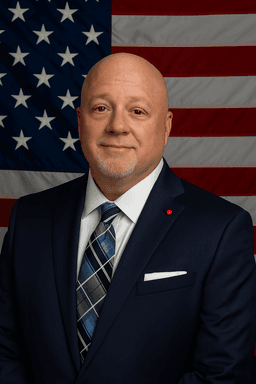 Your attorneyPaul Perkins, Esq.Of Counsel. Licensed in New York.
Attorney advertising. Services are not available in all states.
Reviewed by Paul Perkins, Attorney at Law, Of Counsel. Meet the team
In New York, Insurance Law 5104 is the rule that stops most crash victims from suing for pain and suffering unless they prove a serious injury. It is the reason your medical file matters more than the police report. Top USA Law builds the proof that clears the threshold. Call (877) 411-5291 for a free case review.
New York Insurance Law section 5104 subsection (a) says that in any action between covered persons arising from the negligent use of a motor vehicle in New York, there is no right to recover for non economic loss unless the injured person has suffered a serious injury, and no right to recover for basic economic loss. Two rules live in that one sentence.
First, pain and suffering, the damages that make up most of a serious car accident recovery, are off the table unless your injury fits one of the categories defined in New York Insurance Law section 5102 subsection (d). For lawsuits filed on or after May 26, 2026, eight categories remain, because Chapter 58 of the Laws of 2026 (Part EE) removed the 90 day daily activities category. Second, the first 50,000 dollars of medical bills and lost wages are handled by no fault insurance and cannot be sued for a second time.
The section applies between covered persons, which in practice means almost everyone in a crash involving insured New York vehicles: drivers, passengers, pedestrians and cyclists struck by a car. A motorcyclist is not a covered person under the no fault law, which is why a rider can sue without meeting the threshold.
You clear it with medical proof, not with the facts of the crash. The insurer for the at fault driver will move to dismiss your lawsuit by arguing that your injury is not serious. Your side answers with a doctor's sworn report that identifies the category, states the objective findings behind it, and explains why the injury was caused by this crash rather than by age or a prior condition. The categories most often litigated are permanent consequential limitation and significant limitation.
A passenger in a Queens rideshare crash suffers a torn rotator cuff and has surgery four months later. The surgery report, the pre operative MRI and a post operative range of motion test showing a measured loss of overhead reach together establish a permanent consequential limitation. The insurer's motion to dismiss fails, and the case proceeds to a settlement that includes pain and suffering. The same injury, treated with two urgent care visits and nothing more, would likely be dismissed at the threshold stage.
The pain and suffering claim is dismissed. You keep your no fault benefits and any claim for economic loss above 50,000 dollars, but the value of the case drops sharply. Because the motion is usually decided on the paper record, the records you create in the first weeks after a crash decide the outcome months later.
See if you have a case
Three answers and a phone number. An attorney reviews your situation and calls you back, free.
Rear End Collision
$2,300,000
Insurer offered$85,000
Spinal cord injury after a rear end crash. The insurer offered $85,000.
T Bone Accident
$1,800,000
Insurer offered$120,000
Broken pelvis and internal bleeding at an intersection. The insurer offered $120,000.
Drunk Driver Victim
$1,500,000
Insurer offered$50,000
Traumatic brain injury caused by an impaired driver. The insurer offered $50,000.
Every case is different. Past results do not guarantee, warrant, or predict a similar outcome.
We treat section 5104 as the first battle in every New York car accident case. Within days of your call we identify the category we intend to prove, coordinate treatment with doctors who document objectively, and prepare the sworn medical narrative before the insurer asks for it. Paul Perkins, Of Counsel, is licensed in New York and litigates threshold motions. Start with the New York car accident lawyer page or call (877) 411-5291.
We serve New York clients by phone, video and in person appointments arranged case by case.
Hurt in a crash? Talk it through for free.
New York filing deadlines and insurance notice rules can be short. A free call tells you where your clock stands.
Last reviewed by Paul Perkins, Esq., September 2026.
Three fields. We respond fast, day or night.
Top USA Law took over everything after my car accident. They got me $450,000 when insurance only offered $15,000. I recommend them to everyone.
Client testimonials. Testimonials are not a guarantee, warranty, or prediction of the outcome of your case.
Top USA Law. Services are not available in all states.
Takes 30 seconds. No obligation.