


Andranik "Andy" Boyadzhyan, Esq.
Founding Attorney
Licensed in Alabama, Missouri, New Mexico and Washington, D.C.
Featured in CNN, Forbes, Variety
Serving Alabama
Hurt in a crash? The insurance company already has a team working on your claim. You should too. A free call tells you where you stand.
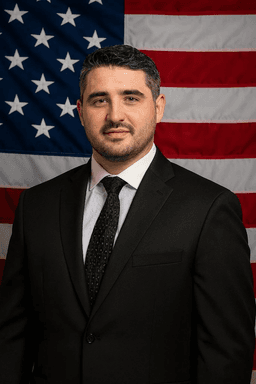 Your attorneyAndranik "Andy" Boyadzhyan, Esq.Founding Attorney. Licensed in Alabama.
Attorney advertising. Services are not available in all states.
By Andranik "Andy" Boyadzhyan, Attorney at Law. Meet the team
In Alabama, a driver, passenger, pedestrian or cyclist found even slightly at fault can be barred from recovering anything, because the state follows pure contributory negligence. There is no percentage reduction, only an exception for wanton conduct such as drunk driving. The claim depends on proof that puts all the fault on the other driver.
In Alabama, even a small share of fault on your part can defeat the whole claim, because the state applies pure contributory negligence.
You can lose the whole claim. Alabama still applies pure contributory negligence to car accidents, a rule from case law rather than statute. If the other driver's insurer convinces a jury that your own carelessness contributed to the collision in any way, the claim fails completely. Nothing is trimmed by a percentage; the number goes to zero.
The rule reaches everyone on the road. A driver who was a little over the limit, a passenger who got into a car with a driver she knew had been drinking, a pedestrian who stepped off the curb mid block, a cyclist without a light after dark: each faces the same argument, an argument insurers can make in an Alabama claim because it is a cheap way for an insurer to pay nothing.
Two things keep the rule from swallowing every case. First, the insurer has to prove it. Contributory negligence is a defense, and the burden of showing that you were careless and that it actually helped cause the crash sits on the driver's side. Second, it is no defense at all to wantonness, the Alabama name for conduct that goes beyond carelessness.
Because a small finding against you ends the claim, an Alabama case should be built as a liability case first, proving the other driver's fault.
Because a small finding against you ends the claim, an Alabama case is built as a liability case first. That means pulling the ALEA or city crash report and any citation, requesting camera footage before it is overwritten, finding the witnesses the report missed, downloading event data from both cars, and, once a suit is filed, subpoenaing the other driver's phone records. Where the physical evidence is contested, a reconstruction engineer works it. The goal is a record the insurer cannot credibly use to attach any blame to you.
The police report helps even when it blames nobody. Adjusters read the contributing circumstances box first, and a report that lists no fault on your side is one the insurer cannot cite against you. When the report is wrong, the answer is evidence the officer did not have.
In the first days after a crash, the other driver's adjuster will ask for a recorded statement. It is where contributory negligence arguments are born. You will be asked how fast you were going, whether you saw the other car, whether you were belted. An honest I am not sure becomes evidence of inattention. Decline it, report the crash to your own insurer as your policy requires, and talk to a lawyer before taking any other call. The same goes for apologies at the scene and social media.
Contributory negligence defeats a claim for negligence. It does not defeat a claim for wantonness, a separate wrong in Alabama: conduct undertaken with knowledge that injury was likely. A driver who was drunk under Ala. Code 32-5A-191, who fled an injury crash under Ala. Code 32-10-1, or who was racing or texting at speed did more than make a mistake. Where the facts support it, wantonness can be pleaded alongside negligence. Consider a driver who rolls a stop sign in Huntsville and is hit by a drunk driver running a red light at twice the limit. Under negligence alone, the stop sign could sink the claim. Under wantonness, the drunk driver's conduct is the question, and the claim survives.
Because any fault can end an Alabama claim, adjusters may press for a quick settlement. Weighing a first insurance offer in Alabama covers what to check first. If the other driver had no insurance, the Alabama uninsured driver guide explains where payment can come from.
Top USA Law. Services are not available in all states.
Fill in four quick fields, and a licensed attorney reviews the facts of your case at no cost.
Alabama circuit court juries decide fault disputes, so every file should be built as if it will be tried there, with a licensed Alabama attorney.
Alabama fault disputes are decided by Circuit Court juries in Jefferson County (Birmingham or Bessemer), Madison County (Huntsville), Montgomery, Mobile or Tuscaloosa County, so every file should be built as if it will be tried there. Top USA Law keeps no Alabama office; Andranik "Andy" Boyadzhyan, licensed in Alabama, consults with clients by phone or video. Read the Alabama car accident lawyer page or call (877) 411-5291 before you speak to any adjuster.
When you cannot travel, Top USA Law comes to you at home or in the hospital.
Under contributory negligence, the scene evidence carries great weight, so local details matter. Our Birmingham car wreck attorney page covers US 280 and the Red Mountain Expressway, the Huntsville car accident lawyer page covers Memorial Parkway, and the Tuscaloosa car crash lawyer page covers Skyland Boulevard.
We serve Alabama clients by phone, video and in person appointments arranged case by case, and calls are answered 24 hours a day.
Sue a driver within two years. File a city claim in six months or a county claim in 12 months, then wait before suing a county.
A licensed Alabama attorney, Andranik "Andy" Boyadzhyan, Founding Attorney, reviews every Alabama claim, and our team helps you in English or Spanish.
Andranik "Andy" Boyadzhyan, Esq.
Founding Attorney
Licensed in Alabama, Missouri, New Mexico and Washington, D.C.
Featured in CNN, Forbes, Variety

Paul Perkins, Esq.
Of Counsel
Licensed in New Jersey and New York
Certified by the New Jersey Supreme Court as a Civil Trial Attorney. Lawyer of Distinction in Civil Litigation.
Featured in CNBC, Bloomberg, Forbes, The New York Times
Andranik "Andy" Boyadzhyan is the founding attorney of Top USA Law. His background spans business law, civil litigation, and personal injury, and his practice today focuses on motor vehicle accident claims.
Sundas Shafi, Esq., Attorney at Law, Head of Litigation
Rosette Kalayjian, Attorney at Law
Sandra Alves, Case Manager
Four steps from your first call to the close of your claim. You focus on healing while we deal with the insurers and keep you updated.
Free consultation
Call 24/7 or send the short form. An attorney reviews what happened and tells you where you stand. Free, no obligation.
We deal with the insurers
We deal with the insurance companies, request the police report and medical records, and keep you updated.
We build your case
Evidence, witnesses, experts and the medical picture of your injuries, prepared as if the case will go to trial.
You get paid
Medical bills, lost wages, vehicle damage, and pain and suffering. No fee unless we win; costs may apply.
Reviewed by Andranik "Andy" Boyadzhyan, Esq.
Fill in the four short fields in this form, and a licensed attorney reviews your case for free. We respond day or night.
Top USA Law. Services are not available in all states.
Takes 30 seconds. No obligation.