

Rear End Collision
$2,300,000
Insurer offered$85,000
Spinal cord injury after a rear end crash. The insurer offered $85,000.
Serving Alabama
Hurt in a crash? The insurance company already has a team working on your claim. You should too. A free call tells you where you stand.
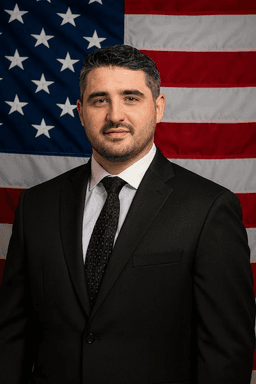 Your attorneyAndranik "Andy" Boyadzhyan, Esq.Founding Attorney. Licensed in Alabama.
Attorney advertising. Services are not available in all states.
By Andranik "Andy" Boyadzhyan, Attorney at Law. Meet the team
In Alabama, a person hurt in a car accident claims directly against the driver who caused the crash for medical bills, lost wages and pain and suffering, with no injury threshold to clear, but any share of fault on the victim's side can end the claim entirely. Top USA Law gathers the evidence that puts the fault where it belongs and handles every insurer. The consultation is free.
You have a case if another driver's carelessness caused the crash, you were hurt, and the evidence shows the fault was theirs alone. A driver who rear ended you in the backup at Malfunction Junction, ran a light on US 280, drifted across a lane on I-65 outside Montgomery, or turned left across you on Airport Boulevard in Mobile was negligent, and Alabama law lets you recover what that negligence cost you, as long as no piece of the blame lands on you.
The crash report matters more here than in most places. An Alabama Law Enforcement Agency trooper or a city officer in Birmingham, Huntsville, Montgomery, Mobile or Tuscaloosa fills out the state crash report, and adjusters read the contributing circumstances and any citation before anything else. When it is blank, wrong or written from the other driver's version, we go get what the officer did not: the vehicle damage, the debris field, camera footage, the other driver's phone records and the people who stopped to help.
You do not have to be the driver. Passengers have claims against whichever driver caused the crash and often against both. Pedestrians, cyclists, motorcyclists and the occupants of the other car have claims too. A passenger is usually the strongest claimant in an Alabama crash, because a passenger almost never did anything that an insurer can call fault, and the fault rule is the only thing that makes these cases hard.
Two things shape every Alabama claim and neither one ends it on its own. The first is the fault rule, which turns early evidence into the whole case. The second is insurance: the policy limits available from the other driver and from your own household set the practical ceiling on what any claim can pay. We sort out both in the first conversation.
Alabama is an at fault state with no no fault system. There is no personal injury protection on an Alabama policy and no threshold your injury has to clear before you can claim pain and suffering. You bring one claim against the driver who caused the crash for medical costs, lost income and pain and suffering together. While the claim is pending, your health insurance covers treatment, and the claim reimburses those costs at the end.
Whether you recover at all depends on fault. Alabama follows pure contributory negligence, one of the harshest fault rules in the country. If the insurer can show that you were even slightly at fault, your claim can be barred entirely. That rule applies to drivers, passengers, pedestrians and cyclists alike, so in every Alabama case the evidence that puts all of the fault on the other driver is the whole case. It is not a rule that trims your claim by a percentage. It is a rule that can reduce it to zero.
Alabama requires liability insurance on every registered vehicle under Ala. Code 32-7-6, and a minimum policy covers very little for one person after a night at UAB Hospital or Huntsville Hospital. Insurers must offer uninsured motorist coverage, and most Alabama policies carry it. When the driver who hit you had a minimum policy, or none, or fled, your own uninsured and underinsured motorist coverage responds, and so can a policy belonging to a relative you live with. We review every policy in your household before we value a case.
The owner of the other vehicle sets the rules. A crash with a delivery van or a company truck brings in the employer's commercial policy. A crash with a MAX bus in Birmingham, a city police car or a county truck is a claim against a public body with its own short sworn claim requirement, covered below. We identify the owner in the first week because the owner decides the deadline and the money.
A claim is worth the sum of what the crash took from you. Economic damages are the measurable losses: every medical bill, the future treatment your doctors expect, lost wages and benefits, the reduction in what you can earn if you cannot return to your old job, and out of pocket costs. Non economic damages cover pain, the activities you have lost, scarring and the strain a serious injury puts on a family. Alabama has no threshold and no general cap on these damages.
Injury severity and permanence drive value more than any other factor. A strain that resolves with a few months of therapy sits at the low end. A herniated disc with injections and a lasting limitation sits well above it. A surgery moves a claim into a different tier. A traumatic brain injury, a spinal cord injury or a wrongful death is valued in a category of its own, against every policy that can be found. Past results do not guarantee a similar outcome.
Fault is the other ceiling, and in Alabama it is a cliff rather than a slope. A claim that a comparative fault rule would pay at 80 percent after a 20 percent fault finding can be worth nothing here if a jury finds you contributed at all. That is why the value of an Alabama case depends as much on camera footage, witness statements and the physical evidence as on the medical records, and why we spend the first weeks on it.
Venue matters too. Juries in Jefferson, Madison, Montgomery and Mobile Counties have each decided injury cases their own way, and adjusters price a case by the venue it would land in. We do not quote a number on the first call, because a number given before the medical picture is clear is a guess. We gather the records and the evidence, and when your doctors can describe your future, we put a demand on paper backed by both.
Expect the fault argument first, because in Alabama it is the insurer's best weapon. An adjuster who can attach any share of blame to you can deny the claim outright, so the adjuster looks for it in every file: you were a few miles over the limit on I-459, you were not wearing a seat belt, you glanced at your phone. The recorded statement the adjuster asks for in the first days is where those arguments are born. Do not give it. We handle every call from every insurer once you retain us.
We answer the fault argument with evidence gathered before it disappears: traffic and business camera footage, the ALEA or city crash report and any citation, the other driver's phone records, the damage and debris patterns, event data from the vehicles, and the witnesses. Where the physical evidence is disputed we retain a reconstruction engineer. In a contributory negligence state, proof that the other driver was wholly at fault is not a detail in the case. It is the case.
Alabama law also treats wantonness differently from ordinary carelessness. A driver who was drunk, racing, or texting at highway speed did more than make a mistake, and contributory negligence is not a defense to a wantonness claim. When the facts support it, we plead it, because it changes the leverage in every negotiation. A conviction under Ala. Code 32-5A-191 for driving under the influence is strong evidence on that point.
Beyond fault, insurers argue that your treatment was excessive, that your MRI shows age rather than trauma, or that the injury predates the crash. We answer with your treating physicians and objective imaging. If the insurer will not pay a fair number once treatment is complete, we file suit in the Circuit Court of the county where the crash happened and let discovery put the driver, the footage and the experts on the record. Most cases settle before trial, and for more when a jury is the alternative.
Alabama gives you two years from the date of the crash to file a personal injury lawsuit under Ala. Code 6-2-38. Two years sounds like plenty until you count the months of treatment, the wait for a doctor to say what your future looks like, and the negotiation that has to happen before suit. When it passes, the claim is gone no matter how strong the evidence was.
A wrongful death action must be filed within two years of the death, and it is brought by the personal representative of the estate rather than by the family directly. Its wrongful death damages are punitive in nature, measured by the wrongdoer's conduct rather than the family's financial loss, and they pass to the heirs. Because the measure is what the driver did, the evidence of how the crash happened matters even more than in an injury case. Opening the estate takes time, and we start it immediately.
Public entities have a much shorter fuse. If a MAX bus, a city police car, a county road crew truck or a dangerous road or signal maintained by a city or county was involved, a sworn written claim must be filed with the city or county clerk within a short period measured in months, and a defective or late claim can end the case no matter how clear the fault. Claims against the State itself are limited by sovereign immunity. We identify every government defendant at intake so no notice is missed.
Insurance deadlines run separately and sooner. Every policy requires prompt notice of the crash, and uninsured and underinsured motorist coverage requires that you notify your own carrier before you settle with the other driver. Settling without that notice can forfeit the coverage you paid for. Waiting to see how you feel is the most common way Alabama crash victims lose money they already had.
See a doctor the same day, even if you feel more shaken than hurt. Adrenaline hides injuries for hours, and a gap between the crash and your first medical visit is the first thing an adjuster will use to argue your pain came from somewhere else. UAB Hospital in Birmingham, Huntsville Hospital and USA Health University Hospital in Mobile are the state's Level I trauma centers, and Baptist Medical Center South in Montgomery and DCH Regional Medical Center in Tuscaloosa serve their regions. Tell every provider the injury came from a car accident.
Make sure a crash report exists and get the report number. A driver in an injury crash must stop and remain at the scene under Ala. Code 32-10-1, and that report is the first document every insurer reads. On the interstates and county roads the report usually comes from an ALEA trooper; inside the cities it comes from the police department. Photograph both vehicles, the road, the signals, the weather, skid marks and debris, and your injuries. Collect the other driver's name, license, plate and insurance card and every witness's number.
Look for cameras before you leave. Gas stations, storefronts, apartment lobbies, traffic signals, MAX buses and the dash cameras in the cars around you record most Alabama roads, and most of that footage is overwritten within days. In a contributory negligence state that footage is often the difference between a full recovery and none. Tell us where the crash happened so we can send preservation letters immediately.
Notify your own insurer that a crash occurred and that you were hurt. Do not give a recorded statement to the other driver's insurer, and do not sign anything from them. Do not discuss fault with anyone but your lawyer, including on social media, because a single sentence conceding a small share of blame can end an Alabama claim. Keep a file of every bill, appointment, missed day of work and a short daily note about pain. That file becomes the backbone of the demand months later.
See if you have a case
Three answers and a phone number. An attorney reviews your situation and calls you back, free.
Rear End Collision
$2,300,000
Insurer offered$85,000
Spinal cord injury after a rear end crash. The insurer offered $85,000.
T Bone Accident
$1,800,000
Insurer offered$120,000
Broken pelvis and internal bleeding at an intersection. The insurer offered $120,000.
Drunk Driver Victim
$1,500,000
Insurer offered$50,000
Traumatic brain injury caused by an impaired driver. The insurer offered $50,000.
Every case is different. Past results do not guarantee, warrant, or predict a similar outcome.
Top USA Law does not keep an office in Alabama. We meet Alabama clients by phone, by video, at home or at the hospital, and everything in the case is handled through one number, (877) 411-5291, answered around the clock. Andranik "Andy" Boyadzhyan, the firm's founding attorney, is licensed in Alabama and handles Alabama matters. If you are in a hospital bed at UAB or Huntsville Hospital, we come to you.
Alabama car accident lawsuits are filed in the Circuit Court of the county where the crash happened or where the defendant lives. For our clients that is most often the Jefferson County Circuit Court, which sits in a Birmingham division and a Bessemer division, the Madison County Circuit Court in Huntsville, the Montgomery County Circuit Court, the Mobile County Circuit Court and the Tuscaloosa County Circuit Court.
The crashes we see most come from the same roads. In Birmingham, rear end and merge collisions where I-20, I-59 and I-65 meet at Malfunction Junction, lane change crashes on I-459, and intersection crashes along US 280. In Huntsville, I-565, Memorial Parkway and US 72. In Montgomery, I-85, I-65 and the Eastern Boulevard. In Mobile, I-10 across the Bayway, I-65 and Airport Boulevard. In Tuscaloosa, I-20/59 and McFarland Boulevard. The rural stretches of I-65 between the cities produce high speed crashes with commercial trucks.
We serve Alabama clients by phone, video and in person appointments arranged case by case.
Contributory negligence is Alabama's general fault rule and comes from case law rather than a statute. A driver, passenger, pedestrian or cyclist whose own negligence contributed to the crash in any degree can be barred from recovering. It is the reason evidence gathered in the first days decides Alabama cases, and the reason we never let a client discuss fault with an insurer.
Ala. Code 6-2-38 sets the two year deadline to file a personal injury lawsuit, measured from the date of the crash. A wrongful death action has its own two year deadline measured from the death, is brought by the personal representative of the estate, and produces damages that are punitive in nature, measured by the wrongdoer's conduct and paid to the heirs.
Ala. Code 32-7-6 requires liability insurance on every registered vehicle in Alabama and sets the minimum limits a policy must carry. Insurers must offer uninsured motorist coverage, and most Alabama policies include it. Because the minimum limits are low and contributory negligence can bar a claim against the other driver, your own coverage and a household relative's coverage are part of every Alabama case.
Ala. Code 32-10-1 requires a driver involved in a crash that causes injury to stop and remain at the scene, and makes leaving a crime. Ala. Code 32-5A-191 prohibits driving under the influence of alcohol or drugs. A conviction under either statute can be used in the civil case, and drunk or hit and run driving often supports a wantonness claim, which contributory negligence does not defeat.
Hurt in a crash? Talk it through for free.
Alabama filing deadlines and insurance notice rules can be short. A free call tells you where your clock stands.
Last reviewed by Andranik "Andy" Boyadzhyan, Esq., October 2026.
Three fields. We respond fast, day or night.
Hit by a semi truck on the highway. Top USA Law knew exactly how to deal with the trucking company. Got me $425,000 after they initially offered $30,000.
Client testimonials. Testimonials are not a guarantee, warranty, or prediction of the outcome of your case.
Top USA Law. Services are not available in all states.
Takes 30 seconds. No obligation.