

Rear End Collision
$2,300,000
Insurer offered$85,000
Spinal cord injury after a rear end crash. The insurer offered $85,000.
Serving Alabama
Hurt in a crash? The insurance company already has a team working on your claim. You should too. A free call tells you where you stand.
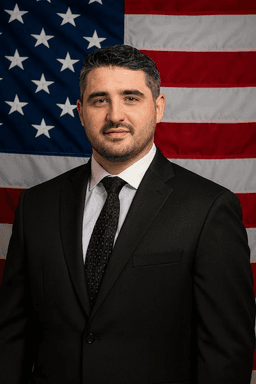 Your attorneyAndranik "Andy" Boyadzhyan, Esq.Founding Attorney. Licensed in Alabama.
Attorney advertising. Services are not available in all states.
By Andranik "Andy" Boyadzhyan, Attorney at Law. Meet the team
In Alabama, a person hurt in an Uber or Lyft crash claims against the driver who caused it, and when the rideshare driver was carrying a passenger or heading to one, the company's commercial policy, far larger than a personal auto policy, stands behind the claim. Top USA Law proves which coverage applied and keeps the fault where it belongs. The consultation is free.
You have a case if a driver's carelessness caused the crash, you were hurt, and the evidence shows the fault was not yours. That covers a passenger whose Uber driver ran the light at Five Points South, a driver hit by a Lyft pulling out of the arrivals lane at the Birmingham airport, a pedestrian struck on Dauphin Street in Mobile by a rideshare car nosing toward a pin, and a student clipped on a Tuscaloosa game day by a driver watching the app instead of the crosswalk.
Alabama's contributory negligence rule is what makes an ordinary crash case hard here: any share of fault on the injured person's side can bar the claim. That rule rarely touches a rideshare passenger. A passenger did not choose the speed, the lane or the phone in the driver's hand, so there is nothing for an insurer to point at. Passengers are the strongest claimants on Alabama roads, and a rideshare passenger has the added benefit of a large commercial policy while the trip is active.
Drivers of other cars, pedestrians and cyclists hit by a rideshare vehicle have the same claim against the rideshare driver that they would have against any motorist, and the same exposure to the fault rule. For them the case is built in the first days from footage, witnesses and the physical evidence that proves the rideshare driver alone caused the crash. Rideshare drivers hurt by other motorists have claims too, though usually without workers' compensation, because the companies treat them as contractors.
The pickup and drop off are where these crashes cluster. A driver stopping in a travel lane on 20th Street to load a rider, swinging across traffic to reach a pin on the far curb, or scrolling the app for the next request in Research Park traffic in Huntsville is negligent in a way ordinary drivers are not. When a rideshare driver was drunk, racing or texting at highway speed, Alabama allows a wantonness claim, and contributory negligence is not a defense to it.
Which policy pays depends on the driver's app at the instant of the crash, and coverage runs in three periods. With the app off, the driver is a private motorist with a personal policy, and most personal policies exclude driving for hire. A driver who had just gone offline after a late run from the Huntsville airport, or who never told the insurer about rideshare work, can leave an injured person with a policy that refuses to pay.
With the app on and the driver waiting for a request, the company provides a smaller layer of liability coverage that applies only when the driver's own policy does not. It is limited, and insurers argue that a crash happened in this period rather than during a trip whenever the timestamps leave any room, because the difference in available money is large.
From the moment a driver accepts a request until the passenger is dropped off, the company's commercial policy is the one on the line, generally one million dollars in liability coverage, with uninsured and underinsured motorist coverage usually layered on top for the passenger and the driver. A ride from the Birmingham airport to Five Points South, a Saturday run to Bryant-Denny Stadium or a trip down Dauphin Street after midnight is covered at this level from acceptance to drop off.
Alabama's ordinary rules sit underneath. Ala. Code 32-7-6 requires liability insurance on every registered vehicle, insurers must offer uninsured motorist coverage and most policies carry it. When the motorist who hit the rideshare car had a minimum policy or none, your own uninsured and underinsured coverage, a household member's coverage and the coverage attached to the trip all come into play. The company's trip records fix the period to the second, and we demand them in the first week.
A rideshare claim in Alabama is worth what the crash took from you, category by category: medical bills, the future care your doctors expect, lost wages and benefits, reduced earning capacity, out of pocket costs, and then pain, scarring and the loss of the things you used to do. Alabama has no injury threshold and no general cap on these damages against a private driver. Riding in an Uber or Lyft changes none of the categories. It changes the insurance behind them.
Severity and permanence set the tier. A strain that resolves with therapy sits at the low end. A herniated disc with injections and a lasting limitation sits above it, and a surgery moves the claim again. A brain injury, a spinal cord injury or a death is valued on its own, against every policy that can be found. Past results do not guarantee a similar outcome.
The available coverage sets the practical ceiling. During an active trip the commercial policy, generally one million dollars in liability coverage, can pay a serious claim that a minimum Alabama policy would exhaust in a single night at UAB Hospital. With the app off, the case may rest on the driver's personal policy and your own underinsured coverage. That is why proving the period is worth as much as proving the injury. Past results do not guarantee a similar outcome.
Fault is the cliff. For a passenger it is almost never an issue. For a driver or pedestrian, a finding of any contribution can reduce the claim to nothing, so the value of an Alabama rideshare case for those claimants depends as much on the footage and witnesses as on the medical records. Venue matters as well: juries in Jefferson, Madison, Mobile and Tuscaloosa Counties have each priced injury cases their own way. We do not quote a number on the first call. We build one when the medical picture is clear.
The first move is the period dispute. The company's insurer says the driver had not accepted a ride yet, or had already completed it, so the smaller coverage or the personal policy applies. We answer with the company's own records, the acceptance timestamp, the GPS trace and the receipt on your phone, matched against the time on the ALEA or city crash report and any camera. What the driver remembers is not the proof. The server log is.
The second is the fault argument, and in Alabama it carries more weight than anywhere. Against a passenger it goes almost nowhere. Against the driver of the other car or a pedestrian, the insurer looks for anything: a few miles over on I-459, a phone in hand, a step off the curb before the signal. The recorded statement requested in the first days is where that argument is manufactured. Do not give it. When the rideshare driver's conduct was wanton, we plead it, because contributory negligence does not defeat a wantonness claim.
The third is the company's own position. It calls itself a technology platform, the driver an independent contractor, and says its responsibility ends with the insurance it arranged. That argument affects whether the company can be sued directly for the driver's conduct. It does not change the insurance, which responds by app status however the classification is resolved. The app's terms also contain an arbitration clause the company may invoke against a claim aimed at it, but the at fault driver and the paying insurer are not shielded by it.
Underneath sit the usual arguments about pre existing conditions, gaps in care and excessive treatment, and we answer them with treating physicians and imaging. If the insurer will not pay fairly once treatment is complete, we file in the Circuit Court of the county where the crash happened and use discovery to compel the trip data and question the driver under oath. Most cases settle before trial, and they settle for more when a jury is the alternative.
Alabama gives you two years from the date of the crash to file a personal injury lawsuit under Ala. Code 6-2-38. A wrongful death action must be filed within two years of the death, is brought by the personal representative of the estate rather than the family directly, and produces damages that are punitive in nature, measured by what the driver did rather than by the family's financial loss. Opening the estate takes time, and we begin at once.
Two years is short, and a rideshare case is shorter. The company's trip and location data are kept under retention schedules that vary, and the app history on a phone, the receipt and a dashcam clip can be gone in weeks. A preservation demand served on the company in the first days is what keeps the coverage period provable. We send it before anything else.
If a public vehicle was involved, a MAX bus in Birmingham, a city police car or a county truck, a sworn written claim must be filed with the city or county clerk within a short period measured in months, and a defective or late claim ends that part of the case no matter how clear the fault. A rideshare car struck by a city bus downtown is a claim against two defendants with two very different clocks, and we identify every owner at intake.
Insurance deadlines run sooner than any of these. Every policy demands prompt notice. Uninsured and underinsured motorist coverage, on your own policy or attached to the trip, usually requires that the carrier be notified before you settle with the at fault driver, and a release signed early can forfeit it. A fast offer from the rideshare company's insurer that closes the claim against everyone is built to do exactly that.
See a doctor the same day. UAB Hospital in Birmingham, Huntsville Hospital and USA Health University Hospital in Mobile are the state's Level I trauma centers, and DCH Regional Medical Center serves Tuscaloosa. Tell every provider the injury came from a car crash and that a rideshare vehicle was involved, so the record ties the injury to the trip from the first visit. A gap between the crash and care is the first thing an adjuster uses.
Save the trip before anything else. Screenshot the receipt, the driver's name and photo, the plate, the pickup and drop off points, the route and the times. That screen proves the period the driver was in and can be harder to reach once the company logs the incident. If you were in the other car, photograph the rideshare car's plate and the phone mount or decal on the dash, which show the car was working.
Make sure a crash report exists and get the number. A driver in an injury crash must stop and remain at the scene under Ala. Code 32-10-1, and the ALEA or city report is the first document every insurer reads. Photograph both vehicles, the road, the signals, the debris and your injuries, and collect every witness's number. Report the crash in the app as well, which creates a timestamped company record. Bar, hotel, garage and MAX bus cameras are overwritten within days, so tell us where it happened immediately.
Notify your own insurer that a crash happened. Do not give a recorded statement to the company's insurer, the driver's insurer or the other driver's insurer, and do not sign anything from any of them. Do not discuss fault with anyone but your lawyer, including online, because in Alabama a single conceding sentence can end a claim. Keep a file of every bill, appointment, missed shift and a daily note on pain.
See if you have a case
Three answers and a phone number. An attorney reviews your situation and calls you back, free.
Rear End Collision
$2,300,000
Insurer offered$85,000
Spinal cord injury after a rear end crash. The insurer offered $85,000.
T Bone Accident
$1,800,000
Insurer offered$120,000
Broken pelvis and internal bleeding at an intersection. The insurer offered $120,000.
Drunk Driver Victim
$1,500,000
Insurer offered$50,000
Traumatic brain injury caused by an impaired driver. The insurer offered $50,000.
Every case is different. Past results do not guarantee, warrant, or predict a similar outcome.
Top USA Law does not keep an office in Alabama. We meet Alabama clients by phone, by video, at home or at the hospital, and a rideshare case runs on records and calls anyway. One number, (877) 411-5291, is answered around the clock. Andranik "Andy" Boyadzhyan, the firm's founding attorney, is licensed in Alabama and handles Alabama matters. If you are in a bed at UAB or Huntsville Hospital, we come to you.
Rideshare lawsuits are filed in the Circuit Court of the county where the crash happened or where the defendant lives. For our clients that is most often the Jefferson County Circuit Court, in its Birmingham and Bessemer divisions, the Madison County Circuit Court in Huntsville, the Mobile County Circuit Court and the Tuscaloosa County Circuit Court. The county that holds the airport or the stadium is usually the county where the suit belongs.
The crashes follow the rideshare traffic. In Birmingham: the airport runs on I-20/59 and the late night pickups in Five Points South, with merge crashes at Malfunction Junction on the way. In Huntsville: downtown after dark and the commuter surge through Research Park on I-565 and Memorial Parkway. In Mobile: the Dauphin Street bar district and the airport runs along Airport Boulevard. In Tuscaloosa: the game day crush around Bryant-Denny Stadium, the Strip on University Boulevard and McFarland Boulevard afterward.
We handle claims for passengers, for rideshare drivers hit by other motorists, for the occupants of cars struck by rideshare vehicles, and for pedestrians and cyclists hit during pickups and drop offs. Drunk drivers leaving the same districts the rideshare cars serve, hit and run drivers, and out of state drivers on I-65 and I-10 each add insurance questions of their own, and we sort them at intake.
We serve Alabama clients by phone, video and in person appointments arranged case by case.
Contributory negligence is Alabama's fault rule and comes from case law rather than a statute: a claimant whose own negligence contributed in any degree can be barred. It rarely touches a rideshare passenger, who had no hand in the driving, and it is not a defense to a wantonness claim against a driver who was drunk, racing or texting at speed. For every other claimant it is the reason early evidence decides the case.
Ala. Code 6-2-38 sets the two year deadline to file an injury suit, measured from the crash. A wrongful death action has its own two year deadline from the death, belongs to the personal representative, and yields damages measured by the wrongdoer's conduct. Alabama also regulates transportation network companies and requires insurance in each period of app use, which is where the three tiers come from. What matters to your case is that the coverage exists and that the trip records prove which tier applied.
Ala. Code 32-7-6 requires liability insurance on every registered vehicle, and insurers must offer uninsured motorist coverage, which most policies carry. Because the rideshare tiers respond only by app status, and because a minimum policy carries little, your own coverage and a household member's coverage are reviewed in every rideshare case, especially where the app was off or the driver was waiting.
Ala. Code 32-10-1 requires a driver in an injury crash to stop and remain at the scene, and Ala. Code 32-5A-191 prohibits driving under the influence. A conviction under either is evidence in the civil case, and drunk or hit and run driving frequently supports the wantonness claim that contributory negligence cannot defeat. Claims against city and county vehicles require a sworn written claim with the clerk within months, and claims against the State are limited by sovereign immunity.
Hurt in a crash? Talk it through for free.
Alabama filing deadlines and insurance notice rules can be short. A free call tells you where your clock stands.
Last reviewed by Andranik "Andy" Boyadzhyan, Esq., October 2026.
Three fields. We respond fast, day or night.
My wife was killed by a drunk driver. Top USA Law handled our wrongful death case with such compassion. They got us $1.2 million.
Client testimonials. Testimonials are not a guarantee, warranty, or prediction of the outcome of your case.
Top USA Law. Services are not available in all states.
Takes 30 seconds. No obligation.