

Motorcycle Crash
$875,000
Insurer offered$40,000
Leg amputation after a left turn collision. The insurer offered $40,000.
Serving Alabama
Hurt in a crash? The insurance company already has a team working on your claim. You should too. A free call tells you where you stand.
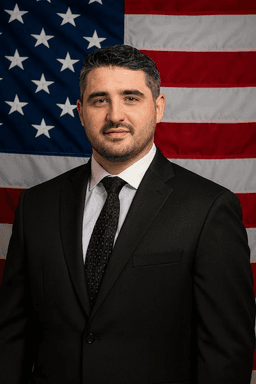 Your attorneyAndranik "Andy" Boyadzhyan, Esq.Founding Attorney. Licensed in Alabama.
Attorney advertising. Services are not available in all states.
By Andranik "Andy" Boyadzhyan, Attorney at Law. Meet the team
In Alabama, an injured motorcyclist claims directly against the driver who caused the crash, with no injury threshold to clear, but the state's contributory negligence rule means any fault the insurer can pin on the rider can end the claim outright. Top USA Law builds the evidence that puts the fault where it belongs and handles every insurer. The consultation is free.
You have a case if another driver's carelessness caused the crash, you were hurt, and the evidence shows the fault was the driver's alone. A driver who turned left across you at a light on US 280 in Birmingham, changed lanes into you on I-65 north of Montgomery, pulled out of a side road on the Cheaha climb without looking, or rolled through a stop sign on Government Street in Mobile was negligent, and Alabama law lets you recover what that negligence cost you, provided none of the blame lands on you.
That last condition is harder on riders than on anyone else. Alabama's contributory negligence rule and the bias against motorcyclists feed each other. An adjuster does not need to prove that you were speeding or weaving; the adjuster only needs to make a jury wonder, and a person on two wheels is an easy target for the suggestion. The physical evidence usually tells a different story, a driver who turned across the bike or drifted into its lane because the driver never registered a single headlight, and our first job is to put that story on the record.
The crash report carries more weight here than in most places. An Alabama Law Enforcement Agency trooper or a city officer fills out the state form, and adjusters read the contributing circumstances and any citation before they read anything else. When the officer wrote the driver's version, we go get what the report does not show: the crush on the car, the scrape path, the signal timing, footage from the businesses at the corner and the people who stopped.
A passenger on the bike has a separate claim and is usually the strongest claimant in the crash, because a passenger almost never did anything an insurer can call fault. Alabama has no injury threshold and no no fault system, so nothing about the severity of an injury decides whether a rider may claim. Road rash, a broken collarbone and a concussion are compensable from the first dollar.
Alabama is an at fault state. There is no personal injury protection and no no fault system, so a rider brings one claim against the driver who caused the crash for medical bills, lost income and pain and suffering together. While the claim is pending, your health insurance covers treatment and is reimbursed at the end. If you have no health coverage, many Alabama providers will treat under an agreement to be paid from the recovery.
Whether you recover at all depends on fault. Alabama follows pure contributory negligence, one of the harshest fault rules in the country. If the insurer can show that you were even slightly at fault, your claim can be barred entirely. The rule applies to riders exactly as it applies to drivers, passengers, pedestrians and cyclists, and insurers apply it to riders with particular energy. In every Alabama motorcycle case, the evidence that puts all of the fault on the driver is the whole case.
Ala. Code 32-7-6 requires liability insurance on every registered vehicle, motorcycles included, and a minimum policy covers very little after a helicopter flight to UAB Hospital. Insurers must offer uninsured motorist coverage, and most Alabama policies carry it. When the driver who hit you had a minimum policy, or none, or fled, your own uninsured and underinsured motorist coverage responds, and a policy belonging to a relative you live with sometimes responds as well. We read every policy in the household before we value a case.
A claim is worth the sum of what the crash took from you. Economic damages are the countable losses: emergency care, surgery and hardware, rehabilitation, the future procedures your surgeon expects, lost wages and benefits, and the reduction in earning capacity if you cannot go back to your trade. Non economic damages cover pain, scarring, lost activities and, for a rider who will not ride again, the loss of something that shaped their weekends. Alabama has no threshold and no general cap on these damages in a claim against a private driver.
A motorcycle has no crumple zone, no airbag and no door frame. A moderate speed impact that would dent a car breaks a leg, a pelvis, a wrist or a collarbone, tears skin deep enough for grafts, and injures the brain and spine. Several surgeries and months away from work are normal, and each surgery moves the claim into a higher tier. The bike and the destroyed gear, helmet, jacket, gloves and boots, form a separate property claim documented at replacement cost. Past results do not guarantee a similar outcome.
Fault is the other ceiling, and in Alabama it is a cliff rather than a slope. A claim that a comparative fault rule would pay at 80 percent after a 20 percent finding can be worth nothing here if a jury decides the rider contributed at all, on an argument as thin as lane position or a headlight the driver claims was off. That is why the value of an Alabama motorcycle case depends as much on the camera footage, the witnesses and the physical evidence as on the medical records.
Insurance sets the practical limit after fault. A minimum policy pays its limit no matter how badly the rider was hurt, so we look for the vehicle owner, an employer, a rideshare company's commercial policy during an active trip, and every uninsured and underinsured policy in your household. Venue matters as well: juries in Jefferson, Madison, Montgomery and Mobile Counties have each treated injured riders their own way, and adjusters price a case by the courthouse it would land in. We do not quote a number on the first call, because a number given before the medical picture is clear is a guess.
Expect the fault argument first, sharpened by the rider caricature. In a contributory negligence state, an insurer facing a motorcycle claim looks hardest for anything to attach to the rider, because attaching it ends the claim rather than trimming it. You were a few miles over on I-459. Your headlight was dim. You should have braked sooner. The recorded statement requested in the first days is where those arguments are born. Do not give it. We handle every call from every insurer once you retain us.
We answer with evidence gathered before it fades: the ALEA or city crash report and any citation, traffic and business camera footage, the driver's phone records, the crush and scrape patterns, event data from the car, and the witnesses who saw the turn. Where the physics are disputed we retain a reconstruction engineer. We also document who you are: a valid license with the motorcycle endorsement, a helmet and proper gear, a maintained bike and a clean record are not the caricature the insurer wants to present.
Alabama requires every motorcycle rider and passenger to wear a helmet. Because contributory negligence applies, a rider who was not wearing one will hear the argument that the violation contributed to the injury, and we answer it with medical evidence limited to the injuries a helmet would have prevented. A helmet has nothing to do with a shattered femur, a torn shoulder or a degloved hand.
Alabama also treats wantonness differently from ordinary carelessness. A driver who was drunk, racing, or texting at highway speed did more than make a mistake, and contributory negligence is not a defense to a wantonness claim. We plead it whenever the facts support it, and a conviction under Ala. Code 32-5A-191 for driving under the influence is strong evidence on that point. If the insurer still will not pay a fair number once treatment is complete, we file suit in the Circuit Court of the county where the crash happened and let discovery put the driver, the footage and the experts on the record.
Alabama gives you two years from the date of the crash to file a personal injury lawsuit under Ala. Code 6-2-38. Two years sounds like enough until you subtract the months of surgery and rehabilitation, the wait for a surgeon to say what the leg will do long term, and the negotiation that has to happen before suit. When the two years pass, the claim is gone.
A wrongful death action must be filed within two years of the death, and it is brought by the personal representative of the estate rather than by the family directly. Alabama's wrongful death damages are punitive in nature, measured by the wrongdoer's conduct rather than the family's financial loss, and they pass to the heirs. Because the measure is what the driver did, the evidence of how the crash happened matters even more than in an injury case. Opening the estate takes time, and we begin at once.
Public bodies have a much shorter fuse. If a MAX bus, a city police car, a county road crew truck, or a road hazard maintained by a city or county was involved, a sworn written claim must be filed with the city or county clerk within a short period measured in months, and a late or defective claim can end the case regardless of fault. Claims against the State itself are limited by sovereign immunity. We identify every government defendant at intake.
Insurance deadlines run separately and sooner. Your motorcycle policy requires prompt notice of the crash, and uninsured and underinsured motorist coverage requires that you notify your own carrier before you settle with the other driver. Settling without that notice can forfeit the coverage you paid for. In Alabama your own coverage is often the money that actually pays, so protecting it comes first.
Go to a hospital the same day, even if you rode the bike home. Adrenaline hides fractures and concussions for hours, and a gap between the crash and the first medical visit is the first thing an adjuster will use against you. UAB Hospital in Birmingham, Huntsville Hospital and USA Health University Hospital in Mobile are the state's Level I trauma centers, and Baptist Medical Center South in Montgomery and DCH Regional Medical Center in Tuscaloosa serve their regions. Tell every provider you were on a motorcycle and how the crash happened.
Make sure a crash report exists and get the report number. A driver in an injury crash must stop and remain at the scene under Ala. Code 32-10-1, and the report the trooper or officer writes is the first document every insurer reads. Before the scene is cleared, photograph the car, the bike, the point of impact, the scrape marks, the signal, and the sight line from where the driver sat. Collect the driver's name, license, plate and insurance card, and the phone number of everyone who stopped. In a contributory negligence state, a witness who saw the driver turn is worth more than anything else you leave with.
Look for cameras before you leave. Gas stations, storefronts, traffic signals, MAX buses and dash cameras in the cars around you record most Alabama roads, and most of that footage is overwritten within days. Do not let the bike be repaired or sold for salvage until we have documented it, and keep the helmet, jacket, gloves and boots. They prove the impact and are part of the property claim. Tell us where the crash happened so preservation letters go out immediately.
Notify your own insurer that a crash occurred and that you were hurt. Do not give a recorded statement to the other driver's insurer and do not sign anything from them. Do not discuss fault with anyone but your lawyer, including in riding group chats or on social media, because a single sentence conceding a small share of blame can end an Alabama claim. Keep a file of every bill, appointment and missed shift, with a short daily note on pain. That file becomes the backbone of the demand.
See if you have a case
Three answers and a phone number. An attorney reviews your situation and calls you back, free.
Motorcycle Crash
$875,000
Insurer offered$40,000
Leg amputation after a left turn collision. The insurer offered $40,000.
Rear End Collision
$2,300,000
Insurer offered$85,000
Spinal cord injury after a rear end crash. The insurer offered $85,000.
T Bone Accident
$1,800,000
Insurer offered$120,000
Broken pelvis and internal bleeding at an intersection. The insurer offered $120,000.
Every case is different. Past results do not guarantee, warrant, or predict a similar outcome.
Top USA Law does not keep an office in Alabama. We meet Alabama riders by phone, by video, at home or at the hospital bedside, and everything in the case runs through one number, (877) 411-5291, answered around the clock. Andranik "Andy" Boyadzhyan, the firm's founding attorney, is licensed in Alabama and handles Alabama matters. If you are in a bed at UAB or Huntsville Hospital, we come to you.
Alabama motorcycle lawsuits are filed in the Circuit Court of the county where the crash happened or where the defendant lives. For our clients that is most often the Jefferson County Circuit Court, which sits in a Birmingham division and a Bessemer division, the Madison County Circuit Court in Huntsville, the Montgomery County Circuit Court, the Mobile County Circuit Court and the Tuscaloosa County Circuit Court.
The crashes we see most come from predictable places. In Birmingham, left turns across riders on US 280 and the surface streets around downtown, and lane changes into bikes on I-65 and I-459. In Huntsville, Memorial Parkway, University Drive and I-565. In Mobile, Airport Boulevard, Government Street and the I-10 and I-65 approaches. On the Talladega and Cheaha mountain roads, it is cars crossing the center line in blind curves and gravel washed onto the pavement after rain. The spring and fall riding seasons bring the largest crowds to those roads, and the largest share of crashes with drivers who did not expect to meet a bike.
We handle left turn and lane change crashes, rear end crashes at signals, crashes with rideshare and delivery drivers, hit and run crashes where the rider was left in the road, drunk driving crashes, and single vehicle crashes caused by pavement defects, gravel and construction hazards on the interstates and the state routes. Each one starts with the same question, who had the right of way, and the same answer, evidence.
We serve Alabama clients by phone, video and in person appointments arranged case by case.
Contributory negligence is Alabama's general fault rule and comes from case law rather than a statute. A rider or passenger whose own negligence contributed to the crash in any degree can be barred from recovering. It is the reason evidence gathered in the first days decides Alabama motorcycle cases. Contributory negligence is not a defense to a wantonness claim against a drunk, racing or grossly distracted driver.
Ala. Code 6-2-38 sets the two year deadline to file a personal injury lawsuit, measured from the date of the crash. A wrongful death action has its own two year deadline measured from the death, is brought by the personal representative of the estate, and produces damages that are punitive in nature, measured by the wrongdoer's conduct and paid to the heirs.
Ala. Code 32-7-6 requires liability insurance on every registered vehicle, motorcycles included, and sets the minimum limits a policy must carry. Insurers must offer uninsured motorist coverage, and most Alabama policies include it. Because minimum limits are low and contributory negligence can bar the claim against the driver, your own coverage and a household relative's coverage are part of every Alabama motorcycle case.
Alabama's helmet law requires every motorcycle rider and passenger to wear one. A violation is an argument the insurer will make under the contributory negligence rule, and we answer it with medical evidence limited to the injuries a helmet would have prevented. A helmet violation says nothing about who caused the crash, and we keep the two questions separate. Riders who were wearing one should say so at the hospital so the record reflects it.
Ala. Code 32-10-1 requires a driver involved in an injury crash to stop and remain at the scene, and makes leaving a crime. Ala. Code 32-5A-191 prohibits driving under the influence. A conviction under either can be used in the civil case, and drunk or hit and run driving often supports a wantonness claim, which contributory negligence does not defeat. Alabama's Dram Shop Act also permits a claim against a licensed seller that served alcohol contrary to law to the driver who then hit you.
Hurt in a crash? Talk it through for free.
Alabama filing deadlines and insurance notice rules can be short. A free call tells you where your clock stands.
Last reviewed by Andranik "Andy" Boyadzhyan, Esq., October 2026.
Three fields. We respond fast, day or night.
I was in an Uber that got T boned. Both insurance companies were pointing fingers. Top USA Law cut through the mess and got me $875,000.
Client testimonials. Testimonials are not a guarantee, warranty, or prediction of the outcome of your case.
Top USA Law. Services are not available in all states.
Takes 30 seconds. No obligation.