

Rear End Collision
$2,300,000
Insurer offered$85,000
Spinal cord injury after a rear end crash. The insurer offered $85,000.
Serving Alabama
Hurt in a crash? The insurance company already has a team working on your claim. You should too. A free call tells you where you stand.
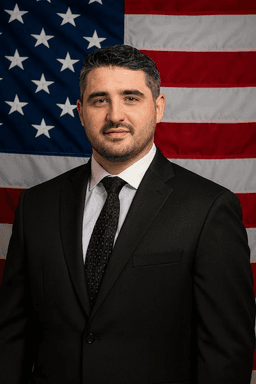 Your attorneyAndranik "Andy" Boyadzhyan, Esq.Founding Attorney. Licensed in Alabama.
Attorney advertising. Services are not available in all states.
By Andranik "Andy" Boyadzhyan, Attorney at Law. Meet the team
In Alabama, a cyclist hit by a car claims directly against the driver's liability insurer for medical bills, lost wages, the bike and pain and suffering, with no no fault coverage to fall back on, and the claim survives only if the evidence shows the rider did nothing wrong. Top USA Law locks down the footage, the ride data and the driver's phone records. The consultation is free.
You have a case if a driver turned across your path, passed too close, opened a door into you, ran a signal or was speeding, drunk or on a phone when the car hit you, and the evidence shows you were riding where you were allowed to ride. A driver who right hooked a commuter on 1st Avenue North in Birmingham, drifted onto the shoulder of a Cheaha climb, or turned left into a rider on University Drive in Huntsville was negligent, and Alabama law lets you recover what that negligence cost.
Alabama's rules of the road treat a bicycle as a vehicle. A driver must yield when turning across a cyclist traveling straight, must pass at a safe distance, must not drive or park in a bike lane and must look before opening a door into traffic. A rider, in turn, must ride with traffic, obey signals and use lights after dark. The insurer will study every one of those rider duties looking for a violation, because in Alabama a violation can end the claim rather than shrink it.
Contributory negligence applies to Alabama cyclists in full. If the insurer can persuade a jury that you rode against traffic, ran the light, swerved out of the lane or had no rear light at dusk, the claim can be barred entirely. That makes an Alabama bicycle case different from almost anywhere else: the proof that you did nothing wrong is not a supporting detail. It is the case. Your lane position, your lights, your signal and the driver's phone records have to be nailed down before the footage cycles.
The one exception is wantonness. A driver who was drunk, racing, or reading a phone while passing a group ride did more than fail to pay attention, and contributory negligence is not a defense to a wantonness claim. That is why a conviction under the DUI statute or a phone record showing a text at the moment of impact does more than prove fault. It removes the insurer's best argument.
Alabama has no no fault system, so there is no personal injury protection to pay a cyclist's bills as they arrive. Your health insurance covers treatment while the claim is open, and the claim against the driver reimburses those costs, along with lost wages, the bike and pain and suffering, at the end. If you have no health coverage, many Alabama providers will treat under an agreement to be paid from the recovery, and we arrange that in the first days.
The driver's liability policy is the primary source. Ala. Code 32-7-6 requires liability insurance on every registered vehicle, but a minimum policy is small next to a collarbone plated at UAB or a pelvis rebuilt at Huntsville Hospital. If the driver was working, a delivery or rideshare company's commercial policy may respond. If the car belonged to someone else, the owner's policy may respond too. We identify every policy behind the vehicle in the first week.
Your own household auto insurance follows you onto the bike. Uninsured and underinsured motorist coverage on your policy, or on a policy belonging to a relative you live with, responds when the driver had too little coverage, none, or drove away. Optional medical payments coverage on a household policy can pay early bills regardless of fault. A cyclist with no auto policy in the household is limited to what can be found on the driver's side, which makes identifying the driver the priority.
Hit and run is common in bicycle crashes because the rider is on the ground before the plate can be read. Ala. Code 32-10-1 makes leaving the scene of an injury crash a crime. Uninsured motorist coverage responds to an unidentified driver, and insurers often demand proof beyond the rider's word that a vehicle was involved, so the crash report, the injuries, the paint on the frame, the footage and any witness are gathered immediately while the police search for the car.
Cyclist injuries run severe because there is nothing between you and the car or the road. Broken collarbones, wrists, hips and femurs, facial fractures, traumatic brain injury from the fall to the pavement, spinal injury and road rash deep enough to need grafts are common. The claim is built from every medical bill, the future care your doctors expect, lost wages, the earning capacity you have lost, out of pocket costs and pain and suffering. Alabama imposes no threshold and no general cap in an injury case.
The bike and the gear are part of the claim. A carbon frame cracked at the head tube, a helmet, a computer and cycling clothing add up quickly, and we document the loss with the original receipts and a written estimate from a bike shop. Severity and permanence set the injury tier. A collarbone in a sling sits at the low end. A hip fixed with hardware or a brain injury with lasting deficits sits well above it. Past results do not guarantee a similar outcome.
In Alabama the fault evidence is the other half of value. A claim worth a great deal on the medical side is worth nothing if a jury attributes any share of the crash to the rider, so an insurer prices an Alabama bicycle case first by how cleanly the lane position, the lights, the signal and the driver's attention can be proven. Footage of you riding straight in the lane with a rear light blinking while the driver turned across you is worth more than any expert.
Venue and insurance set the practical ceiling. A Jefferson County jury, a Madison County jury and a Mobile County jury each have their own history with injury cases, and adjusters know it. Available coverage, from the driver's policy through your own household's uninsured and underinsured coverage, caps what a claim can pay in practice. We do not quote a figure until the prognosis is in writing, and then we support the demand with the medical record and the fault evidence together.
Expect the adjuster to say you came out of nowhere, rode against traffic, ran the light, swerved into the car or could not be seen. In a comparative fault state that argument shaves the claim. In Alabama it is a bid to end it, so the adjuster makes it in nearly every bicycle file and looks for the material in your own words. The recorded statement requested in the first days is where that material comes from. Do not give one. We take every call from the day you retain us.
We answer with proof gathered before it is gone. The file from your bike computer or ride tracking app, which fixes your speed, your line and the second the ride ended. Footage from your helmet camera, the driver's dash camera, storefronts, gas stations, apartment lobbies, MAX buses and traffic signal cameras. Signal timing records kept by the city. The driver's phone records, obtained by subpoena once suit is filed. The scrape on the frame and the dent on the fender, which tell a reconstruction engineer where and how hard the car struck.
Speed and attention undo most fault arguments. A driver going a reasonable speed and watching the road has time to react to a rider who has been visible for several seconds, and a witness who says the driver never braked or was looking down says more about fault than where your wheel was. A driver who was drunk, racing or texting may have acted wantonly, and contributory negligence is not a defense to a wantonness claim.
On damages, the insurer will send you to its own doctor and argue that your imaging shows age rather than trauma. We answer with your treating physicians and objective findings. If the insurer will not pay a fair number once treatment is complete, we file suit in the Circuit Court of the county where the crash happened, subpoena the phone records and the footage that were refused, and put the driver under oath. Most cases settle before trial, and they settle for more when a jury is the alternative.
Alabama gives you two years from the date of the crash to file a personal injury lawsuit under Ala. Code 6-2-38. Serious cycling injuries take months to reach a prognosis, and the negotiation that follows takes more, so two years is shorter than it sounds. When it passes, the claim is over no matter how clear the footage was or how badly you were hurt.
A wrongful death claim must be filed within two years of the death by the personal representative of the estate. Alabama's wrongful death damages are punitive in nature, measured by the driver's conduct rather than the family's loss, and they pass to the heirs. Because the measure is what the driver did, the evidence that the driver was speeding, impaired or distracted carries the case, and we open the estate immediately so nothing waits on paperwork.
Bicycle cases bring in public defendants more often than car cases. A MAX bus in Birmingham or a city bus in Huntsville, Montgomery or Mobile, or a bike lane that ended in a storm grate, a trail crossing with no warning, or a signal that never detected a bicycle can make a city or county responsible. Those claims require a sworn written claim filed with the city or county clerk within a short period measured in months, and a late or defective claim ends the case. Claims against the State are limited by sovereign immunity.
Evidence deadlines are shorter still. Storefront and bus footage is overwritten within days. Ride data can be lost with a dead battery or a replaced phone. Signal timing records and the driver's phone records survive longer but must be requested through the right channel. Your own uninsured motorist coverage requires prompt notice and requires that your insurer hear from you before you accept anything from the driver's side. A quick call is how most of these deadlines are met.
Get medical care the same day even if you rode home. A concussion, internal bleeding and a scaphoid or rib fracture do not always show until the adrenaline fades. UAB Hospital in Birmingham, Huntsville Hospital and USA Health University Hospital in Mobile are the state's Level I trauma centers. Baptist Medical Center South in Montgomery and DCH Regional Medical Center in Tuscaloosa serve their regions. Tell every provider you were struck by a car while cycling.
Make sure police come and a report is written, and get the report number. In the cities that is the Birmingham, Huntsville, Montgomery, Mobile or Tuscaloosa police department; on the highways and the county roads it is Alabama Law Enforcement Agency troopers or the county sheriff. Photograph the car, its plate and damage, the exact spot where you were hit, the bike lane or shoulder, the signal, the lighting and your injuries. Write down what the driver said. A driver who says "I never saw you" has just described inattention.
Keep the bike and the helmet exactly as they are. Do not repair the frame, do not discard the cracked helmet and do not wash the jersey. The bent fork, the crushed wheel and the crack in the shell are physical proof of where the car struck and how hard. Save the ride: export the file from your bike computer or app before it syncs over, and pull the footage from any helmet or handlebar camera. Find the witnesses and note every camera in view, and tell us the location the same day.
Do not speak to the driver's insurer, do not sign anything from them, and do not post about the crash. In Alabama a single sentence such as "I was going pretty fast" or "I did not see the light change" can end a claim. Notify your own auto insurer, if you have one, that you were struck while riding. Keep a file of every bill, appointment and missed shift, and write a short daily note about pain and what you cannot do.
See if you have a case
Three answers and a phone number. An attorney reviews your situation and calls you back, free.
Rear End Collision
$2,300,000
Insurer offered$85,000
Spinal cord injury after a rear end crash. The insurer offered $85,000.
T Bone Accident
$1,800,000
Insurer offered$120,000
Broken pelvis and internal bleeding at an intersection. The insurer offered $120,000.
Drunk Driver Victim
$1,500,000
Insurer offered$50,000
Traumatic brain injury caused by an impaired driver. The insurer offered $50,000.
Every case is different. Past results do not guarantee, warrant, or predict a similar outcome.
Top USA Law has no office in Alabama. We meet Alabama cyclists by phone, by video, at home or at the hospital, and every case runs through one number, (877) 411-5291, answered around the clock. Andranik "Andy" Boyadzhyan, the firm's founding attorney, is licensed in Alabama and handles Alabama bicycle cases. If you cannot leave the hospital or your bed, we come to you.
Alabama bicycle accident lawsuits are filed in the Circuit Court of the county where the crash happened, most often for our clients the Jefferson County Circuit Court in its Birmingham or Bessemer division, the Madison County Circuit Court in Huntsville, the Montgomery County Circuit Court, the Mobile County Circuit Court and the Tuscaloosa County Circuit Court. A claim against a city or county goes to the clerk first and to the Circuit Court only after that step.
The crashes we see follow the places people ride. In Birmingham, the Jones Valley Trail and the Lakeshore Trail and the streets that connect them, 1st Avenue North downtown and US 31 through the southern suburbs. East of the city, the Chief Ladiga Trail and the road crossings along it, and the Cheaha climbs. In Huntsville, the greenways and the crossings on Memorial Parkway and University Drive. In Mobile, the Bayfront and Government Street. In Tuscaloosa, University Boulevard around the campus.
We handle bicycle claims against private drivers, delivery and rideshare drivers on the clock, commercial trucks, MAX and city buses, and the cities and counties responsible for a bike lane or trail crossing that was unsafe by design or by neglect. Doorings, right hooks, left crosses, close passes from behind and hit and run drivers make up most of the files. We sort out who owes what before the first demand goes out.
We serve Alabama clients by phone, video and in person appointments arranged case by case.
Contributory negligence is Alabama's general fault rule and comes from case law. A cyclist whose own negligence contributed to the crash in any degree can be barred from recovering, and insurers apply the rule to riders as hard as they apply it to pedestrians. Contributory negligence is not a defense to a wantonness claim, which is why proof that the driver was drunk, racing or texting changes the case.
Alabama's rules of the road give a bicycle the rights and duties of a vehicle. A driver must yield when turning across a rider, pass at a safe distance, stay out of a bike lane and look before opening a door. A rider must ride with traffic, obey signals and use lights after dark. Which side broke which rule is a question of feet, seconds and lumens, and the footage and the ride data answer it.
Ala. Code 6-2-38 sets the two year deadline to file an injury lawsuit from the date of the crash. A wrongful death claim has its own two year deadline from the death, is brought by the personal representative and produces damages that are punitive in nature. A claim against a city or county requires a sworn written claim with the clerk within a short period measured in months.
Ala. Code 32-7-6 requires liability insurance on every registered vehicle, and uninsured motorist coverage, which insurers must offer, follows you onto a bicycle. Ala. Code 32-10-1 requires a driver in an injury crash to stop and remain at the scene, and Ala. Code 32-5A-191 prohibits driving under the influence. A conviction under either can be used in the civil case and supports wantonness, which takes contributory negligence off the table.
Hurt in a crash? Talk it through for free.
Alabama filing deadlines and insurance notice rules can be short. A free call tells you where your clock stands.
Last reviewed by Andranik "Andy" Boyadzhyan, Esq., October 2026.
Three fields. We respond fast, day or night.
My wife was killed by a drunk driver. Top USA Law handled our wrongful death case with such compassion. They got us $1.2 million.
Client testimonials. Testimonials are not a guarantee, warranty, or prediction of the outcome of your case.
Top USA Law. Services are not available in all states.
Takes 30 seconds. No obligation.