

Drunk Driver Victim
$1,500,000
Insurer offered$50,000
Traumatic brain injury caused by an impaired driver. The insurer offered $50,000.
Serving Alabama
Hurt in a crash? The insurance company already has a team working on your claim. You should too. A free call tells you where you stand.
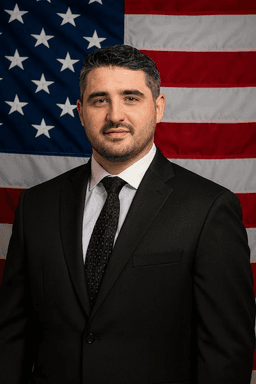 Your attorneyAndranik "Andy" Boyadzhyan, Esq.Founding Attorney. Licensed in Alabama.
Attorney advertising. Services are not available in all states.
By Andranik "Andy" Boyadzhyan, Attorney at Law. Meet the team
In Alabama, a person hit by a drunk driver claims against that driver for medical bills, lost wages and pain and suffering, and the arrest, the breath or blood result and the conviction do most of the work of proving fault. Alabama's harsh fault rule loses its force against a driver who was drinking. Top USA Law gathers the criminal file and deals with every insurer. The consultation is free.
In nearly every case, yes. A driver who left Five Points South or Lakeview and crossed the center line on Highland Avenue, ran a light on 20th Street after closing time, drifted across I-565 on the way home from downtown Huntsville, came off Dauphin Street and rear ended a stopped car on I-10, or left the Strip in Tuscaloosa and hit a pedestrian on University Boulevard did more than make a mistake. Driving drunk is negligence on its face, and Alabama law lets you recover what it cost you.
The criminal charge and your claim are separate. A prosecutor must prove the DUI beyond a reasonable doubt. Your claim only has to show that the driver more likely than not caused the crash, which is why a civil case can succeed even when the charge is reduced or dismissed. The breath or blood result, the officer's notes, the field sobriety video and the bar tab are evidence in your case regardless of what happens in criminal court.
Alabama's general fault rule is pure contributory negligence, which can bar a claim if the victim contributed to the crash in any degree. Drunk driving is where that rule loses its teeth. Alabama treats driving while intoxicated as the clearest case of wantonness, a conscious disregard for the safety of others, and contributory negligence is not a defense to a wantonness claim. A person who was a few miles over the limit on I-459 when a drunk driver crossed into the lane still has a case.
The claim is not limited to people in other vehicles. Someone riding with the drunk driver can claim against that driver too. A pedestrian crossing 7th Avenue South at last call, a cyclist on the Jones Valley Trail crossing, a motorcyclist on Memorial Parkway and a family in a car on Airport Boulevard all have claims. When the insurer argues that a passenger knew the driver was impaired, we answer with what the passenger actually saw before getting in.
The driver's liability insurer pays first. Alabama is an at fault state with no no fault layer, so your claim for medical care, wages and pain and suffering goes to that insurer as one package. Ala. Code 32-7-6 requires liability insurance on every registered vehicle, but a driver who drinks and drives often carries the minimum, and a minimum policy is spent quickly after a night at UAB Hospital or Huntsville Hospital.
Alabama's Dram Shop Act permits a claim against a licensed seller that served alcohol contrary to law, including to a visibly intoxicated person or a minor, who then caused a crash. That reaches the bar in Lakeview that kept pouring, the restaurant on Dauphin Street that served a patron who could not stand, and the store that sold to a teenager. These claims live or die on receipts, security video and staff accounts, and every one of those disappears within days.
The owner of the vehicle is the next source. When the drunk driver was in a borrowed car, a company truck or a parent's SUV, the owner's policy may respond, and an owner who handed keys to someone known to be drinking faces a separate negligent entrustment claim. If the driver was on the clock, whether delivering food or carrying a rideshare fare, the employer's or the platform's commercial policy joins the case.
Your own coverage is often what makes the claim whole. Alabama insurers must offer uninsured motorist coverage, and most policies carry it. It responds when the drunk driver had no insurance, or fled and was never found, and underinsured coverage pays when the driver's limits are too low for your injuries. A policy belonging to a relative you live with can sometimes respond as well. We read every policy in the household before we value the claim.
The claim covers what the crash took from you: hospital and physician bills, the future care your doctors expect, lost wages, reduced earning capacity if you cannot go back to your job, and out of pocket costs such as travel to treatment and help at home. It also covers pain, scarring, the activities you have lost and the strain on your marriage and family. Alabama sets no injury threshold and no general cap on these damages against a private driver.
Alabama allows punitive damages against a driver whose conduct was wanton, and driving drunk is the textbook example. A high blood alcohol result, a prior DUI or a refusal to take the test all strengthen the argument. The catch is that standard auto policies often exclude punitive damages, so an award against a driver with no assets may never be collected. We look at the driver's finances before deciding whether to pursue punitive damages or use them as leverage in settlement.
When the crash kills someone, Alabama's wrongful death damages are punitive in nature, measured by the wrongdoer's conduct rather than the family's financial loss, and they pass to the heirs. A drunk driver's conduct is exactly what that measure is built to weigh, which is why the criminal file matters even more in a fatal crash than in an injury case.
Severity and permanence move the number most. A sprain that heals with a course of therapy sits near the bottom of the range. A fracture with hardware sits above it. A brain injury or a spinal cord injury is valued in its own category, against every policy that can be found. Venue matters too: adjusters price a case bound for Jefferson County differently from one bound for a rural county. We do not quote a figure before your doctors can describe your future. Past results do not guarantee a similar outcome.
Expect it. An insurer that cannot deny fault when its driver blew twice the limit argues about everything else: that your MRI shows age rather than trauma, that your treatment ran too long, that you contributed in some small way and the claim is barred. The contributory negligence argument is the one to take seriously, because it works against ordinary drivers, and we answer it by pleading wantonness from the first letter.
On causation, we respond with your treating physicians, objective imaging and, where needed, a narrative report tying the injury to the crash. On treatment, keep every appointment. A gap in care is the adjuster's favorite exhibit and the easiest one to avoid. On the contributory negligence argument, the driver's blood alcohol result, the arrest report and the DUI conviction are the answer, and we obtain all three.
A quick offer of the policy limit often comes with a release that ends the claim against everyone, including the bar and your own underinsured carrier. Do not sign it. Underinsured coverage usually requires that your own insurer be notified before you settle with the drunk driver, and a release signed early can forfeit money you already paid for. We sequence the settlements so that every source stays open.
If the insurer will not pay a fair number once treatment is complete, we file suit in the Circuit Court of the county where the crash happened and use discovery to put the driver, the arresting officer, the bar's records and the medical experts on the record. Most Alabama cases still settle before trial. An insurer pays more once it knows a Jefferson County jury is going to hear the bar tab read aloud.
Alabama gives you two years from the date of the crash to file a personal injury lawsuit under Ala. Code 6-2-38. A wrongful death action must be filed within two years of the death and is brought by the personal representative of the estate, so opening the estate is the first step and we start it immediately. When a family member survives for weeks and then passes, the two dates differ, and we calendar both.
The criminal DUI case under Ala. Code 32-5A-191 moves on its own schedule and does nothing to pause yours. A plea can come within months; a contested case can take more than a year. We do not wait. We obtain the arrest report, the test results and the body camera footage while the charge is pending, follow the docket, and make sure no plea agreement quietly includes a release of your civil claim. Restitution ordered in criminal court rarely covers more than out of pocket costs.
Public entities run on a much shorter fuse. If a MAX bus, a police car or a county road crew truck was involved in the crash, a sworn written claim must be filed with the city or county clerk within a short period measured in months, and a late or defective claim can end the case no matter how drunk the other driver was. Claims against the State itself are limited by sovereign immunity. We identify every government defendant at intake.
Insurance deadlines run sooner than any statute. Every policy requires prompt notice, and uninsured and underinsured coverage requires that you notify your own carrier before settling with the driver. Evidence has an even shorter life. Bar receipts and security video are gone within days, and a Dram Shop Act claim that depends on them is lost long before two years pass.
Go to a doctor before the day is over, even if you think you walked away with nothing worse than a scare. Adrenaline masks injuries, and an adjuster treats any delay before your first visit as proof that the crash did not hurt you. UAB Hospital in Birmingham, Huntsville Hospital and USA Health University Hospital in Mobile are the state's Level I trauma centers, and Baptist Medical Center South in Montgomery and DCH Regional Medical Center in Tuscaloosa serve their regions. Make sure every chart says the injury came from a collision with an impaired driver.
Get the crash report number and the name of the agency. An Alabama Law Enforcement Agency trooper handles most interstate and county road crashes, and the Birmingham, Huntsville, Montgomery, Mobile and Tuscaloosa police departments handle the city streets. A driver in an injury crash must stop and remain at the scene under Ala. Code 32-10-1, and one who fled to avoid a breath test is often found later through plates and video. Find out whether the driver was taken into custody and whether a breath or blood sample was collected.
The receipts and the video are what disappear. Tell us anything you learned about where the driver spent the evening. A bar in Five Points South, a patio in Lakeview, a taproom in downtown Huntsville, a Dauphin Street club or a Strip bar keeps card records and security footage for a short time, and a preservation letter in the first days is the only way to hold them. The same is true of traffic cameras, storefronts and MAX buses near the crash. Take photographs of both cars, the roadway and your own injuries before the tow truck arrives.
Report the crash and your injuries to your own carrier. Give the drunk driver's insurer nothing: no recorded statement, no medical authorization, no signature. Do not discuss fault with anyone but your lawyer, on the phone or online. Then keep a file: every bill, every appointment, every missed day of work and a short daily note about pain. Months later that file, beside the criminal record, is what the demand is built on.
See if you have a case
Three answers and a phone number. An attorney reviews your situation and calls you back, free.
Drunk Driver Victim
$1,500,000
Insurer offered$50,000
Traumatic brain injury caused by an impaired driver. The insurer offered $50,000.
Rear End Collision
$2,300,000
Insurer offered$85,000
Spinal cord injury after a rear end crash. The insurer offered $85,000.
T Bone Accident
$1,800,000
Insurer offered$120,000
Broken pelvis and internal bleeding at an intersection. The insurer offered $120,000.
Every case is different. Past results do not guarantee, warrant, or predict a similar outcome.
Top USA Law does not keep an office in Alabama. We meet Alabama clients by phone, by video, at home or at the hospital, and everything in the case runs through one number, (877) 411-5291, answered around the clock. Andranik "Andy" Boyadzhyan, the firm's founding attorney, is licensed in Alabama and handles Alabama matters. If you are in a bed at UAB or Huntsville Hospital, we come to you.
The same handful of streets produce most of the cases we see. In Birmingham, drivers leaving Five Points South and Lakeview head out on Highland Avenue, 20th Street, US 280 and the I-65 and I-459 ramps toward the suburbs. In Huntsville, downtown empties onto Memorial Parkway, I-565 and US 72. In Mobile, Dauphin Street feeds Airport Boulevard, I-65 and the I-10 Bayway. In Tuscaloosa, the Strip empties onto University Boulevard, McFarland Boulevard and I-20/59. In Montgomery, the downtown bars feed the Eastern Boulevard and I-85.
Alabama drunk driving lawsuits are filed in the Circuit Court of the county where the crash happened or where the defendant lives. For our clients that is most often the Jefferson County Circuit Court, in its Birmingham and Bessemer divisions, the Madison County Circuit Court in Huntsville, the Mobile County Circuit Court, the Tuscaloosa County Circuit Court and the Montgomery County Circuit Court. The criminal DUI case is often in the same courthouse, and we follow it there.
We handle crashes with drunk rideshare and delivery drivers, drunk drivers in company vehicles, underage drivers served at a bar or a store, wrong way drivers on the interstates and hit and run crashes where the driver fled to avoid a breath test. Football weekends, holiday nights and the hour after last call produce a steady share of the rest.
We serve Alabama clients by phone, video and in person appointments arranged case by case.
Ala. Code 32-5A-191 prohibits driving under the influence of alcohol or drugs. A conviction or a guilty plea can be used in the civil case to establish that the driver was impaired, and a pending charge still gives us the arrest report and the test results. Ala. Code 32-10-1 requires a driver in an injury crash to stop and remain at the scene, and leaving is a crime that impaired drivers commit to avoid a test.
Contributory negligence is Alabama's general fault rule and comes from case law rather than a statute. It can bar a claim when the victim contributed to the crash in any degree, which is why ordinary Alabama cases turn on early evidence. Drunk driving is the clearest example of wantonness, and contributory negligence is not a defense to a wantonness claim, so the rule that makes other Alabama cases hard rarely controls this one.
Ala. Code 6-2-38 sets the two year deadline to file a personal injury lawsuit, measured from the crash. A wrongful death action has its own two year deadline measured from the death, is brought by the personal representative of the estate, and produces damages that are punitive in nature, measured by the driver's conduct and paid to the heirs. Neither deadline protects the bar video or the receipts.
Ala. Code 32-7-6 requires liability insurance on every registered vehicle and sets the minimum limits. Insurers must offer uninsured motorist coverage, and most policies carry it. Alabama's Dram Shop Act permits a claim against a licensed seller that served alcohol contrary to law, including to a visibly intoxicated person or a minor, who then caused a crash, and we investigate receipts, video and staff quickly when the facts support it.
Hurt in a crash? Talk it through for free.
Alabama filing deadlines and insurance notice rules can be short. A free call tells you where your clock stands.
Last reviewed by Andranik "Andy" Boyadzhyan, Esq., October 2026.
Three fields. We respond fast, day or night.
Excelente servicio. Hablaron español conmigo y me explicaron todo el proceso. Recibí $320,000 por mi accidente de motocicleta.
Client testimonials. Testimonials are not a guarantee, warranty, or prediction of the outcome of your case.
Top USA Law. Services are not available in all states.
Takes 30 seconds. No obligation.