

Rear End Collision
$2,300,000
Insurer offered$85,000
Spinal cord injury after a rear end crash. The insurer offered $85,000.
Serving Alabama
Hurt in a crash? The insurance company already has a team working on your claim. You should too. A free call tells you where you stand.
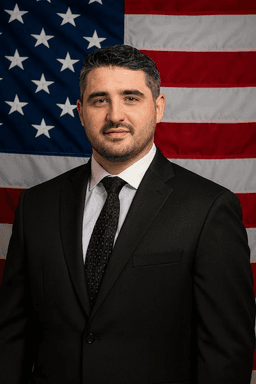 Your attorneyAndranik "Andy" Boyadzhyan, Esq.Founding Attorney. Licensed in Alabama.
Attorney advertising. Services are not available in all states.
By Andranik "Andy" Boyadzhyan, Attorney at Law. Meet the team
In Alabama, a person hurt on a bus, hit by one, or struck while waiting at a stop can recover medical bills, lost wages and pain and suffering from the operator or driver at fault. A public transit bus adds a sworn claim deadline measured in months, and the fault rule rewards clean evidence. Top USA Law identifies the operator and secures the video. The consultation is free.
You have a case if the negligence of a bus driver, the operator behind that driver, or another motorist caused your injury, and the evidence shows the fault was not yours. Alabama holds a bus company or transit system to the standard of a common carrier, a heightened duty of care toward the people it carries. A MAX driver who pulled from a downtown Birmingham stop while a rider was still in the aisle, an Orbit operator in Huntsville who took a turn hard enough to throw riders across the bus, or a school bus driver who left a child in the road all breached that duty.
Drivers hit by buses have the same claim they would have against any working driver, with the employer answering for the person at the wheel. A bus is long, heavy and slow to stop, and the crashes we see most involve a bus swinging wide through a turn on 20th Street North, changing lanes on Memorial Parkway without seeing a car in its blind spot, or pulling out from a stop on Government Street in Mobile into traffic that had no room. The bus's own cameras usually show exactly what happened.
Pedestrians struck at a stop are the most seriously injured people in this practice and often the clearest cases. A passenger stepping off the M in Montgomery or the Wave in Mobile is walking where the bus placed them, and a driver who squeezes past the stopped bus or fails to stop for a school bus with its arm out is responsible for the result. The bus driver who lets riders off short of the curb, or closes the door on a bag strap, can be responsible as well.
Alabama's fault rule shapes every case, and bus cases are where it hurts least. Under contributory negligence, a person whose own carelessness contributed to the injury can be barred from recovery entirely. A seated passenger almost never did anything a jury could call fault, which makes a rider one of the strongest claimants in the state. A driver or a pedestrian has to prove the fault sat entirely with the other side, and that proof is gathered in the first days.
The operator of the bus is responsible for the driver's negligence, and who that operator is decides the deadline, the paperwork and the money. A private charter carrier taking a team to a game, an intercity bus on I-65, and a private company driving school routes under contract all carry commercial liability policies, and the claim proceeds on ordinary rules. A public bus is a different case from the first phone call.
MAX in Birmingham, Huntsville's Orbit, the M in Montgomery, the Wave in Mobile, Tuscaloosa Transit and buses run by school districts are public entities. A claim against a city or county in Alabama requires a sworn written claim filed with the clerk within a short period measured in months, and a claim that is late, unsworn or filed in the wrong office can end the case no matter how clear the video. Alabama also limits what a city or county can be made to pay on a tort claim, which is one more reason to look for every other responsible party.
Some city systems contract the driving to a private company. When that is true the contractor's commercial policy may be the primary source of recovery and the ordinary two year rule may apply to the contractor, but we serve the sworn claim on the city anyway, because guessing wrong about which rule applies is not a risk worth taking. The same goes for a school district that outsources its routes.
When a private car caused the crash, that driver's liability insurer pays the bus passenger's claim, whether the bus was public or not. Ala. Code 32-7-6 requires liability coverage on every registered vehicle, and when the driver carried the minimum or nothing, or drove away in violation of Ala. Code 32-10-1, the uninsured motorist coverage on your own policy or a relative's policy responds. Your health insurance covers treatment while the claim is pending, and the recovery reimburses it at the end. Alabama has no personal injury protection.
A claim is worth the total of what the injury cost and will cost. Economic damages cover the ambulance, the emergency room, imaging, surgery, therapy, future treatment your doctors expect, wages lost during recovery and earning capacity lost if you cannot return to your job. Non economic damages cover pain, scarring, the loss of activities and the strain on a family. Against a private operator or driver, Alabama sets no threshold and no general cap on those damages.
The injuries follow the type of crash. A fall inside a moving bus produces broken wrists, hips and shoulders and head strikes on stanchions and seat frames. A car struck by a bus takes a heavy impact at low speed, which is hard on the neck and back. A pedestrian struck at a stop suffers the worst of it: fractures, crush injuries, brain injuries and deaths. A permanent restriction moves the claim to a different tier than a strain that resolves with therapy.
Two ceilings apply. Against a city or county system, the limit Alabama places on public entity tort payments caps the recovery regardless of the injury, so we look for a private contractor, a second driver or a household policy alongside the public claim. Against anyone, the fault rule sits over the number, because a finding that a driver or pedestrian contributed can take the claim to zero. A passenger rarely faces that risk, which is why passenger claims are valued on the injury rather than the evidence fight.
Alabama also allows a wantonness claim against a driver whose conduct went beyond carelessness: a bus driver texting through a downtown route, or a motorist who blew past a stopped school bus at speed. Contributory negligence is not a defense to wantonness, and it changes the leverage. We value a case by venue too, because juries in Jefferson, Madison, Montgomery and Mobile Counties have each decided injury cases their own way. We do not quote a number before the medical picture is clear. Past results do not guarantee a similar outcome.
A public system rarely disputes that the incident happened, since its cameras recorded it. It disputes that its driver did anything wrong, and on a fall inside the bus the argument is always the same: the stop was ordinary, riders are expected to hold on, and you did not. The reply is the video and the event recorder, which show how hard the bus braked, whether the doors were closed, and how many other riders went forward at the same moment. Those riders are the witnesses.
On a collision or a pedestrian strike, expect the fault argument first, because in Alabama it is the whole defense. The claims office will say you merged into the bus's lane, crossed against the signal at the stop, or stepped out from behind the bus. Any of those, if believed, can bar the claim, which is why we gather the forward and side camera footage, the signal timing, the ALEA or city crash report and every witness before the argument is made. Never give a recorded statement to a claims office or an insurer.
A quick offer often follows a bad video. It arrives before your doctors know whether you need surgery, and it comes with a release that ends every claim, including the one against the private driver who hit the bus. Signing it means the future treatment is yours to pay. We do not respond to a number until treatment has reached a point where your doctors can describe your future.
If the offer stays low, we file suit in the Circuit Court of the county and take the driver's deposition, obtain the driver's training and discipline records, the maintenance history of the bus and the system's own incident report. Public systems defend with staff counsel and settle late, so every bus case is prepared for trial. Most resolve before a jury is seated, and they resolve for more when the file has already been built.
Against a private operator or another driver, Alabama gives two years from the crash to file a personal injury lawsuit under Ala. Code 6-2-38, and two years from the death for a wrongful death action, which is brought by the personal representative of the estate. Two years passes quickly once treatment, a doctor's opinion on permanence and the negotiation before suit are counted, and a missed date ends the claim for good.
Against MAX, Orbit, the M, the Wave, Tuscaloosa Transit or a school district, the two year rule is not the first deadline. A sworn written claim must be filed with the city or county clerk within a short period measured in months, and the lawsuit cannot proceed without it. We prepare and file that claim ourselves in the first weeks, because a claim that is unsworn, incomplete or delivered to the wrong office is treated as no claim at all. Claims against the State itself are limited by sovereign immunity.
A child's injury on a school bus or at a stop is subject to the same public entity rules. Alabama extends a minor's time to sue, but a sworn claim requirement against a district or a city may not wait for the child to grow up, so we do not rely on the extension. Parents hold their own claim for the medical expenses, and that claim runs on the adult clock from the date of the crash.
Insurance deadlines run sooner than any of these. If a car hit the bus you were riding, your uninsured and underinsured motorist coverage requires notice to your own carrier and, usually, its consent before you settle with the driver. Accepting a driver's minimum limits without that consent can forfeit the coverage that would have paid the rest. Call before you cash anything.
See a doctor the same day, at the scene if paramedics are there. A fall on a bus feels like an embarrassment in the moment and like a fracture by nightfall. UAB Hospital in Birmingham, Huntsville Hospital and USA Health University Hospital in Mobile are the state's Level I trauma centers, and Baptist Medical Center South in Montgomery and DCH Regional Medical Center in Tuscaloosa serve their cities. Tell every provider the injury came from a bus incident so the records say so.
Before you get off, note the bus number, the route and the time. Every MAX, Orbit, M and Wave bus carries a fleet number near the door and on the outside, and the route shows on the destination sign. Those details are how the system pulls the right recording among hundreds of buses. Ask the driver to make the incident report the system requires and confirm it was made. If police responded, Birmingham, Huntsville, Montgomery or Mobile police or an ALEA trooper will have a crash report number.
The onboard cameras are the case. Transit buses carry forward, door and interior cameras and an event recorder that logs speed, braking and door position, and the recordings are overwritten on a short cycle unless someone asks for them. Give us the bus number and route the day you call, and we send a preservation letter to the system and to the storefronts near the stop. Photograph the bus, the stop, the shelter, the curb and your injuries before you leave.
Get the names and numbers of the riders around you and anyone waiting at the stop, because a public system does not collect them for you and they are the witnesses to what the video does not show. Do not give a recorded statement to a claims office or any insurer, do not sign anything, and say nothing about fault to anyone but your lawyer. In a contributory negligence state, one careless sentence can end a claim. Keep every bill and a short daily note.
See if you have a case
Three answers and a phone number. An attorney reviews your situation and calls you back, free.
Rear End Collision
$2,300,000
Insurer offered$85,000
Spinal cord injury after a rear end crash. The insurer offered $85,000.
T Bone Accident
$1,800,000
Insurer offered$120,000
Broken pelvis and internal bleeding at an intersection. The insurer offered $120,000.
Drunk Driver Victim
$1,500,000
Insurer offered$50,000
Traumatic brain injury caused by an impaired driver. The insurer offered $50,000.
Every case is different. Past results do not guarantee, warrant, or predict a similar outcome.
Top USA Law does not keep an office in Alabama. A bus case is built from video, records and medical files, and we handle it for Alabama clients by phone, by video, at home or at the hospital through one number, (877) 411-5291, answered around the clock. Andranik "Andy" Boyadzhyan, the firm's founding attorney, is licensed in Alabama and handles Alabama matters.
Birmingham cases come from the MAX routes through downtown, the transfer points along 20th Street North and Morris Avenue, and the school routes across Jefferson County. They are filed in the Jefferson County Circuit Court, which sits in a Birmingham division and a Bessemer division. Huntsville cases involve Orbit buses on Memorial Parkway and University Drive and the Madison County school routes, and go to the Madison County Circuit Court.
Montgomery cases involve the M along its downtown routes and transfer points and are filed in the Montgomery County Circuit Court. Mobile cases involve the Wave on Government Street and Airport Boulevard and are filed in the Mobile County Circuit Court. Tuscaloosa cases involve Tuscaloosa Transit and the student traffic along University Boulevard and McFarland Boulevard, and go to the Tuscaloosa County Circuit Court.
We also handle claims against private charter and intercity carriers on I-65, I-20 and I-10, against contractors who drive school district routes, and against the drivers who strike riders at stops or pass stopped school buses, including drunk drivers, where a conviction under Ala. Code 32-5A-191 becomes evidence in the civil case and often supports a wantonness claim. Those carriers bring an ordinary insurer to the table, and the ordinary two year rule applies.
We serve Alabama clients by phone, video and in person appointments arranged case by case.
Contributory negligence is Alabama's fault rule, and it comes from case law rather than a statute. A driver or pedestrian whose own carelessness contributed to the injury can be barred from recovering anything, which makes the evidence gathered in the first days the whole case. A seated bus passenger rarely faces the rule, because a passenger seldom did anything that counts as fault. Contributory negligence is not a defense to wantonness, which covers conduct that was reckless rather than merely careless.
Ala. Code 6-2-38 gives two years from the crash to file a personal injury suit against a private operator or driver, and a wrongful death action has its own two year deadline measured from the death, brought by the personal representative of the estate. A claim against a city or county transit system or a school district requires a sworn written claim filed with the clerk within a short period measured in months before any lawsuit, and Alabama limits what a city or county pays on a tort claim.
Ala. Code 32-7-6 requires liability insurance on every registered vehicle in Alabama, and insurers must offer uninsured motorist coverage, which most policies carry. It is the coverage that pays a bus passenger or a person at a stop when the car that caused the crash was uninsured. Ala. Code 32-10-1 requires a driver in an injury crash to stop and remain at the scene, and Ala. Code 32-5A-191 prohibits driving under the influence. A conviction under either is evidence in the civil case.
Alabama treats a bus operator as a common carrier, owing its passengers a heightened degree of care that comes from case law. That standard is why a violent stop or a start before the doors close is a claim on a bus when the same jolt in a private car would be nobody's fault. It is also why the onboard recording is requested before anything else.
Hurt in a crash? Talk it through for free.
Alabama filing deadlines and insurance notice rules can be short. A free call tells you where your clock stands.
Last reviewed by Andranik "Andy" Boyadzhyan, Esq., October 2026.
Three fields. We respond fast, day or night.
Excelente servicio. Hablaron español conmigo y me explicaron todo el proceso. Recibí $320,000 por mi accidente de motocicleta.
Client testimonials. Testimonials are not a guarantee, warranty, or prediction of the outcome of your case.
Top USA Law. Services are not available in all states.
Takes 30 seconds. No obligation.