

Rear End Collision
$2,300,000
Insurer offered$85,000
Spinal cord injury after a rear end crash. The insurer offered $85,000.
Serving Alabama
Hurt in a crash? The insurance company already has a team working on your claim. You should too. A free call tells you where you stand.
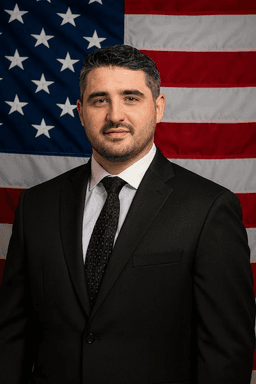 Your attorneyAndranik "Andy" Boyadzhyan, Esq.Founding Attorney. Licensed in Alabama.
Attorney advertising. Services are not available in all states.
By Andranik "Andy" Boyadzhyan, Attorney at Law. Meet the team
In Alabama, a person hurt by a driver who fled has a claim. When the driver is never found, the uninsured motorist coverage most Alabama policies carry pays what that driver owed, and when the driver is found, that driver's insurer pays. The fault evidence must be clean, because any blame on your side can end the claim. Top USA Law builds that proof. The consultation is free.
You do, provided the evidence shows the fault was entirely the other driver's. A driver who merged into you at Malfunction Junction and kept going, struck your parked car on US 280 and drove off, or hit you in a crosswalk on Airport Boulevard in Mobile and disappeared owes you the same damages a driver who stopped would owe. Alabama's fault rule, not the driver's absence, is what makes these claims demanding.
Alabama applies contributory negligence. If an insurer can show that you contributed to the crash in any degree, the claim can be barred outright, and that rule applies to an uninsured motorist claim against your own carrier just as it applies to a claim against a driver. The fleeing driver is not there to describe what happened, which means the physical evidence, the cameras and the witnesses carry the entire burden of showing you did nothing wrong.
Fleeing helps on that front. A driver who left an injured person on I-65 has done more than make a mistake, and Alabama recognizes wantonness as a separate claim that contributory negligence does not defeat. When the driver is found and the facts show the choice to leave, or drunk or reckless driving before the crash, we plead it, because it changes what the insurer can argue.
Being behind the wheel is not a requirement. A passenger in the car that was hit, a pedestrian on Memorial Parkway in Huntsville, a cyclist on McFarland Boulevard in Tuscaloosa and a motorcyclist on the Eastern Boulevard in Montgomery all have claims, and a passenger is usually the strongest claimant because there is almost nothing a passenger did that an insurer can call fault. Coverage for a person outside a car comes from their own policy or a household policy.
When the driver is never identified, the claim goes to uninsured motorist coverage. Ala. Code 32-7-6 requires liability insurance on every registered vehicle, and Alabama insurers must offer uninsured motorist coverage on every policy they sell. Most Alabama drivers keep it. It pays the medical costs, lost wages and pain and suffering the fleeing driver would have owed, up to the limit on the policy, and it is often the only money in the case.
The coverage can sit in more than one place. Your own policy is the starting point. A policy belonging to a relative who lives with you can respond, and a passenger can look to the policy on the vehicle they were in. Alabama policies differ on whether limits from several vehicles or several policies can be added together, and the answer is in the policy language. We gather every declarations page in the household before we say what is available.
Alabama has no public fund for a victim whose household carries no coverage. For that person the claim lives or dies with the identification of the driver, and the search for a plate, a vehicle description or a camera angle is the case itself. Underinsured motorist coverage matters once a driver is found and turns out to carry only the minimum.
When the driver is found, that driver's liability insurer takes the primary position and your own coverage moves to the underinsured layer if the limits are too low. Ala. Code 32-10-1 requires a driver in an injury crash to stop and remain at the scene, and a conviction for leaving is admissible in the civil case, where it also supports the wantonness claim. A driver who was working brings in the employer's commercial policy, and a driver in a borrowed car brings in the owner's.
The measure is what the crash cost you: hospital and doctor bills, the future treatment your physicians expect, lost pay and benefits, reduced earning power, and out of pocket expenses on one side, and pain, scarring, lost activities and the strain on a family on the other. Alabama has no injury threshold and no general cap on these damages in a claim against a private driver or an uninsured motorist carrier.
Two ceilings apply. The first is coverage. When the driver is never found, the uninsured motorist limit on every policy that responds is the most the claim can pay, regardless of the injury. The second is fault, and in Alabama it is not a percentage but a switch. A claim that contributory negligence turns off pays nothing, which is why the proof that you did nothing wrong is worth as much as the medical records.
Within those limits, severity sets the range. A strain treated with therapy sits low. A fracture, a disc injury with injections or a concussion with lingering symptoms sits higher. Surgery, a brain injury or a spinal cord injury exhausts most uninsured motorist limits and makes finding the driver, and any employer or owner behind the driver, the difference between a partial recovery and a full one.
Venue plays a part. An uninsured motorist dispute that reaches the Jefferson County Circuit Court, the Madison County Circuit Court or the Mobile County Circuit Court is valued by adjusters against how juries in those counties have treated injury claims. We do not name a figure until your doctors can describe your future, because a number offered earlier is a guess that helps the insurer. Past results do not guarantee a similar outcome.
Expect resistance. Your carrier owes you good faith, but it evaluates an uninsured motorist claim as a paying party, and Alabama's fault rule hands it a powerful tool. If an adjuster can attach any share of blame to you, you glanced at your phone, you were a few miles over on I-459, you stepped off the curb outside the crosswalk, the company can deny the claim entirely. Its recorded statement is where those arguments are collected.
The other common denials concern the policy's own conditions. Every Alabama policy describes what it requires in a hit and run: how quickly the crash must be reported to police, how and when the company must be notified, and what proof of the other vehicle it expects. Those terms vary from one form to the next, so we read the actual policy and measure what was done against it, and we explain any gap with the medical emergency or the circumstances that caused it.
Then come the injury arguments, that your MRI shows age rather than trauma, that a gap in treatment means you recovered, that the bills were excessive. These are answered by your treating doctors, objective imaging and an unbroken record of care. On the existence of the other vehicle, the paint on your bumper, the debris in the road and footage from a business facing US 72 answer the argument better than any statement can.
Many Alabama policies allow the insurer to be sued directly on the uninsured motorist claim, and some send it to arbitration. We take the path the policy allows, in the Circuit Court for the county when suit is permitted, and use discovery to obtain the adjuster's file. An insurer that denies a valid claim without a reasonable basis faces its own exposure under Alabama law, and we put that on the table in writing when the facts warrant it.
Ala. Code 6-2-38 gives two years from the crash to file a personal injury lawsuit, and a wrongful death action must be filed within two years of the death by the personal representative of the estate. Two years is the outside limit against an identified driver. A suit against your own insurer on the uninsured motorist coverage may run on a different clock depending on the policy and the nature of the claim, and we treat the earliest possible date as the deadline.
The dates that actually end Alabama hit and run claims are in the policy. Carriers require that a hit and run be reported to police within a short window, sometimes a day, and that the company be told promptly, sometimes in writing. A victim who waits to see whether the pain passes and then calls can be told that the coverage was forfeited. We open the claim and satisfy each condition in the first days, and document any delay that has already occurred.
A public vehicle changes the timeline entirely. If a MAX bus in Birmingham, a city police car or a county truck was the vehicle that left, a sworn written claim must be filed with the clerk within a period measured in months, and a defective claim can end the case. Public vehicles rarely flee, but contractors working for cities and counties do, and we check the owner of every identified vehicle for that reason.
Evidence expires fastest. Business camera systems overwrite within days. License plate reader data kept by police agencies is retained for a limited time. Paint transfer vanishes at the body shop. The two year statute protects the right to sue and does nothing for the proof, which in a contributory negligence state is the entire case. In a hit and run, the evidence is also the only way the driver gets found.
Call 911 and stay at the scene. Inside the cities, the Birmingham, Huntsville, Montgomery, Mobile or Tuscaloosa police will respond; on the interstates and county roads it is usually an Alabama Law Enforcement Agency trooper. Describe the vehicle while it is fresh: color, make, body style, where it was damaged, any part of the plate, the direction it went and anything about the driver. Get the report number and confirm that the report says the driver left.
See a doctor the same day. UAB Hospital in Birmingham, Huntsville Hospital and USA Health University Hospital in Mobile are the state's Level I trauma centers, Baptist Medical Center South in Montgomery and DCH Regional Medical Center in Tuscaloosa serve their regions, and an urgent care visit documents a minor injury. Tell each provider that a driver hit you and fled, so the records say so from the first page.
Preserve what the other vehicle left. Photograph the paint transfer on your car, the plastic and glass on the road, the position of your vehicle and the marks on the pavement before anything is moved or washed. Fragments of a headlight or grille carry part numbers that identify a make and model, and the paint color narrows the year range. Keep the car out of the body shop until it has been photographed thoroughly.
Find cameras and witnesses before leaving. Gas stations, storefronts, apartment gates, traffic signals, MAX buses and residential doorbells record the road, and their footage is overwritten inside a week. Take the name and number of anyone who stopped, since a witness who caught part of a plate is the most common way a fleeing driver is found. Police license plate readers along the interstates and at intersections log vehicles, and an officer can search them if the report is filed quickly.
Notify your own insurer within a day, say that it was a hit and run and ask that an uninsured motorist claim be opened. Do not discuss fault with anyone but your lawyer, including the adjuster, including social media, because in Alabama a single sentence conceding a small mistake can end the claim. Keep every bill and every missed shift from the first day.
See if you have a case
Three answers and a phone number. An attorney reviews your situation and calls you back, free.
Rear End Collision
$2,300,000
Insurer offered$85,000
Spinal cord injury after a rear end crash. The insurer offered $85,000.
T Bone Accident
$1,800,000
Insurer offered$120,000
Broken pelvis and internal bleeding at an intersection. The insurer offered $120,000.
Drunk Driver Victim
$1,500,000
Insurer offered$50,000
Traumatic brain injury caused by an impaired driver. The insurer offered $50,000.
Every case is different. Past results do not guarantee, warrant, or predict a similar outcome.
Top USA Law does not keep an office in Alabama. We meet hit and run clients by phone, by video, at home or at the hospital, and one number, (877) 411-5291, reaches us at any hour. Andranik "Andy" Boyadzhyan, the firm's founding attorney, is licensed in Alabama and handles Alabama matters. A hit and run case is built from records, footage and calls, none of which requires a trip to an office.
Suits against an identified driver are filed in the Circuit Court of the county where the crash happened or where the driver lives, and suits against an insurer are filed where the policy allows. For our clients that is most often the Jefferson County Circuit Court in its Birmingham and Bessemer divisions, the Madison County Circuit Court in Huntsville, the Montgomery County Circuit Court, the Mobile County Circuit Court and the Tuscaloosa County Circuit Court.
The hit and run crashes we see follow the traffic. In Birmingham: sideswipes and merge collisions at Malfunction Junction where I-20, I-59 and I-65 meet, lane changes on I-459, and parked cars struck along US 280. In Huntsville: I-565, Memorial Parkway and US 72. In Montgomery: I-85, I-65 and the Eastern Boulevard. In Mobile: I-10 across the Bayway, I-65 and Airport Boulevard. In Tuscaloosa: I-20/59 and McFarland Boulevard. Late nights and weekends produce a disproportionate share.
We take hit and run claims involving pedestrians, cyclists, motorcyclists, parked cars and occupied vehicles, drivers who fled because they were impaired, unlicensed or uninsured, and cases where the driver is identified weeks later through a plate reader, a body shop or a tip. When the driver was drunk, a conviction under Ala. Code 32-5A-191 adds weight to the wantonness claim.
We serve Alabama clients by phone, video and in person appointments arranged case by case.
Under Ala. Code 32-10-1, a driver in a crash that injures someone must stop and remain at the scene, and leaving is a crime. It is the statute that converts a fleeing driver's decision into evidence: a conviction is admissible in the civil case, the criminal investigation generates records we obtain, and the choice to leave supports a wantonness claim that contributory negligence cannot defeat.
Contributory negligence is Alabama's fault rule and comes from case law rather than statute. Any negligence on the victim's part that contributed to the crash can bar recovery, in a claim against the driver and in an uninsured motorist claim against your own carrier alike. It is the reason the physical evidence and the footage gathered in the first days decide Alabama hit and run cases.
Ala. Code 32-7-6 requires liability insurance on every registered vehicle and sets the minimum limits. Insurers must offer uninsured motorist coverage, and most Alabama policies include it, which is why it is the backstop in a hit and run. Alabama has no public fund for a victim whose household has no coverage. Each policy sets its own reporting and proof conditions for a hit and run claim, and those conditions are enforced.
Ala. Code 6-2-38 gives two years from the crash to file an injury suit, and a wrongful death action has its own two year deadline measured from the death. Policy deadlines for reporting and notice come much sooner. Ala. Code 32-5A-191 prohibits driving under the influence, and a conviction under it is used in the civil case when a fleeing driver turns out to have been impaired.
Hurt in a crash? Talk it through for free.
Alabama filing deadlines and insurance notice rules can be short. A free call tells you where your clock stands.
Last reviewed by Andranik "Andy" Boyadzhyan, Esq., October 2026.
Three fields. We respond fast, day or night.
I was in an Uber that got T boned. Both insurance companies were pointing fingers. Top USA Law cut through the mess and got me $875,000.
Client testimonials. Testimonials are not a guarantee, warranty, or prediction of the outcome of your case.
Top USA Law. Services are not available in all states.
Takes 30 seconds. No obligation.