

Pedestrian Hit by Car
$725,000
Insurer offered$25,000
Hip fracture and concussion in a crosswalk. The insurer offered $25,000.
Serving Alabama
Hurt in a crash? The insurance company already has a team working on your claim. You should too. A free call tells you where you stand.
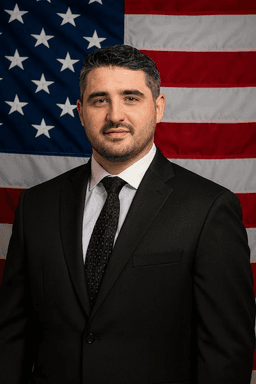 Your attorneyAndranik "Andy" Boyadzhyan, Esq.Founding Attorney. Licensed in Alabama.
Attorney advertising. Services are not available in all states.
By Andranik "Andy" Boyadzhyan, Attorney at Law. Meet the team
In Alabama, a pedestrian hit by a car claims directly against the driver's liability insurer for medical bills, lost wages and pain and suffering, with no no fault coverage to fall back on, and the claim survives only if the evidence shows the walker did nothing wrong. Top USA Law secures the footage, the signal records and the driver's phone records before they are gone. The consultation is free.
You have a case if a driver failed to yield, ran a signal, turned without looking, backed out blind, or was speeding, drunk or on a phone when the car hit you, and the evidence shows you were where you were allowed to be, doing what you were allowed to do. A driver who turned left across a walk signal on 1st Avenue North in Birmingham, drifted onto the shoulder of Memorial Parkway in Huntsville, or ran a red light on Airport Boulevard in Mobile was negligent, and Alabama law lets you recover what that negligence cost.
Alabama's rules of the road require a driver to yield to a pedestrian in a marked crosswalk and in the unmarked crosswalk at an intersection, and require every driver to use due care to avoid hitting a person on foot wherever that person is. A pedestrian crossing outside a crosswalk is required to yield to traffic, and the insurer will build its whole defense on that sentence. Which rule governs your crash depends on precisely where you were standing, and that is the first fact we prove.
Contributory negligence applies to Alabama pedestrians in full. If the insurer can persuade a jury that you stepped off the curb against the signal, crossed mid block, wore dark clothing at night or looked down at your phone, the claim can be barred entirely rather than reduced. That makes an Alabama pedestrian case different from almost anywhere else: the proof that you did nothing wrong is not a supporting detail. It is the case, and it has to be gathered before the footage cycles.
Children, older adults and people using wheelchairs and walkers are struck at high rates along Alabama's wide arterials, where a bus stop sits across five lanes from the stores people are walking to. Cases involving them often turn on whether the driver was going a safe speed for a road lined with shops and bus stops, and whether parked cars, a turning truck or a dark crossing blocked the driver's view.
Alabama has no no fault system, so there is no personal injury protection to pay a struck pedestrian's bills automatically. Your health insurance covers treatment while the claim is open, and the claim against the driver reimburses those costs, along with lost wages and pain and suffering, at the end. If you have no health coverage, many Alabama providers will treat under an agreement to be paid from the recovery, and we arrange that in the first days.
The driver's liability policy is the primary source of payment. Ala. Code 32-7-6 requires liability insurance on every registered vehicle, but a minimum policy is small next to what a hip fracture, a skull fracture or a stay at UAB costs. If the driver was working, a delivery or rideshare company's commercial policy may be on the line. If the car belonged to someone else, the owner's policy may respond as well. We identify every policy behind the vehicle in the first week.
Your own auto insurance matters even though you were walking. Uninsured and underinsured motorist coverage on your policy, or on a policy belonging to a relative you live with, follows you onto the sidewalk and responds when the driver had too little coverage, none, or drove away. Optional medical payments coverage on a household policy can pay early bills regardless of fault. A pedestrian with no auto policy in the household is limited to what can be found on the driver's side, which makes identifying the driver the priority.
A hit and run is common in pedestrian crashes because the driver knows what happened and the victim often never saw the car. Ala. Code 32-10-1 makes leaving the scene of an injury crash a crime. Uninsured motorist coverage responds to an unidentified driver, and insurers often demand independent proof that a vehicle struck you, so the crash report, the injuries, the footage and any witness are gathered immediately while the police search for the car.
Pedestrian injuries run severe because there is no steel around you. Fractures of the hip, pelvis, tibia and ankle, traumatic brain injury from the fall to the pavement, spinal injury, and road rash and degloving that need grafts are common, and many require surgery and months of rehabilitation. The claim is built from every medical bill, the future care your doctors expect, lost wages, the earning capacity you have lost, out of pocket costs and pain and suffering. Alabama imposes no threshold and no general cap in an injury case.
Severity and permanence set the tier. A wrist fracture in a cast sits at the low end. An ankle rebuilt with plates and screws, a femur set with a rod, or a disc injury that needs injections sits well above it. A brain injury with lasting cognitive deficits, a spinal cord injury or an amputation is valued in a category of its own, with a life care planner behind the number. Past results do not guarantee a similar outcome.
In Alabama the fault evidence is the other half of value. A claim that is worth a great deal on the medical side is worth nothing if a jury attributes a share of the crash to the walker, so an insurer prices an Alabama pedestrian case first by how cleanly the crossing, the signal, the lighting and the driver's attention can be proven. Footage of you inside the crosswalk under a walk signal is worth more than any expert.
Venue and insurance set the practical ceiling. A Jefferson County jury, a Madison County jury and a Mobile County jury each have their own history with injury cases, and adjusters know it. Available coverage, from the driver's policy through your own household's uninsured motorist coverage, caps what a claim can pay in practice. We do not quote a figure until the prognosis is in writing, and then we support the demand with the medical record and the fault evidence together.
Expect the adjuster to say you darted out, crossed against the light, walked outside the crosswalk or could not be seen. In a comparative fault state that argument shaves the claim. In Alabama it is a bid to end it, so the adjuster makes it in nearly every pedestrian file and looks for the material in your own words. The recorded statement requested in the first days is where that material comes from. Do not give one. We take every call from the day you retain us.
We answer with proof gathered before it is gone. Camera footage from storefronts, gas stations, apartment lobbies, transit buses and traffic signal cameras. The signal timing records kept by the city or the state transportation department, which show whether the walk signal was lit when you stepped off the curb. The driver's phone records, obtained by subpoena once suit is filed, which show a text or a call at the moment of impact. Lighting measurements taken at the same hour. The point of impact, the throw distance and the vehicle damage, which tell a reconstruction engineer how fast the car was moving.
Speed and attention undo most fault arguments. A driver going a reasonable speed for a road lined with stores and bus stops, and watching the road, has time to react to a person who has been visible for several seconds, and a witness who says the driver never braked or was looking down says more about fault than where the pedestrian's feet were. A driver who was drunk, racing or texting may have acted wantonly, and contributory negligence is not a defense to a wantonness claim.
On damages, the insurer will send you to its own doctor and argue that your imaging shows age rather than trauma. We answer with your treating physicians and objective findings. If the insurer will not pay a fair number once treatment is complete, we file suit in the Circuit Court of the county where the crash happened, subpoena the phone records and the footage that were refused, and put the driver under oath. Most cases settle before trial, and they settle for more when a jury is the alternative.
Alabama gives you two years from the date of the crash to file a personal injury lawsuit under Ala. Code 6-2-38. Serious pedestrian injuries take months to reach a prognosis, and the negotiation that follows takes more, so two years is shorter than it sounds. When it passes, the claim is over no matter how clear the footage was or how badly you were hurt.
A wrongful death claim must be filed within two years of the death by the personal representative of the estate. Alabama's wrongful death damages are punitive in nature, measured by the driver's conduct rather than the family's loss, and they pass to the heirs. Because the measure is what the driver did, the evidence that the driver was speeding, impaired or distracted carries the case, and we open the estate immediately so nothing waits on paperwork.
Pedestrian cases bring in public defendants more often than car cases. A MAX bus in Birmingham or a city bus in Huntsville, Montgomery or Mobile, a police car, a school district vehicle, or a crossing with a broken signal, a burned out light or no crosswalk where one was needed can make a city or county responsible. Those claims require a sworn written claim filed with the city or county clerk within a short period measured in months, and a late or defective claim ends the case. Claims against the State are limited by sovereign immunity.
Evidence deadlines are shorter still. Storefront and bus footage is overwritten within days. Signal timing records and the driver's phone records survive longer but must be requested through the right channel. Your own uninsured motorist coverage requires prompt notice and requires that your insurer hear from you before you accept anything from the driver's side. A quick call is how most of these deadlines are met.
Get medical care the same day even if you walked away. A concussion, internal bleeding and a hairline fracture do not always show until the adrenaline fades, and a gap between the crash and the first visit is an argument the insurer will make. UAB Hospital in Birmingham, Huntsville Hospital and USA Health University Hospital in Mobile are the state's Level I trauma centers. Baptist Medical Center South in Montgomery and DCH Regional Medical Center in Tuscaloosa serve their regions. Tell every provider you were struck by a car.
Make sure police come and a report is written, and get the report number. Photograph the exact spot where you were hit, the crosswalk markings or their absence, the signal, the lighting, the car and its damage, and your injuries. Note the time, because signal timing and lighting change by the hour. Write down what the driver said at the scene. A driver who says "I never saw you" has just described inattention.
Find the witnesses and the cameras before you leave. Pedestrians are hit in front of stores, bus stops, gas stations and apartment buildings where people saw the crash, and those people leave in minutes. Get names and numbers. Note every camera in view, including the bus that was pulling away. Tell us the location the same day so preservation letters go out before the footage cycles.
Do not speak to the driver's insurer, do not sign anything from them, and do not post about the crash. In Alabama a single sentence such as "I was hurrying" or "I did not see the light" can end a claim. Notify your own auto insurer, if you have one, that you were struck as a pedestrian. Keep a file of every bill, appointment and missed shift, and write a short daily note about pain and what you cannot do.
See if you have a case
Three answers and a phone number. An attorney reviews your situation and calls you back, free.
Pedestrian Hit by Car
$725,000
Insurer offered$25,000
Hip fracture and concussion in a crosswalk. The insurer offered $25,000.
Rear End Collision
$2,300,000
Insurer offered$85,000
Spinal cord injury after a rear end crash. The insurer offered $85,000.
T Bone Accident
$1,800,000
Insurer offered$120,000
Broken pelvis and internal bleeding at an intersection. The insurer offered $120,000.
Every case is different. Past results do not guarantee, warrant, or predict a similar outcome.
Top USA Law has no office in Alabama. We meet Alabama clients by phone, by video, at home or at the hospital, and every case runs through one number, (877) 411-5291, answered around the clock. Andranik "Andy" Boyadzhyan, the firm's founding attorney, is licensed in Alabama and handles Alabama pedestrian cases. If you cannot leave the hospital or your bed, we come to you.
Alabama pedestrian accident lawsuits are filed in the Circuit Court of the county where the crash happened, most often for our clients the Jefferson County Circuit Court in its Birmingham or Bessemer division, the Madison County Circuit Court in Huntsville, the Montgomery County Circuit Court, the Mobile County Circuit Court and the Tuscaloosa County Circuit Court. A claim against a city or county goes to the clerk first and to the Circuit Court only after that step.
The crashes we see cluster on the same roads. In Birmingham, US 31 through the southern suburbs and 1st Avenue North downtown, where bus stops, turning traffic and night foot traffic meet. In Huntsville, Memorial Parkway and University Drive, wide, fast and lined with stores that people cross to reach. In Montgomery, the Eastern Boulevard and the Atlanta Highway. In Mobile, Government Street downtown and Airport Boulevard through the west side. In Tuscaloosa, University Boulevard and McFarland Boulevard around the campus, where students cross at all hours.
We handle pedestrian claims against private drivers, delivery and rideshare drivers on the clock, commercial trucks, MAX and city buses, and the cities and counties responsible for a crossing that was unsafe by design or by neglect. Each defendant brings its own insurer and sometimes its own deadline, and a single crash on Airport Boulevard can involve two or three of them. We sort out who owes what before the first demand goes out.
We serve Alabama clients by phone, video and in person appointments arranged case by case.
Contributory negligence is Alabama's general fault rule and comes from case law. A pedestrian whose own negligence contributed to the crash in any degree can be barred from recovering, and insurers apply the rule to pedestrians harder than to anyone else. Contributory negligence is not a defense to a wantonness claim, which is why proof that the driver was drunk, racing or texting changes the case.
Alabama's rules of the road require a driver to yield to a pedestrian in a marked crosswalk and at an unmarked crossing at an intersection, to obey traffic signals, and to use due care to avoid striking any pedestrian on the road. A pedestrian crossing elsewhere must yield to vehicles. Which rule applies is a question of feet and inches, and the footage answers it.
Ala. Code 6-2-38 sets the two year deadline to file an injury lawsuit from the date of the crash. A wrongful death claim has its own two year deadline from the death, is brought by the personal representative and produces damages that are punitive in nature. A claim against a city or county requires a sworn written claim with the clerk within a short period measured in months.
Ala. Code 32-7-6 requires liability insurance on every registered vehicle, and uninsured motorist coverage, which insurers must offer, follows you as a pedestrian. Ala. Code 32-10-1 requires a driver in an injury crash to stop and remain at the scene, and Ala. Code 32-5A-191 prohibits driving under the influence. A conviction under either can be used in the civil case and supports wantonness.
Hurt in a crash? Talk it through for free.
Alabama filing deadlines and insurance notice rules can be short. A free call tells you where your clock stands.
Last reviewed by Andranik "Andy" Boyadzhyan, Esq., October 2026.
Three fields. We respond fast, day or night.
My wife was killed by a drunk driver. Top USA Law handled our wrongful death case with such compassion. They got us $1.2 million.
Client testimonials. Testimonials are not a guarantee, warranty, or prediction of the outcome of your case.
Top USA Law. Services are not available in all states.
Takes 30 seconds. No obligation.