

Rear End Collision
$2,300,000
Insurer offered$85,000
Spinal cord injury after a rear end crash. The insurer offered $85,000.
Serving Washington, D.C.
Hurt in a crash in Washington, D.C.? The insurance company already has a team working on your claim. You should too. A free call tells you where you stand.
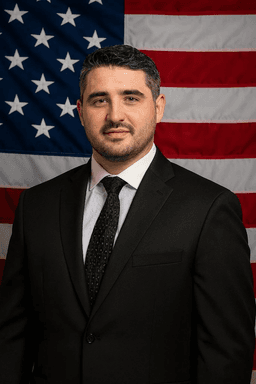 Your attorneyAndranik "Andy" Boyadzhyan, Esq.Founding Attorney. Licensed in Washington, D.C.
Attorney advertising. Services are not available in all states.
700 12th St NW, Suite 700, Washington, DC 20005 Maps and directions
By Andranik "Andy" Boyadzhyan, Attorney at Law. Meet the team
In Washington, D.C., if you were hurt in a car crash, health insurance pays first, then PIP if you elect it within 60 days. You can claim from the negligent driver, but a car driver or passenger even slightly at fault can be barred. See a doctor and get the police report.
Top USA Law's Washington, D.C. office listing is at 700 12th St NW, Suite 700, a few blocks from Metro Center. District clients can meet the firm there by arrangement, by phone or by video, and the firm comes to you at home or in the hospital when you cannot travel. Andranik "Andy" Boyadzhyan, Attorney at Law, is licensed in the District and wrote this page.
| Question | District answer | Law or source |
|---|---|---|
| Deadline to sue the driver | Three years from the crash; a claim against the District needs written notice to the Mayor within six months | D.C. Code 12-301 |
| Fault rule for drivers and passengers | Contributory negligence: any share of fault can bar the claim | District common law |
| Fault rule for pedestrians, cyclists and motorcyclists | Barred only if their negligence was a proximate cause and greater than all defendants' combined | D.C. Code 50-2204.52 |
| Who pays medical bills first | Health insurance or medical payments coverage; if your policy has PIP and you elect it within 60 days, PIP pays the deductible and what that coverage leaves (31-2406(g)) | D.C. Code 31-2404 |
| Court | Superior Court of the District of Columbia, Civil Division, 500 Indiana Avenue NW | D.C. Courts |
| Hospitals | MedStar Washington Hospital Center, George Washington University Hospital, Howard University Hospital | D.C. court guide |
| Crash report | MPD PD-10 from the Public Documents Section | Metropolitan Police Department |
In a car, you can claim if another driver caused the crash and you share no blame. Pedestrians and cyclists face a gentler rule.
A District injury claim runs against the driver who caused the crash, usually through that driver's liability insurer, and covers medical bills, lost pay, and pain and suffering. Unlike New York or New Jersey, the District has no automatic no fault system that pays everyone first. Benefits arrive automatically only if you bought optional personal injury protection and elect it.
The hard part is fault. For drivers and passengers, District common law still applies contributory negligence: a person found even slightly at fault can be barred from recovering anything. The insurer only has to prove a small share of blame, so the strength of a District case is the strength of its early evidence.
Pedestrians, cyclists, motorcyclists and other vulnerable users get a different rule under D.C. Code 50-2204.52, which is why the Washington, D.C. pedestrian accident lawyer and D.C. bicycle accident lawyer pages are separate. A family's claim after a death runs on its own two year clock, covered on the D.C. wrongful death lawyer page.
Your own coverage carries the early bills. The at-fault driver's liability insurer pays the claim, and your uninsured motorist coverage fills gaps.
| Order | Who pays | What it covers |
|---|---|---|
| 1 | Your health insurance or the medical payments coverage on your policy | Emergency and follow-up care while the claim is built |
| 1a | Personal injury protection, only if your policy has it and you elect it within 60 days | Medical and rehabilitation expenses, work loss and funeral benefits, regardless of fault, at the limits you bought |
| 2 | The at-fault driver's liability insurer | Medical bills, lost pay, and pain and suffering, up to the policy limit |
| 3 | Your uninsured motorist coverage | A driver with no insurance or a hit and run; underinsured coverage, if you carry it, when the other policy is too small |
| 4 | The driver personally, the vehicle owner or an employer | What no policy covers; the District has no public fund for victims of uninsured drivers |
The DC DMV vehicle insurance page lists the required minimums: $25,000 per person and $50,000 per accident in liability, $10,000 for property damage, and uninsured motorist coverage of $25,000 per person and $50,000 per accident. Those are policy floors set by D.C. Code 31-2406, not case values. Past results do not guarantee a similar outcome. The D.C. Code 31-2403 insurance duty page explains the requirement to keep that coverage in force.
Uninsured motorist coverage follows people as well as cars. A passenger may claim under the policy on the car and under a policy held at home, and each policy carries its own limit. In that claim your own company stands in the shoes of the driver who hit you and can raise the same fault defenses.
If your policy includes personal injury protection, you must tell the insurer within 60 days whether you elect it. Electing it limits lawsuits.
The District lets drivers buy optional personal injury protection under D.C. Code 31-2404. The statute sets the floor for each part: medical and rehabilitation coverage of at least $50,000, work loss of at least $12,000, and funeral benefits of actual costs up to $4,000, with higher options insurers must offer. Those are coverage limits, not case values. Past results do not guarantee a similar outcome.
Under D.C. Code 31-2405, a victim must notify the PIP insurer within 60 days of the crash whether they elect the benefits. The insurer must tell you about that window in writing, and it can be extended only by written agreement. If you make no election, the mandatory liability coverage applies.
Electing PIP has a cost. A person who elects it can sue the at-fault driver only for substantial permanent scarring or disfigurement, a substantial and medically demonstrable permanent impairment that significantly affects work or daily life, an impairment that prevents substantially all usual activities for more than 180 continuous days, or medical or work loss that exceeds the PIP benefits. A family's death claim is not limited by the election. Have the policy read before you sign the form; the D.C. Code 31-2404 no fault option page walks through it.
No one can name a number at the start. Fault proof, the injury, treatment, lost pay and the insurance limits behind the driver decide value.
In the District, fault comes before value, because a claim that can be pinned even partly on you may be worth nothing. Once fault is clear, value turns on objective findings on imaging, how long and how steadily you were treated, whether a doctor finds the injury permanent, the wages you lost, and the liability and uninsured motorist limits that exist to pay.
Gaps in care cut value. An adjuster reads a three week break in therapy as healing, so keep every appointment and write down how the injury changes your sleep, work and family life. The D.C. car accident settlement value guide explains each factor, and the herniated disc settlement in Washington, D.C. and whiplash settlement in Washington, D.C. pages cover two common injuries.
A first offer can come early and low. Read should I accept the first insurance offer in Washington, D.C. before you sign a release, and see the D.C. settlement calculator page for why no formula can price the fault fight.
For the value question in more depth, see how pain and suffering damages are weighed in D.C., filing an underinsured motorist claim in the District and the wait for a settlement check after a District case resolves.
See if you have a case
Three answers and a phone number. An attorney reviews your situation and calls you back, free.
The first two weeks are for evidence. That means the PD-10, camera footage, witnesses and preservation letters, gathered before the fault rule is argued.
Andranik "Andy" Boyadzhyan is licensed in the District. Records from MedStar, GW or Howard, the PD-10 report and camera footage should be gathered early, and a case is filed in D.C. Superior Court when the insurer will not pay what it is worth. The 60 day PIP election and any six month notice to the District go on the calendar in week one.
Video decides District cases. DDOT traffic cameras, apartment lobbies, corner stores and garage entrances can record over footage within days, and a Metrobus or delivery truck carries its own cameras and data, so preservation letters go out to each of them first.
Andranik "Andy" Boyadzhyan, Attorney at Law, licensed in the District, Missouri, Alabama and New Mexico, handles Top USA Law's District claims. Case manager Sandra Alves works on records and client communication. Read about the team on the Top USA Law attorneys page or the Washington, D.C. office page.
The consultation is free and there is no attorney fee unless we win; costs may apply. The fee comes out of the recovery, and the agreement says in writing how costs are handled.
Car, truck, bus, pedestrian, bicycle, motorcycle, rideshare and fatal crashes on District streets, each with its own fault rule or coverage path.
New York Avenue NE carries heavy commuter traffic at highway speed. Rear-end crashes stack up near Bladensburg Road and Florida Avenue NE.
New York Avenue NE carries heavy commuter traffic, and inbound drivers are still moving at highway speed when the road tightens near Bladensburg Road and again at Florida Avenue NE. Rear end crashes stack up there at rush hour, and the box trucks serving Ivy City add weight to every impact.
East of the Anacostia River the pattern is different. Pennsylvania Avenue SE at Minnesota Avenue SE, Benning Road NE and the long run of Southern Avenue SE along the District's edge mix fast through traffic with drivers turning across it, so a crash there can be a left turn taken in front of an oncoming car or a red light run at a wide, open intersection.
Downtown, the 14th Street Bridge approaches funnel Interstate 395 traffic onto 14th Street SW and the Southwest Freeway, and the morning backup produces chain reaction rear end collisions. Rhode Island Avenue NE and Georgia Avenue NW bring their own hazards: Metrobus pulling in and out of stops, delivery vans double parked in the travel lane, and cyclists sharing a road that was never built for them.
The Anacostia Freeway, I-295, and South Capitol Street add high speed merges where a stalled car becomes a second impact. Whatever the road, the responding MPD officer writes the PD-10, the first document to request.
Ask the Metropolitan Police Department for your PD-10 report by email, mail or appointment. Only people involved, or their lawyer, can request it directly.
Only a first party can get a PD-10 from the Metropolitan Police Department. That means a person involved in the crash, or the lawyer, lawyer's staff or investigator for that person. The department's request page says there is no fee for a first party request. Anyone else goes through the department's FOIA office.
There are three ways to ask. You can email the Public Documents Section at the address on the department's request page. You can mail a request to that section with a copy of your photo ID, the completed PD Form 10B and a self-addressed stamped envelope. Or you can book an in-person visit by phone; the request page lists the number. Bring photo ID and the date, place and time of the crash. The page asks mail-in requesters to allow six weeks, so email or an appointment may be faster.
Have the six-digit report number, called the CCN, ready if you can. If you do not know it, the page says to call the police district that responded. The Public Documents Unit can answer other questions, and its number is on the same page. The Washington, D.C. car accident report guide has the mailing address and form details.
Read the PD-10 the day it arrives. The officer's diagram, the statements taken at the scene and any citation issued are the first version of the fault story, and in the District the fault story is everything. A wrong arrow on the diagram should be raised early.
Serious District crash injuries can go to MedStar Washington Hospital Center, GW or Howard, and records from that first visit anchor your claim.
Serious crash injuries in the District can be taken to a Level I trauma center such as MedStar Washington Hospital Center on Irving Street NW, George Washington University Hospital in Foggy Bottom, or Howard University Hospital on Georgia Avenue NW. The records from that first visit become the backbone of the whole claim. If you went home and the pain arrived the next morning, get seen that day.
Ask each hospital for the full chart, the imaging and an itemized bill, and give every provider your health insurance or claim number. Health insurance or other coverage you have pays first, and elected PIP covers the deductible and what remains under D.C. Code section 31-2406(g); a health plan may ask to be repaid from a settlement, depending on the plan.
Soft tissue and spine care often runs through a chiropractor or physical therapist. The chiropractor after a car accident in Washington, D.C. page explains how those bills are paid and documented. Injury guides for the District cover back injuries, neck injuries, brain injuries, broken bones and, for families, wrongful death settlements.
Two District rules have their own pages: the two year wrongful death deadline under D.C. Code 16-2702 and claims after a Metrobus crash with WMATA.
In each case, the insurance company made a first offer. Here is what our clients received instead. Past results do not guarantee a similar outcome.
Rear End Collision
$2,300,000
Insurer offered$85,000
Spinal cord injury after a rear end crash. The insurer offered $85,000.
T Bone Accident
$1,800,000
Insurer offered$120,000
Broken pelvis and internal bleeding at an intersection. The insurer offered $120,000.
Drunk Driver Victim
$1,500,000
Insurer offered$50,000
Traumatic brain injury caused by an impaired driver. The insurer offered $50,000.
Every case is different. Past results do not guarantee, warrant, or predict a similar outcome.
My wife was killed by a drunk driver. Top USA Law handled our wrongful death case with such compassion. They got us $1.2 million.
Client testimonials. Testimonials are not a guarantee, warranty, or prediction of the outcome of your case.
Drivers and passengers face contributory negligence, so any share of fault can end the claim. Vulnerable users get the Collision Recovery Act's rule instead.
The District bars a driver or passenger from recovering anything if they were even slightly at fault. Not reduced, barred. The other driver's insurer will comb through your speed, following distance and lane position looking for one percent to hang on you. The answer is evidence gathered early: DDOT traffic camera footage, nearby business cameras, dashcam video and witness statements collected before memories fade.
Pedestrians, and cyclists, motorcyclists and other vulnerable users under D.C. Code 50-2204.51 are treated differently. Under D.C. Code 50-2204.52, their own negligence does not bar recovery unless it was a proximate cause of the injury and greater than the combined negligence of all defendants. The Act does not say the award is reduced by their share.
Two rules help drivers. Under D.C. Code 50-1807, not wearing a seat belt is not evidence of negligence, so an insurer cannot use it to argue fault. And the partly at fault in Washington, D.C. page explains the last clear chance doctrine and other answers to a contributory negligence defense.
Sue a driver in three years. District claims need Mayor notice in six months. Choosing PIP? Tell your insurer in 60 days.
| Step | Deadline | Rule |
|---|---|---|
| Stop, call 911 if anyone is hurt, stay until police arrive | At the scene | D.C. Code 50-2201.05c |
| Elect or decline PIP benefits | 60 days from the crash | D.C. Code 31-2405 |
| Written notice to the Mayor for a District vehicle, road or signal | Six months from the injury | D.C. Code 12-309 |
| Metrobus claim | A separate interstate compact sets WMATA's process; a shorter deadline can apply | WMATA claims process |
| Lawsuit against the at-fault driver | Three years | D.C. Code 12-301 |
| Wrongful death lawsuit | Two years from the death | D.C. Code 16-2702 |
Your own policy can add shorter limits. An uninsured motorist claim may require prompt notice and a demand for arbitration or suit inside a time the policy sets, which can be shorter than the three years in D.C. Code 12-301. Read the policy's conditions in the first week. The how long a District car accident case takes page explains what happens between these dates.
A District crash lawsuit is filed in the Civil Division of D.C. Superior Court at 500 Indiana Avenue NW, in the Civil Actions Branch.
A District car accident lawsuit is filed in the Civil Division of the Superior Court of the District of Columbia at 500 Indiana Avenue NW. You have three years from the crash to file under D.C. Code 12-301, and a family filing for a death has two years under D.C. Code 16-2702.
A car crash lawsuit is handled by the Civil Actions Branch, which sits in Room 5000 of the Moultrie Courthouse. The branch lists its phone number and hours on the court's website, and it also accepts filings in an after-hours box in the lobby. The Civil Division also lists a Non-Jury Fast Track for vehicle cases. To use it, the claim has to fall under the limit the court sets, and every party has to give up a jury trial.
The D.C. Superior Court car accident cases guide covers filing, service and the fast track, and the District car accident lawsuit process page walks through each stage.
Evidence is exchanged. The court can send the case to mediation through its Multi-Door Dispute Resolution Division before any trial date is set.
A civil case can be sent to mediation run by the court's Multi-Door Dispute Resolution Division. The court says its mediators help the sides settle before trial, they do not decide the outcome, and any agreement is voluntary. The court sends a notice of the mediation date about 60 days ahead. Each side files a Confidential Settlement Statement, and a represented side's lawyer also files a Mediation Readiness Certificate.
A session generally lasts three hours. The court holds mediations by video unless everyone agrees to meet in person. If the sides reach a deal, it is filed with the court. If not, court staff set a pre-trial date. Because the District bars a driver who shares even a little fault, how you describe the crash in that statement matters, so read it carefully before it goes in.
If an insurer stalls, the District's insurance regulator says in its consumer guidance that complaints about claim handling go to the Department of Insurance, Securities and Banking, which enforces the unfair claim practices law, D.C. Code 31-2231.17. Our District guides explain the demand letter that comes before suit and the deposition that comes in discovery.
A District vehicle or road needs notice to the Mayor within six months. A Metrobus claim follows the WMATA Compact instead.
If a District government vehicle was involved, or a District maintained road or signal contributed to the crash, D.C. Code 12-309 requires written notice to the Mayor within six months of the injury, giving the approximate time, place, cause and circumstances. A written Metropolitan Police Department report made in the regular course of duty counts as that notice, but do not rely on it alone; send your own.
If a Metrobus was involved, WMATA is an interstate compact agency with its own claim process, and a separate statute can set a shorter deadline. Get the bus number, route and time, and ask for the claim to be opened early so the bus video is kept.
A driver who flees commits a crime under D.C. Code 50-2201.05c, and neither being sober nor being blameless is a defense to leaving. For the claim, the unknown driver is treated as uninsured, so your own uninsured motorist coverage answers. Report it to MPD the same day if you can. The District's Crime Victims Compensation Program can help with some costs after a criminal hit and run, but its awards are reduced by insurance and other sources, so it does not pay ahead of your coverage. A drunk driver's crash is covered on the D.C. Code 50-2206.11 drunk driving claims page.
Stay at the scene, call 911, photograph everything, get examined that day, request the PD-10, and say nothing about fault to any insurer.
The full list is on the what to do after a car accident in Washington, D.C. page. If the other driver is insured by GEICO, the GEICO car accident claim in Washington, D.C. guide shows how that carrier handles a District claim, the State Farm claim guide for the District covers that carrier's reporting steps, and the total loss car claim in the District page covers the vehicle.
Yes. The firm can review crash claims in all six jurisdictions where its attorneys are licensed. Each follows its own fault and insurance rules.
The District's contributory negligence rule does not travel. New Jersey uses PIP and a verbal threshold, and New York uses no fault and a serious injury threshold, so the New Jersey car accident lawyer and New York car accident lawyer pages explain those systems. The firm's main office handles claims through the Hackensack car accident lawyer page, and the metro pages for the Manhattan car accident lawyer, Brooklyn car accident lawyer and Newark car accident lawyer cover those courts and hospitals. Missouri, Alabama and New Mexico have their own pages: the Missouri car accident lawyer, Alabama car accident lawyer and New Mexico car accident lawyer.
Missing shifts after a crash on New York Avenue? Lost wages after a District crash explains the PIP work loss option.
Hurt riding with someone else? See passenger injury claims in Washington, D.C..
For the full District picture, read the Washington, D.C. car accident lawyer page, or call (877) 411-5291 to start a free review of your District crash.
These Washington, D.C. laws shape your claim; each card gives the statute number and what it means for you in plain English.
Motor Vehicle Collision Recovery Act: a pedestrian, cyclist, motorcyclist or other vulnerable user is not barred unless their negligence was a proximate cause of the injury and greater than the defendants' combined.
Optional personal injury protection that insurers must offer.
Sixty day window to elect PIP benefits; electing them limits any suit against another person unless the injury meets the District threshold or your medical, rehabilitation or work losses exceed the PIP benefits available.
Three year deadline to sue a private driver for a personal injury; a claim against the District needs written notice to the Mayor within six months (D.C. Code 12-309).
Two year deadline for a wrongful death action.
Six month written notice to the Mayor for claims against the District.
Leaving after colliding; a crime when the crash caused injury.
Driving under the influence.
Sue within three years, or two after a death. District claims need Mayor notice in six months; elect PIP in 60 days.
A licensed Washington, D.C. attorney, Andranik "Andy" Boyadzhyan, Founding Attorney, reviews every Washington, D.C. claim, and our team helps you in English or Spanish.

Andranik "Andy" Boyadzhyan, Esq.
Founding Attorney
Licensed in Alabama, Missouri, New Mexico and Washington, D.C.
Featured in CNN, Forbes, Variety

Paul Perkins, Esq.
Of Counsel
Licensed in New Jersey and New York
Certified by the New Jersey Supreme Court as a Civil Trial Attorney. Lawyer of Distinction in Civil Litigation.
Featured in CNBC, Bloomberg, Forbes, The New York Times
Andranik "Andy" Boyadzhyan is the founding attorney of Top USA Law. His background spans business law, civil litigation, and personal injury, and his practice today focuses on motor vehicle accident claims.
Sundas Shafi, Esq., Attorney at Law, Head of Litigation
Rosette Kalayjian, Attorney at Law
Sandra Alves, Case Manager
Four steps from your first call to the close of your claim. You focus on healing while we deal with the insurers and keep you updated.
Free consultation
Call 24/7 or send the short form. An attorney reviews what happened and tells you where you stand. Free, no obligation.
We deal with the insurers
We deal with the insurance companies, request the police report and medical records, and keep you updated.
We build your case
Evidence, witnesses, experts and the medical picture of your injuries, prepared as if the case will go to trial.
You get paid
Medical bills, lost wages, vehicle damage, and pain and suffering. No fee unless we win; costs may apply.
Reviewed by Andranik "Andy" Boyadzhyan, Esq.
Fill in the four short fields in this form, and a licensed attorney reviews your case for free. We respond day or night.
Hit by a semi truck on the highway. Top USA Law knew exactly how to deal with the trucking company. Got me $425,000 after they initially offered $30,000.
Client testimonials. Testimonials are not a guarantee, warranty, or prediction of the outcome of your case. Every case is different. Past results do not guarantee, warrant, or predict a similar outcome.
Top USA Law. Services are not available in all states.
Takes 30 seconds. No obligation.