


Andranik "Andy" Boyadzhyan, Esq.
Founding Attorney
Licensed in Alabama, Missouri, New Mexico and Washington, D.C.
Featured in CNN, Forbes, Variety
Serving Washington, D.C.
Hurt in a crash? The insurance company already has a team working on your claim. You should too. A free call tells you where you stand.
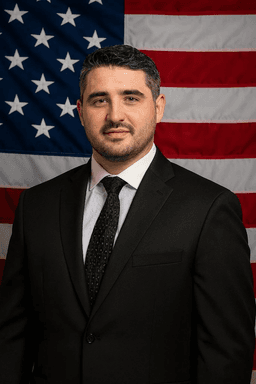 Your attorneyAndranik "Andy" Boyadzhyan, Esq.Founding Attorney. Licensed in Washington, D.C.
Attorney advertising. Services are not available in all states.
By Andranik "Andy" Boyadzhyan, Attorney at Law. Meet the team
In Washington, D.C., an injured passenger's medical bills go to the passenger's own health insurance first; PIP on the car, or on the driver's own policy, may add benefits if bought, once the passenger elects it within 60 days; and the passenger can claim against whichever driver caused the crash. Top USA Law can review your case at no cost.
Key takeaways
Health insurance pays first; the driver's PIP, if bought and elected within 60 days, may fill gaps; the at-fault driver's insurer answers to its limit.
Passengers can feel stuck in the middle: they did nothing wrong, but two drivers and two insurers may each point at the other. A rider in a friend's car on Pennsylvania Avenue SE, or a coworker carpooling over the Sousa Bridge, does not need to settle who was at fault before getting care. The table shows who pays what in common District situations.
| Situation | Medical bills | Injury claim |
|---|---|---|
| Your driver caused the crash | Your health plan first; PIP on the car, or on the driver's own policy, if bought and elected within 60 days (D.C. Code 31-2406(g)) | Against your driver's liability insurer |
| The other driver caused it | The same order of payment | Against the other driver's liability insurer |
| Both drivers share fault | The same order of payment | Against both insurers |
| At-fault driver uninsured or fled | The same order of payment | Uninsured motorist coverage that applies to you (D.C. Code 31-2406) |
Yes, if the driver bought it and you elect it within 60 days; it covers the car's occupants after your health or other coverage pays.
Under D.C. Code section 31-2404, PIP is optional, and its benefits apply "only to a victim who is an insured or an occupant of the insured's vehicle or of a vehicle which the insured is driving." A passenger is an occupant, so the driver's PIP can pay medical and rehabilitation costs, work loss and funeral benefits, in whatever combination the owner bought, regardless of fault. D.C. Code section 31-2406(g) then sets the order: a victim may not claim PIP, other than for a deductible, while eligible for compensation for the same loss from another insurer or coverage, until that coverage is exhausted. So your own health plan is billed first. If PIP is offered, you must tell the PIP insurer within 60 days whether you elect it, under D.C. Code section 31-2405. Electing it bars a suit against another driver unless the injury meets the D.C. Code 31-2405 threshold or your medical and rehabilitation costs or work loss exceed the PIP available, so get advice first. Our guide to who pays medical bills in the District walks through each payer.
Top USA Law. Services are not available in all states.
Fill in four quick fields, and a licensed attorney reviews the facts of your case at no cost.
Yes. A passenger can claim against any driver whose negligence caused the crash, including the driver of the car the passenger rode in.
A passenger may hesitate to claim against a friend, a relative or a coworker who was driving. The claim is made against that driver's liability insurance, which exists for exactly this, and the insurer handles the defense of covered claims up to its limits. When two drivers share blame, for example a left turn across Rhode Island Avenue NE into an oncoming car going too fast, the passenger can claim against both. Every District policy must carry liability coverage of at least $25,000 per person and $50,000 per accident under D.C. Code section 31-2406. Past results do not guarantee a similar outcome. Two policies can matter when one is small. A claim covers medical costs, lost income, and pain and suffering, subject to the PIP election rules. See lost wages after a D.C. crash for the income part.
It can happen. District common law can bar a car passenger found even slightly at fault, and an insurer may argue that a passenger contributed.
Under District of Columbia common law, contributory negligence applies to passengers as well as drivers. An insurer may argue that a passenger grabbed the wheel, distracted the driver, or chose to ride with a driver the passenger knew was impaired. Facts answer those arguments, so write down what happened while it is fresh. One argument the law shuts down: under D.C. Code section 50-1807, a seat belt violation does not "constitute evidence of negligence, evidence of contributory negligence," and cannot be used to mitigate damages. Our page on partial fault in the District explains the rule in more depth.
A rider hurt on a Metrobus can read our WMATA Metrobus claim guide for how a claim against the transit authority works.
Uninsured and underinsured motorist coverage may pay what the at-fault driver's policy cannot, if a policy that applies to you carries it.
Uninsured motorist coverage is mandatory on District policies under D.C. Code section 31-2406, and an uninsured vehicle includes a hit-and-run vehicle whose driver cannot be identified. Underinsured coverage must be offered under 31-2406(c-1). Under D.C. Code section 31-2402(32A), a vehicle is underinsured when its liability limits are insufficient to pay the loss up to the limit of uninsured motorist coverage the insured requested. Whether the policy on the car you rode in, or your own household policy, extends that coverage to you as a passenger depends on who each policy defines as an insured, so ask both insurers in writing. Our guide to an underinsured motorist claim in the District covers the steps.
A motorcycle passenger reads as a vulnerable user under District law; a rideshare passenger is covered by the company's ride policy rules.
D.C. Code section 50-2204.51 defines a vulnerable user to include a person "using" a motorcycle. The word is using, not operating, so the text reads to include a passenger, though we found no court ruling on the point. If it applies, D.C. Code section 50-2204.52 lets a vulnerable user's own negligence bar recovery only if it was a proximate cause and greater than the combined negligence of all defendants. Passengers in an Uber or Lyft have a different set of insurance rules, explained in who pays after a D.C. rideshare crash.
Get treated, collect both drivers' insurance details, keep your own records, and avoid recorded statements about fault until you understand your claim.
Sixty days for any PIP election, six months to notify the Mayor of District claims, three years to sue, two years for a death claim.
| Step | Deadline | Source |
|---|---|---|
| Tell the PIP insurer if you elect PIP | 60 days after the crash | D.C. Code 31-2405 |
| Notice to the Mayor for a District vehicle or road | 6 months after the injury | D.C. Code 12-309 |
| Injury lawsuit | 3 years | D.C. Code 12-301 |
| Wrongful death lawsuit by the personal representative | 2 years after the death | D.C. Code 16-2702 |
Suits are filed in the Superior Court of the District of Columbia within the period set by D.C. Code section 12-301; see the D.C. lawsuit process.
What a case like this is worth: value turns on the injury, the treatment, lost income, the PIP election, fault and the limits on each driver's policy. See how D.C. settlements are valued.
Top USA Law's Washington, D.C. office is at 700 12th St NW, Suite 700. Andranik "Andy" Boyadzhyan, Attorney at Law, licensed in Washington, D.C., wrote this page. Call (877) 411-5291 about your passenger claim. You pay no fee unless we win, and costs may apply. See the Washington, D.C. car accident lawyer page and the D.C. car accident attorney overview.
Related Washington, D.C. questions: health insurance after a crash, whether you need a lawyer, what a lawyer costs.
Sue within three years, or two after a death. District claims need Mayor notice in six months; elect PIP in 60 days.
A licensed Washington, D.C. attorney, Andranik "Andy" Boyadzhyan, Founding Attorney, reviews every Washington, D.C. claim, and our team helps you in English or Spanish.
Andranik "Andy" Boyadzhyan, Esq.
Founding Attorney
Licensed in Alabama, Missouri, New Mexico and Washington, D.C.
Featured in CNN, Forbes, Variety

Paul Perkins, Esq.
Of Counsel
Licensed in New Jersey and New York
Certified by the New Jersey Supreme Court as a Civil Trial Attorney. Lawyer of Distinction in Civil Litigation.
Featured in CNBC, Bloomberg, Forbes, The New York Times
Andranik "Andy" Boyadzhyan is the founding attorney of Top USA Law. His background spans business law, civil litigation, and personal injury, and his practice today focuses on motor vehicle accident claims.
Sundas Shafi, Esq., Attorney at Law, Head of Litigation
Rosette Kalayjian, Attorney at Law
Sandra Alves, Case Manager
Four steps from your first call to the close of your claim. You focus on healing while we deal with the insurers and keep you updated.
Free consultation
Call 24/7 or send the short form. An attorney reviews what happened and tells you where you stand. Free, no obligation.
We deal with the insurers
We deal with the insurance companies, request the police report and medical records, and keep you updated.
We build your case
Evidence, witnesses, experts and the medical picture of your injuries, prepared as if the case will go to trial.
You get paid
Medical bills, lost wages, vehicle damage, and pain and suffering. No fee unless we win; costs may apply.
Reviewed by Andranik "Andy" Boyadzhyan, Esq.
Fill in the four short fields in this form, and a licensed attorney reviews your case for free. We respond day or night.
Top USA Law. Services are not available in all states.
Takes 30 seconds. No obligation.