


Andranik "Andy" Boyadzhyan, Esq.
Founding Attorney
Licensed in Alabama, Missouri, New Mexico and Washington, D.C.
Featured in CNN, Forbes, Variety
Serving Washington, D.C.
Hurt in a crash? The insurance company already has a team working on your claim. You should too. A free call tells you where you stand.
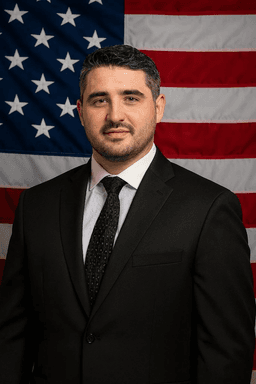 Your attorneyAndranik "Andy" Boyadzhyan, Esq.Founding Attorney. Licensed in Washington, D.C.
Attorney advertising. Services are not available in all states.
By Andranik "Andy" Boyadzhyan, Attorney at Law. Meet the team
In Washington, D.C., a car accident lawyer can work on a contingent fee: a percentage of the recovery, set in a written agreement, with nothing owed in fees if there is no recovery. Case costs are handled separately in that agreement. Top USA Law charges no fee unless we win (costs may apply).
Key takeaways
Car crash lawyers in the District can be paid a contingent fee, a share of the money recovered, so you pay no fee up front.
Lawyers may charge an hourly rate, a flat fee, or a contingent fee tied to the outcome. Rule 1.5(c) of the D.C. Rules of Professional Conduct says a fee "may be contingent on the outcome of the matter," except where a contingent fee is prohibited, such as defending someone charged with a crime under Rule 1.5(d). For a person hurt in a crash on Rock Creek Parkway or at a busy intersection on 16th Street NW, a contingent fee means the lawyer is paid from the settlement or verdict, if one comes, and not from your paycheck while you are out of work.
Whatever the arrangement, Rule 1.5(a) says every fee must be reasonable. It lists eight factors, including the time and skill the case requires, the amount involved and the results obtained, the lawyer's experience, and whether the fee is fixed or contingent.
It must be written and state the percentage, the expenses deducted, when they come off, and whether you owe expenses if you lose.
Rule 1.5(c) is specific. A contingent fee agreement "shall be in writing" and shall state the method for figuring the fee, including the percentage or percentages that apply if the case settles, goes to trial, or goes to appeal; the litigation and other expenses that will be deducted; whether those expenses come off before or after the fee is calculated; and whether you will owe expenses regardless of the outcome. When the lawyer has not regularly represented you, Rule 1.5(b) requires the basis or rate of the fee, the scope of the work and the expenses you will owe to be given to you in writing, before or within a reasonable time after the work starts.
| Item | What to look for |
|---|---|
| Method and percentage | The percentage for settlement, for trial and for appeal, if they differ |
| Expenses deducted | Which litigation and other expenses come out of the recovery |
| Order of deduction | Whether expenses come off before or after the fee is calculated |
| Expenses if you lose | Whether you owe expenses regardless of the outcome |
| Closing statement | A written statement at the end showing the outcome, your share and how it was figured |
Top USA Law. Services are not available in all states.
Fill in four quick fields, and a licensed attorney reviews the facts of your case at no cost.
No District rule fixes a percentage for car cases. Your written agreement sets it, and it must be reasonable under Rule 1.5(a).
Rule 1.5 does not name a number. Its comment notes that other law can limit contingent fees, for example with a ceiling on the percentage, and that if there is doubt whether a contingent fee is in the client's interest, the lawyer should explain other payment options. The agreement may set one percentage for a settlement and a higher one if the case goes to trial or appeal, because Rule 1.5(c) asks for "the percentage or percentages" for each stage. Read that part closely and ask what event moves you from one percentage to the next: filing suit, a set date, or the start of trial.
Costs are case expenses, such as filing fees, records and expert reports. A D.C. lawyer may advance them, and the agreement says who repays.
Case costs are different from the lawyer's fee. They can include court filing and service fees, police and medical record charges, deposition transcripts, expert reports and investigation. Rule 1.8(d) lets a District lawyer pay or provide "the expenses of litigation," including court costs, investigation, medical examinations and the costs of obtaining and presenting evidence. It also allows other financial assistance that is reasonably necessary for the client to bring or keep the case going. Whether you repay those costs if the case is lost must be in the written agreement under Rule 1.5(c). That is why Top USA Law words its terms as "No Fee Unless We Win (Costs May Apply)."
The percentage is applied to the recovery, either before or after costs are subtracted, exactly as your written agreement says. The order changes your share.
| Step | Costs deducted after the fee | Costs deducted before the fee |
|---|---|---|
| 1 | Fee = percentage x gross recovery | Net = gross recovery minus costs |
| 2 | Subtract the fee, then subtract costs | Fee = percentage x net |
| 3 | Pay any valid liens | Pay any valid liens |
| 4 | Client receives the rest | Client receives the rest |
When costs come off first, the percentage applies to a smaller number, so the fee is smaller and your share is larger. Neither method is wrong under the District rules; the agreement just has to say which one applies. Liens are separate again: if a health plan or medical provider claims repayment from the recovery, that claim is resolved before the rest is paid out.
The check goes into the lawyer's trust account. The lawyer must notify you promptly, pay you promptly, and account for every dollar on request.
Rule 1.15(a) requires a District lawyer to hold client money in a trust account, separate from the firm's own money, and to keep records for five years. Under Rule 1.15(c), the lawyer must promptly tell you when funds arrive, promptly deliver what you are entitled to, and give a full accounting if you ask. If a lien holder and you disagree over part of the money, Rule 1.15(d) has the disputed portion held separately while the undisputed portion is paid out. Rule 1.5(c) then requires a written closing statement showing the outcome, the amount sent to you and how it was figured. Our page on when a D.C. settlement check arrives walks through the timing.
Sometimes the insurer does. A court that finds overdue PIP was not promptly paid can order the insurer to pay your lawyer's reasonable fee.
Personal injury protection is optional in the District, but if you bought it and elected benefits within the 60 days set by D.C. Code section 31-2405, the insurer must pay as losses accrue, subject to D.C. Code section 31-2406(g), which makes PIP pay after other available coverage, except for a deductible. Under 31-2410(c), a PIP payment is overdue if not paid within 30 days after the insurer receives reasonable proof of the loss, and it bears interest. D.C. Code section 31-2410(e) adds that an attorney may receive a reasonable fee for representing you in an action for overdue PIP, and the fee is paid by the insurer, on top of the benefits and interest, if a court finds the insurer did not promptly pay. That fee does not come out of your benefits. See our guide to D.C.'s optional PIP.
A lawyer can identify the deadlines that apply, gather evidence, deal with insurers and handle court steps, and explain choices like the PIP election.
No lawyer can promise a result, and we do not. What a lawyer can do is find the clocks that apply to you and explain what each one requires. The District's clocks start fast: 60 days to elect PIP under 31-2405, six months to give written notice to the Mayor when a District vehicle or roadway is involved under D.C. Code section 12-309, and three years to sue under D.C. Code section 12-301. Fault is unforgiving too, since under District of Columbia common law a driver or passenger found even slightly at fault can lose the claim, if that fault helped cause the crash. A lawyer also checks your own uninsured and underinsured coverage under D.C. Code section 31-2406 when the other driver's limits are low. Our first offer guide explains why timing matters.
Ask for the percentage at each stage, how costs are handled if you win or lose, and who pays liens, all in writing.
What a case like this is worth: the fee is a share of the value, and value turns on the injury, treatment, lost income, fault and insurance limits. See how D.C. car accident settlements are valued.
Top USA Law offers a free case review, and our terms are No Fee Unless We Win (Costs May Apply), set out in a written agreement before you sign. Our Washington, D.C. office is at 700 12th St NW, Suite 700, and cases filed in court go to the Superior Court of the District of Columbia, Civil Division; see the D.C. Superior Court guide. Andranik "Andy" Boyadzhyan, Attorney at Law, licensed in Washington, D.C., wrote this page. Visit the Washington, D.C. car accident lawyer page or the District-wide D.C. car accident attorney page.
Related Washington, D.C. questions: pain and suffering, rental cars, the lawsuit process.
Before weighing the cost, read whether you need a lawyer for a D.C. car accident at all.
Sue within three years, or two after a death. District claims need Mayor notice in six months; elect PIP in 60 days.
A licensed Washington, D.C. attorney, Andranik "Andy" Boyadzhyan, Founding Attorney, reviews every Washington, D.C. claim, and our team helps you in English or Spanish.
Andranik "Andy" Boyadzhyan, Esq.
Founding Attorney
Licensed in Alabama, Missouri, New Mexico and Washington, D.C.
Featured in CNN, Forbes, Variety

Paul Perkins, Esq.
Of Counsel
Licensed in New Jersey and New York
Certified by the New Jersey Supreme Court as a Civil Trial Attorney. Lawyer of Distinction in Civil Litigation.
Featured in CNBC, Bloomberg, Forbes, The New York Times
Andranik "Andy" Boyadzhyan is the founding attorney of Top USA Law. His background spans business law, civil litigation, and personal injury, and his practice today focuses on motor vehicle accident claims.
Sundas Shafi, Esq., Attorney at Law, Head of Litigation
Rosette Kalayjian, Attorney at Law
Sandra Alves, Case Manager
Four steps from your first call to the close of your claim. You focus on healing while we deal with the insurers and keep you updated.
Free consultation
Call 24/7 or send the short form. An attorney reviews what happened and tells you where you stand. Free, no obligation.
We deal with the insurers
We deal with the insurance companies, request the police report and medical records, and keep you updated.
We build your case
Evidence, witnesses, experts and the medical picture of your injuries, prepared as if the case will go to trial.
You get paid
Medical bills, lost wages, vehicle damage, and pain and suffering. No fee unless we win; costs may apply.
Reviewed by Andranik "Andy" Boyadzhyan, Esq.
Fill in the four short fields in this form, and a licensed attorney reviews your case for free. We respond day or night.
Top USA Law. Services are not available in all states.
Takes 30 seconds. No obligation.