


Andranik "Andy" Boyadzhyan, Esq.
Founding Attorney
Licensed in Alabama, Missouri, New Mexico and Washington, D.C.
Featured in CNN, Forbes, Variety
Serving Washington, D.C.
Hurt in a crash? The insurance company already has a team working on your claim. You should too. A free call tells you where you stand.
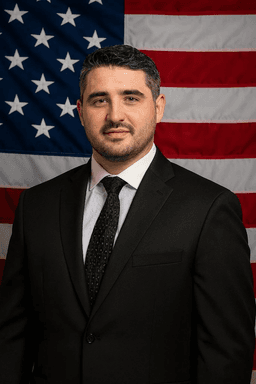 Your attorneyAndranik "Andy" Boyadzhyan, Esq.Founding Attorney. Licensed in Washington, D.C.
Attorney advertising. Services are not available in all states.
By Andranik "Andy" Boyadzhyan, Attorney at Law. Meet the team
In Washington, D.C., no law sets a formula for pain and suffering; an insurer or jury values it from proof of your pain, treatment and lost daily life. Your own fault and a PIP election can limit or end the claim. Top USA Law will review your case at no cost.
Key takeaways
Pain and suffering is the human cost of a crash: physical pain, fear, lost sleep, scarring and daily pleasures you can no longer enjoy.
Lawyers call it non-economic damages, because no receipt shows the amount. It sits beside economic damages, which are the bills and lost pay you can add up. A person rear-ended on I-395 near the 14th Street Bridge may have a hospital bill with a clear total, but the months of neck pain, the missed weekend games with a child and the anxiety of merging onto the freeway again have no price tag. Those losses are still real, and District juries are asked to put a fair value on them.
| Type | What it includes | How it is shown |
|---|---|---|
| Economic | Medical and therapy bills, prescriptions, lost wages, reduced earning ability, car repair | Bills, pay stubs, tax returns, employer letters |
| Non-economic | Physical pain, emotional distress, loss of enjoyment of life, scarring or disfigurement, inconvenience | Medical records, your own account, family and coworker testimony, photos, a recovery journal |
There is no legal formula. Adjusters use rough methods to negotiate, while a jury weighs the evidence and decides what amount is fair.
No section of the District's motor vehicle insurance law, from D.C. Code section 31-2404 through D.C. Code section 31-2406, sets a multiplier or a daily rate for pain. Two shortcuts still come up in talks with adjusters. The multiplier method takes the medical bills and multiplies them by a number picked for how serious the injury seems. The per diem method assigns a daily amount for each day of recovery. Neither one binds a jury, and neither one is a promise of value. They are bargaining tools.
What actually moves the number is proof: how long treatment lasted, whether imaging or surgery confirmed the injury, whether a doctor expects lasting limits, how much work you missed, and what you can no longer do. We do not predict a dollar figure for any injury, because no one can do that honestly before the evidence is in.
Top USA Law. Services are not available in all states.
Fill in four quick fields, and a licensed attorney reviews the facts of your case at no cost.
It can. If you elect PIP, any suit against another person needs an injury or costs that pass the District's threshold.
Personal injury protection is optional in the District. Under D.C. Code section 31-2404, insurers must offer it, and it pays medical and rehabilitation costs, work loss and funeral benefits without regard to fault, but only to a victim who is an insured, an occupant of the insured's vehicle, or an occupant of a vehicle the insured is driving. Under D.C. Code section 31-2405, you have 60 days after the crash to tell the PIP insurer whether you elect those benefits. The insurer must tell you about the 60 day window in writing, and the window can be extended only by written agreement. If you make no election in time, the liability coverage applies instead.
| Your choice | PIP pays | Pain and suffering claim against the driver | Rule |
|---|---|---|---|
| Elect PIP within 60 days | Medical, work loss and funeral benefits, regardless of fault | Any suit against another person is allowed only if the injury meets the District threshold or your expenses or work loss exceed PIP | D.C. Code 31-2405(b) |
| Do not elect, or let 60 days pass | Nothing under PIP | Full liability claim, subject to contributory negligence | D.C. Code 31-2405(g) |
| Death claim | Funeral benefits if bought | Survivors may sue whether or not PIP was elected | D.C. Code 31-2405(c) |
Substantial permanent scarring, a substantial permanent impairment that significantly affected work or daily life, or more than 180 continuous days unable to do usual activities.
The test in D.C. Code section 31-2405(b) has two doors. The first is the injury: substantial permanent scarring or disfigurement; a substantial, medically demonstrable permanent impairment that significantly affected your work or usual daily activities; or a medically demonstrable impairment that kept you from doing all or nearly all of your usual daily activities for more than 180 continuous days. The second door is money: your medical and rehabilitation expenses, or your work loss, exceed the PIP benefits available. Either door reopens the claim for pain and suffering. A cyclist knocked down on Pennsylvania Avenue who needs surgery and six months of therapy may get through one or both. A short soft tissue strain may not.
For drivers and passengers, yes. The District follows contributory negligence, so even a small share of fault can bar the whole claim.
Under District of Columbia common law, an injured driver or passenger who is found to have contributed to the crash in any degree may recover nothing, including nothing for pain. That is why insurers look hard for a late turn, a rolling stop or a phone in your hand. Pedestrians, cyclists, motorcyclists and other vulnerable users have a different rule. Under the Motor Vehicle Collision Recovery Act, D.C. Code section 50-2204.52, their own negligence does not bar recovery unless it was a proximate cause of the crash and greater than the combined negligence of everyone they sued. Not wearing a seat belt is not evidence of negligence under D.C. Code section 50-1807. Our page on being partly at fault in D.C. explains each rule.
Steady medical records, your own day by day account, and people who saw the change in you make pain visible to an adjuster or jury.
Our D.C. whiplash settlement guide shows how a neck injury is documented.
Delays in care, treatment gaps, earlier injuries, careless statements and low insurance limits can all shrink what an insurer will pay for pain.
Waiting days to see a doctor, posting photos from a trip while claiming you cannot travel, or giving a recorded statement to the other driver's insurer can all be used to argue the pain was minor. A prior back problem does not end a claim, but the records must separate the old injury from the new one. Insurance limits matter too: D.C. Code section 31-2406 sets District minimum liability limits, and a serious injury can exceed them. Your own uninsured motorist coverage, and underinsured coverage if you bought it, can fill part of that gap. See the uninsured driver page.
Three years to sue, but some steps come sooner: 60 days for the PIP election, six months to notify the Mayor of District claims.
What a case like this is worth: value turns on the injury, the length of treatment, lost income, permanency, fault and the insurance limits. Read how D.C. car accident settlements are valued.
Talk to a lawyer before you elect PIP, before any recorded statement, and as soon as the other driver blames you for the crash.
Top USA Law's Washington, D.C. office is at 700 12th St NW, Suite 700, a few blocks from the K Street and 14th Street corridors. District injury cases are filed in the Superior Court of the District of Columbia, Civil Division, explained on our D.C. Superior Court guide. Andranik "Andy" Boyadzhyan, Attorney at Law, licensed in Washington, D.C., wrote this page. We meet clients by phone, by video or in person, and you pay no fee unless we win, and costs may apply. Start with the Washington, D.C. car accident lawyer page or the District-wide D.C. car accident attorney overview.
Related Washington, D.C. questions: rear-end collision claims, settlement calculator, health insurance after a crash, when the settlement check arrives, what a lawyer costs, what to do after a crash.
Sue within three years, or two after a death. District claims need Mayor notice in six months; elect PIP in 60 days.
A licensed Washington, D.C. attorney, Andranik "Andy" Boyadzhyan, Founding Attorney, reviews every Washington, D.C. claim, and our team helps you in English or Spanish.
Andranik "Andy" Boyadzhyan, Esq.
Founding Attorney
Licensed in Alabama, Missouri, New Mexico and Washington, D.C.
Featured in CNN, Forbes, Variety

Paul Perkins, Esq.
Of Counsel
Licensed in New Jersey and New York
Certified by the New Jersey Supreme Court as a Civil Trial Attorney. Lawyer of Distinction in Civil Litigation.
Featured in CNBC, Bloomberg, Forbes, The New York Times
Andranik "Andy" Boyadzhyan is the founding attorney of Top USA Law. His background spans business law, civil litigation, and personal injury, and his practice today focuses on motor vehicle accident claims.
Sundas Shafi, Esq., Attorney at Law, Head of Litigation
Rosette Kalayjian, Attorney at Law
Sandra Alves, Case Manager
Four steps from your first call to the close of your claim. You focus on healing while we deal with the insurers and keep you updated.
Free consultation
Call 24/7 or send the short form. An attorney reviews what happened and tells you where you stand. Free, no obligation.
We deal with the insurers
We deal with the insurance companies, request the police report and medical records, and keep you updated.
We build your case
Evidence, witnesses, experts and the medical picture of your injuries, prepared as if the case will go to trial.
You get paid
Medical bills, lost wages, vehicle damage, and pain and suffering. No fee unless we win; costs may apply.
Reviewed by Andranik "Andy" Boyadzhyan, Esq.
Fill in the four short fields in this form, and a licensed attorney reviews your case for free. We respond day or night.
Top USA Law. Services are not available in all states.
Takes 30 seconds. No obligation.