

Pedestrian Hit by Car
$725,000
Insurer offered$25,000
Hip fracture and concussion in a crosswalk. The insurer offered $25,000.
Serving Washington, D.C.
Hurt in a crash? The insurance company already has a team working on your claim. You should too. A free call tells you where you stand.
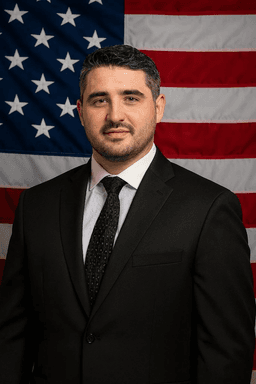 Your attorneyAndranik "Andy" Boyadzhyan, Esq.Founding Attorney. Licensed in Washington, D.C.
Attorney advertising. Services are not available in all states.
By Andranik "Andy" Boyadzhyan, Attorney at Law. Meet the team
In Washington, D.C., fault alone does not end a pedestrian's or cyclist's claim after a motor vehicle hits them; the bar applies only when their negligence was a proximate cause and exceeded all defendants' combined. Drivers and passengers of cars are still barred by any share of fault. Call Top USA Law, (877) 411-5291.
Struck by a motor vehicle, a pedestrian or cyclist keeps the claim unless their negligence was a proximate cause and exceeded all defendants' combined.
The question people ask first is "Was it partly my fault?" For someone on foot or on a bike in the District, a yes does not end the claim by itself. The Motor Vehicle Collision Recovery Act sets the test in D.C. Code section 50-2204.52: the injured person's own negligence bars recovery only if it is a proximate cause of the injury and greater than the aggregated total negligence of all the defendants that proximately caused it. A driver or a passenger of a car stays under the older rule, where contributory negligence can bar the claim.
Look at the words "all the defendants". The injured person is measured against everyone responsible, added together. With one defendant, the bar applies only if the injured person was more at fault than the driver. Take two drivers each found 30 percent at fault and a cyclist found 40 percent: 40 is not greater than 60, so the bar does not apply. Those numbers are an illustration and not a prediction.
This page covers what the rule leaves out and the rights that sit beside it. The rule itself is on our 50-2204.52 card, and payment, PIP and the 60 day election are in the scooter and e-bike guide. Andranik "Andy" Boyadzhyan, licensed in the District of Columbia, is the attorney behind this page. Top USA Law is based in Hackensack, New Jersey, and works with District clients by phone and video.
It does not decide how damages are figured or cover every crash, and it leaves other pedestrian and cyclist protections in place.
Yes, in one direction. Section 50-2204.52(a)(2) shields a vulnerable user in a collision with a pedestrian, so the cyclist's own negligence does not bar the claim unless it was a proximate cause and greater than all defendants' combined. Subsection (a)(1) covers a pedestrian or vulnerable user who collides with a motor vehicle or another vulnerable user. Two pedestrians colliding fall outside both.
The Act says nothing about it. It decides only when a pedestrian's or vulnerable user's negligence bars recovery, and it adds that nothing in the subchapter changes joint and several liability or the last clear chance doctrine. How a share of fault affects damages is argued from the evidence in each case.
Section 50-2204.52(b)(2) says the subchapter does not reduce what pedestrians and cyclists already have under two other sections. One is D.C. Code section 7-1004: a driver approaching a blind pedestrian carrying a white or metallic cane, or a deaf pedestrian, either one using a dog guide, "shall take all necessary precautions to avoid injury", and a driver who fails is liable in damages. The other is D.C. Code section 50-1606: in a civil suit over an accident in which a person under 16 is injured, failure to wear a helmet is not evidence of negligence per se, contributory negligence or assumption of the risk, is not admissible, and does not reduce damages.
Health coverage you are eligible for pays first, and PIP, where it applies, pays the deductible and then the rest. Whether PIP reaches a person who was on foot or on a bike turns on the policy and on D.C. Code section 31-2404, so read the policy with an attorney; our scooter guide walks through sections 31-2404, 31-2405 and 31-2406(g).
Top USA Law. Services are not available in all states.
Fill in four quick fields, and a licensed attorney reviews the facts of your case at no cost.
In each case, the insurance company made a first offer. Here is what our clients received instead. Past results do not guarantee a similar outcome.
Pedestrian Hit by Car
$725,000
Insurer offered$25,000
Hip fracture and concussion in a crosswalk. The insurer offered $25,000.
Every case is different. Past results do not guarantee, warrant, or predict a similar outcome.
Suit against a driver is due in three years; notice to the Mayor for a claim against the District is due within six months.
Three years is the general limit for a personal injury suit under D.C. Code section 12-301, and a wrongful death action has two years under D.C. Code section 16-2702. The District adds a step. Before you can sue it for unliquidated damages, written notice of the approximate time, place, cause and circumstances must reach the Mayor within six months of the injury, and a written Metropolitan Police Department report made in the regular course of duty is enough (D.C. Code section 12-309). A broken sidewalk or a faulty District signal in the story starts that six month clock.
A lawsuit is filed in the Superior Court of the District of Columbia. The Court's Civil Actions Branch is in the Moultrie Courthouse, 500 Indiana Avenue NW, Room 5000. See our Superior Court guide and the lawsuit process guide.
DC Health's page on the trauma center credentialing process says "Currently, there are four Level 1 Trauma Centers designated in the District": MedStar Washington Hospital Center, George Washington University Hospital, Howard University Hospital and Children's National Hospital, which serves children. Tell every provider that your injury came from a crash.
Get the report number from the officer at the scene, and read our D.C. crash report guide before you request the report.
Related guides: the D.C. pedestrian accident page, the partly at fault guide and the D.C. car accident laws guide. Call (877) 411-5291. No Fee Unless We Win (Costs May Apply).
Sue a private driver within three years, or two after a death. District claims need written Mayor notice within six months.
A licensed Washington, D.C. attorney, Andranik "Andy" Boyadzhyan, Founding Attorney, reviews every Washington, D.C. claim, and our team helps you in English or Spanish.

Andranik "Andy" Boyadzhyan, Esq.
Founding Attorney
Licensed in Alabama, Missouri, New Mexico and Washington, D.C.
Featured in CNN, Forbes, Variety

Paul Perkins, Esq.
Of Counsel
Licensed in New Jersey and New York
Certified by the New Jersey Supreme Court as a Civil Trial Attorney. Lawyer of Distinction in Civil Litigation.
Featured in CNBC, Bloomberg, Forbes, The New York Times
Andranik "Andy" Boyadzhyan is the founding attorney of Top USA Law. His background spans business law, civil litigation, and personal injury, and his practice today focuses on motor vehicle accident claims.
Sundas Shafi, Esq., Attorney at Law, Head of Litigation
Rosette Kalayjian, Attorney at Law
Sandra Alves, Case Manager
Four steps from your first call to the close of your claim. You focus on healing while we deal with the insurers and keep you updated.
Free consultation
Call 24/7 or send the short form. An attorney reviews what happened and tells you where you stand. Free, no obligation.
We deal with the insurers
We deal with the insurance companies, request the police report and medical records, and keep you updated.
We build your case
Evidence, witnesses, experts and the medical picture of your injuries, prepared as if the case will go to trial.
You get paid
Medical bills, lost wages, vehicle damage, and pain and suffering. No fee unless we win; costs may apply.
Reviewed by Andranik "Andy" Boyadzhyan, Esq.
Fill in the four short fields in this form, and a licensed attorney reviews your case for free. We respond day or night.
Top USA Law. Services are not available in all states.
Takes 30 seconds. No obligation.