

Rear End Collision
$2,300,000
Insurer offered$85,000
Spinal cord injury after a rear end crash. The insurer offered $85,000.
Serving Washington, D.C.
Hurt in a crash? The insurance company already has a team working on your claim. You should too. A free call tells you where you stand.
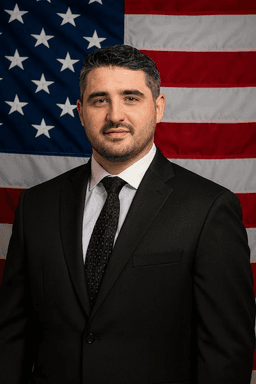 Your attorneyAndranik "Andy" Boyadzhyan, Esq.Founding Attorney. Licensed in Washington, D.C.
Attorney advertising. Services are not available in all states.
By Andranik "Andy" Boyadzhyan, Attorney at Law. Meet the team
In Washington, D.C., contributory negligence can bar a driver or passenger from recovering anything if the insurer proves they contributed to the crash in any degree. Pedestrians, cyclists and other non motorized users recover unless more than 50 percent at fault under D.C. Code 50-2204.52. Evidence of fault is the whole case. Call Top USA Law at (877) 411-5291 for a free review.
Contributory negligence is a defense that blames the injured person. Where it applies in full, any fault of your own can defeat the claim.
Contributory negligence is the legal doctrine that a person who helped cause their own injury cannot make the other party pay for it. The defendant raises it, the defendant has to prove it, and in a pure contributory negligence jurisdiction like the District of Columbia the consequence is total: not a reduced recovery, no recovery. That is the single most important thing to understand about a Washington, D.C. car accident claim.
Most of the country replaced this rule decades ago with comparative negligence, which splits the loss by percentage. The District kept it for drivers and passengers, so an argument worth a discount elsewhere is worth the whole case here.
Yes, for drivers and passengers. The District is one of a small number of places that still applies the old rule in its pure form.
It is common law, not a statute. You will not find a section of the D.C. Code that says "any fault bars recovery," because the rule was inherited from centuries of court decisions and the District's courts never abandoned it. That matters practically: there is no statutory text to argue about and no percentage schedule to apply. The doctrine lives in case law, and it is applied case by case on the facts.
The one legislative change came in 2016. The Motor Vehicle Collision Recovery Act, codified at D.C. Code 50-2204.52, replaced the harsh rule with a comparative standard for pedestrians, cyclists and other non motorized road users. Everyone else, including the driver and the passenger in the car, is still governed by the common law rule. Our guide to D.C. Code 50-2204.52 covers that carve out in detail.
Comparative fault reduces what you recover. Contributory negligence eliminates it. Same 20 percent of blame, two completely different outcomes.
| Rule | Who it governs in the District | Effect of 20 percent fault on recovery |
|---|---|---|
| Pure contributory negligence | Drivers, passengers and motorcyclists | Claim can be barred entirely |
| Modified comparative fault, 50 percent bar | Not the District's rule for drivers | Recovery cut by 20 percent |
| Modified comparative fault, 51 percent bar | Not the District's rule for drivers | Recovery cut by 20 percent |
| Pure comparative fault | Not the District's rule for drivers | Recovery cut by 20 percent |
| Comparative rule in D.C. Code 50-2204.52 | Pedestrians, cyclists, other non motorized users | Claim survives; fault is not the greater share |
Under a comparative system a jury assigns percentages and the award drops by the injured person's share, sometimes with a cut off at half or just over half. The loss gets divided. Nobody walks away with nothing over a small mistake.
There is no percentage step in a District driver's case. The jury is asked whether the plaintiff's own negligence was a proximate cause of the injury. If the answer is yes, the verdict is for the defense. A District claim is therefore an all or nothing liability fight, which is why the evidence comes first and the medical file comes second.
It turns every claim into a liability case. The insurer does not need to prove you caused the crash, only that you helped.
Adjusters talk in percentages because juries do, but the doctrine has no threshold. A driver five miles per hour over the limit when a car turned left across their path is not obviously at fault, and an insurer will still argue the speed contributed. The argument does not have to be strong, only plausible enough to make the claim risky, because a defense verdict on liability pays nothing at all.
Because the payoff is asymmetric. In a comparative jurisdiction, winning a fault argument saves the carrier a percentage. In the District it can save the entire claim, so the argument is worth making even when it is weak. That is also why a carrier will push a low early number in a District case and why our page on the first insurance offer in Washington, D.C. matters more here than in most places.
| What the adjuster argues | What actually decides it | Evidence that answers it |
|---|---|---|
| You were speeding | Whether speed changed the outcome, not whether it happened | Vehicle event data, crush measurements, signal timing |
| You were on your phone | Whether you were using it at impact | Carrier records with timestamps, handset data |
| You changed lanes without signaling | Position of both cars before impact | Camera footage, damage pattern, witness accounts |
| You were following too closely | Whether the other driver stopped suddenly and why | Brake light and lamp evidence, event data, witnesses |
| You ran a stale yellow | Actual signal phase at entry | Signal timing records, intersection video |
| You stopped short | Whether stopping was reasonable in traffic | Traffic conditions, dashcam, following distance |
| You crossed outside the crosswalk | The comparative rule, not the bar | D.C. Code 50-2204.52, sight lines, driver speed |
| You were not wearing a seat belt | District law keeps belt use out of it | The statute itself; see below |
Three things blunt the doctrine: a rescue doctrine for the last chance to avoid the crash, a causation requirement, and a statute for people not in cars.
The District recognizes the last clear chance doctrine. A negligent plaintiff can still recover where the defendant had the last realistic opportunity to avoid the collision and did not take it. The classic District fact pattern is a driver who made a mistake, then stopped or became helpless, and was struck by a driver who had time and room to react. The doctrine is proved with the same material as fault itself: distances, speeds, sight lines, reaction time, and what each driver could actually see.
A violation that played no part in the collision is not contributory negligence. An expired registration, a burned out dome light, a lapsed inspection sticker: none of these caused anything, and none of them bar a claim. The defense has to connect your conduct to the crash as a proximate cause, and a great many adjuster arguments die at exactly that point when they are pushed.
District law keeps belt use out of the fault fight. Neither a violation of the District's safety belt chapter nor compliance with it counts as evidence of negligence or of contributory negligence, and it cannot be used to reduce damages in a civil action. When an adjuster leans on an unbelted claimant in the District, that argument has no legal footing.
D.C. Code 50-2204.52 says the negligence of a pedestrian or other vulnerable user of a public highway or sidewalk does not bar recovery unless it was a proximate cause of the injury and greater than the aggregated total negligence of all the defendants who proximately caused it. In practice that is a 50 percent rule: a share of half or less does not end the claim. It applies to people on foot in Washington, D.C. and to cyclists, and whether a given device counts as a non motorized user is a fact question worth arguing.
| Road user | Fault rule that applies | Source |
|---|---|---|
| Driver | Any contributing fault can bar the claim | District common law |
| Passenger | Same rule, but a passenger rarely contributes | District common law |
| Motorcyclist | Any contributing fault can bar the claim | District common law |
| Pedestrian | Barred only if fault is the greater share | D.C. Code 50-2204.52 |
| Bicyclist | Barred only if fault is the greater share | D.C. Code 50-2204.52 |
| Other non motorized user | Treated as a vulnerable user | D.C. Code 50-2204.52 |
| Anyone suing the District government | Same fault rule, plus a six month notice | D.C. Code 12-309 |
Your own coverage does not care whose fault it was. That is why household policies matter more in the District than almost anywhere.
Benefits that flow from your own contract are paid on the policy's terms, not on a jury's view of fault. Medical payments coverage pays treatment bills. Collision coverage repairs the car. And the District allows an optional no fault election under D.C. Code 31-2404, under which a driver who elects personal injury protection benefits receives them without proving fault, while accepting limits on suing the other driver unless the injury is serious enough or the medical costs run past the available benefits. The election has to be made in a short window measured in days, not months, so it is one of the first questions in a new District file.
Uninsured and underinsured motorist coverage is the real backstop. The District requires uninsured motorist coverage on registered vehicles, and underinsured coverage is available. It is your own carrier's obligation, but it is not free of the fault problem: an uninsured motorist claim usually asks whether the phantom or uninsured driver was legally liable, so the same evidence has to be assembled. See uninsured driver claims in Washington, D.C. for how that plays out.
Nobody rules on fault at the scene. The crash report, the cameras and the physical evidence decide it, months later.
The crash report is usually the insurer's first and favorite document. It records the officer's diagram, any citation, and what each driver said while shaken up. It is not a judicial finding and it is not the last word, but it sets the frame, and an error in it will be quoted back at you for two years. Request it early, read it carefully, and pursue a correction where it is factually wrong. The Metropolitan Police Department publishes its process at mpdc.dc.gov.
The evidence that wins District liability fights expires fast. Business cameras along a block overwrite within days, Metrobus footage follows a retention schedule, and a vehicle's speed and braking data is lost when the car is repaired. Witness numbers stop working. A canvass in week one beats any argument in year two.
A citation or a conviction moves the needle. Leaving the scene is a crime in the District under D.C. Code 50-2201.05c, and driving under the influence is prohibited under D.C. Code 50-2206.11. A conviction on either is strong evidence against that driver. It does not end the contributory negligence defense automatically, but it makes it a much harder sell.
Four moves decide most District fault fights, and three of the four happen in the first two weeks.
Get the footage before it is overwritten. Identify every camera with a view of the block, send written preservation demands the same week, and reach the vehicles before repair so event data can be downloaded. Locate witnesses while their numbers work. Photograph the intersection at the same hour and in the same weather, because sight lines and glare are facts.
An apology at the scene, a friendly recorded statement to the other driver's adjuster, or a post about how you "did not see him" becomes the defense's evidence of contributory negligence. Report the crash to your own carrier as your policy requires, and answer its questions. Decline the other insurer's recorded statement until you have counsel. Say nothing about the crash on social media, including in a private group.
Every District file should be examined for last clear chance, for a causation gap between your conduct and the collision, and for whether the injured person is covered by the comparative rule in D.C. Code 50-2204.52 rather than the common law bar. Those three questions are worth asking before any demand goes out, because they change what the claim is worth.
Treatment cannot wait for a liability decision. Medical payments coverage, a no fault election, health insurance and an uninsured motorist claim can all carry the medical file while liability is argued. We read every declarations page in the household first, because a release signed without the uninsured carrier's consent can destroy that claim.
A fault dispute does not pause anything. The lawsuit deadline and the District notice deadline run while the letters go back and forth.
The lawsuit must be filed within three years of the crash under D.C. Code 12-301. A claim against the District government requires written notice to the Mayor within six months under D.C. Code 12-309. A wrongful death action has two years from the death under D.C. Code 16-2702. A Metrobus or Metrorail claim goes through WMATA's own process. Our Washington, D.C. car accident deadline guide lays all of them out in a table, and the step by step guide for the days after a crash covers what to do first.
See if you have a case
Three answers and a phone number. An attorney reviews your situation and calls you back, free.
Rear End Collision
$2,300,000
Insurer offered$85,000
Spinal cord injury after a rear end crash. The insurer offered $85,000.
T Bone Accident
$1,800,000
Insurer offered$120,000
Broken pelvis and internal bleeding at an intersection. The insurer offered $120,000.
Drunk Driver Victim
$1,500,000
Insurer offered$50,000
Traumatic brain injury caused by an impaired driver. The insurer offered $50,000.
Every case is different. Past results do not guarantee, warrant, or predict a similar outcome.
We treat every District case as a liability case first. The medical file can be built later; the footage cannot.
In the first two weeks we canvass cameras along the block and send written preservation demands, order the crash report, record witnesses, photograph the scene in the same light, and arrange a data download where the vehicle still exists. Where a bus, truck or rideshare vehicle is involved, the preservation demand goes to the corporate owner's risk department, not the driver.
Then we get ahead of the argument instead of answering it. If the insurer is going to say you were speeding, we want the signal timing and crush measurements on file before the adjuster commits that story to writing. If the injured person was on foot or on a bike, the claim is framed under D.C. Code 50-2204.52 from the first letter, so the comparative standard is the starting point rather than a concession. Where the seat belt argument comes up, we answer it with the District's own rule.
Andranik "Andy" Boyadzhyan is licensed in the District of Columbia and handles these claims. Top USA Law has a Washington, D.C. office at 700 12th St NW, Suite 700. The consultation is free, there is no fee unless we win, and costs may apply. Call (877) 411-5291 before you give any statement about how the crash happened.
Fault is one of several District rules that decide a car accident claim. These pages cover the rest.
We serve Washington, D.C. clients by phone, video and in person appointments arranged case by case.
Hurt in a crash? Talk it through for free.
Washington, D.C. filing deadlines and insurance notice rules can be short. A free call tells you where your clock stands.
Last reviewed by Andranik "Andy" Boyadzhyan, Esq., September 2026.
Three fields. We respond fast, day or night.
Best decision I ever made. My truck accident case settled for $285,000. They were available 24/7 and always kept me updated.
Client testimonials. Testimonials are not a guarantee, warranty, or prediction of the outcome of your case.
Top USA Law. Services are not available in all states.
Takes 30 seconds. No obligation.