

Rear End Collision
$2,300,000
Insurer offered$85,000
Spinal cord injury after a rear end crash. The insurer offered $85,000.
Serving Washington, D.C.
Hurt in a crash? The insurance company already has a team working on your claim. You should too. A free call tells you where you stand.
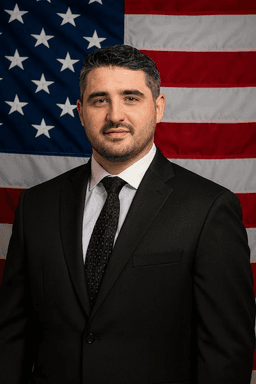 Your attorneyAndranik "Andy" Boyadzhyan, Esq.Founding Attorney. Licensed in Washington, D.C.
Attorney advertising. Services are not available in all states.
By Andranik "Andy" Boyadzhyan, Attorney at Law. Meet the team
In Washington, D.C., you have three years from the date of the crash to file a car accident lawsuit under D.C. Code 12-301. A wrongful death case has two years from the death. If a District vehicle or a District road hazard was involved, written notice is due within six months. Insurance negotiations do not stop the clock. Call Top USA Law at (877) 411-5291 for a free case review.
Three years from the date of the crash. That is the deadline to file a lawsuit in the District, and missing it ends the claim.
D.C. Code 12-301 is the District's general statute of limitations. Paragraph (8) covers any action for which a limitation is not otherwise specially prescribed and gives it three years from the time the right to sue accrues. A car accident injury claim sits in that paragraph. The right to sue accrues the day of the collision, so the clock starts at the scene, not when the pain gets worse.
Filing means commencing a civil action: a complaint accepted by the clerk of the Superior Court of the District of Columbia before the third anniversary. It does not mean opening an insurance claim or trading emails with an adjuster, which can run for two and a half years while the real deadline runs out underneath them.
The same section gives property damage three years, so your car and your body share one date. Two other deadlines are shorter and they are the ones that end cases: six months to serve written notice on the Mayor when the District government is involved, under D.C. Code 12-309, and two years from a death for a wrongful death action under D.C. Code 16-2702.
Most District claims run three years. Notice to the District government runs six months. A death runs two years. Your own policy can be shorter than all of them.
| Claim | Deadline | Clock starts | Source |
|---|---|---|---|
| Injury lawsuit against the other driver | Three years | Date of the crash | D.C. Code 12-301 |
| Damage to your vehicle and property | Three years | Date of the crash | D.C. Code 12-301 |
| Wrongful death action | Two years | Date of the death | D.C. Code 16-2702 |
| Survival claim for pain before death | Three years | Date of the crash | D.C. Code 12-301 |
| Written notice to the District government | Six months | Date of the injury | D.C. Code 12-309 |
| Lawsuit against the District after notice | Three years | Date of the crash | D.C. Code 12-301 |
| Metrobus or Metrorail claim | WMATA claim procedures | Date of the crash | WMATA interstate compact |
| Uninsured or underinsured motorist claim | Policy notice terms | Per your policy | Your own auto policy |
| Electing optional no fault benefits | Days, not months | Date of the crash | D.C. Code 31-2404 and your policy |
Read the table as independent clocks, not one deadline. One Metrobus crash can trigger the WMATA procedure, the six month notice for a District owned signal, the three year lawsuit date and a notice term in your own policy, all at once.
The claim is dismissed. The defense raises the statute of limitations in its first response, the court applies it, and the facts never get heard.
There is no hardship exception for a strong case. A District driver with a clear rear end crash and a repaired shoulder has nothing if the complaint is filed one day late. Adjusters track the date as closely as lawyers do, and as the third year closes offers get smaller, because a claimant with no filed complaint is about to have no leverage. If an adjuster goes quiet in month thirty, that is information. Read our guide on whether to accept the first insurance offer in Washington, D.C.
What survives a missed deadline: benefits from your own contract, such as medical payments coverage. What ends: the claim against the at fault driver, which is where pain and suffering, full wage loss and future care live.
A few situations stop or delay the clock. None of them are safe to rely on, and every one of them is decided by a judge after the fact.
The District recognizes a discovery rule for an injury a person could not reasonably have known about. In a crash it almost never helps, because a collision injury announces itself the same week. Even where it applies, the clock starts when a reasonable person would have connected the harm to its cause.
District law lets a person who was under 18 when the right of action accrued bring the action after that disability is removed, so a child's own injury claim generally does not die on the third anniversary. That is not a reason to wait. Footage is gone in days and the witness who saw the light turn is unfindable in a year, so a parent should bring the claim inside the ordinary three years.
The same provision covers a person who was non compos mentis when the right of action accrued: an adult who cannot manage their own affairs after a head injury. The period runs from removal of the disability, and proving the condition existed at accrual takes medical records, so calendar the plain date too.
District law also addresses a defendant who is absent from the District or conceals themselves, which can keep the period from running while the person cannot be found. That is a narrow rule and a bad plan. File inside three years and use the court's process to locate and serve the driver.
Where a defendant actively conceals the facts that would let you discover the claim, accrual can be delayed until the concealment is found out: an owner who hides who was driving, for example. It is an argument of last resort.
| Situation | Effect on the three year clock | What to do now |
|---|---|---|
| Injured person was under 18 at the crash | Period runs from removal of the disability | File inside three years anyway; evidence will not wait |
| Injured person was non compos mentis | Period runs from removal of the disability | Open a guardianship and preserve medical proof |
| Injury could not reasonably have been known | Discovery rule may move accrual | Document when and how you learned of it |
| Defendant absent from the District or hiding | May keep the period from running | File and use the court's service process |
| Defendant concealed the facts | May delay accrual until discovery | Preserve every communication that misled you |
| Injured person dies before suing | Two year death clock and three year survival clock both apply | Open the estate and appoint a representative |
| Ongoing settlement talks | No effect at all | Calendar the crash date and file if talks stall |
Three years is the headline. The deadlines that actually end District cases are measured in months, and two of them start the day of the crash.
If the vehicle that hit you belonged to the District, or a District maintained signal or roadway defect contributed, D.C. Code 12-309 requires written notice to the Mayor within six months after the injury. The notice must state the approximate time, place, cause and circumstances. Miss it and the claim against the District is barred while the lawsuit date is still years away. We serve it in writing through the District's risk management function and keep proof of service.
A Washington, D.C. wrongful death action must be brought within two years of the death under D.C. Code 16-2702, by the personal representative of the estate. Two clocks run: two years from the death, and three years from the crash for the estate's survival claim. The estate has to be opened first, and probate takes time.
Metrobus and Metrorail are run by WMATA, an interstate compact agency rather than the District government. The six month notice to the Mayor does not govern a WMATA claim, and WMATA runs its own claims process. The lawsuit deadline still comes from D.C. Code 12-301. If a Washington, D.C. bus accident injured you, the first question is which entity owned the bus.
Uninsured and underinsured motorist coverage is a contract claim against your own carrier, and the contract sets the rules: prompt notice, cooperation, sometimes arbitration inside a stated period, and consent before you settle with the at fault driver. Settling without that consent can void the uninsured driver claim in Washington, D.C.
The three year clock still runs when nobody knows who hit you. It runs against a defendant you have not identified, which is why the search starts immediately.
Leaving the scene is a crime in the District under D.C. Code 50-2201.05c, which requires a driver who knows or believes their vehicle was in a collision to stop immediately, call for help when someone is hurt, remain until law enforcement arrives and give identifying information. A conviction is strong evidence in the civil case, but the civil deadline does not wait for the criminal case.
Two tracks run in parallel in a Washington, D.C. hit and run file. The first is identification: canvassing cameras along the block, circulating a partial plate, following the Metropolitan Police Department investigation. The second is your own uninsured motorist claim, which carries a policy notice deadline far shorter than three years.
Deadlines are easier to see on a calendar than in a statute. Here are two District crashes with the dates written out.
A driver is rear ended at Rhode Island Avenue NE and Montana Avenue on May 12, 2026 and treats for eight months. The lawsuit deadline is May 12, 2029 under D.C. Code 12-301, and the vehicle damage claim shares that date. Nothing an adjuster said in 2028 changed it.
A pedestrian is struck by a District government van on Georgia Avenue NW on May 1, 2026. Written notice to the Mayor under D.C. Code 12-309 is due by November 1, 2026. The lawsuit against the District is due by May 1, 2029. If a private car also contributed, the claim against that driver has the full three years and needs no notice. Because a pedestrian is covered by the fault rule in D.C. Code 50-2204.52, the same file still has to show the pedestrian's share of fault was not the greater share.
Nothing on this list is a statute of limitations. Every item on it decides cases anyway, and most of them expire in days or weeks.
| Task | When | Why it decides the case |
|---|---|---|
| Get examined | Same day or next day | A treatment gap becomes the carrier's causation defense |
| Notify your own insurer | Promptly, per the policy | Late notice can forfeit your own coverage |
| Elect optional no fault benefits, if you have them | Days after the crash | The election window is short and it affects the right to sue |
| Request the crash report | First two weeks | It fixes the officer's version of fault in writing |
| Send preservation letters | First two weeks | Footage and vehicle data are overwritten fast |
| Serve the six month District notice | Before month six | Statutory bar under D.C. Code 12-309 |
Footage hurts the most: business cameras along a District block overwrite within days. The step by step guide to the days after a Washington, D.C. crash covers this in order, and the Metropolitan Police Department publishes its report process at mpdc.dc.gov.
Limitation periods exist so cases are tried while the proof is still real. That is also the argument for filing early rather than at the edge.
Memory fades, vehicles are scrapped and witnesses move. A claim that sat for ten years would be tried on guesswork. Read the three years as an outer wall, not a schedule.
Filing stops the clock in the statute and starts a different one: the court's schedule, which is measured in months and sometimes years.
After filing, the defendant is served and answers, then the case moves into discovery, depositions, medical examinations and mediation before a trial date is real. Filing on the third anniversary is legal and also the costliest way to run a case, because evidence you could have gathered in month two has to be rebuilt in year four. See how long a Washington, D.C. car accident case takes and what a Washington, D.C. car accident settlement is worth.
See if you have a case
Three answers and a phone number. An attorney reviews your situation and calls you back, free.
Rear End Collision
$2,300,000
Insurer offered$85,000
Spinal cord injury after a rear end crash. The insurer offered $85,000.
T Bone Accident
$1,800,000
Insurer offered$120,000
Broken pelvis and internal bleeding at an intersection. The insurer offered $120,000.
Drunk Driver Victim
$1,500,000
Insurer offered$50,000
Traumatic brain injury caused by an impaired driver. The insurer offered $50,000.
Every case is different. Past results do not guarantee, warrant, or predict a similar outcome.
In the Superior Court of the District of Columbia. The District has one trial court of general jurisdiction, and every ordinary car accident case starts there.
The complaint goes to the civil division at the courthouse on Indiana Avenue NW. That single venue is one of the few simple things about a District case: no county to choose, and no question of whether a crash on the Anacostia Freeway belongs somewhere different from one on 16th Street NW. A claim against the District government is filed in the same court after the six month notice is served. A claim involving a federal vehicle follows a separate federal process.
Every District file opens with a deadline audit before anyone talks settlement. We write down the three year date under D.C. Code 12-301, any six month notice date under D.C. Code 12-309, the two year death date under D.C. Code 16-2702 where it applies, the WMATA procedure where Metro is involved, and the notice and consent terms in every household auto policy.
Then we work backward. Preservation letters and camera canvassing happen in the first two weeks, and the crash report is requested immediately. Where the owner of the striking vehicle is unclear we resolve that before month six, because the answer decides whether a notice deadline is running. Where a client came to us late, we say so plainly and file rather than negotiate into the wall.
Andranik "Andy" Boyadzhyan is licensed in the District of Columbia and handles these claims. Top USA Law has a Washington, D.C. office at 700 12th St NW, Suite 700. Consultations are free, there is no fee unless we win, and costs may apply. Call (877) 411-5291 and bring the date of the crash.
The deadline is one of several District rules that decide a car accident claim. These are the others.
We serve Washington, D.C. clients by phone, video and in person appointments arranged case by case.
Hurt in a crash? Talk it through for free.
Washington, D.C. filing deadlines and insurance notice rules can be short. A free call tells you where your clock stands.
Last reviewed by Andranik "Andy" Boyadzhyan, Esq., September 2026.
Three fields. We respond fast, day or night.
Best decision I ever made. My truck accident case settled for $285,000. They were available 24/7 and always kept me updated.
Client testimonials. Testimonials are not a guarantee, warranty, or prediction of the outcome of your case.
Top USA Law. Services are not available in all states.
Takes 30 seconds. No obligation.