

Rear End Collision
$2,300,000
Insurer offered$85,000
Spinal cord injury after a rear end crash. The insurer offered $85,000.
Serving Washington, D.C.
Hurt in a crash? The insurance company already has a team working on your claim. You should too. A free call tells you where you stand.
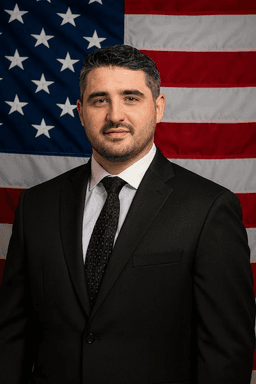 Your attorneyAndranik "Andy" Boyadzhyan, Esq.Founding Attorney. Licensed in Washington, D.C.
Attorney advertising. Services are not available in all states.
By Andranik "Andy" Boyadzhyan, Attorney at Law. Meet the team
In Washington, D.C., a person hurt on a Metrobus, hit by one, or struck at a stop claims directly against the bus operator for medical costs, lost income and pain and suffering, with no injury threshold to clear. Who owns the bus decides the deadline and the claim process. Top USA Law identifies the operator, serves the right notice and preserves the video. The consultation is free.
You have a case as a passenger if the bus was driven carelessly and you were hurt. A bus operator is a common carrier, owing riders a higher degree of care than one driver owes another. A driver who braked hard on the 16th Street line at a light in Columbia Heights, pulled away from a stop on Georgia Avenue before you reached a seat, or shut the doors on your arm at a Benning Road stop fell short of that duty. The stop or start has to be unusual and violent, and the cabin video and the riders around you prove it.
You also have a case if you were driving and a bus hit you. A bus that swung out of a stop on Pennsylvania Avenue SE into your lane, rear ended you in traffic on Rhode Island Avenue, or merged into your car on New York Avenue was negligent, and the operator answers for its driver. In the District, though, a driver's claim carries a risk a passenger's does not: if the operator can attach any share of the blame to you, the claim can be barred. The bus's forward camera and event recorder settle that question.
Pedestrians bring the most serious bus cases we see. A person struck by a bus turning across a crosswalk on H Street NE, clipped by a mirror at a shelter on Minnesota Avenue, or hit crossing to a stop on Martin Luther King Jr. Avenue SE has a claim against the operator. Pedestrians are judged under a friendlier fault rule than drivers, explained below, and a passenger hurt when a car struck the bus often has claims against two drivers at once.
Two things shape every District bus claim. The first is who owns the bus. Metrobus belongs to WMATA, an interstate compact agency with its own claim process; a District school bus belongs to the District government, with a six month notice rule; a tour coach on the Mall belongs to a private company on ordinary deadlines. The second is contributory negligence, which is rarely an issue for a passenger, because a passenger almost never contributed to anything, but is the whole case for a driver.
The District is an at fault jurisdiction. You bring your claim directly against the operator of the bus that caused your injury, and you can seek medical costs, lost income and pain and suffering in one claim with no serious injury threshold to clear. While the claim is pending, your health insurance covers treatment and the claim reimburses those costs at the end. If you have no health insurance, many providers treat under an agreement to be paid from the recovery.
The District does offer an optional no fault election. Under D.C. Code 31-2404, a policyholder may carry personal injury protection benefits, and a person who elects to receive those benefits after a crash accepts limits on suing the other party unless the injury meets statutory thresholds. A bus passenger with no auto policy has nothing to elect, and most District bus cases proceed directly against the operator. When you do carry such a policy, we review it before any election is made.
Fault works differently for each person on the scene. Drivers and passengers are judged under contributory negligence, so any share of fault on the victim's part can bar the claim. For a passenger, that is rarely a live issue; sitting in a seat or holding a rail is not negligence. For a pedestrian struck at a stop, the Motor Vehicle Collision Recovery Act, D.C. Code 50-2204.52, applies instead: a pedestrian recovers unless their own negligence was greater than the combined negligence of the other parties.
A public transit bus changes the process rather than the law of fault. Metrobus is run by WMATA, an interstate compact agency that is self insured, keeps its own video and defends claims through its own claims office. It is not the District government, and the District's notice rule does not apply to it. A District school bus or any other District vehicle is a claim against the District, with written notice to the Mayor within six months. A private charter, tour or commuter coach is an ordinary defendant with a commercial policy.
A claim is worth the sum of what the crash took from you, built one category at a time. Economic damages are the measurable losses: medical bills, future treatment your doctors expect, lost wages and benefits, reduced earning capacity if you cannot return to your job, and out of pocket costs. Non economic damages cover pain and suffering, loss of enjoyment of life and scarring. The District has no threshold and no general cap on these damages in a bus case.
Bus crashes produce a recognizable set of injuries. Standing riders thrown by a hard stop fracture wrists, hips and shoulders. Seated riders in a collision suffer neck and back injuries because transit buses have no seat belts. Pedestrians struck by a bus suffer crush injuries and are valued in a category of their own. A fracture, a surgery or a herniated disc with a lasting limitation moves a claim into a different tier from a strain that resolves with therapy.
Two things set the ceiling in practice. The first is the defendant. A private coach company's commercial policy pays up to its limit. WMATA and the District are self insured and have no policy limit in the usual sense, but neither pays early. The second is fault, and for a driver hit by a bus it is a cliff rather than a slope: a claim another jurisdiction would pay at 80 percent after a 20 percent fault finding can be worth nothing here. For a passenger, that cliff almost never comes into play.
Cases are tried in the Superior Court of the District of Columbia, and District juries have historically been receptive to injured people when fault is clear. We do not quote a number on the first call. We gather the evidence and the records and, when your doctors can describe your future, put a demand on paper backed by both. Past results do not guarantee a similar outcome. Each case is decided on its own facts.
Expect it. WMATA's claims office and the District's risk management office exist to close files cheaply. The first response usually says the stop was ordinary, that you fell because you were not holding on, or that the driver had the right of way. Those are opening positions. The answer to each is evidence, and most of the evidence sits in the operator's hands until we demand it.
For a driver, expect the fault argument first, because in the District it can end the claim. The adjuster will say you could have braked sooner or entered the intersection a moment late. The recorded statement requested in the first days is where those arguments come from. Do not give it. For a passenger, the argument is weaker, since a rider who was seated or holding a rail did nothing wrong, but the recorded statement is still where the operator looks for a foothold, so the same rule applies.
Metrobuses carry cameras facing forward, into the cabin and at each door, and an event recorder that logs speed, braking and door status. WMATA overwrites that data on a short cycle unless a preservation demand arrives first. We send one immediately. When an operator later says the footage no longer exists, the court can allow a jury to draw an inference against the party that failed to keep it.
On injury, the operator will send you to its own doctor and argue that your MRI shows age rather than trauma. We answer with treating physicians, objective imaging and, where needed, a narrative report tying the injury to the crash. Because the District has no threshold, the fight is over causation and value, not categories. If the operator will not pay fairly after treatment is complete, we file suit and use discovery to obtain the driver's file, and the maintenance history of the bus. Self insured entities settle when trial is real.
The deadline that matters most in a bus case is the shortest one, and in the District it depends entirely on who owned the bus. If the bus was a District school bus or any other District government vehicle, D.C. Code 12-309 requires written notice to the Mayor within six months of the injury as a precondition to suing the District. The notice must describe the time, place, cause and circumstances of the injury. We serve the notice ourselves.
Metrobus is different. WMATA is an interstate compact agency, not the District government, and the six month notice statute does not apply to it. WMATA has its own claim process and its own defenses. The general three year deadline governs the lawsuit, but WMATA's video is overwritten in days and its claims office moves on its own schedule, so we open the claim and serve the preservation demand in the first week rather than waiting on the statute.
Private operators follow the ordinary deadline. A claim against a tour company, a charter bus, a commuter coach or a private school bus contractor must be filed within three years of the crash under D.C. Code 12-301. A wrongful death action must be brought within two years of the death under D.C. Code 16-2702. That clock runs from the death, not the crash, and the personal representative of the estate must be appointed before suit, which takes time. We begin that process immediately.
Insurance deadlines run separately and sooner. Every policy requires prompt notice, and uninsured and underinsured motorist coverage requires that you notify your own carrier before settling with anyone else. When a crash involves both a bus and a private car, both sets of deadlines apply. The safe approach is to treat every District bus crash as a six month case until the owner of the bus is confirmed.
See a doctor the same day. Standing riders often walk off the bus and feel the injury that night, and a gap between the crash and your first visit is the first thing a claims office uses against you. MedStar Washington Hospital Center and George Washington University Hospital are the District's Level I trauma centers, and Howard University Hospital is nearby. Tell every provider that you were hurt on or by a bus so the records say so.
Make sure an incident report exists. Tell the driver you were hurt before you leave the bus, because an operator with no report will later say nothing happened. Write down the bus number on the side and rear, the route, the direction, the stop and the time. If police responded, get the report number; Metro Transit Police cover Metrobus incidents, and the Metropolitan Police Department's Major Crash Investigations Unit handles the most serious pedestrian cases. A bus driver who strikes a pedestrian and continues on the route is committing a crime under D.C. Code 50-2201.05c.
The onboard cameras are the case. Metrobuses record the cabin, the doors and the road ahead, and DDOT traffic cameras, federal building security cameras and storefronts record most District streets. Operators keep that footage for a short cycle. For a driver, that footage is often the difference between a full recovery and none. Call us the same day so a preservation demand reaches the operator before the cycle turns over.
Get names and numbers from the riders around you; they will scatter at the next stop. Photograph the bus, the stop, your position and your injuries. Do not give a recorded statement to WMATA, the District or any insurer, do not accept a quick check, and do not discuss fault with anyone but your lawyer. Keep a file of every bill, appointment and missed day of work; it becomes the claim months later.
See if you have a case
Three answers and a phone number. An attorney reviews your situation and calls you back, free.
Rear End Collision
$2,300,000
Insurer offered$85,000
Spinal cord injury after a rear end crash. The insurer offered $85,000.
T Bone Accident
$1,800,000
Insurer offered$120,000
Broken pelvis and internal bleeding at an intersection. The insurer offered $120,000.
Drunk Driver Victim
$1,500,000
Insurer offered$50,000
Traumatic brain injury caused by an impaired driver. The insurer offered $50,000.
Every case is different. Past results do not guarantee, warrant, or predict a similar outcome.
Top USA Law meets District clients at 700 12th St NW, Suite 700, Washington, DC 20005, a few blocks from Metro Center and the Superior Court of the District of Columbia at 500 Indiana Avenue NW. One number reaches us, (877) 411-5291, answered around the clock. If you cannot travel, we come to your home or hospital. Andranik "Andy" Boyadzhyan, the firm's founding attorney, is licensed in the District of Columbia and handles every District bus matter.
District bus accident lawsuits are filed in the Civil Division of the Superior Court of the District of Columbia. Claims against WMATA may be filed there or in the United States District Court for the District of Columbia, and WMATA frequently moves cases to the federal court. A claim against the District government follows the six month notice, and a claim against a federal vehicle, such as a Park Police unit near the Mall, goes through an administrative process before it reaches the federal court.
The bus crashes we see come from the same places: the 16th Street line through Columbia Heights and Mount Pleasant, the Georgia Avenue corridor from Petworth to the District line, Pennsylvania Avenue SE through Anacostia and Hillcrest, Benning Road NE past the Minnesota Avenue station, and the H Street NE and Rhode Island Avenue stops where buses and turning cars share little room. Tour and charter coaches loading around the National Mall and Union Station produce a steady share of pedestrian and sideswipe cases.
We handle claims involving Metrobus and other WMATA vehicles, District school buses and paratransit vans, tour and charter coaches around the Mall, private commuter coaches, intercity buses at Union Station, and crashes on the District's borders, where we confirm the crash happened inside the District before anything else. Each brings a different owner, a different claim process and often a different deadline into a single case.
Contributory negligence is the District's general rule for drivers and passengers and comes from case law rather than a statute: a person whose own negligence contributed to the crash in any degree is barred from recovering, subject to the last clear chance doctrine. The Motor Vehicle Collision Recovery Act, D.C. Code 50-2204.52, replaced that rule for pedestrians and cyclists, who recover unless their negligence was greater than the combined negligence of the other parties.
D.C. Code 12-309 requires written notice to the Mayor within six months of the injury as a precondition to suing the District of Columbia, and it governs District school buses and every other District government vehicle. Metrobus is operated by WMATA, an interstate compact agency with its own claim process, and the District's notice rule does not apply to it. Private charter, tour and commuter operators follow ordinary deadlines.
D.C. Code 12-301 sets the three year deadline to file a personal injury lawsuit. D.C. Code 16-2702 sets the two year deadline for a wrongful death action, measured from the death. D.C. Code 31-2404 creates the optional no fault election and the thresholds a person who elects those benefits must meet to sue for non economic damages; a bus passenger with no auto policy has nothing to elect.
D.C. Code 50-2201.05c requires a driver involved in an injury crash to stop, provide identification and insurance information and render assistance, and makes leaving the scene a criminal offense; it applies to a bus driver who strikes a pedestrian and keeps to the schedule. D.C. Code 50-2206.11 prohibits driving under the influence of alcohol or drugs. A conviction under either, whether of the bus driver or of the driver who hit the bus, can be used in the civil case.
Hurt in a crash? Talk it through for free.
Washington, D.C. filing deadlines and insurance notice rules can be short. A free call tells you where your clock stands.
Last reviewed by Andranik "Andy" Boyadzhyan, Esq., October 2026.
Three fields. We respond fast, day or night.
Top USA Law took over everything after my car accident. They got me $450,000 when insurance only offered $15,000. I recommend them to everyone.
Client testimonials. Testimonials are not a guarantee, warranty, or prediction of the outcome of your case.
Top USA Law. Services are not available in all states.
Takes 30 seconds. No obligation.