

Rear End Collision
$2,300,000
Insurer offered$85,000
Spinal cord injury after a rear end crash. The insurer offered $85,000.
Serving Washington, D.C.
Hurt in a crash? The insurance company already has a team working on your claim. You should too. A free call tells you where you stand.
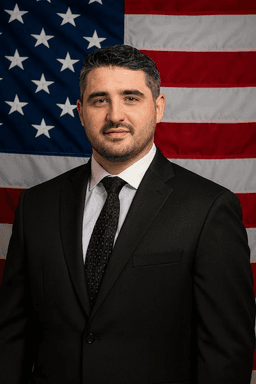 Your attorneyAndranik "Andy" Boyadzhyan, Esq.Founding Attorney. Licensed in Washington, D.C.
Attorney advertising. Services are not available in all states.
By Andranik "Andy" Boyadzhyan, Attorney at Law. Meet the team
In Washington, D.C., a person hit by a driver who fled has a claim. The uninsured motorist coverage that every District policy must carry pays what the driver would have owed, a household relative's policy can apply, and finding the driver adds the driver's insurer. Top USA Law opens the claim, guards it against the District's strict fault rule and runs the search. The consultation is free.
A driver who hits you on New York Avenue and disappears toward the Anacostia Freeway has not taken your claim with them. The money comes from a different policy and the paperwork is heavier, but the question at the center of the case is the same one every District crash asks: was the driver careless, did that carelessness injure you, and can the insurer pin any share of the blame on you? A car that ran the light at Georgia Avenue and Kennedy Street, sideswiped you in Dupont Circle, or struck you in a Rhode Island Avenue crosswalk and kept going was negligent whether or not the driver stopped.
The claim belongs to whoever was hurt. Pedestrians and cyclists are a large share of District hit and run victims, and since the Motor Vehicle Collision Recovery Act they are judged under a gentler fault rule than people in cars. Passengers have a claim against the driver who fled, and a person sitting in a parked car when it was struck has one too. Someone on foot with no car of their own is usually covered by a policy belonging to a relative in the household.
Two things complicate a District hit and run claim. The first is proof: the policy will require a prompt police report, prompt notice, and often something beyond your own word that another vehicle was involved. The second is contributory negligence. In an uninsured motorist claim your own insurer stands in the shoes of the driver who fled, and if it can show that you contributed to the crash in any degree, a driver's or passenger's claim can be barred entirely. That rule makes the first days of evidence the whole case.
The District is an at fault jurisdiction, so there is no automatic no fault coverage to pay your bills while the driver is missing. Your health insurance covers treatment, and the claim reimburses those costs at the end along with everything else. Without health insurance, treatment can usually be arranged under an agreement that the provider is paid from the recovery. A District policyholder who elected optional no fault benefits under D.C. Code 31-2404 has personal injury protection that pays first, but that election carries limits on the right to sue, and we review the policy before any election is made after a crash.
When the driver is never found, the claim is paid by uninsured motorist coverage, which District law requires on every vehicle registered here. The coverage treats an unidentified driver as an uninsured one and pays what that driver would have owed: medical costs, lost wages, future care, out of pocket expenses and pain and suffering, with no injury threshold to clear, up to the uninsured motorist limit. The coverage can come from your own policy, from a policy belonging to a relative you live with, or from the policy on the car you were riding in.
There is no fund behind the policy. Unlike some places, the District does not operate a public program for people hurt by unidentified drivers who have no coverage of their own. A victim with no household policy is left with the driver, once found, and nothing else. That is why we treat the search as the priority in every District hit and run: we follow the Metropolitan Police investigation, send preservation demands to every camera near the scene, and retain an investigator where the police file has gone quiet.
Fault decides whether anyone pays at all. For drivers and passengers, the District applies contributory negligence, and a finding that you were even slightly at fault bars the claim, subject to the last clear chance doctrine, which preserves the claim when the other driver had the final opportunity to avoid the crash and failed to take it. For pedestrians, cyclists and other non motorized users, the Motor Vehicle Collision Recovery Act, D.C. Code 50-2204.52, replaced that rule; they recover unless their own negligence was greater than the combined negligence of everyone else involved.
When the driver is found, the driver's liability insurer becomes the primary source, the owner's policy joins it if the car was borrowed, and an employer's policy applies if the driver was working. Leaving after colliding is a crime under D.C. Code 50-2201.05c, and a plea or conviction is admissible evidence that the driver knew what they had done. Your own uninsured motorist claim does not close; if the driver's limits are too low for your injuries, underinsured coverage on your policy responds to the shortfall. If the vehicle turns out to belong to the District, WMATA or the federal government, a different claim procedure applies and we switch to it.
A hit and run claim is valued the way any District injury claim is valued, by adding up what the crash took from you. Economic damages cover medical bills, future treatment, lost wages and benefits, reduced earning capacity and out of pocket costs. Non economic damages cover pain and suffering, scarring, loss of enjoyment of life and the strain on a family, and the District places no threshold and no general cap on them in a crash case.
In a hit and run, the ceiling is your own coverage. If the driver is never found, the most the claim can produce is the uninsured motorist limit on the policies available to you, and a household with one minimum policy has a low ceiling regardless of the injury. We read every policy in the household and the policy on the car you were in, because more than one can sometimes apply and the highest available limit controls. Past results do not guarantee a similar outcome. Each case is decided on its own facts.
Fault is the other ceiling, and in the District it is a cliff: a small fault finding against a driver or passenger can reduce the claim to nothing. Identifying the driver lifts the ceiling and shifts the leverage. A found driver adds a liability policy, an owner's policy and possibly an employer's policy, and the flight itself matters before a District jury; a driver who left an injured person on Pennsylvania Avenue at night is not a sympathetic defendant. We do not quote a number on the first call. We gather the evidence and the records and put a demand on paper that the insurer must answer with proof.
In an uninsured motorist claim your own insurer is the opposing party, and District denials arrive in four forms: there was no other vehicle, you reported it too late, you contributed to the crash, and your injuries came from something else. The first two are answered with the record: paint transfer on your bumper, debris from the road, the damage pattern a reconstruction engineer can read, the 911 recording with its time stamp, the Metropolitan Police report, camera footage and the witness who saw it.
The contributory negligence argument is the one that decides District cases, and it is where the insurer spends its effort. You were going a few miles over the limit on the Southeast Southwest Freeway, you changed lanes without signaling, you stepped off the curb mid block, you were not wearing a seat belt. Any of those, if proven, can end a driver's or passenger's claim. We answer with evidence that places all of the fault on the driver who fled, with the last clear chance doctrine where the facts support it, and, for pedestrians and cyclists, with D.C. Code 50-2204.52, which lets them recover unless their fault was greater than everyone else's combined.
The causation argument is answered with medicine. The insurer sends you to a physician it selects, who reports that your MRI shows age related change and that your complaints predate the crash. We answer with your treating doctors, objective imaging read by a radiologist and a narrative report tying the injury to the collision. Because the District has no injury threshold, the fight is over cause and value rather than over categories, and the medical record is where it is won.
Many District uninsured motorist policies send the dispute to arbitration rather than to a jury, and we prepare it as a trial, with experts and the reconstruction. Where the policy allows suit, or where the driver has been identified, we file in the Superior Court of the District of Columbia and use discovery to put the insurer's own investigation on the record. A carrier that has denied a claim it should have paid tends to find a better number once a hearing date is set.
The lawsuit deadline is the longest clock. The District gives three years from the crash to file a personal injury action under D.C. Code 12-301, and a wrongful death action must be brought within two years of the death under D.C. Code 16-2702 by the personal representative of the estate. In a hit and run, suit can be filed against an unnamed driver to protect the deadline while the search continues, and the real name is substituted when it is found.
Policy conditions, not statutes, are what end most District hit and run claims. Your uninsured motorist coverage requires a police report, usually within a day or as soon as it was reasonably possible, and prompt written notice to the carrier that a hit and run occurred and that you intend to make a claim. It also requires that you notify the carrier before you settle with a driver who is later found. These conditions come from the policy rather than the code, and because the District has no public fund there is no second chance if they are missed.
Public entities add a short clock. If the vehicle that fled is later identified as a Metropolitan Police car, a DPW or DDOT truck or another District owned vehicle, or if a broken signal or an unlit crosswalk maintained by the District contributed to the crash, D.C. Code 12-309 requires written notice to the Mayor within six months of the injury as a precondition to suing the District. A Metrobus is a claim against WMATA under its own procedure, and a federal vehicle is claimed against the United States through an administrative process. We serve the District notice whenever a District vehicle is a possibility.
Call 911 from the scene, or from the hospital if you were taken there first, and make sure a Metropolitan Police report is written. When the injuries are serious, MPD's Major Crash Investigations Unit takes the case, with its own reconstruction and canvass for cameras and witnesses. Tell the officer every detail you can: the color and shape of the vehicle, any characters from the plate, where it was damaged and which way it went. Because D.C. Code 50-2201.05c makes leaving after colliding a crime, the report starts a criminal investigation, and its number is the first thing every insurer requests.
Cameras are how District hit and run drivers are found, and their footage is overwritten within days. DDOT traffic cameras, Metrobus cameras, federal building security cameras, storefronts, apartment lobbies, doorbells and the license plate readers MPD operates across the District all record the street. Note every camera you can see, ask the nearest businesses to hold their video, and get the name and number of anyone who saw it happen; a witness who caught part of a plate is worth more than any camera.
Leave your car exactly as it is, unwashed and unrepaired, and collect whatever the other vehicle left behind. The streak of paint on your door has a color code that points to a manufacturer, and a mirror housing or headlight shard on the pavement usually carries a part number that narrows the make and model. Photograph everything in place before it is moved, bag the fragments, and keep the car away from a body shop until we have documented it.
See a doctor the same day, at MedStar Washington Hospital Center, George Washington University Hospital, Howard University Hospital or an urgent care, and tell every provider that a vehicle that fled struck you. Then notify your own insurer in writing that a hit and run occurred, that you were hurt and that you are making an uninsured motorist claim. Do not give a recorded statement without us, do not discuss fault with anyone but your lawyer, and do not post about the crash online. Here, one offhand sentence accepting a sliver of blame can cost the entire claim.
See if you have a case
Three answers and a phone number. An attorney reviews your situation and calls you back, free.
Rear End Collision
$2,300,000
Insurer offered$85,000
Spinal cord injury after a rear end crash. The insurer offered $85,000.
T Bone Accident
$1,800,000
Insurer offered$120,000
Broken pelvis and internal bleeding at an intersection. The insurer offered $120,000.
Drunk Driver Victim
$1,500,000
Insurer offered$50,000
Traumatic brain injury caused by an impaired driver. The insurer offered $50,000.
Every case is different. Past results do not guarantee, warrant, or predict a similar outcome.
Top USA Law meets District clients at 700 12th St NW, Suite 700, Washington, DC 20005, a few blocks from Metro Center and the Superior Court of the District of Columbia at 500 Indiana Avenue NW. One number reaches us, (877) 411-5291, answered around the clock. Travel is rarely necessary; we handle most District matters by phone and video, and we come to your home or hospital room when that is easier. Andranik "Andy" Boyadzhyan, the firm's founding attorney, is licensed in the District of Columbia and handles every District hit and run matter.
Uninsured motorist claims are usually decided in arbitration under the policy, but a District hit and run case that reaches a courtroom is filed in the Civil Division of the Superior Court of the District of Columbia. A claim against the United States, such as a crash with a Park Police or postal vehicle that left the scene, is heard in the United States District Court for the District of Columbia after the administrative claim is exhausted.
The hit and runs we see come from the same places: sideswipes and rear end collisions on the Southeast Southwest Freeway, the Anacostia Freeway and the District portions of Interstate 295 and 395, where the other driver never pulls over; intersection crashes on New York Avenue, Georgia Avenue, Pennsylvania Avenue, Rhode Island Avenue and Benning Road; yield disputes at Dupont, Logan, Thomas and Washington Circles; and pedestrian and cyclist strikes late at night on 14th Street, U Street, H Street NE, Minnesota Avenue and Martin Luther King Jr. Avenue SE. We confirm the crash happened inside the District before anything else.
D.C. Code 50-2201.05c requires a driver who collides with a person or a vehicle to stop, provide identification and insurance information and render assistance. Leaving after colliding is a criminal offense, and a plea or conviction is admissible evidence in the civil claim once the driver is identified. D.C. Code 50-2206.11 prohibits driving under the influence of alcohol or drugs; a fleeing driver later found and charged under it hands the civil case a conviction that explains why they ran.
Contributory negligence is the District's general rule for drivers and passengers and comes from case law rather than a statute: a person whose own negligence contributed to the crash in any degree is barred from recovering, subject to the last clear chance doctrine. The Motor Vehicle Collision Recovery Act, D.C. Code 50-2204.52, replaced that rule for pedestrians, bicyclists and other non motorized users, who recover unless their negligence was greater than the combined negligence of the other parties. Both rules apply in an uninsured motorist claim, where your own insurer raises the defenses the fleeing driver would have raised.
D.C. Code 31-2404 governs the optional no fault election and the injury thresholds that an electing policyholder must meet before suing for non economic damages. D.C. Code 12-301 gives three years from the crash to file a personal injury action. D.C. Code 16-2702 gives two years from the death for a wrongful death action. Under D.C. Code 12-309, written notice to the Mayor within six months of the injury is a precondition to any suit against the District, which matters when the fleeing vehicle was District owned or a District maintained road or signal contributed to the crash.
Hurt in a crash? Talk it through for free.
Washington, D.C. filing deadlines and insurance notice rules can be short. A free call tells you where your clock stands.
Last reviewed by Andranik "Andy" Boyadzhyan, Esq., October 2026.
Three fields. We respond fast, day or night.
Excelente servicio. Hablaron español conmigo y me explicaron todo el proceso. Recibí $320,000 por mi accidente de motocicleta.
Client testimonials. Testimonials are not a guarantee, warranty, or prediction of the outcome of your case.
Top USA Law. Services are not available in all states.
Takes 30 seconds. No obligation.