

Pedestrian Hit by Car
$725,000
Insurer offered$25,000
Hip fracture and concussion in a crosswalk. The insurer offered $25,000.
Serving Washington, D.C.
Hurt in a crash? The insurance company already has a team working on your claim. You should too. A free call tells you where you stand.
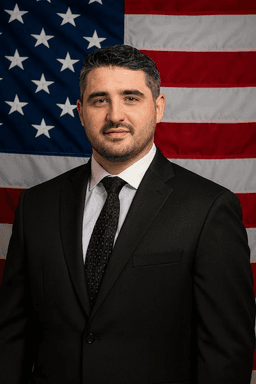 Your attorneyAndranik "Andy" Boyadzhyan, Esq.Founding Attorney. Licensed in Washington, D.C.
Attorney advertising. Services are not available in all states.
By Andranik "Andy" Boyadzhyan, Attorney at Law. Meet the team
In Washington, D.C., a pedestrian struck by a car claims directly against the driver, and thanks to the Motor Vehicle Collision Recovery Act a pedestrian recovers even if partly at fault, as long as their negligence was not greater than the driver's. Top USA Law locks down the camera footage and crash report that put the fault where it belongs. The consultation is free.
You have a case if a driver failed to yield, ran a light, turned without looking, or was distracted or speeding when the car struck you. District drivers must exercise due care around pedestrians, and a driver who fails to on New York Avenue, Georgia Avenue or Pennsylvania Avenue is negligent.
The District treats pedestrians differently than drivers when it comes to fault, which matters enormously here. Since 2016, the Motor Vehicle Collision Recovery Act protects pedestrians and cyclists from the District's otherwise harsh contributory negligence rule. A pedestrian can recover unless their own negligence was greater than the combined negligence of the driver and any other defendants, a modified comparative standard far friendlier than the rule that applies to drivers and passengers in the District.
That protection makes evidence just as important, because the insurer will still argue the pedestrian's share of fault was the larger share. The Metropolitan Police Department crash report, DDOT traffic camera footage, Metrobus cameras and nearby building cameras, and witness statements are what establish whose negligence was greater.
Pedestrians struck outside a marked crosswalk, at a Circle, or crossing mid block on a wide arterial like Rhode Island Avenue still have claims under the modified comparative standard, and a driver who was speeding or distracted bears significant responsibility regardless of exactly where the pedestrian was crossing.
Delivery cyclists, scooter riders and commuters on foot near federal buildings and Metro stations are struck at meaningful rates in the District, and these cases often involve multiple potential defendants: the driver, a government agency if a public vehicle or roadway was involved, and sometimes an employer if the driver was working.
You bring your claim directly against the driver who struck you and that driver's liability insurer. There is no injury threshold to clear for a pedestrian claim in the District. Your health insurance covers treatment while the claim is pending, and the claim reimburses those costs along with your other losses at the end.
The District requires liability and uninsured motorist coverage on every registered vehicle under D.C. Code 31-2403. When the driver who hit you carried a minimum policy or none, your own uninsured motorist coverage, if you have an auto policy, or a household relative's, can respond even though you were not driving.
Government vehicles strike pedestrians in the District with some regularity given the density of federal and District operations downtown. A Metropolitan Police car, a DC Fire and EMS unit, or a District owned vehicle creates a claim against the District with a six month notice requirement. A Metrobus creates a claim against WMATA with its own procedures. We identify the vehicle owner in the first week because it sets the deadline.
Pedestrian injuries in the District tend toward the severe end because there is no vehicle frame to absorb the impact. Fractures, traumatic brain injury and spinal injury are common. Value is built from medical bills, future care, lost wages, earning capacity and pain and suffering, with no threshold and no general cap in a District pedestrian case.
Severity and permanence drive the number. A fracture requiring surgical fixation, a brain injury with lasting cognitive effects, or a spinal injury affecting mobility is valued well above an injury that resolves with therapy. Insurance limits set the practical ceiling, so we pursue every available policy, the driver's, the vehicle owner's, an employer's, or a government entity's self insurance where applicable.
Fault still matters even under the friendlier pedestrian standard, since a pedestrian found more at fault than the driver recovers nothing. We build the evidence on both fault and damages before valuing a case. Past results do not guarantee a similar outcome.
Cases involving children struck near a school, or older residents struck near a Metro station, often carry additional weight given the District's protective approach to pedestrians under the Motor Vehicle Collision Recovery Act. A spouse's loss of consortium claim and, where applicable, a parent's claim for a child's costs are separate categories of recovery we evaluate in every case.
Value in the District is best understood in tiers, same as elsewhere, though the absence of any threshold or general cap means the categories translate more directly into dollar value once fault is established. At the low end, soft tissue injuries and minor fractures healed without surgery produce claims centered on medical costs and a modest pain component. In the middle tier, surgical injuries, a fractured ankle repaired with hardware, a torn ligament, or a herniated disc treated with injections, raise the value with the invasiveness of care and any documented permanency. At the high end, catastrophic injuries, traumatic brain injury with measurable deficits, spinal cord injury, amputation, or multiple surgical fractures, reflect a lifetime of altered earning capacity and future care, typically supported by expert testimony.
A concrete example illustrates the range in the District. A pedestrian clipped at low speed near a Metro station entrance who suffers a wrist fracture healed with a cast presents a claim built around a few months of treatment and a modest pain component. A pedestrian struck at higher speed on a wide arterial like New York Avenue who suffers a fractured femur requiring surgical fixation and months of therapy presents a materially larger claim, with a surgical component, extended wage loss, and a substantially higher pain and suffering figure tied to a permanency finding.
The District holds a negligent driver responsible for aggravating a pre existing condition, so a pedestrian with a prior injury who suffers a new, more serious problem from the crash can still recover for the aggravation. Because fault comparison matters so much in the District, insurers sometimes combine a pre existing injury argument with a fault argument, trying to attack the claim from two directions at once, which is why documenting both the medical timeline and the fault evidence together is essential.
Expect the insurer to argue your negligence was the greater share of the fault, since that is the only way it can defeat a pedestrian claim under the Motor Vehicle Collision Recovery Act. It will point to where you were crossing, whether you looked, and the signal timing.
We answer with DDOT and private camera footage, the Metropolitan Police crash report, signal timing records, and, where the physical evidence is contested, an accident reconstruction. Do not give a recorded statement to the driver's insurer, a single sentence can become the basis for arguing your fault was greater than the driver's.
Beyond fault, insurers argue that your treatment was excessive or your injuries pre existing. We answer with your treating physicians and objective imaging. If the insurer will not pay fairly, we file suit in the Superior Court of the District of Columbia.
Because any degree of pedestrian fault can bar a claim entirely under the District's general contributory negligence rule, insurers here push fault arguments harder than almost anywhere else, though the Motor Vehicle Collision Recovery Act changes the calculus significantly for pedestrians.
The greater fault defense argues that the pedestrian's own negligence was greater than the driver's, which under the Act is the only way the insurer can defeat the claim entirely. We answer with camera footage, the police report, signal timing data and, where needed, reconstruction, building the case that the driver's negligence, not the pedestrian's, was the greater share.
The visibility defense argues the pedestrian was hard to see given lighting or clothing. We answer with lighting documentation and the driver's own statement about when they first saw the pedestrian, which frequently reveals a lookout failure rather than a true visibility problem on the District's well lit downtown streets.
The sudden appearance defense argues there was no time to react. We answer with speed evidence and witness accounts of how long the pedestrian was visible in the crossing before impact.
The pre existing injury defense argues your symptoms are unrelated to the crash. We answer with a clear before and after medical timeline and, where needed, a physician's opinion distinguishing aggravation from an unrelated condition.
The District's insurers also use the independent medical examination as a tool to support these defenses. The examining doctor works for the insurance industry, and we counter a weak report with your own treating physicians' detailed records and, in serious cases, an independent expert of our own.
The District gives you three years from the crash to file a personal injury lawsuit under D.C. Code 12-301. A wrongful death action must be brought within two years of the death under D.C. Code 16-2702.
If a District government vehicle, a poorly maintained crosswalk or signal, or a District maintained road was involved, D.C. Code 12-309 requires written notice to the Mayor within six months of the injury before you can sue the District. Pedestrian cases against the District for a defective crossing or malfunctioning signal fall under this shorter deadline.
WMATA has its own separate claim procedures for Metrobus incidents, and federal vehicles are claimed against the United States through an administrative process. We identify the correct path immediately.
See a doctor the same day even if you feel able to walk. MedStar Washington Hospital Center and George Washington University Hospital are the District's Level I trauma centers.
Make sure a Metropolitan Police crash report exists and get the report number. Photograph the crossing or location where you were struck, the vehicle, the signal, and your injuries. Collect the driver's information and any witnesses' names and numbers.
Look for cameras before you leave. DDOT traffic cameras, Metrobuses, federal building security systems, storefronts and residential doorbells cover most District streets, and the footage is often overwritten within days. In a jurisdiction where fault comparison matters this much, that footage can decide the case.
Do not discuss fault with the driver's insurer or on social media, and do not sign anything from them.
In a jurisdiction where fault comparison can determine whether you recover anything at all, evidence gathered in the first days is not just helpful, it is often the entire case.
DDOT traffic camera footage, Metrobus onboard cameras, and private cameras on federal buildings, storefronts and residential doorbells cover most District streets, and this footage is typically overwritten within days to a couple of weeks. We send preservation letters to every identifiable camera owner immediately, and where a federal agency controls a camera, we follow the appropriate request procedure without delay given how much slower those channels can move.
Traffic signal timing records from DDOT establish right of way at a signalized intersection or a Circle, and cross referencing signal phase data against camera timestamps often resolves a disputed question of who had the right of way, which is decisive given how the District compares fault.
Witness canvassing in the District means returning to busy downtown intersections and Circles, often during the same time of day, to find commuters, security guards and shopkeepers who saw the crash. A witness account of exactly where the pedestrian was and how long they were visible often decides whether an insurer can succeed with a greater fault argument.
Vehicle damage and any available event data help establish approximate speed, directly relevant to both the visibility and sudden appearance defenses. We retain an accident reconstruction engineer in cases where the physical evidence is contested and the value justifies it.
Detailed medical documentation tying the specific mechanism of injury to a pedestrian strike, rather than a generic diagnosis, strengthens the causation picture in a case where every element of proof carries extra weight.
See if you have a case
Three answers and a phone number. An attorney reviews your situation and calls you back, free.
Pedestrian Hit by Car
$725,000
Insurer offered$25,000
Hip fracture and concussion in a crosswalk. The insurer offered $25,000.
Rear End Collision
$2,300,000
Insurer offered$85,000
Spinal cord injury after a rear end crash. The insurer offered $85,000.
T Bone Accident
$1,800,000
Insurer offered$120,000
Broken pelvis and internal bleeding at an intersection. The insurer offered $120,000.
Every case is different. Past results do not guarantee, warrant, or predict a similar outcome.
Top USA Law meets District clients at 700 12th St NW, Suite 700, Washington, DC 20005, near the Superior Court of the District of Columbia. Our main office is at 411 Hackensack Ave, 2nd Floor, Hackensack, NJ 07601. Every office is reached through one number, (877) 411-5291, answered around the clock. Andranik "Andy" Boyadzhyan, the firm's founding attorney, is licensed in the District of Columbia.
District pedestrian accident lawsuits are filed in the Civil Division of the Superior Court of the District of Columbia.
Pedestrian crashes cluster around the District's traffic circles, Dupont, Logan, Thomas and Washington Circles, and along wide arterial streets like New York Avenue, Georgia Avenue and Rhode Island Avenue where signal timing often does not favor people on foot.
We also handle pedestrian claims involving Circulator buses, tour buses, delivery trucks and government fleet vehicles throughout downtown and the surrounding neighborhoods, each of which can raise its own insurer, notice requirement or federal claim procedure.
Downtown pedestrian crashes concentrate around the federal core, the area near Metro Center, Farragut Square and the corridors connecting office buildings to Metro stations during rush hour, where turning traffic from cross streets repeatedly conflicts with heavy pedestrian volume.
The District's traffic circles, Dupont, Logan, Thomas and Washington Circles, produce a distinct pattern of pedestrian crashes tied to confusing multi directional traffic flow and crosswalks that require crossing several lanes at once.
Neighborhoods along Georgia Avenue, upper Northwest near Metro stations, and the H Street corridor in Northeast each present their own pedestrian crash patterns, tied to a mix of local traffic, streetcar operations on H Street, and commercial foot traffic.
The Motor Vehicle Collision Recovery Act, D.C. Code 50-2204.52, is the single most important statute in a District pedestrian case. It replaces the District's harsh contributory negligence rule with a modified comparative standard for pedestrians and cyclists, allowing recovery unless the pedestrian's own negligence was greater than the combined negligence of the other parties.
D.C. Code 31-2403 requires liability and uninsured motorist coverage on every District registered vehicle. D.C. Code 12-301 sets the three year deadline to sue, and D.C. Code 16-2702 sets the two year wrongful death deadline.
D.C. Code 12-309 requires written notice to the Mayor within six months as a precondition to suing the District government, which applies to many pedestrian cases involving public roads and crosswalks.
D.C. Code 50-2201.05c requires a driver to stop after an injury crash and provide information, and D.C. Code 50-2206.11 prohibits driving under the influence. A conviction under either supports the civil case.
Hurt in a crash? Talk it through for free.
Washington, D.C. filing deadlines and insurance notice rules can be short. A free call tells you where your clock stands.
Last reviewed by Andranik "Andy" Boyadzhyan, Esq., October 2026.
Three fields. We respond fast, day or night.
Excelente servicio. Hablaron español conmigo y me explicaron todo el proceso. Recibí $320,000 por mi accidente de motocicleta.
Client testimonials. Testimonials are not a guarantee, warranty, or prediction of the outcome of your case.
Top USA Law. Services are not available in all states.
Takes 30 seconds. No obligation.