

Rear End Collision
$2,300,000
Insurer offered$85,000
Spinal cord injury after a rear end crash. The insurer offered $85,000.
Serving Washington, D.C.
Hurt in a crash? The insurance company already has a team working on your claim. You should too. A free call tells you where you stand.
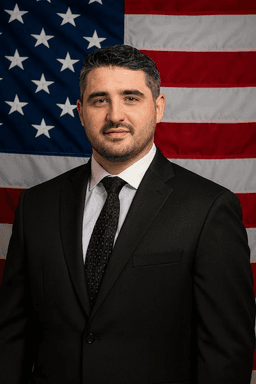 Your attorneyAndranik "Andy" Boyadzhyan, Esq.Founding Attorney. Licensed in Washington, D.C.
Attorney advertising. Services are not available in all states.
By Andranik "Andy" Boyadzhyan, Attorney at Law. Meet the team
In Washington, D.C., a person hurt in an Uber or Lyft crash claims directly against the at fault party, and the rideshare company's larger commercial policy typically applies once a trip has been accepted. The District's contributory negligence rule makes early evidence critical. Top USA Law obtains the trip data and locks down the fault evidence. The consultation is free.
You have a case if you were hurt as a rideshare passenger, in another vehicle struck by an Uber or Lyft driver, or as a pedestrian or cyclist hit by one. The same negligence standard applies as in any District crash, a driver who ran a light, turned without looking, or was distracted looking at the app is negligent.
Rideshare crashes are common in the District given the density of app based transportation downtown and around nightlife corridors. The key coverage question is the driver's app status at the moment of the crash, which determines whether the rideshare company's commercial policy or only the driver's personal policy applies.
For drivers and passengers, the District's contributory negligence rule means any fault on your part can bar the claim, so early evidence matters enormously. Pedestrians and cyclists struck by a rideshare driver are protected by the friendlier standard under the Motor Vehicle Collision Recovery Act.
Late night crashes near nightlife corridors in Adams Morgan, U Street and downtown are common in rideshare cases, and so are crashes where a driver stopped in a travel lane to load or unload a passenger or made an unsafe turn responding to a pickup request. Each of these patterns creates its own negligence theory beyond a simple failure to yield.
You bring your claim directly against the at fault party's liability insurer. With the app off, only the driver's personal policy applies. With the app on and waiting for a request, a lower tier of coverage from the rideshare company applies. Once a trip is accepted and a passenger is aboard, a much larger commercial liability policy from the rideshare company applies.
There is no injury threshold to clear in a District rideshare case. Your health insurance covers treatment while the claim is pending, and the claim reimburses those costs along with your other losses at the end.
We obtain the trip data, driver app logs and insurance certificates to establish which policy governs and pursue the rideshare company's coverage, the driver's personal insurer, or both depending on the facts.
Value is built from medical bills, future care, lost wages, earning capacity and pain and suffering, with no threshold and no general cap. The available insurance, often the rideshare company's larger commercial policy during an active trip, affects what can practically be recovered.
Severity and permanence drive the number. A fracture, a surgery, a traumatic brain injury or a spinal injury moves a claim into a higher tier of value. Fault remains critical under the District's contributory negligence rule for drivers and passengers, since any fault on your part can bar the claim entirely.
We do not quote a number before treatment, fault evidence and the coverage tier are confirmed. Past results do not guarantee a similar outcome.
The commercial policy that applies during an active trip typically offers substantially higher limits than a personal auto policy, which matters even more in a jurisdiction where fault disputes can otherwise threaten the entire recovery. Establishing the correct coverage tier and the fault evidence together is the core of building a strong District rideshare case.
Value in a District rideshare case follows the same tiers as any car accident claim, and the absence of a threshold or general cap means severity translates directly into value once fault is established. At the low end, whiplash and minor sprains resolving within months produce claims centered on medical costs and a modest pain component. In the middle tier, a shoulder injury requiring surgery, a herniated disc treated with injections, or a surgically fixed fracture raise the value with the invasiveness of care and documented permanency. At the high end, a traumatic brain injury, a spinal injury, or multiple surgical fractures reflect a lifetime of altered earning capacity, typically supported by expert testimony.
A concrete comparison illustrates the range. A rideshare passenger in a low speed collision near a downtown Circle who suffers a neck strain resolving with a few weeks of therapy presents a modest claim. A rideshare passenger in a higher speed crash on the Southeast Southwest Freeway who suffers a herniated disc requiring surgery presents a materially larger claim, made more valuable by the rideshare company's commercial policy typically applying if the trip was active.
Because coverage during an active trip typically offers far higher limits than a personal policy, the practical ceiling on a District rideshare case is often higher than an equivalent crash between two personally insured drivers, provided the crash occurred during an active trip and the fault evidence supports the claim under the District's rules.
Wage loss calculations follow the same approach as any District car accident claim, built from pay stubs, tax returns for self employed clients, and, where an injury causes a lasting change in earning capacity, a vocational assessment documenting the gap between pre and post injury earning ability.
Expect two fronts of dispute in the District, the driver's app status at the time of the crash, and, for drivers and passengers, any argument that you contributed to the crash. We answer the coverage dispute with the trip data the rideshare company maintains, and the fault dispute with camera footage, the police report and, where needed, reconstruction.
Do not give a recorded statement to any insurer before speaking with us. Because the District's contributory negligence rule can bar a claim entirely for drivers and passengers, a single conceding sentence carries more weight here than almost anywhere else.
If the insurer will not pay fairly, we file suit in the Superior Court of the District of Columbia, naming every party whose negligence contributed and pursuing every applicable policy.
District rideshare insurers combine the coverage tier defenses common to every rideshare case with the fault arguments that carry extra weight under the District's contributory negligence rule.
The app status dispute is unique to rideshare cases. The rideshare company's insurer may claim the app was off or a trip had not been accepted, attempting to shift the claim to the driver's more limited personal policy. We answer with a formal demand for the company's trip data, GPS logs, app status timestamps and acceptance records.
The independent contractor defense argues the company bears no responsibility for the driver's conduct. This affects certain liability theories against the company but does not change which insurance policy applies, since coverage tracks the app status regardless of that classification question.
For a rideshare passenger, contributory negligence rarely applies, since passengers are almost never found to have contributed to the crash itself, which is one reason a passenger's claim in the District is often stronger and more straightforward than a driver's claim would be.
For occupants of another vehicle or a pedestrian struck by a rideshare driver, the District's fault rules apply as they would in any crash, contributory negligence for drivers and passengers of the other vehicle, and the friendlier standard under the Motor Vehicle Collision Recovery Act for pedestrians and cyclists.
The insurer's independent medical examination remains a tool for supporting injury related defenses regardless of which policy pays. We prepare clients for the exam and counter a weak report with detailed treating physician records.
A related issue involves the vehicle's for hire registration status with the District. A lapse in that registration can become a side issue an insurer raises to complicate a claim, though it rarely changes which policy actually responds once the app data confirms an active trip.
When more than one insurer is potentially responsible, the driver's personal carrier, the rideshare company's app off tier carrier, and its active trip tier carrier, the companies can point at each other rather than pay promptly. We identify every potentially responsible policy at the outset and pursue them together rather than waiting for the insurers to resolve it among themselves.
Insurers sometimes also argue a delay in reporting the crash to the rideshare company undermines the claim. A short delay caused by seeking emergency medical care does not defeat an otherwise well documented case, and the District's rules do not require an instant in app report for a personal injury claim to proceed.
The District gives you three years from the crash to file a personal injury lawsuit under D.C. Code 12-301. A wrongful death action must be brought within two years of the death under D.C. Code 16-2702.
If a District government vehicle was involved in the crash, D.C. Code 12-309 requires written notice to the Mayor within six months.
Trip data retention can make evidence harder to obtain the longer you wait, so calling promptly protects it even though the filing deadline is further out.
Get medical care the same day. Screenshot the trip details in the Uber or Lyft app, the driver's name, trip start and end times and the route, before they become harder to retrieve.
Make sure a Metropolitan Police crash report exists and get the report number. Photograph both vehicles, the street, the signals and your injuries.
Look for DDOT traffic cameras, Metrobus cameras and nearby building cameras before the footage is overwritten, especially important given how fault comparison can affect a District claim.
Report the crash within the rideshare app if you were a passenger, and do not accept a quick settlement or sign a release without legal advice.
District rideshare cases require gathering the same company controlled data relevant everywhere, combined with the fault evidence that matters more here than almost anywhere else.
App trip logs establish exactly when the driver went online, when a trip was requested, accepted and started, and when it ended. We send a formal preservation and production demand to the rideshare company within days of being retained.
Driver background check records can become relevant when a driver's history raises questions about the company's screening practices, particularly for a driver with a documented unsafe driving history.
The insurer coverage tier dispute process requires formally requesting the underlying trip data rather than accepting the insurer's characterization, cross referenced against the police report and any available camera footage, with formal discovery available to compel production if the company resists.
Because fault comparison can determine outcome for drivers and passengers of the other vehicle in a District case, DDOT traffic camera footage, Metrobus cameras, and private camera footage near the crash location are preserved with particular urgency in every District rideshare case.
Medical documentation tying the injury to the specific mechanics of the crash strengthens the causation picture in a jurisdiction where every element of proof carries added weight.
Where a crash involves significant impact and the parties dispute how it happened, an accident reconstruction using the physical evidence and any available event data recorder information can establish speed and point of impact independent of anyone's account.
Passenger statements from other riders in the vehicle, when a trip carried more than one passenger, can corroborate the sequence of events and counter a differing account from the driver or another party.
Ride receipts and in app messaging between the passenger and driver, preserved through the app's own trip history, can corroborate the pickup, route and moment of the crash, particularly useful when a driver's account differs from what the passenger recalls.
Where the crash involved a second vehicle, that vehicle's own insurance information, registration and any prior claims history relevant to the driver's conduct rounds out the liability picture alongside the rideshare specific records.
See if you have a case
Three answers and a phone number. An attorney reviews your situation and calls you back, free.
Rear End Collision
$2,300,000
Insurer offered$85,000
Spinal cord injury after a rear end crash. The insurer offered $85,000.
T Bone Accident
$1,800,000
Insurer offered$120,000
Broken pelvis and internal bleeding at an intersection. The insurer offered $120,000.
Drunk Driver Victim
$1,500,000
Insurer offered$50,000
Traumatic brain injury caused by an impaired driver. The insurer offered $50,000.
Every case is different. Past results do not guarantee, warrant, or predict a similar outcome.
Top USA Law meets District clients at 700 12th St NW, Suite 700, Washington, DC 20005, near the Superior Court of the District of Columbia. Our main office is at 411 Hackensack Ave, 2nd Floor, Hackensack, NJ 07601. Every office is reached through one number, (877) 411-5291, answered around the clock. Andranik "Andy" Boyadzhyan, the firm's founding attorney, is licensed in the District of Columbia.
District rideshare accident lawsuits are filed in the Civil Division of the Superior Court of the District of Columbia.
Rideshare crashes cluster around downtown nightlife corridors, the District's traffic circles, and areas near Union Station and the National Mall where pickup and drop off congestion is heaviest.
We also handle claims against rideshare drivers involved in crashes around Reagan National Airport pickup and drop off zones and the District's convention and event venues, where pickup congestion produces a steady rate of low speed but often serious collisions.
Downtown rideshare crashes cluster around the District's nightlife corridors, Adams Morgan, U Street and the H Street corridor, where weekend evening pickup and drop off congestion produces a steady rate of collisions.
The area around Reagan National Airport's terminal roadways is one of the highest volume rideshare pickup and drop off environments in the region, and crashes there often involve unfamiliar out of town drivers navigating the airport's access roads.
Convention and event venues downtown, near the Walter E. Washington Convention Center and Capital One Arena, produce concentrated rideshare traffic and a corresponding rate of low speed but often serious collisions during major events.
Rideshare crashes tied to trips to and from Nationals Park and Audi Field follow their own predictable pattern around event start and end times, when a surge in simultaneous pickups and drop offs raises the risk of a hurried, distracted maneuver in tight event area traffic.
The District's traffic circles and one way street grid mean many rideshare crashes involve a driver navigating an unfamiliar route or making a last second maneuver to reach a pickup location, a pattern our review of the trip data and turn by turn app instructions is specifically built to uncover.
Contributory negligence is the District's general rule for drivers and passengers, from case law rather than statute, and any fault on your part can bar recovery entirely. The Motor Vehicle Collision Recovery Act, D.C. Code 50-2204.52, protects pedestrians and cyclists with a friendlier modified comparative standard.
D.C. Code 31-2403 requires liability and uninsured motorist coverage on every District registered vehicle. D.C. Code 12-301 sets the three year deadline to sue, and D.C. Code 16-2702 sets the two year wrongful death deadline.
D.C. Code 12-309 requires notice to the Mayor within six months for claims against the District government. The District regulates transportation network companies and requires tiered minimum insurance coverage during periods of app use.
Hurt in a crash? Talk it through for free.
Washington, D.C. filing deadlines and insurance notice rules can be short. A free call tells you where your clock stands.
Last reviewed by Andranik "Andy" Boyadzhyan, Esq., October 2026.
Three fields. We respond fast, day or night.
Hit by a semi truck on the highway. Top USA Law knew exactly how to deal with the trucking company. Got me $425,000 after they initially offered $30,000.
Client testimonials. Testimonials are not a guarantee, warranty, or prediction of the outcome of your case.
Top USA Law. Services are not available in all states.
Takes 30 seconds. No obligation.