

Rear End Collision
$2,300,000
Insurer offered$85,000
Spinal cord injury after a rear end crash. The insurer offered $85,000.
Serving Washington, D.C.
Hurt in a crash? The insurance company already has a team working on your claim. You should too. A free call tells you where you stand.
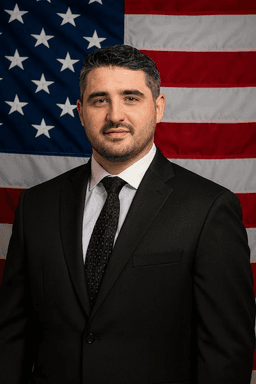 Your attorneyAndranik "Andy" Boyadzhyan, Esq.Founding Attorney. Licensed in Washington, D.C.
Attorney advertising. Services are not available in all states.
By Andranik "Andy" Boyadzhyan, Attorney at Law. Meet the team
In Washington, D.C., a cyclist hit by a driver claims directly against that driver's liability insurer, and the Motor Vehicle Collision Recovery Act lets the cyclist recover unless their own fault was greater than the driver's, a far friendlier rule than the one drivers face. Top USA Law locks down the footage and ride data that keep the fault where it belongs. The consultation is free.
You have a case when a driver turned across your path, passed too close, opened a door into the lane, parked in the cycletrack and forced you into traffic, or pulled out of an alley without looking. A bicycle is a vehicle on District streets, and the driver who right hooks a rider in the 15th Street cycletrack, left crosses a cyclist in the Pennsylvania Avenue lanes, doors a Capital Bikeshare user on M Street or drifts across a rider on Florida Avenue NE has breached a duty the law recognizes. The same is true where the Metropolitan Branch Trail crosses driveways and streets.
What makes the District different is the fault rule, and for cyclists it is the whole case. Drivers and passengers in the District are governed by contributory negligence, a common law rule under which any share of fault, however small, bars recovery entirely. Cyclists are not. The Motor Vehicle Collision Recovery Act, D.C. Code 50-2204.52, lets a cyclist recover unless the cyclist's own negligence was greater than the combined negligence of the driver and anyone else sued, meaning more than 50 percent. A rider who rolled a stop sign and was then struck by a driver on a phone still recovers, reduced by the rider's share.
That protection is exactly why the insurer will argue that your share was the larger one. It will say you ran the light at the end of the trail, rode against traffic, had no lights, or swerved out of the lane. Those arguments are answered with proof: the Metropolitan Police crash report, DDOT traffic camera footage, Metrobus cameras, storefront and building cameras, the crush and scrape pattern on the car, the damage to the bike, and the ride file from a bike computer or phone app that records your speed and line second by second.
Delivery riders on electric bikes, Capital Bikeshare users, trail commuters and weekend riders are all cyclists under the Act. A delivery rider working for an app when struck may have an occupational accident program in addition to the driver's coverage. A shared bike that failed can add a product claim. We sort those layers after the driver's greater share of fault is established.
There is no no fault system for a District cyclist. You bring the claim directly against the driver who hit you and that driver's liability insurer, with no injury threshold to clear, and there is no cap on what a cyclist can recover in an ordinary case. Your health insurance covers treatment while the claim is pending, and the claim reimburses those costs along with everything else at the end. If you have no health insurance, we arrange treatment on a lien so care is not delayed.
The District does allow an optional no fault election under D.C. Code 31-2404. A cyclist who owns an auto policy with personal injury protection may be able to draw medical benefits from it, but electing those benefits after a crash accepts limits on suing the driver during an initial period. Most cyclist cases proceed directly against the driver, and we read your policy before advising whether any election is in your interest.
Your own household auto coverage responds even though you were on a bike. The District requires uninsured motorist coverage on every registered vehicle, and uninsured and underinsured coverage on your policy, or on a policy belonging to a relative you live with, fills the gap when the driver carried a minimum policy, had none, or fled. There is no public fund to fall back on in the District, so the search for the driver and for household coverage begins the first week.
Government vehicles strike cyclists in the District with some regularity. A Metropolitan Police cruiser, a DC Fire and EMS unit, a public works truck or a District owned vehicle creates a claim against the District with a six month notice requirement, and so does a defective District maintained street, cycletrack or trail surface. A Metrobus creates a claim against WMATA under its own procedures, and a federal vehicle such as a Park Police car is claimed against the United States through an administrative process. We identify the vehicle owner immediately because the owner sets the deadline.
A cyclist absorbs the impact with their body, so the injuries repeat: a fractured collarbone, scaphoid or wrist from bracing the fall, a broken hip, femur or pelvis from the strike, facial and dental injuries, a head injury, and road rash deep enough to need debridement or a graft. The claim is built from medical costs, future treatment, lost wages, reduced earning capacity, the bicycle and everything on it, and pain and suffering, with no threshold and no general cap in a District cyclist case.
Severity and permanence set the range. A collarbone that heals in a sling is valued differently from one plated in surgery, and a concussion that clears in weeks sits far below a brain injury with deficits confirmed by testing. Insurance limits set the practical ceiling, so we pursue every policy: the driver's, the vehicle owner's, an employer's if the driver was working, a government entity's self insurance where one is involved, and the household coverage in your family. Past results do not guarantee a similar outcome.
Fault still shapes the number even under the friendlier rule. A cyclist found 20 percent at fault recovers 80 percent of the damages, and a cyclist found more than 50 percent at fault recovers nothing, so the evidence on fault and the evidence on damages are built together. A claim is not valued until both are documented and treatment is far enough along for a prognosis.
The bike is often worth more than the adjuster's first offer by a wide margin. A carbon frame, a wheelset, a power meter, a computer, a helmet that must be replaced after any impact, and clothing can total thousands of dollars. We document value with purchase records and a written shop estimate and insist on replacement cost. A pre existing condition does not defeat the claim; a rider whose old shoulder injury became a new labral tear recovers for the aggravation, and a spouse's loss of consortium claim is evaluated in every serious case.
The adjuster's first and often only move is fault, because under D.C. Code 50-2204.52 the only way to defeat a cyclist's claim outright is to show the cyclist's negligence was greater than the driver's. Expect to hear that you ran the light on 15th Street, were riding against traffic on Florida Avenue NE, had no lights on the Metropolitan Branch Trail at night, wore headphones or swerved out of the M Street lane. Every one of those arguments is about percentage, and we push the driver's percentage up with speed evidence, phone records where distraction is suspected, and the driver's own duty to look before turning or opening a door.
The helmet argument follows. Whether or not you wore one, the insurer may argue a helmet would have changed the outcome. That argument is confined to injuries a helmet would actually have prevented, so it has nothing to say about a broken wrist, a shattered hip, a torn knee or road rash, and we answer it with medical evidence tied to the exact mechanism of your injury.
We answer both with evidence gathered early: preserved footage, the ride file from your bike computer or phone app, the damage on the car and the bike, the accounts of the people who stopped, DDOT signal timing records where the right of way is disputed, and a reconstruction when the physical evidence is contested. Do not give the driver's insurer a recorded statement. In a jurisdiction that compares fault this closely, a sentence about your speed or your line can become the basis for arguing your share was the larger one.
When fault is clear the lowball moves to damages: the bike is overvalued, the surgery was elective, the limitation is not permanent, the symptoms are from an old injury. The insurer's examining doctor will support each point. We answer with your treating physicians, objective imaging and range of motion measurements, and if the offer does not move once the medical picture is complete, we file suit in the Superior Court of the District of Columbia.
A cyclist injured by a driver in the District has three years from the date of the crash to file a personal injury lawsuit under D.C. Code 12-301. When a cyclist dies, the family's wrongful death action must be brought within two years of the death under D.C. Code 16-2702. Three years sounds like plenty, but footage is gone in days and the bike ends up in a closet, so the case is built in weeks even if it is filed later.
The short deadline is the one that catches cyclists. If a District government vehicle, a defective District maintained street, cycletrack, grate or trail surface, or a malfunctioning signal caused the crash, D.C. Code 12-309 requires written notice to the Mayor within six months of the injury before you can sue the District. Road and trail defect claims are common for cyclists because a seam or a gap a car rolls over will throw a rider, and a late notice ends the claim no matter how strong it was.
WMATA has its own claim procedures for Metrobus incidents, and a federal vehicle is claimed against the United States through an administrative process with its own deadline. A hit and run, a crime under D.C. Code 50-2201.05c, has to be reported promptly to the police and to your own insurer for the uninsured motorist claim. Every one of those dates is calendared the day you retain us.
Get examined the same day even if you rode home. Cyclists land on their heads and hands, and a concussion, a scaphoid fracture or an internal injury can stay quiet for hours. MedStar Washington Hospital Center and George Washington University Hospital are the District's Level I trauma centers, and Howard University Hospital is nearby. Tell every provider you were struck while cycling so the mechanism is in the record.
Make sure the Metropolitan Police wrote a crash report and get the report number, the officer's name and the driver's license, plate and insurance card. In a serious crash the Major Crash Investigations Unit may respond, and its file is worth obtaining. Photograph the car, its damage, the bike where it landed, the lane markings, the signal, the open door if you were doored, and your injuries, and get names and numbers from everyone who stopped, including other riders.
Keep the bike and the helmet exactly as they are. Do not repair, wash or discard either one, because the bent fork, the cracked helmet shell and the scrape along the drive side are physical evidence. Save the ride file from your bike computer or phone app unedited, export it and send us a copy; it records your speed and your line at the moment of impact. If you wear an action camera, preserve the card. Then note every camera that faced the scene, the storefront, the lobby, the Metrobus that passed, the DDOT camera on the pole, the federal building across the street, and tell us the location so preservation letters go out before the footage is overwritten.
Do not give a recorded statement to the driver's insurer, do not accept a quick check, and do not sign anything from them. Do not discuss fault with anyone but your lawyer, including on social media, because in the District the question of whose share was larger is the question that decides the case. Notify your own auto insurer, if you have one, that a crash occurred, and start a file of every bill, appointment and missed day of work.
See if you have a case
Three answers and a phone number. An attorney reviews your situation and calls you back, free.
Rear End Collision
$2,300,000
Insurer offered$85,000
Spinal cord injury after a rear end crash. The insurer offered $85,000.
T Bone Accident
$1,800,000
Insurer offered$120,000
Broken pelvis and internal bleeding at an intersection. The insurer offered $120,000.
Drunk Driver Victim
$1,500,000
Insurer offered$50,000
Traumatic brain injury caused by an impaired driver. The insurer offered $50,000.
Every case is different. Past results do not guarantee, warrant, or predict a similar outcome.
Top USA Law meets cyclists and their families at 700 12th St NW, Suite 700, Washington, DC 20005, three blocks from the 15th Street cycletrack and a few blocks from Metro Center and the Superior Court of the District of Columbia at 500 Indiana Avenue NW. Andranik "Andy" Boyadzhyan, the firm's founding attorney, is licensed in the District of Columbia and handles the firm's District bicycle cases. The office is reached through one number, (877) 411-5291, answered around the clock, and if you cannot travel we come to your home or hospital.
District bicycle accident lawsuits are filed in the Civil Division of the Superior Court of the District of Columbia. Claims against the United States, such as a crash with a Park Police or postal vehicle on the trail crossings or downtown, are heard in the United States District Court for the District of Columbia after the administrative claim is exhausted.
The bicycle crashes we see cluster in the same places: the 15th Street cycletrack, where turning drivers and cars pulling across it to park produce right hooks and left crosses; the Pennsylvania Avenue lanes, where turning traffic and tour buses cut across riders in the median lanes; the Metropolitan Branch Trail, where it crosses driveways and streets in NoMa and Brookland; Florida Avenue NE, where fast traffic and delivery trucks share the road with riders heading to and from the trail; M Street in Georgetown and downtown, where doorings and lane blocking are constant; and the Capital Bikeshare docks near Metro stations, where riders enter traffic from the curb.
We also handle bicycle claims involving Metrobus and Circulator buses, District government and federal vehicles, rideshare and taxi doorings, delivery trucks, District road and trail defects, and out of state drivers, who are common on the District's borders and whose policies raise their own coverage questions. Each of those brings a different insurer and sometimes a different notice deadline into the same case.
The Motor Vehicle Collision Recovery Act, D.C. Code 50-2204.52, is the single most important statute in a District cyclist case. It replaces the District's contributory negligence rule, which bars a driver or passenger from recovering for any share of fault, with a modified comparative standard for cyclists and pedestrians. A cyclist recovers unless the cyclist's own negligence was greater than the combined negligence of the other parties, meaning more than 50 percent, and recovery is reduced by the cyclist's share.
D.C. Code 31-2404 creates the District's optional no fault election. A cyclist who owns an auto policy with personal injury protection may be able to draw benefits from it, but electing those benefits accepts limits on suing the driver during an initial period, so the choice is made only after the policy and the injury are reviewed. For most cyclists the direct claim against the driver is the better path.
D.C. Code 12-301 sets the three year deadline to file a personal injury lawsuit, and D.C. Code 16-2702 sets the two year deadline for a wrongful death action measured from the death. D.C. Code 12-309 requires written notice to the Mayor within six months as a precondition to suing the District of Columbia, which applies to District vehicles and to defective District maintained streets, cycletracks and trails.
D.C. Code 50-2201.05c requires a driver involved in an injury crash to stop, provide identification and insurance information and render assistance, making leaving the scene a criminal offense. D.C. Code 50-2206.11 makes driving under the influence of alcohol or drugs an offense. A conviction under either can be used in the civil case, and the arrest report, the breath or blood result and the body camera footage from the stop are evidence we obtain whether or not the criminal case ends in a plea.
Hurt in a crash? Talk it through for free.
Washington, D.C. filing deadlines and insurance notice rules can be short. A free call tells you where your clock stands.
Last reviewed by Andranik "Andy" Boyadzhyan, Esq., October 2026.
Three fields. We respond fast, day or night.
Best decision I ever made. My truck accident case settled for $285,000. They were available 24/7 and always kept me updated.
Client testimonials. Testimonials are not a guarantee, warranty, or prediction of the outcome of your case.
Top USA Law. Services are not available in all states.
Takes 30 seconds. No obligation.