

Rear End Collision
$2,300,000
Insurer offered$85,000
Spinal cord injury after a rear end crash. The insurer offered $85,000.
Serving Washington, D.C.
Hurt in a crash? The insurance company already has a team working on your claim. You should too. A free call tells you where you stand.
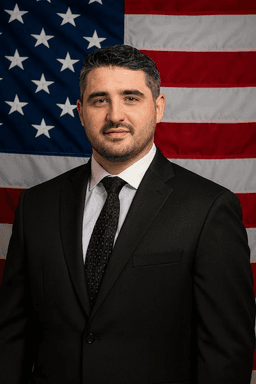 Your attorneyAndranik "Andy" Boyadzhyan, Esq.Founding Attorney. Licensed in Washington, D.C.
Attorney advertising. Services are not available in all states.
By Andranik "Andy" Boyadzhyan, Attorney at Law. Meet the team
In Washington, D.C., a family that lost someone in a crash can bring a wrongful death claim through the estate's personal representative, plus a separate survival claim for what the person suffered before death. The deadline is short and the District's fault rule is strict, so evidence must be gathered early. Top USA Law handles the estate paperwork, the insurers and the proof. The consultation is free.
You do if another driver's carelessness caused the death and the evidence shows the person you lost did nothing to contribute to it. A driver who ran a red light on New York Avenue NE, sped through a crosswalk on Pennsylvania Avenue SE, drifted across the center line on Southern Avenue or turned across a motorcycle on Benning Road was negligent, and District law lets the family recover what that loss cost them. The claim belongs to the family whether the person who died was driving, riding as a passenger, walking or on a bicycle.
The District's fault rule is what makes these cases different from almost anywhere else. Under District of Columbia common law, a driver or passenger who contributed to the crash in any degree is barred from recovering, and that rule follows the claim after a death. An insurer that can show the person who died was going a little fast, or hesitated a moment too long at an intersection, will argue the family gets nothing. The one exception is the Motor Vehicle Collision Recovery Act, D.C. Code 50-2204.52: a pedestrian or cyclist who died can still recover unless their own negligence was greater than the combined negligence of everyone else involved.
Because of that rule, the investigation is the case. The Metropolitan Police Department's Major Crash Investigations Unit handles fatal crashes in the District and produces a report and often a reconstruction, but that work answers the criminal question, not the family's. We gather what the police do not keep: DDOT traffic camera footage, video from Metrobuses and storefronts, the event data recorders in both vehicles, the other driver's phone records and the accounts of the people who stopped.
The civil claim does not wait for the criminal case and does not depend on it. A charge for leaving after colliding under D.C. Code 50-2201.05c, or for driving under the influence under D.C. Code 50-2206.11, is strong evidence of fault, but the family's claim proceeds under its own lower standard of proof whether or not the prosecutor files anything. Many fatal crashes never produce a criminal charge. The family still has a claim.
In the District, the wrongful death claim is brought by the personal representative of the estate, not by the family members directly. That person is appointed by the Probate Division of the Superior Court of the District of Columbia on Indiana Avenue NW, and is usually the surviving spouse or domestic partner, an adult child or a parent. The personal representative files the claim and makes the decisions in it, but holds the recovery for the people the law names, not for themselves.
The recovery belongs to the spouse or domestic partner and the next of kin. When the case resolves, the money is apportioned among them according to the loss each one suffered, so a spouse who depended on the person's income and a young child who lost a parent's care are each recognized separately. A personal representative who is also a beneficiary receives a share on the same basis as everyone else.
The survival claim works differently. It belongs to the estate itself, and whatever it recovers passes under the person's will or, if there was no will, under the District's intestacy rules. That can mean a different set of people receive the survival recovery than receive the wrongful death recovery, which is one reason both claims need to be pleaded and valued on their own.
Families sometimes disagree about who should serve as personal representative, and that disagreement can stall a claim while the deadline runs. We help the family settle on one person early, prepare the petition and the supporting papers, and move the appointment through the Probate Division so that the claim can be filed and every beneficiary is protected. The person who serves takes on duties to the others, and we explain those duties plainly before anyone signs.
The wrongful death claim compensates the family for what the person would have provided had they lived. That means the financial support they would have earned and shared over a working life, the value of the services and care they gave the household, whether raising children, keeping a home or looking after an aging parent, and the reasonable costs of the funeral and burial. The District measures much of this loss in financial terms, so the person's earnings history, work life expectancy and role in the home are documented carefully, often with an economist.
The survival claim recovers what the person could have claimed for themselves had they lived: the conscious pain and suffering between the crash and the death, the medical expenses of the final treatment, and the wages lost in that period. When someone is taken to MedStar Washington Hospital Center or George Washington University Hospital and lives for hours or days, this claim can be substantial. The trauma team's notes, the EMS run sheet and witnesses to the person's awareness at the scene are the proof.
The insurance behind the driver sets the practical ceiling, so we look for every policy: the driver's liability coverage, the owner's policy if the car was borrowed, an employer's policy if the driver was working, a rideshare company's commercial coverage during an active trip, WMATA or the District's self insurance for a public vehicle, and the family's own uninsured and underinsured motorist coverage, including a household relative's policy. If the person who died had elected optional no fault benefits under D.C. Code 31-2404, we review that policy before anyone accepts a payment, because an election can affect the right to sue.
We do not quote a number in the first conversation. A figure given before the estate is open, the records are gathered and the fault evidence is secured is a guess, and a guess helps the insurer more than the family. When the picture is clear we put a demand on paper backed by evidence. Past results do not guarantee a similar outcome. Each case is decided on its own facts.
Expect the fault argument first, because in the District it is the whole defense. An adjuster will look for any small thing the person who died might have done: a few miles over the limit, no seat belt, a lane position, a step off the curb outside the crosswalk. The recorded statement the adjuster asks a grieving spouse or parent for in the first days is where those arguments come from, and grief produces sentences like "he was always in a hurry" that follow the file for years. Do not give that statement. We handle every call.
We answer fault with evidence gathered before it fades: the camera footage, the Major Crash Investigations Unit report and any citation, the event data recorder readouts, the phone records and the witnesses. Where the physical evidence is contested we retain a reconstruction engineer. The District also recognizes the last clear chance doctrine: even if the person who died was careless, a driver who had the last clear opportunity to avoid the collision and failed to take it can be held fully responsible. We build the facts for that argument whenever they exist.
Delay is the second tactic. Insurers know a family is facing funeral bills and a lost income, and some wait, hoping the family will accept whatever is offered. Others move quickly in the other direction and offer the policy limit within days in exchange for a signed release, before the family knows about the employer's policy or its own underinsured coverage. A release signed early ends every claim, including the survival claim. Nothing should be signed until every policy has been found.
If the insurer will not pay fairly once the evidence and the loss are documented, we file suit in the Civil Division of the Superior Court of the District of Columbia and use discovery to put the driver, the footage and the experts on the record. Most wrongful death cases in the District still settle before trial. They settle for more when the insurer knows a District jury is the alternative.
Two years from the date of the death, under D.C. Code 16-2702. The clock runs from the death, not the crash, so when a person survives for weeks in the hospital the two dates differ and we calendar both. The claim must be filed by the personal representative, and the Probate Division has to appoint that person before suit can be brought, so the practical deadline is earlier than the statute suggests.
Families sometimes assume they have the three years that D.C. Code 12-301 gives an injured person, because that is the deadline they read about after a crash. A wrongful death claim runs on the shorter two year clock. We treat the two year date as the deadline for both the wrongful death claim and the survival claim and file them together well inside it.
A claim against the District government has a far shorter fuse. If a Metropolitan Police car, a DC Fire and EMS unit, a DPW or DDOT vehicle, or a dangerous District maintained road or signal was involved, D.C. Code 12-309 requires written notice to the Mayor within six months of the injury as a precondition to suing the District. The notice must describe the time, place, cause and circumstances. We serve it in the first weeks rather than relying on the police report to satisfy it.
WMATA, which runs Metrobus and Metrorail, is not the District government and is not covered by the six month notice statute, but it has its own claim procedure and its own defenses, and we handle that process directly. Insurance deadlines run separately and sooner: every policy requires prompt notice, and uninsured and underinsured motorist coverage generally requires that the family notify its own carrier and obtain consent before settling with the driver.
Open the estate. Because the wrongful death claim can only be brought by a personal representative, the first legal step is a petition to the Probate Division of the Superior Court on Indiana Avenue NW. We prepare the petition and the supporting papers, help the family choose who will serve, and handle the filing. Nothing else in the claim can move until this is done, so we start it in the first conversation.
Order certified copies of the death certificate through the funeral home or from DC Health's Vital Records Division, and order several, because the court, each insurer and each bank will want one. If the Office of the Chief Medical Examiner performed an autopsy, we obtain the report. It establishes the cause of death and, for the survival claim, helps show how long the person was conscious after the crash.
Preserve the evidence before it disappears. Do not let an insurer scrap or sell the vehicle, because the event data recorder inside it records speed, braking and seat belt use in the seconds before impact. Tell us where the crash happened so we can send preservation letters to DDOT, WMATA and the businesses on the block within days, before their footage is overwritten. Keep the person's phone, and write down the names of anyone who stopped.
Expect calls from the other driver's insurer within days. The adjuster will offer condolences, ask a few questions and may mention a quick payment. Give them our number and nothing else. Do not post about the crash or the person who died on social media. Keep every funeral and burial receipt and every bill from the hospital, because those costs are part of what the claims seek, and let us handle the insurers while you handle everything else.
Top USA Law meets District families at 700 12th St NW, Suite 700, Washington, DC 20005, near the Superior Court of the District of Columbia. We meet District families by phone, by video or at home, which is how most families prefer to handle the early conversations anyway. One number, (877) 411-5291, is answered around the clock. Andranik "Andy" Boyadzhyan, the firm's founding attorney, is licensed in the District of Columbia and handles District wrongful death matters personally.
District wrongful death lawsuits are filed in the Civil Division of the Superior Court of the District of Columbia at 500 Indiana Avenue NW, and the Probate Division of the same court handles the appointment of the personal representative. When a fatal crash involved a federal vehicle, the claim runs through a separate administrative process against the United States before any suit is filed, and we manage that as well.
The fatal crashes we see in the District come from the same roads year after year: high speed collisions on New York Avenue NE, pedestrian and turning crashes along Pennsylvania Avenue SE, head on and lane departure crashes on Southern Avenue along the District line, and crashes involving buses, motorcycles and people on foot along Benning Road. The freeways through the city produce the rest, especially at night and in the rain.
We handle fatal crashes involving Metrobus and other WMATA vehicles, District government vehicles, rideshare and delivery drivers, commercial trucks, drunk drivers and hit and run drivers who have not yet been found. Each of those raises its own insurance questions and its own deadlines, and the first week is when we sort them out. A hit and run case in particular turns on finding the vehicle quickly, through camera footage and body shop inquiries, before the trail goes cold.
See if you have a case
Three answers and a phone number. An attorney reviews your situation and calls you back, free.
Rear End Collision
$2,300,000
Insurer offered$85,000
Spinal cord injury after a rear end crash. The insurer offered $85,000.
T Bone Accident
$1,800,000
Insurer offered$120,000
Broken pelvis and internal bleeding at an intersection. The insurer offered $120,000.
Drunk Driver Victim
$1,500,000
Insurer offered$50,000
Traumatic brain injury caused by an impaired driver. The insurer offered $50,000.
Every case is different. Past results do not guarantee, warrant, or predict a similar outcome.
Top USA Law handles wrongful death lawyer claims across Washington, D.C.. Meetings by appointment at our offices, or at your home or the hospital when you cannot travel.
D.C. Code 16-2702 requires a wrongful death action to be brought within two years of the death. The action is brought by the personal representative of the estate for the benefit of the spouse or domestic partner and next of kin. It is the deadline every other step in the case is planned around, and the appointment of the personal representative has to happen before it.
Contributory negligence is the District's general rule and comes from District of Columbia common law rather than a statute: a driver or passenger whose own negligence contributed to the crash in any degree is barred from recovering, and that bar applies to a claim brought after a death. The Motor Vehicle Collision Recovery Act, D.C. Code 50-2204.52, replaced that rule for pedestrians, cyclists and other non motorized users, who recover unless their negligence was greater than the combined negligence of the other parties.
D.C. Code 12-301 sets the three year deadline for a personal injury lawsuit, which is why families are sometimes surprised that a death claim runs on a shorter clock. D.C. Code 12-309 requires written notice to the Mayor within six months as a precondition to suing the District of Columbia over a District vehicle or a District maintained road. Missing that notice ends the claim against the District no matter how strong the facts are.
D.C. Code 31-2404 creates the optional no fault election and sets the thresholds a person who elects those benefits must meet to sue for non economic damages, which is why we review the policy of the person who died before any benefit is accepted. D.C. Code 50-2201.05c makes leaving after a collision that caused injury a criminal offense, and D.C. Code 50-2206.11 prohibits driving under the influence. A conviction under either can be used in the family's civil case.
Hurt in a crash? Talk it through for free.
Washington, D.C. filing deadlines and insurance notice rules can be short. A free call tells you where your clock stands.
Last reviewed by Andranik "Andy" Boyadzhyan, Esq., October 2026.
Three fields. We respond fast, day or night.
Hit by a semi truck on the highway. Top USA Law knew exactly how to deal with the trucking company. Got me $425,000 after they initially offered $30,000.
Client testimonials. Testimonials are not a guarantee, warranty, or prediction of the outcome of your case.
Top USA Law. Services are not available in all states.
Takes 30 seconds. No obligation.