

Drunk Driver Victim
$1,500,000
Insurer offered$50,000
Traumatic brain injury caused by an impaired driver. The insurer offered $50,000.
Serving Washington, D.C.
Hurt in a crash? The insurance company already has a team working on your claim. You should too. A free call tells you where you stand.
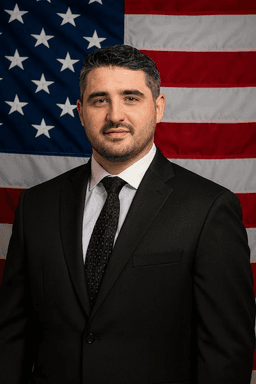 Your attorneyAndranik "Andy" Boyadzhyan, Esq.Founding Attorney. Licensed in Washington, D.C.
Attorney advertising. Services are not available in all states.
By Andranik "Andy" Boyadzhyan, Attorney at Law. Meet the team
In Washington, D.C., a person hit by a drunk driver claims directly against that driver with no injury threshold to clear, and the DUI arrest does most of the work on fault, but any fault on the victim's part can still bar the claim under the District's contributory negligence rule. Top USA Law locks down the arrest evidence and handles every insurer. The consultation is free.
You have a case if a driver who had been drinking caused the crash, you were hurt, and the evidence shows you did nothing to contribute. A driver who left the bars on U Street and ran a light on Florida Avenue, drifted across the center line on Rock Creek Parkway after a night in Adams Morgan, or rear ended you on the Southeast Southwest Freeway leaving Navy Yard was negligent, and the Metropolitan Police arrest that followed is most of the fault proof.
A conviction is not required. The prosecutor must prove guilt beyond a reasonable doubt, while the civil claim requires only that the driver's carelessness more likely than not caused your injury. A driver who refused the breath test, pleaded to a lesser charge or had the case dismissed can still be found negligent, and the officer's observations, the body camera footage and the bar's records carry that burden.
You need not have been in the other car. Someone riding with the drunk driver has a claim against that driver's liability policy. Pedestrians crossing 18th Street after last call, cyclists on the 14th Street bridge approach and people standing at a bus stop on Benning Road all have claims against the driver who hit them, and since 2016 pedestrians and cyclists are judged under a friendlier fault rule than drivers and passengers.
Two features of District law shape the claim from the first day. The first is contributory negligence: the insurer will search for any share of blame it can pin on you, because in the District a small share can bar the whole claim. The second is the District line. A crash inside the District follows District rules, one that started on the roads beyond the line does not, and we confirm the location before anything else.
The District runs on fault, not on no fault. You claim directly against the drunk driver and that driver's liability insurer for medical costs, lost income and pain and suffering in one claim, with no serious injury threshold to clear. While the claim is pending, your health insurance covers treatment and the claim reimburses those costs at the end. The optional no fault election under D.C. Code 31-2404 exists, and we review your policy before any election, because accepting those benefits can limit your right to sue.
The vehicle's owner is often a second source. When the drunk driver was in a parent's car, a roommate's car or a company vehicle, the owner's policy is the primary coverage, and an owner who handed keys to someone they knew had been drinking can face a separate negligent entrustment claim. An employer whose worker was driving home from a work event can answer for the worker too.
The bar or store is a narrower source than in most states. District law is more restrictive on claims against an establishment that served an impaired driver. Such claims are possible in narrow circumstances, and we evaluate each one on its facts, which means the tab, the card records, the staff on duty and the surveillance video from a bar on H Street NE or 14th Street NW have to be preserved before anyone decides. The driver, the owner and your own coverage remain the primary sources of recovery.
Your own coverage matters more in the District than almost anywhere. Impaired drivers frequently carry the minimum policy or none, and contributory negligence can bar the claim against the driver entirely. The District requires uninsured motorist coverage on every registered vehicle, underinsured coverage is available, and a household relative's policy can apply. There is no public fund for a victim with no coverage at all, so identifying the driver and every policy is the priority.
The value is built from the same categories as any crash: medical costs, future treatment, lost wages, lost earning capacity, out of pocket expenses, pain and suffering, loss of enjoyment of life and scarring. The District has no threshold and no general cap on these damages. Drunk driving crashes sit higher in every category because impaired drivers rarely brake before impact, so the injuries are worse.
The District also allows punitive damages where the defendant acted with evil motive, actual malice or willful disregard for the rights of others, proven by clear and convincing evidence. Driving drunk, especially with a high blood alcohol level, a prior conviction or a refusal to stop for police, can meet that standard. Punitive damages exist to punish and deter, and they are awarded on top of the compensatory award.
The catch is collection. Standard auto policies exclude punitive damages, and the District does not require an insurer to pay them, so a punitive award comes from the driver's own wages, property and savings. Before we plead a punitive claim we investigate whether the driver has assets worth pursuing. The claim still has leverage, because an insurer that lets a drunk driving case reach a verdict exposes its insured personally.
Fault is the other ceiling, and in the District it is a cliff. A claim that a comparative fault state would pay at 90 percent after a small fault finding can be worth nothing here if a jury finds the victim contributed at all. That is why the value of a District drunk driving case depends on the body camera footage, the breath result and the witnesses as much as on the medical records. We do not quote a number on the first call. When the evidence and the medical picture are clear, we put a demand on paper. Past results do not guarantee a similar outcome. Each case is decided on its own facts.
Expect the fault argument even with an arrest in the file. The adjuster concedes the intoxication and looks for anything on your side: a few miles over the limit, a late brake, a missing seat belt, a drink of your own earlier that night. In a contributory negligence jurisdiction any of those can be argued as a complete bar, so the recorded statement the adjuster requests in the first days is where the defense is built. Do not give it. We handle every call.
The passenger version is the hardest. When you rode with a driver you knew had been drinking, the insurer argues that you accepted the risk and were contributorily negligent, and in the District that argument can bar the claim rather than reduce it. The answer is evidence: how much the driver had, whether it was visible when you left the Wharf or Barracks Row, and whether you had a realistic alternative. We build that record before the insurer builds its own.
The District recognizes last clear chance. Even where a victim was careless, a driver who had the last clear opportunity to avoid the crash and failed to take it can be held fully responsible. An impaired driver's slowed reaction is often the reason that opportunity was missed, which makes the doctrine a natural fit in these cases, and we develop the facts to support it whenever they exist.
Beyond fault, insurers argue that treatment was excessive or the injury pre existing, and we answer with treating physicians, imaging and a narrative report tying the injury to the crash. When the carrier will not pay fairly after treatment ends, we file suit in the Superior Court of the District of Columbia, and discovery puts the driver, the arresting officer, the breath test records and the body camera video on the record. Most cases settle before trial, and a case with a DUI conviction settles from strength.
A personal injury lawsuit in the District must be filed within three years of the crash under D.C. Code 12-301. A wrongful death action must be filed within two years of the death under D.C. Code 16-2702, and the personal representative must be appointed first. The DUI prosecution does not stop either deadline, and a claim filed after it passes is gone whatever the driver pleaded to.
The criminal case runs separately. A charge under D.C. Code 50-2206.11 is prosecuted by the Office of the Attorney General for the District of Columbia in the Criminal Division of the Superior Court at 500 Indiana Avenue NW, and a first offense often resolves within months. When the crash caused serious injury, the charge can rise to a felony handled by the United States Attorney's Office in the same courthouse, and those cases take a year or more. Serious crashes are worked up by the Metropolitan Police Major Crash Investigations Unit, whose file we obtain.
It is sometimes worth waiting on part of the criminal docket. A guilty plea under D.C. Code 50-2206.11 is admissible in the civil case and can settle the fault question, so we sometimes hold the demand until the plea is entered. We make sure a plea agreement never includes a release of your civil claim, and we work with the prosecutor's victim witness staff on a victim impact statement and restitution for out of pocket losses.
Shorter deadlines apply when the government is involved. If the drunk driver was operating a District vehicle, D.C. Code 12-309 makes written notice to the Mayor within six months of the injury a precondition to any suit against the District. A Metrobus is a claim against WMATA, and a federal vehicle is a claim against the United States, each with its own procedure and deadline. Insurance deadlines run sooner still, and uninsured and underinsured coverage requires notice to your own carrier before any settlement with the driver.
Go to a doctor before the night is out. Drunk driving crashes on New York Avenue, Interstate 295 and the Southeast Southwest Freeway happen at speed and late, and adrenaline hides injury for hours. MedStar Washington Hospital Center and George Washington University Hospital are the District's Level I trauma centers, and Howard University Hospital is nearby. Make sure each provider writes down that a drunk driver caused the crash.
Get the Metropolitan Police report number and the name of the arresting officer. The report is where the file starts, not where it ends. The breath test given at the station, the blood draw taken at the hospital under a warrant when the driver was hurt, the field sobriety notes and the body worn camera footage all sit in the department's file and in the Superior Court criminal discovery. We obtain them through a public records request, the docket in the Criminal Division and, once suit is filed, by subpoena. In a contributory negligence jurisdiction that footage is often the whole case.
Preserve the bar evidence. If you know where the driver was drinking, tell us immediately, because even a narrow claim against the establishment depends on the tab, the card records, the staff on duty and the surveillance video, and most systems overwrite within days. Photograph the vehicles, the road and your injuries, and note the DDOT traffic cameras, Metrobuses, storefronts and doorbells that may have recorded the crash. Our preservation demands go out on the day you retain us.
Report the crash and your injury to your own carrier. Decline the recorded statement the drunk driver's insurer will ask for, sign nothing from them and turn down any early check. Do not discuss fault with anyone but your lawyer, including on social media, because in the District a single sentence conceding a small share of blame can end the claim. Keep every bill, log every appointment and missed shift, and write a line each day about pain.
See if you have a case
Three answers and a phone number. An attorney reviews your situation and calls you back, free.
Drunk Driver Victim
$1,500,000
Insurer offered$50,000
Traumatic brain injury caused by an impaired driver. The insurer offered $50,000.
Rear End Collision
$2,300,000
Insurer offered$85,000
Spinal cord injury after a rear end crash. The insurer offered $85,000.
T Bone Accident
$1,800,000
Insurer offered$120,000
Broken pelvis and internal bleeding at an intersection. The insurer offered $120,000.
Every case is different. Past results do not guarantee, warrant, or predict a similar outcome.
Top USA Law meets District clients at 700 12th St NW, Suite 700, Washington, DC 20005, a few blocks from Metro Center and the Superior Court of the District of Columbia. One number reaches us, (877) 411-5291, answered around the clock, and we come to your home or hospital when travel is hard. Andranik "Andy" Boyadzhyan, the firm's founding attorney, is licensed in the District of Columbia and handles District drunk driving matters.
The civil case is filed in the Civil Division of the Superior Court of the District of Columbia at 500 Indiana Avenue NW. The driver's DUI case runs separately in the Criminal Division of the same courthouse. Claims against the United States, such as a crash with a Park Police or postal vehicle driven by an impaired employee, are heard in the United States District Court for the District of Columbia after the administrative claim is exhausted.
The crashes we see come from the same corridors: the roads home from U Street and Shaw onto Florida Avenue and New York Avenue NE; from Adams Morgan and Dupont Circle onto Connecticut Avenue and Rock Creek Parkway; from Georgetown's M Street onto the Whitehurst Freeway and Wisconsin Avenue; from the Wharf and Navy Yard onto South Capitol Street and the Southeast Southwest Freeway; from H Street NE onto Benning Road; and from Barracks Row onto Pennsylvania Avenue SE. Late night crashes on Interstate 295 and Interstate 395 inside the District produce most of the rest.
We handle claims involving District government vehicles, Metrobus and WMATA vehicles, federal vehicles, rideshare and taxi drivers who had been drinking, hit and run drivers who are later identified, and drivers who live outside the District, which raise their own insurance questions. When the crash killed someone, we bring the wrongful death claim for the family and the survival claim for the estate together.
D.C. Code 50-2206.11 prohibits driving under the influence of alcohol or drugs in the District. A plea or conviction under it can be used in the civil case to establish that the driver was impaired, and the arrest record, breath and blood results and body camera footage behind it are evidence even when the charge is reduced or dismissed. The case is heard in the Criminal Division of the Superior Court.
Contributory negligence is the District's general rule for drivers and passengers and comes from case law rather than a statute: a person whose own negligence contributed to the crash in any degree is barred from recovering, subject to the last clear chance doctrine. The Motor Vehicle Collision Recovery Act, D.C. Code 50-2204.52, replaced that rule for pedestrians, cyclists and other non motorized users, who recover unless their negligence was greater than the combined negligence of the other parties.
District law is more restrictive than most states on claims against a bar or store that served an impaired driver. Such claims are possible in narrow circumstances and are evaluated individually. D.C. Code 31-2404 creates the optional no fault election and sets the thresholds a person who elects those benefits must meet to sue for non economic damages, which is why we review the policy before any election is made.
D.C. Code 12-301 sets the three year deadline for a personal injury suit, D.C. Code 16-2702 sets the two year deadline for a wrongful death action measured from the death, and D.C. Code 12-309 requires written notice to the Mayor within six months as a precondition to suing the District. D.C. Code 50-2201.05c makes leaving an injury crash a crime, which matters because impaired drivers flee more often than sober ones. Punitive damages come from District case law and are not covered by auto insurance.
Hurt in a crash? Talk it through for free.
Washington, D.C. filing deadlines and insurance notice rules can be short. A free call tells you where your clock stands.
Last reviewed by Andranik "Andy" Boyadzhyan, Esq., October 2026.
Three fields. We respond fast, day or night.
Top USA Law took over everything after my car accident. They got me $450,000 when insurance only offered $15,000. I recommend them to everyone.
Client testimonials. Testimonials are not a guarantee, warranty, or prediction of the outcome of your case.
Top USA Law. Services are not available in all states.
Takes 30 seconds. No obligation.