

Pedestrian Hit by Car
$725,000
Insurer offered$25,000
Hip fracture and concussion in a crosswalk. The insurer offered $25,000.
Serving Washington, D.C.
Hurt in a crash in Washington, D.C.? The insurance company already has a team working on your claim. You should too. A free call tells you where you stand.
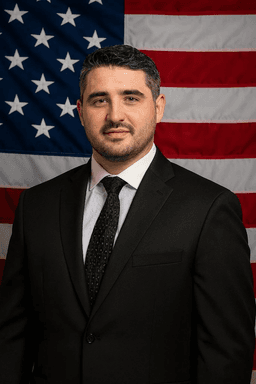 Your attorneyAndranik "Andy" Boyadzhyan, Esq.Founding Attorney. Licensed in Washington, D.C.
Attorney advertising. Services are not available in all states.
700 12th St NW, Suite 700, Washington, DC 20005 Maps and directions
By Andranik "Andy" Boyadzhyan, Attorney at Law. Meet the team
In Washington, D.C., if a car hit you while you were walking, the District's Collision Recovery Act lets you recover. You lose only if your own negligence helped cause the crash and was greater than all defendants' combined. Stepping off the curb early does not end a crosswalk case. Call (877) 411-5291.
The District adopted Vision Zero in 2015. Pedestrians are still hurt by turning drivers on streets like 14th Street NW and Georgia Avenue NW.
The District adopted Vision Zero in 2015, and the streets DDOT keeps flagging are the same ones where people on foot keep getting hurt. On 14th Street NW in Columbia Heights and Georgia Avenue NW through Petworth, the crash can be a driver turning across a crosswalk while watching for a gap in traffic instead of the person already in it. The Metro station exits at Columbia Heights and Petworth put crowds of people into those crosswalks at once.
East of the Anacostia River the roads are wider and the blocks are longer. Pennsylvania Avenue SE between Potomac Avenue and Minnesota Avenue SE, Benning Road NE and Southern Avenue SE all carry fast through traffic past bus stops, and someone crossing to catch a Metrobus gets hit midblock or in a crosswalk with no signal at all.
Closer to downtown, Florida Avenue NE where it crosses New York Avenue NE, Rhode Island Avenue NE and the H Street NE corridor with its streetcar tracks mix delivery vans, rideshare pickups and turning drivers. The right turn on green, taken without a glance at the crosswalk, is one way these crashes happen.
A driver who runs a red light on Georgia Avenue NW can hit another car and push it toward a crosswalk. Side impact fault in the District explains who had to yield, with a section for bike and scooter riders. In a chain reaction on Benning Road NE, who pays after a D.C. rear-end pileup sorts out the drivers. If the driver had no insurance, your options against an uninsured D.C. driver are laid out.
See if you have a case
Three answers and a phone number. An attorney reviews your situation and calls you back, free.
Under the Collision Recovery Act, a pedestrian recovers unless their negligence exceeded all defendants' combined. Car drivers and passengers do not get this protection.
For drivers and passengers, the District follows contributory negligence, which bars anyone who was even slightly at fault from recovering. In 2016 the Motor Vehicle Collision Recovery Act, D.C. Code 50-2204.52, took pedestrians, cyclists and motorcyclists out of that rule. If you were on foot, on a bike or on a motorcycle, you recover unless your own negligence was a proximate cause and greater than the combined negligence of all the defendants. That single change is why a crosswalk case in the District survives the arguments that would end it for a driver: you crossed a few feet outside the lines, or the signal had started to flash. Those facts can reduce what you recover, but they do not erase the claim unless the insurer proves you were mostly to blame.
A pedestrian seriously hurt by a car can be taken to MedStar Washington Hospital Center on Irving Street NW, George Washington University Hospital in Foggy Bottom or Howard University Hospital on Georgia Avenue NW, all Level I trauma centers. The District's optional no fault benefits under D.C. Code 31-2404 depend on the policy, so check any policy that could apply to you; your health insurance can carry the treatment while the claim against the driver's liability insurer pays it back. If the driver left, D.C. Code 50-2201.05c makes leaving after colliding a crime, and the uninsured motorist coverage on your own or a household member's auto policy can stand in until the driver is found.
The Metropolitan Police Department writes the crash up on a PD-10 report, which should be requested early. The lawsuit is filed in the Superior Court of the District of Columbia at 500 Indiana Avenue NW. The deadline is three years from the crash under D.C. Code 12-301; a wrongful death claim gets two years under D.C. Code 16-2702. If a District vehicle hit you, or a broken signal or faded crosswalk on a District maintained road played a part, the Mayor must receive written notice within six months under D.C. Code 12-309. A Metrobus is different: WMATA is an interstate compact agency with its own claim process, and a separate statute can set a shorter deadline.
A suit in D.C. Superior Court follows the steps of a District crash lawsuit, from service to mediation. How long a District injury case can run explains what sets the pace. If an adjuster calls early, weighing a first offer in Washington, D.C. lists what to check.
Walkers hurt near Georgia Avenue or Benning Road can read more on non-economic damages after a District pedestrian crash, an underinsured motorist claim for a person on foot and what hiring a District injury lawyer costs.
DDOT says a small share of District roads produces half of its injury and fatal crashes. It calls them the High Injury Network.
The District Department of Transportation names its most dangerous roads. In its fiscal year 2024 performance oversight hearing testimony (February 2025), DDOT said that 5 percent of the city's roadway mileage accounts for 50 percent of injury and fatal crashes. It calls those roads the High Injury Network. The same testimony says more than 80 percent of those roads have a safety project that is active, completed or funded.
The testimony points readers to the Vision Zero site, visionzero.dc.gov, for more on the network. That matters to a hurt walker in a simple way. If you were struck on a busy arterial road, the stretch may already be one the District has studied. It is worth writing down the exact block, the nearest crosswalk and the signal timing while you remember them.
Photos help most when they are taken soon. Show the lane markings, the crosswalk paint, the signal heads and any missing curb ramp or broken sidewalk. A project that is funded but not yet built may leave an old crosswalk in place.
If a District road or sidewalk defect played a part, written notice to the Mayor within six months comes first. Metrobus claims follow separate rules.
Some pedestrian crashes involve more than a driver. A broken sidewalk, a missing signal or a crosswalk the District let fade can contribute. D.C. Code 12-309 says written notice to the Mayor within six months of the injury is a precondition to suing the District for unliquidated damages, and a written Metropolitan Police Department report made in the regular course of duty counts as that notice. That is a short window, much shorter than the three years for an ordinary claim. If any of those conditions might apply, raise it at the first call.
Notice has to describe what happened and where. Use the exact address or intersection, the date, the time and the injury. Keep a copy of what you send and any proof of delivery.
A Metrobus is a different path. The bus belongs to the Washington Metropolitan Area Transit Authority, and a separate statute can set a shorter deadline than the ones above. Do not assume the six month District notice covers a bus claim. If a bus was involved, say so as early as you can.
A pedestrian struck by a District government vehicle should also read about the six month notice to the Mayor under D.C. Code 12-309.
In each case, the insurance company made a first offer. Here is what our clients received instead. Past results do not guarantee a similar outcome.
Pedestrian Hit by Car
$725,000
Insurer offered$25,000
Hip fracture and concussion in a crosswalk. The insurer offered $25,000.
Every case is different. Past results do not guarantee, warrant, or predict a similar outcome.
Attorney Andranik Boyadzhyan, licensed in the District, leads these cases, and the free consultation can be by phone or video.
Andranik "Andy" Boyadzhyan, licensed in the District, leads these cases. The consultation can be by phone or video, since a pedestrian with a fractured pelvis is not driving to a meeting. The fault record should be built early, the contributory negligence argument answered with the Collision Recovery Act, and a case filed in D.C. Superior Court when the offer does not match the injury. The consultation costs nothing, and you owe no attorney fee unless we win; costs may apply. Read the Washington, D.C. pedestrian accident lawyer page, or call (877) 411-5291.
When you cannot travel, Top USA Law comes to you at home or in the hospital.
For the first hours and days, steps after a crash in the District cover the crash report and your medical records. A D.C. claim worksheet in place of a calculator lists the factors. What a Washington, D.C. injury claim is worth explains the losses you can claim. People struck on foot often face fractures or head injuries, and families who lost someone can read the D.C. wrongful death settlement guide.
If the car that hit you was driving for an app, Uber and Lyft crash coverage in the District shows which policy tier applies.
Riders hurt inside an app car can read the Washington, D.C. Uber and Lyft accident lawyer page.
These Washington, D.C. laws shape your claim; each card gives the statute number and what it means for you in plain English.
Motor Vehicle Collision Recovery Act: a pedestrian, cyclist, motorcyclist or other vulnerable user is not barred unless their negligence was a proximate cause of the injury and greater than the defendants' combined.
Optional personal injury protection that insurers must offer.
Sixty day window to elect PIP benefits; electing them limits any suit against another person unless the injury meets the District threshold or your medical, rehabilitation or work losses exceed the PIP benefits available.
Three year deadline to sue a private driver for a personal injury; a claim against the District needs written notice to the Mayor within six months (D.C. Code 12-309).
Two year deadline for a wrongful death action.
Six month written notice to the Mayor for claims against the District.
Leaving after colliding; a crime when the crash caused injury.
Driving under the influence.
Sue a private driver within three years, or two after a death. District claims need written Mayor notice within six months.
A licensed Washington, D.C. attorney, Andranik "Andy" Boyadzhyan, Founding Attorney, reviews every Washington, D.C. claim, and our team helps you in English or Spanish.

Andranik "Andy" Boyadzhyan, Esq.
Founding Attorney
Licensed in Alabama, Missouri, New Mexico and Washington, D.C.
Featured in CNN, Forbes, Variety

Paul Perkins, Esq.
Of Counsel
Licensed in New Jersey and New York
Certified by the New Jersey Supreme Court as a Civil Trial Attorney. Lawyer of Distinction in Civil Litigation.
Featured in CNBC, Bloomberg, Forbes, The New York Times
Andranik "Andy" Boyadzhyan is the founding attorney of Top USA Law. His background spans business law, civil litigation, and personal injury, and his practice today focuses on motor vehicle accident claims.
Sundas Shafi, Esq., Attorney at Law, Head of Litigation
Rosette Kalayjian, Attorney at Law
Sandra Alves, Case Manager
Four steps from your first call to the close of your claim. You focus on healing while we deal with the insurers and keep you updated.
Free consultation
Call 24/7 or send the short form. An attorney reviews what happened and tells you where you stand. Free, no obligation.
We deal with the insurers
We deal with the insurance companies, request the police report and medical records, and keep you updated.
We build your case
Evidence, witnesses, experts and the medical picture of your injuries, prepared as if the case will go to trial.
You get paid
Medical bills, lost wages, vehicle damage, and pain and suffering. No fee unless we win; costs may apply.
Reviewed by Andranik "Andy" Boyadzhyan, Esq.
Fill in the four short fields in this form, and a licensed attorney reviews your case for free. We respond day or night.
Top USA Law. Services are not available in all states.
Takes 30 seconds. No obligation.