


Andranik "Andy" Boyadzhyan, Esq.
Founding Attorney
Licensed in Alabama, Missouri, New Mexico and Washington, D.C.
Featured in CNN, Forbes, Variety
Serving Washington, D.C.
Hurt in a crash? The insurance company already has a team working on your claim. You should too. A free call tells you where you stand.
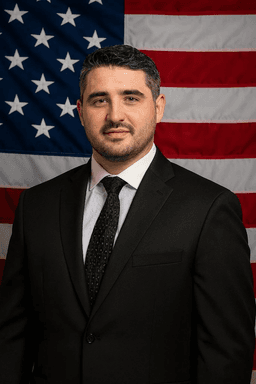 Your attorneyAndranik "Andy" Boyadzhyan, Esq.Founding Attorney. Licensed in Washington, D.C.
Attorney advertising. Services are not available in all states.
By Andranik "Andy" Boyadzhyan, Attorney at Law. Meet the team
In Washington, D.C., a wrongful death settlement compensates the spouse or domestic partner and next of kin for the injury the death caused them, plus last illness and burial costs. The personal representative brings the claim within two years; a claim against the District needs Mayor notice within six months. Call Top USA Law for a free case review.
We are sorry for your loss. Nothing on this page puts a price on the person your family lost; it explains how District law handles the claim so you can make choices on your own timeline, with the facts in hand.
Key takeaways
The personal representative of the person who died. Family members do not file separate suits; the representative brings one claim for all of them.
Under D.C. Code section 16-2702, a wrongful death action "shall be brought by and in the name of the personal representative of the deceased person," within two years after the death. The representative is appointed through the Probate Division of the Superior Court. That person files the claim and makes decisions in it, but the law directs the recovery to the family members it names, not to the representative personally.
Under D.C. Code section 16-2701(a), the claim exists when a death in the District is caused by a wrongful act, neglect or default that would have let the injured person sue had they lived. The statute says liability applies even when the death happened under circumstances that are a felony, such as a negligent homicide charge under D.C. Code 50-2203.01. Our D.C. wrongful death lawyer page explains how the firm helps families through appointment and filing.
Wrongful death covers what the family lost. The survival claim carries forward the person's own claim, such as for injuries before death.
Under D.C. Code section 12-101, when a person dies after a right of action has accrued, that right survives in favor of the legal representative. A crash victim who lived for a time after the crash had a claim for their own injuries, and that claim passes to the representative. The wrongful death claim under 16-2701 is a separate action for the injury the death caused the family.
| Wrongful death | Survival | |
|---|---|---|
| Who files | The personal representative (16-2702) | The legal representative (12-101) |
| Whose loss | The spouse or domestic partner and next of kin (16-2701(b)) | The claim the person had at death |
| Includes | Injury to the family from the death, plus last illness and burial expenses | The person's own claim from the crash |
| Deadline | Two years after the death (16-2702); a claim against the District also needs notice to the Mayor within six months (12-309) | Ask your lawyer; do not plan around more time than the wrongful death claim |
Both claims can be brought together in Superior Court. Our Superior Court guide covers where and how a District case is filed.
Top USA Law. Services are not available in all states.
Fill in four quick fields, and a licensed attorney reviews the facts of your case at no cost.
The injury the death caused the spouse or domestic partner and next of kin, plus the reasonable expenses of the last illness and burial.
D.C. Code 16-2701(b) says damages are assessed with reference to the injury resulting from the wrongful act to the spouse or domestic partner and the next of kin, and shall include the reasonable expenses of last illness and burial. In a settlement, the same measure guides the talks: what the family lost because the person died, and the medical and funeral costs.
Families ask what the injury to the spouse or domestic partner and next of kin covers. The statute states that measure broadly and does not list items. The proof can center on the support the person provided, the services they gave the household, and their role in the family, and your lawyer can explain how District courts have read that measure in cases like yours. The statute also says a trial judge or appeals court may reduce a verdict it finds excessive.
The spouse or domestic partner and next of kin, by the verdict's allocation or, without one, by the District's distribution statute.
Under D.C. Code section 16-2703, the damages, except the amount for last illness and burial, may not be used to pay the debts or liabilities of the person who died. They go to the family and are distributed to the spouse and next of kin according to the allocation made by the verdict or judgment, or without one, by the statute of distribution in force in the District.
When a jury decides the case and a spouse or domestic partner survives, 16-2701(b) directs it to allocate the verdict between the spouse or domestic partner and the next of kin according to the damage each suffered. In a settlement, the allocation is worked out among the family with the representative and, where needed, the court. Disagreements about the split are easier to resolve early than after an offer arrives.
The family's losses, the person's age, work and role at home, the expenses of the last illness and burial, fault, and the insurance available.
No formula sets the value of a life, and no one can predict a result. The factors below are what insurers and juries weigh.
| Factor | What the proof looks like |
|---|---|
| Financial support | Pay records, tax returns, the person's work history and plans |
| Household services | Child care, caregiving, home upkeep the person provided |
| Family relationships | Who depended on the person and how, from spouse to children to parents |
| Last illness and burial | Hospital, ambulance and funeral bills |
| Survival claim | Medical records of what the person went through before death |
| Fault | Crash report, video, witness statements, criminal charges against the driver |
| Insurance | The at-fault policy limits, other liable parties, underinsured coverage |
Past results do not guarantee a similar outcome. Our page on what decides a D.C. settlement explains how adjusters weigh evidence in District cases.
A PIP election does not block the family's death claim; PIP funeral coverage, if bought, may pay funeral costs up to its limit.
Under D.C. Code section 31-2405(c), nothing in the PIP lawsuit limit prevents the survivors of a victim whose death arises out of the use of a motor vehicle from bringing a claim for the loss and noneconomic loss resulting from the death, whether or not the victim had elected PIP. So the threshold that can limit an injured person's suit does not apply to the family's wrongful death claim.
PIP is optional in the District under D.C. Code 31-2404. Where the policy includes PIP funeral coverage, it pays the survivors funeral and funeral-related benefits of actual costs up to $4,000. Past results do not guarantee a similar outcome. A suit for unpaid PIP benefits must be filed within three years under D.C. Code 31-2411(a). The D.C. Code 31-2404 card explains the PIP option.
For the full text of the filing rule and how the two years are counted from the date of death, see the D.C. Code 16-2702 deadline card.
The family's claim exists only if the person could have sued had they lived, so fault rules that would have applied to them matter.
D.C. Code 16-2701(a) ties the family's claim to whether the act would have entitled the injured person to sue if death had not followed. For a car's driver or passenger, District common law applies contributory negligence, which can bar a claim for even slight fault, so a careful investigation of how the crash happened is essential. Our partly at fault guide for the District explains that rule.
If your loved one was walking or riding a bike or motorcycle, ask your lawyer how the Motor Vehicle Collision Recovery Act, D.C. Code 50-2204.52, applies; see the Collision Recovery Act card and the D.C. pedestrian accident lawyer page. A driver who was impaired or fled may face charges under D.C. Code 50-2206.11 or 50-2201.05c; see the impaired driving card and the leaving after colliding card.
Then the family may have no wrongful death claim, because District law bars it if the injured person recovered damages for the injury during life.
The last sentence of D.C. Code 16-2701(b) says an action may not be maintained under the wrongful death chapter if the party injured by the wrongful act, neglect or default recovered damages for it during their life. This matters when a crash victim lives for months, deals with the insurer, and signs a release before dying. If your family is unsure whether any release or payment happened, collect every letter and check from the insurer and show them to a lawyer before taking any step. A payment of the person's own PIP benefits is a different thing from a damages recovery against the driver, and your lawyer can sort out which is which.
Two years from death to file suit, six months for notice when a District vehicle is involved, and an earlier step to appoint a representative.
| Step | Deadline | Source |
|---|---|---|
| File the wrongful death suit | Within two years after the death | D.C. Code 16-2702 |
| Notice to the Mayor if a District vehicle or road is involved | Within six months after the injury | D.C. Code 12-309 |
| Suit for unpaid PIP funeral benefits | Within three years | D.C. Code 31-2411(a) |
| Appoint a personal representative | Before the suit can be filed | D.C. Code 16-2702 |
Appointment takes time, so the practical deadline is earlier than the statute suggests. Start the probate step early, even while the family is grieving.
The at-fault driver's liability policy first, then other liable parties such as an employer, and your family's uninsured or underinsured coverage.
District minimum liability limits are $25,000 per person and $50,000 per accident under D.C. Code 31-2406(c). Past results do not guarantee a similar outcome. A death claim can exceed a minimum policy, so a full investigation looks for every policy: the driver's, the vehicle owner's, an employer's if the driver was working, and the family's own uninsured and underinsured coverage under 31-2406(f) and (c-1). Our guides on D.C. underinsured motorist claims and an uninsured driver in the District explain those claims, and a commercial vehicle case is covered on the D.C. truck accident lawyer page.
A District hospital can hold a lien for its reasonable charges after filing notice, and an uninsured motorist insurer that paid may seek repayment.
Under D.C. Code section 40-201, a District hospital that treated the injured person has a lien on the recovery, including one collected by heirs or personal representatives after a death, for its reasonable and necessary charges; the lien does not apply to injuries covered by workers' compensation. Under D.C. Code 40-202, the lien is effective only if the hospital filed written notice with the Recorder of Deeds and mailed it to those alleged liable before payment. Under D.C. Code 31-2406(f)(5), an uninsured motorist insurer that paid is entitled to the proceeds of the recovery to the extent of its payment. Every claimed lien should be checked against these rules before money is distributed.
The crash investigation, medical and death records, proof of the person's income and family role, and the last illness and funeral bills.
Video and data can be overwritten quickly, so early preservation letters matter. A criminal case against the driver runs separately from the family's civil claim.
Timing turns on probate, the investigation, insurance and any lawsuit; alternative dispute resolution, such as mediation, is mandatory in Superior Court civil actions.
Some claims resolve with the insurer once the representative is appointed and the evidence is gathered. Others need a lawsuit, discovery and the Superior Court's mandatory alternative dispute resolution, such as mediation, before a trial date. Our pages on how a D.C. lawsuit works and when a District settlement check arrives explain each stage, and how a District injury lawyer is paid explains fees.
Start the probate appointment, gather records, keep bills, avoid recorded statements, and do not sign releases until the claim and the lien picture are clear.
If a loved one survived with a serious head injury, our D.C. brain injury guide covers that claim instead. Top USA Law helps District families from Capitol Hill to Anacostia; the Washington, D.C. car accident lawyer page covers local roads and courts, and the District car accident lawyer overview explains how the firm works. When your family is ready, call (877) 411-5291. You pay no fee unless we win, and costs may apply.
You have two years from the death to sue a private driver. A claim against the District needs written notice to the Mayor within six months.
A licensed Washington, D.C. attorney, Andranik "Andy" Boyadzhyan, Founding Attorney, reviews every Washington, D.C. claim, and our team helps you in English or Spanish.
Andranik "Andy" Boyadzhyan, Esq.
Founding Attorney
Licensed in Alabama, Missouri, New Mexico and Washington, D.C.
Featured in CNN, Forbes, Variety

Paul Perkins, Esq.
Of Counsel
Licensed in New Jersey and New York
Certified by the New Jersey Supreme Court as a Civil Trial Attorney. Lawyer of Distinction in Civil Litigation.
Featured in CNBC, Bloomberg, Forbes, The New York Times
Andranik "Andy" Boyadzhyan is the founding attorney of Top USA Law. His background spans business law, civil litigation, and personal injury, and his practice today focuses on motor vehicle accident claims.
Sundas Shafi, Esq., Attorney at Law, Head of Litigation
Rosette Kalayjian, Attorney at Law
Sandra Alves, Case Manager
Four steps from your first call to the close of your claim. You focus on healing while we deal with the insurers and keep you updated.
Free consultation
Call 24/7 or send the short form. An attorney reviews what happened and tells you where you stand. Free, no obligation.
We deal with the insurers
We deal with the insurance companies, request the police report and medical records, and keep you updated.
We build your case
Evidence, witnesses, experts and the medical picture of your injuries, prepared as if the case will go to trial.
You get paid
Medical bills, lost wages, vehicle damage, and pain and suffering. No fee unless we win; costs may apply.
Reviewed by Andranik "Andy" Boyadzhyan, Esq.
Fill in the four short fields in this form, and a licensed attorney reviews your case for free. We respond day or night.
My wife was killed by a drunk driver. Top USA Law handled our wrongful death case with such compassion. They got us $1.2 million.
Client testimonials. Testimonials are not a guarantee, warranty, or prediction of the outcome of your case. Every case is different. Past results do not guarantee, warrant, or predict a similar outcome.
Top USA Law. Services are not available in all states.
Takes 30 seconds. No obligation.