


Andranik "Andy" Boyadzhyan, Esq.
Founding Attorney
Licensed in Alabama, Missouri, New Mexico and Washington, D.C.
Featured in CNN, Forbes, Variety
Serving Washington, D.C.
Hurt in a crash? The insurance company already has a team working on your claim. You should too. A free call tells you where you stand.
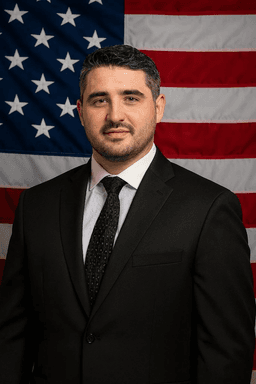 Your attorneyAndranik "Andy" Boyadzhyan, Esq.Founding Attorney. Licensed in Washington, D.C.
Attorney advertising. Services are not available in all states.
By Andranik "Andy" Boyadzhyan, Attorney at Law. Meet the team
In Washington, D.C., an underinsured motorist claim asks your own insurer to pay the part of your loss the at-fault driver's liability limit cannot cover, up to your uninsured motorist limit, if you bought UIM. Top USA Law can read both policies and explain where you stand. Call for a free case review.
Key takeaways
It is a claim under your own auto policy when the driver who hurt you has insurance, but not enough to pay your loss.
D.C. Code section 31-2406(c-1) says underinsured motor vehicle coverage "is for the protection of an insured who is legally entitled to recover damages from the owner or operator of an underinsured motor vehicle." The other driver's liability insurer pays first, up to its limit. Your own UIM then covers what is left of your loss, within the UIM limit on your declarations page, the terms of your policy and the set-off terms under D.C. Code 31-2406(c-1).
The District's required liability floor is low compared with the cost of a serious injury. Under D.C. Code 31-2406(c), a driver must carry only $25,000 per person and $50,000 per accident for injuries. Past results do not guarantee a similar outcome. A crash on the Southeast Freeway, at Dupont Circle, or on New York Avenue NE that leaves you with surgery or months off work can outrun that amount quickly, which is exactly the gap UIM is built to fill.
When that driver's liability limits are not enough to pay your loss up to the uninsured motorist limit on your own policy.
The definition sits in D.C. Code section 31-2402(32A): an underinsured motor vehicle is "an insured motor vehicle where the limits on 3rd-party personal liability or property damage coverage under the insurance required by 31-2406 are insufficient to pay the loss up to the limit of uninsured motor vehicle coverage as requested by the insured." Three numbers matter: the other driver's limit, your loss, and your own UM limit. The table walks through how they interact. Past results do not guarantee a similar outcome.
| Other driver's liability limit | Your loss | Your UM limit | Underinsured? |
|---|---|---|---|
| $25,000 | $60,000 | $100,000 | Yes: $25,000 cannot pay the loss up to your limit |
| $25,000 | $20,000 | $100,000 | No: the liability limit pays the whole loss |
| $50,000 | $80,000 | $25,000 | No: $50,000 already covers the loss up to your $25,000 limit |
| No policy at all | Any | Any | Not UIM; the uninsured motorist coverage applies instead |
The third row is the one that catches people: a low UM limit on your own policy can mean there is nothing for UIM to add, even when your loss is large. Past results do not guarantee a similar outcome. The table shows whether UIM is triggered, not what it will pay; your policy's set-off terms decide how the liability payment is credited.
Top USA Law. Services are not available in all states.
Fill in four quick fields, and a licensed attorney reviews the facts of your case at no cost.
Check your declarations page and the full policy. UIM in the District is optional, and insurers need not keep written rejections of it.
Under D.C. Code section 31-2406(c-1), each insurer "shall offer, except for the operation of motorcycles and motor-driven cycles, optional underinsured motor vehicle coverage in amounts up to the amounts of the uninsured motorist coverage as requested by the insured." Once you reject it, "the insurer does not have to reoffer it," and the insurer "shall not be required to obtain or maintain written rejections." There may be no signed form showing you turned it down, so start with the declarations page and the full policy.
The UM amounts set the ceiling. Uninsured motorist coverage is mandatory at $25,000 per person and $50,000 per accident under D.C. Code 31-2406(f)(2), and you may choose higher limits up to $100,000 per person and $300,000 per accident under 31-2406(f)(4). Past results do not guarantee a similar outcome. If you ride a motorcycle, the insurer is not required to offer UIM on that policy at all. Our page on D.C. insurance minimums lists every required coverage.
UM covers an uninsured or unidentified driver; UIM, one with too little. PIP, if elected within 60 days, pays regardless of fault, after health insurance.
| Coverage | When it applies | Required? | Law |
|---|---|---|---|
| Uninsured motorist (UM) | No liability policy, the insurer denies coverage or is insolvent, or the driver cannot be identified | Yes, at $25,000 / $50,000 | D.C. Code 31-2406(f) |
| Underinsured motorist (UIM) | The driver's limits cannot pay your loss up to your UM limit | Must be offered, except on motorcycles; you may reject it | D.C. Code 31-2406(c-1) and 31-2402(32A) |
| Personal injury protection (PIP) | Medical, work loss and funeral benefits without regard to fault | Must be offered; optional to buy | D.C. Code 31-2404 and 31-2405 |
Each row carries its own conditions. Past results do not guarantee a similar outcome. If the at-fault car had no insurance at all, read our page on an uninsured driver crash in D.C. If you have PIP, D.C. Code section 31-2405 gives you 60 days after the crash to tell the PIP insurer whether you elect benefits, and electing limits your right to sue another person unless your injury meets a statutory threshold or your costs exceed the PIP available. Ask how that choice affects a later UIM claim before the 60 days run. The D.C. no-fault option page covers the election.
Yes. UIM pays what you are legally entitled to recover from the other driver, so the District's fault rules apply to the claim.
For drivers and passengers, the District follows contributory negligence under District of Columbia common law: a finding that you were even slightly at fault may bar recovery from the other driver, and with it the UIM claim built on that recovery. For a pedestrian, or a cyclist, motorcyclist or other vulnerable user defined in D.C. Code section 50-2204.51, the Motor Vehicle Collision Recovery Act, D.C. Code section 50-2204.52, says your own negligence does not bar recovery unless it was a proximate cause and greater than the combined negligence of all defendants. Not wearing a seat belt is not evidence of negligence under D.C. Code section 50-1807.
Your own insurer may look at the crash with the same skepticism the other driver's insurer did. Give it accurate facts, and see our page on being partly at fault in D.C. before you discuss fault with any adjuster.
Not without telling your own insurer first. Its subrogation rights against the at-fault driver can be harmed by a release you sign alone.
D.C. Code section 31-2406(c-1) makes UIM benefits "subject to the same provisions as denials or exclusions of coverages, insolvency, subrogation, and set-off as provided in the uninsured motorist coverage." Under 31-2406(f)(5), an insurer that pays is "entitled to the proceeds of any settlement or judgment" against the person legally responsible, to the extent of its payment. A release that ends the at-fault driver's liability can cut into those rights, so your policy's conditions on notice and consent come first.
Read the conditions section of your policy, give written notice of the liability offer, and keep a copy. Our page on whether to accept the first insurance offer in D.C. covers what a release usually says. If your own adjuster asks for a recorded statement, read recorded statements after a D.C. crash first.
Confirm the other driver's limits, check your UIM and UM amounts, document the loss, notify your insurer, and resolve the liability claim on its terms.
No one can promise how long the claim takes or what it will pay. Treatment length, objective findings, time off work, permanency and both policies' limits drive the value; our page on what a D.C. car accident settlement is worth explains those factors.
Three years to sue the driver, 60 days to elect PIP, six months to notify the Mayor of District claims, plus your policy's notice terms.
A lawsuit against the at-fault driver must be filed within three years under D.C. Code section 12-301; the UIM claim rests on that legal right, so do not let it lapse while you wait on your own insurer. If a District government vehicle or road defect was involved, D.C. Code section 12-309 requires written notice to the Mayor within six months. The PIP election window in 31-2405 is 60 days. See our page on the D.C. three year deadline.
If a D.C. lawsuit becomes necessary, our page on the D.C. car accident lawsuit process walks through the Superior Court stages. The Washington, D.C. car accident lawyer page explains how Andranik "Andy" Boyadzhyan's team reviews District claims, and the D.C. pedestrian accident lawyer page covers the vulnerable user rule.
Riders hurt in an app car can read who pays after an Uber or Lyft crash in the District for the ride insurance tiers.
District rules for every kind of crash claim are on the Washington, D.C. car accident lawyer hub. Call (877) 411-5291 to have both policies reviewed. You pay no fee unless we win, and costs may apply.
Sue within three years, or two after a death. District claims need Mayor notice in six months; elect PIP in 60 days.
A licensed Washington, D.C. attorney, Andranik "Andy" Boyadzhyan, Founding Attorney, reviews every Washington, D.C. claim, and our team helps you in English or Spanish.
Andranik "Andy" Boyadzhyan, Esq.
Founding Attorney
Licensed in Alabama, Missouri, New Mexico and Washington, D.C.
Featured in CNN, Forbes, Variety

Paul Perkins, Esq.
Of Counsel
Licensed in New Jersey and New York
Certified by the New Jersey Supreme Court as a Civil Trial Attorney. Lawyer of Distinction in Civil Litigation.
Featured in CNBC, Bloomberg, Forbes, The New York Times
Andranik "Andy" Boyadzhyan is the founding attorney of Top USA Law. His background spans business law, civil litigation, and personal injury, and his practice today focuses on motor vehicle accident claims.
Sundas Shafi, Esq., Attorney at Law, Head of Litigation
Rosette Kalayjian, Attorney at Law
Sandra Alves, Case Manager
Four steps from your first call to the close of your claim. You focus on healing while we deal with the insurers and keep you updated.
Free consultation
Call 24/7 or send the short form. An attorney reviews what happened and tells you where you stand. Free, no obligation.
We deal with the insurers
We deal with the insurance companies, request the police report and medical records, and keep you updated.
We build your case
Evidence, witnesses, experts and the medical picture of your injuries, prepared as if the case will go to trial.
You get paid
Medical bills, lost wages, vehicle damage, and pain and suffering. No fee unless we win; costs may apply.
Reviewed by Andranik "Andy" Boyadzhyan, Esq.
Fill in the four short fields in this form, and a licensed attorney reviews your case for free. We respond day or night.
Top USA Law. Services are not available in all states.
Takes 30 seconds. No obligation.