

Rideshare Accident
$950,000
Insurer offered$35,000
Multiple fractures as a rideshare passenger. The insurer offered $35,000.
Serving Washington, D.C.
Hurt in a crash? The insurance company already has a team working on your claim. You should too. A free call tells you where you stand.
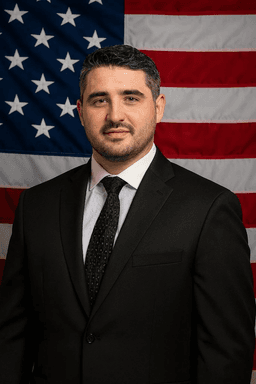 Your attorneyAndranik "Andy" Boyadzhyan, Esq.Founding Attorney. Licensed in Washington, D.C.
Attorney advertising. Services are not available in all states.
By Andranik "Andy" Boyadzhyan, Attorney at Law. Meet the team
In Washington, D.C., an Uber or Lyft crash during a ride is covered by a primary liability policy the company or driver must carry, while health insurance pays a rider's medical bills first. Who pays the rest depends on fault and the app status. Top USA Law can review your trip records at no cost.
Key takeaways
Whoever caused the crash pays through their insurer, and the app status at that moment decides which rideshare policy and limit stand behind the driver.
District law calls Uber and Lyft "private vehicle-for-hire" companies, and the Department of For-Hire Vehicles (DFHV) registers them. D.C. Code section 50-301.29c sets the insurance each must carry, in tiers that follow the driver's app status. A rider picked up outside Union Station and hit on H Street NE is in a different position from a pedestrian struck by an app driver who was cruising the 14th Street corridor between requests. The table shows the tiers the statute sets.
| App status | Required coverage | Source |
|---|---|---|
| Request accepted, through drop-off | Primary liability of at least $1 million per occurrence | D.C. Code 50-301.29c(a), (m) |
| Logged on and available, no ride | Primary liability of at least $50,000 per person, $100,000 per accident, $25,000 property damage | D.C. Code 50-301.29c(b) |
| App off | The driver's personal policy; a District-registered car must carry at least the 31-2406 minimums | D.C. Code 31-2406 |
These are required minimums, not what any claim is worth. Past results do not guarantee a similar outcome.
A primary liability policy of at least $1 million per occurrence, kept by the company or the driver, from acceptance until you leave the car.
Under D.C. Code section 50-301.29c(a), the company or the driver must keep "a primary automobile liability insurance policy that provides coverage of at least $1 million per occurrence" whenever the driver is engaged in a prearranged ride. Subsection (m) defines that period: it "begins when a private vehicle-for-hire operator accepts a requested ride through digital dispatch, continues while the operator transports the passenger in the operator's vehicle, and ends when the passenger departs from the vehicle." So a crash on the way to pick you up is inside the ride tier too. Past results do not guarantee a similar outcome. If more than one company policy covers the same loss, subsection (f) splits the claim equally among them unless the insurers and policy owners agree otherwise in writing. The company must disclose these requirements on its website, and its terms of service may not contradict them, under subsection (h). Liability coverage pays when the app driver is at fault; when another driver caused the crash, that driver's insurer is the one that owes the claim.
Top USA Law. Services are not available in all states.
Fill in four quick fields, and a licensed attorney reviews the facts of your case at no cost.
A lower tier applies: at least $50,000 per person, $100,000 per accident and $25,000 for property damage while the driver is available.
D.C. Code section 50-301.29c(b) covers the time a driver is logged on and shown as available but is not engaged in a ride. The policy must recognize the rideshare use and can be full time coverage, a rider on the driver's personal policy, or a primary policy the company buys. If insurance the driver bought to meet the rideshare requirements has lapsed, subsection (d) makes the company provide the coverage "beginning with the first dollar of a claim." Subsection (g) requires the company to cooperate with the driver's insurer, including the dates and times that show whether the driver was logged on. That record can settle which tier applies, so ask for it early. Past results do not guarantee a similar outcome.
Your health insurance first, if you have it. The District ride statute requires liability coverage, not PIP, and PIP in the District is optional anyway.
Under D.C. Code section 31-2404, PIP is something an owner may buy, and it covers a victim who is an insured or an occupant of the insured's vehicle. Whether any PIP reaches a rideshare passenger depends on the policies on that car, which the ride statute does not require to include it. Even where PIP exists, D.C. Code section 31-2406(g) bars claiming it, other than for a deductible, while you are eligible for other coverage for the same loss, until that coverage is used up. If a PIP insurer offers benefits, you have 60 days to decide whether to elect them under D.C. Code section 31-2405, and electing bars a suit against another driver unless the injury meets the D.C. Code 31-2405 threshold or your medical costs or work loss exceed the PIP available. Our guides to who pays medical bills in the District and health insurance after a D.C. crash explain the order of payment.
An insurer can try. District common law bars a passenger found even slightly at fault, though skipping a seat belt is not evidence of negligence.
Under District of Columbia common law, contributory negligence applies to drivers and passengers alike, so an insurer may argue, for example, that a rider distracted the driver or opened a door into traffic. Evidence protects you: the trip receipt, photos and the names of witnesses. Under D.C. Code section 50-1807, a seat belt violation is not evidence of negligence or contributory negligence and cannot be used to reduce damages. Pedestrians, and vulnerable users such as cyclists and scooter riders, hit by an app driver are protected by D.C. Code section 50-2204.52: their own negligence bars recovery only if it was a proximate cause and greater than the combined negligence of all defendants. Our page on partial fault in the District explains both rules.
In each case, the insurance company made a first offer. Here is what our clients received instead. Past results do not guarantee a similar outcome.
Rideshare Accident
$950,000
Insurer offered$35,000
Multiple fractures as a rideshare passenger. The insurer offered $35,000.
Every case is different. Past results do not guarantee, warrant, or predict a similar outcome.
I was in an Uber that got T boned. Both insurance companies were pointing fingers. Top USA Law cut through the mess and got me $875,000.
Client testimonials. Testimonials are not a guarantee, warranty, or prediction of the outcome of your case.
The other driver's insurer pays when that driver caused the crash; if the driver fled or had no insurance, uninsured motorist coverage may apply.
A rider can claim against whichever driver caused the crash, or both. When the other driver had no insurance or drove off, District policies must carry uninsured motorist coverage under D.C. Code section 31-2406, and an uninsured vehicle includes a hit-and-run vehicle whose owner or driver cannot be identified. The District ride statute does not set uninsured motorist limits for rideshare trips, so ask the rideshare insurer in writing what coverage it carries, and ask your own insurer whether your uninsured and underinsured coverage reaches you as a passenger. A driver who leaves in violation of D.C. Code 50-2201.05c can be prosecuted, so call 911 and get the police report. Our guides to a crash with an uninsured driver in the District and an underinsured motorist claim cover the next steps. If a District government vehicle was involved, written notice to the Mayor within six months is required under D.C. Code section 12-309.
Get medical care, save the trip record, report the crash in the app and to police, and keep every message from the company's insurer.
Three years to sue for injuries, 60 days to elect PIP, six months to notify the Mayor of District claims, two years for a death.
| Step | Deadline | Source |
|---|---|---|
| Elect or decline PIP, if any applies | 60 days after the crash | D.C. Code 31-2405 |
| Notice to the Mayor for a District vehicle or road | 6 months | D.C. Code 12-309 |
| Injury lawsuit | 3 years | D.C. Code 12-301 |
| Wrongful death lawsuit by the personal representative | 2 years after the death | D.C. Code 16-2702 |
An injury suit is filed in the Superior Court of the District of Columbia within the period in D.C. Code section 12-301; see the D.C. lawsuit process. If the crash kept you off work, read lost wages after a D.C. crash.
What a case like this is worth: value turns on the injury, the treatment, lost income, fault, which insurance tier applies and its limits. See how D.C. settlements are valued.
Top USA Law's Washington, D.C. office is at 700 12th St NW, Suite 700. Andranik "Andy" Boyadzhyan, Attorney at Law, licensed in Washington, D.C., wrote this page. Call (877) 411-5291 about your rideshare crash. You pay no fee unless we win, and costs may apply. See the Washington, D.C. car accident lawyer page and the D.C. car accident attorney overview.
Related Washington, D.C. questions: passenger claims, whether you need a lawyer, when a settlement check arrives.
Sue a private driver within three years, or two after a death. District claims need written Mayor notice within six months.
A licensed Washington, D.C. attorney, Andranik "Andy" Boyadzhyan, Founding Attorney, reviews every Washington, D.C. claim, and our team helps you in English or Spanish.

Andranik "Andy" Boyadzhyan, Esq.
Founding Attorney
Licensed in Alabama, Missouri, New Mexico and Washington, D.C.
Featured in CNN, Forbes, Variety

Paul Perkins, Esq.
Of Counsel
Licensed in New Jersey and New York
Certified by the New Jersey Supreme Court as a Civil Trial Attorney. Lawyer of Distinction in Civil Litigation.
Featured in CNBC, Bloomberg, Forbes, The New York Times
Andranik "Andy" Boyadzhyan is the founding attorney of Top USA Law. His background spans business law, civil litigation, and personal injury, and his practice today focuses on motor vehicle accident claims.
Sundas Shafi, Esq., Attorney at Law, Head of Litigation
Rosette Kalayjian, Attorney at Law
Sandra Alves, Case Manager
Four steps from your first call to the close of your claim. You focus on healing while we deal with the insurers and keep you updated.
Free consultation
Call 24/7 or send the short form. An attorney reviews what happened and tells you where you stand. Free, no obligation.
We deal with the insurers
We deal with the insurance companies, request the police report and medical records, and keep you updated.
We build your case
Evidence, witnesses, experts and the medical picture of your injuries, prepared as if the case will go to trial.
You get paid
Medical bills, lost wages, vehicle damage, and pain and suffering. No fee unless we win; costs may apply.
Reviewed by Andranik "Andy" Boyadzhyan, Esq.
Fill in the four short fields in this form, and a licensed attorney reviews your case for free. We respond day or night.
I was in an Uber that got T boned. Both insurance companies were pointing fingers. Top USA Law cut through the mess and got me $875,000.
Client testimonials. Testimonials are not a guarantee, warranty, or prediction of the outcome of your case. Every case is different. Past results do not guarantee, warrant, or predict a similar outcome.
Top USA Law. Services are not available in all states.
Takes 30 seconds. No obligation.