


Andranik "Andy" Boyadzhyan, Esq.
Founding Attorney
Licensed in Alabama, Missouri, New Mexico and Washington, D.C.
Featured in CNN, Forbes, Variety
Serving Washington, D.C.
Hurt in a crash? The insurance company already has a team working on your claim. You should too. A free call tells you where you stand.
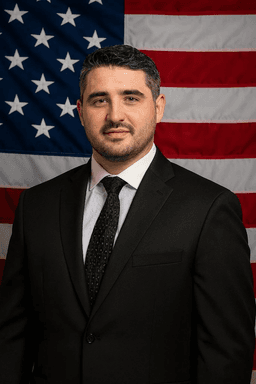 Your attorneyAndranik "Andy" Boyadzhyan, Esq.Founding Attorney. Licensed in Washington, D.C.
Attorney advertising. Services are not available in all states.
By Andranik "Andy" Boyadzhyan, Attorney at Law. Meet the team
In Washington, D.C., a recorded statement to the other driver's insurer can decide your claim, because contributory negligence can bar a driver or passenger found even slightly at fault. Cooperate honestly with your own insurer, and talk to a lawyer before speaking with theirs. Top USA Law can help you prepare. Call today.
Key takeaways
Because District common law can bar a driver or passenger who is even slightly at fault, so a single admission can decide the claim.
For claims between motorists, the District follows contributory negligence under District of Columbia common law. That means a driver or passenger found even slightly at fault may recover nothing. An adjuster who records "I looked down for a second" or "I was in a hurry" has a statement that can be offered to argue exactly that.
The stakes run high on crowded corridors where many things happen at once: merging onto I-395, rounding Dupont Circle or Logan Circle, or turning left across Connecticut Avenue. None of that means you should hold back the truth. It means you should know who you are talking to, why they are asking, and what the law makes important, before the recorder starts.
Prompt notice, accurate answers and the cooperation your policy requires, plus a PIP election within 60 days if you bought PIP.
If you have optional personal injury protection under D.C. Code section 31-2404, D.C. Code section 31-2405 gives you 60 days after the crash to tell the PIP insurer whether you elect benefits, and the insurer must notify any identifiable victim of that period in writing. Electing limits your right to sue the other driver unless your injury meets a statutory threshold or your costs exceed the PIP available. Your insurer may ask for a recorded statement to process that claim, and your policy's cooperation terms govern it.
The same goes for an uninsured or underinsured claim. UIM benefits are subject to the uninsured motorist coverage's provisions on "denials or exclusions of coverages, insolvency, subrogation, and set-off" under D.C. Code section 31-2406(c-1). Read your policy's duties after an accident before the call, and answer accurately. Our page on the D.C. no-fault option explains the election, and how a D.C. UIM claim works covers the other side of your own policy.
Top USA Law. Services are not available in all states.
Fill in four quick fields, and a licensed attorney reviews the facts of your case at no cost.
Talk to a lawyer first. That insurer represents the driver who hit you and is looking for facts that reduce or defeat your claim.
No policy you signed makes you the other driver's insurer's customer. Its adjuster may be friendly and may say the statement is routine. Under contributory negligence, though, the adjuster's most useful finding is any fault on your part. A lawyer can decide whether a statement helps at all, limit it to the crash facts, attend the call, or provide the information in writing.
If you do speak, give the same truthful account you would give anyone. The information you must exchange at the scene is set by statute, and the adjuster's questions go well beyond it. Our page on being partly at fault in D.C. explains how fault arguments are built.
Fault, distractions, speed and your injuries. Seat belt use is one topic the law takes off the table as evidence of negligence.
| Topic | District rule | What to keep in mind |
|---|---|---|
| Your own driving | Contributory negligence bars a driver or passenger even slightly at fault | Describe what happened; do not speculate or judge |
| Walking, cycling or scooting | D.C. Code 50-2204.52: barred only if your negligence was a proximate cause and greater than all defendants' combined | Fault still matters, under a more protective test |
| Seat belt | D.C. Code 50-1807: non-use is not evidence of negligence and cannot reduce damages | Answer truthfully; the answer cannot be used that way |
| Injuries | D.C. Code 31-2405 threshold if you elected PIP | Describe today's symptoms; say if you are still being evaluated |
| Leaving the scene | D.C. Code 50-2201.05c duties after an injury collision | The information you exchanged is a fact, not an opinion |
The vulnerable user rule covers pedestrians, cyclists, motorcyclists and others listed in D.C. Code section 50-2204.51. If that is you, read our page on the Collision Recovery Act and the D.C. pedestrian accident lawyer page before talking to any adjuster.
Stick to what you saw and did, say "I don't know" when you don't, describe injuries as they are, and never guess.
Give your own accurate account; if the police report has an error, point it out rather than matching it. Our page on getting a D.C. car accident report explains how to obtain the report before you talk to anyone.
One test helps before each answer: would you be comfortable hearing that sentence read back to a jury in D.C. Superior Court? If not, slow down and make sure it is accurate and complete. The goal is a careful answer, not a missing one, and a pause to think is always allowed on a recorded call.
Ask for requests in writing, keep notes of every call, and know that the District regulates unfair claim settlement practices by insurers.
D.C. Code section 31-2231.17 lists unfair claim settlement practices when done often enough to be a general business practice, including refusing to pay without a reasonable investigation, failing to affirm or deny coverage within a reasonable time, and not attempting in good faith a prompt, fair settlement when liability is reasonably clear. The section is enforced by the Commissioner, and the Department of Insurance, Securities and Banking takes consumer complaints.
Pressure to record a statement on the spot is not a reason to do it on the spot. You can set a time, ask for questions in writing, and have a lawyer present. Insurer-specific practices vary; our GEICO car accident claim page shows one company's process.
It stays in the insurer's file and can be compared with your deposition and records if the case is filed in D.C. Superior Court.
A lawsuit must be filed within three years under D.C. Code section 12-301, in the Civil Division of the Superior Court of the District of Columbia. Before trial you will answer written questions and give a deposition under oath, and the defense may compare those answers with earlier statements. Mediation is mandatory in Civil Actions cases. See our page on the D.C. lawsuit process.
If you already gave a statement that was wrong or incomplete, get a copy and correct it in writing, ideally through a lawyer. An early offer may follow; read whether to accept the first insurance offer in D.C. first.
Before any recorded call with the other driver's insurer, before your PIP election, and whenever a question about fault worries you.
The Washington, D.C. car accident lawyer page explains how Andranik "Andy" Boyadzhyan's team handles District claims. If bills are the worry, read who pays medical bills after a D.C. crash.
If the call comes from a rideshare company's insurer, first read who pays after a D.C. Uber or Lyft crash.
District rules for every crash claim are on the Washington, D.C. car accident lawyer hub. Call (877) 411-5291 before the next call with an adjuster. You pay no fee unless we win, and costs may apply.
Sue within three years, or two after a death. District claims need Mayor notice in six months; elect PIP in 60 days.
A licensed Washington, D.C. attorney, Andranik "Andy" Boyadzhyan, Founding Attorney, reviews every Washington, D.C. claim, and our team helps you in English or Spanish.
Andranik "Andy" Boyadzhyan, Esq.
Founding Attorney
Licensed in Alabama, Missouri, New Mexico and Washington, D.C.
Featured in CNN, Forbes, Variety

Paul Perkins, Esq.
Of Counsel
Licensed in New Jersey and New York
Certified by the New Jersey Supreme Court as a Civil Trial Attorney. Lawyer of Distinction in Civil Litigation.
Featured in CNBC, Bloomberg, Forbes, The New York Times
Andranik "Andy" Boyadzhyan is the founding attorney of Top USA Law. His background spans business law, civil litigation, and personal injury, and his practice today focuses on motor vehicle accident claims.
Sundas Shafi, Esq., Attorney at Law, Head of Litigation
Rosette Kalayjian, Attorney at Law
Sandra Alves, Case Manager
Four steps from your first call to the close of your claim. You focus on healing while we deal with the insurers and keep you updated.
Free consultation
Call 24/7 or send the short form. An attorney reviews what happened and tells you where you stand. Free, no obligation.
We deal with the insurers
We deal with the insurance companies, request the police report and medical records, and keep you updated.
We build your case
Evidence, witnesses, experts and the medical picture of your injuries, prepared as if the case will go to trial.
You get paid
Medical bills, lost wages, vehicle damage, and pain and suffering. No fee unless we win; costs may apply.
Reviewed by Andranik "Andy" Boyadzhyan, Esq.
Fill in the four short fields in this form, and a licensed attorney reviews your case for free. We respond day or night.
Top USA Law. Services are not available in all states.
Takes 30 seconds. No obligation.