

Pedestrian Hit by Car
$725,000
Insurer offered$25,000
Hip fracture and concussion in a crosswalk. The insurer offered $25,000.
Serving Washington, D.C.
Hurt in a crash? The insurance company already has a team working on your claim. You should too. A free call tells you where you stand.
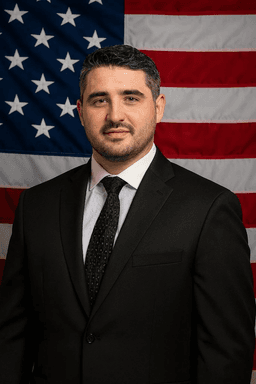 Your attorneyAndranik "Andy" Boyadzhyan, Esq.Founding Attorney. Licensed in Washington, D.C.
Attorney advertising. Services are not available in all states.
By Andranik "Andy" Boyadzhyan, Attorney at Law. Meet the team
In Washington, D.C., a concussion claim starts with a medical visit soon after the crash, because symptoms can show up hours or days later. Health insurance or other coverage you have pays first, then PIP if you elect it within 60 days. Top USA Law can explain each step. Call (877) 411-5291.
Get checked the same day, decide on PIP within 60 days, keep symptom and work records, then weigh a claim against the driver.
A concussion is easy to miss at a crash scene. You may stand up, trade insurance cards on New York Avenue NE and drive home, then wake the next morning with a headache and trouble reading. The Centers for Disease Control and Prevention, on its page about symptoms of mild TBI and concussion (dated Sept. 15, 2025), says some symptoms "may appear right away, while others may not appear for hours or days after the injury." That gap is why the order of steps matters in the District.
This page walks through those steps in order. Our brain injury guide for Washington, D.C. covers the medicine of more serious brain injuries and what drives claim value; this one is the checklist for a concussion. Andranik "Andy" Boyadzhyan, licensed in the District, wrote it. Top USA Law's main office is at 411 Hackensack Ave in Hackensack, New Jersey, and the firm's Washington, D.C. office listing is 700 12th St NW, Suite 700. We talk with clients by phone, by video and at meetings we arrange.
See a provider that day, even if you feel fine, and go to an emergency room at once for any danger sign the CDC lists.
The CDC's symptom page lists danger signs in adults that call for 911 or an emergency department right away, including a headache that gets worse and does not go away, repeated vomiting, slurred speech, one pupil larger than the other, and being very drowsy or unable to wake up. Its page on what to do after a mild TBI says getting care from a healthcare provider "can speed your recovery."
DC Health lists four Level 1 trauma centers in the District: MedStar Washington Hospital Center, George Washington University Hospital, Howard University Hospital and Children's National Hospital for children. Tell the triage nurse you were in a crash and say where your head moved or struck. That first note is written before anyone argues about the claim. If a police officer came, write down the officer's name and the report number before you leave.
Other coverage, such as health insurance, pays first; PIP, if you elect it within 60 days, can cover a deductible and the rest after that.
Personal injury protection (PIP) is optional in the District. Under D.C. Code 31-2404, insurers must offer it, it pays medical and rehabilitation costs, work loss and funeral benefits without regard to fault, and it reaches only a victim who is an insured or an occupant of the insured's vehicle, or of a vehicle the insured is driving. D.C. Code 31-2406(g) then sets the order: you cannot claim PIP, other than to cover a deductible, for a loss another insurer or coverage pays, until that coverage is exhausted. So give the hospital your health insurance card first.
Two more payment rules can touch a concussion claim. If you were hurt on the job, workers' compensation benefits are subtracted in calculating PIP under D.C. Code 31-2410(b). And a District hospital can hold a lien on your recovery for its reasonable charges under D.C. Code 40-201, but not for an injury covered by workers' compensation, and only after the written notice D.C. Code 40-202 requires is filed with the Recorder of Deeds and mailed before payment.
Decide within 60 days; electing PIP limits suits against another person unless a threshold is met or costs exceed PIP, except death claims.
D.C. Code 31-2405 gives a victim 60 days after the crash to tell the PIP insurer whether they elect PIP benefits. The insurer must tell you about the 60 days in writing, the time can be extended by written agreement, and a relative may decide for someone who is incapacitated. A person with a fresh concussion may not be able to read that letter, so a family member should open the mail.
The choice has a cost. A victim who elects PIP can sue another person over the crash only if the injury caused substantial permanent scarring or disfigurement, a substantial and medically demonstrable permanent impairment that significantly affected work or usual daily activities, or an impairment that kept the person from substantially all usual daily activities for more than 180 continuous days, or if medical and rehabilitation costs or work loss exceed the PIP benefits available. A concussion that clears in weeks may not meet that test, so ask a lawyer before the 60 days end. Survivors' death claims are not limited by the election (31-2405(c)).
Keep visit notes, a daily symptom log, written work instructions and witness accounts; insurers weigh what was written down while symptoms were happening.
A concussion does not always show on a scan. The CDC's page about mild TBI and concussion says providers may test learning, memory, concentration and problem solving with neuropsychological or neurocognitive tests. Ask whether those tests are right for you, and keep the results.
If you claim PIP, the insurer can ask for a physical or mental examination under the policy terms, and D.C. Code 31-2411(b) entitles you to a free copy of each written report on request. Ask for it every time.
Yes, but District contributory negligence can bar a car's driver or passenger who was even slightly at fault, so fault evidence matters early.
Under District of Columbia common law, a driver or passenger of a car who is found even slightly at fault may be barred from recovering from another driver. Pedestrians, cyclists, motorcyclists and other vulnerable users have more room: under the Motor Vehicle Collision Recovery Act, D.C. Code 50-2204.52, their own negligence bars recovery only if it was a proximate cause of the injury and greater than the combined negligence of all the defendants.
That rule makes crash evidence as important as medical proof. Photos of the cars, the intersection and the lights, dashcam or doorbell video from nearby homes, and the names of witnesses can decide the claim before anyone looks at the concussion itself. Ask stores near the crash, in writing, to keep their video. If a District government vehicle hit you, the claim also needs written notice to the Mayor within six months under D.C. Code 12-309; a written Metropolitan Police Department report made in the regular course of duty is a sufficient notice under the statute.
Top USA Law. Services are not available in all states.
Fill in four quick fields, and a licensed attorney reviews the facts of your case at no cost.
In each case, the insurance company made a first offer. Here is what our clients received instead. Past results do not guarantee a similar outcome.
Pedestrian Hit by Car
$725,000
Insurer offered$25,000
Hip fracture and concussion in a crosswalk. The insurer offered $25,000.
Every case is different. Past results do not guarantee, warrant, or predict a similar outcome.
Three years to sue a private driver; District claims need Mayor notice in six months; the PIP election is due within 60 days.
| Step | Deadline | Rule |
|---|---|---|
| Tell the PIP insurer whether you elect PIP | Within 60 days of the crash, unless extended by written agreement | D.C. Code 31-2405 |
| Claim against the District, such as a city vehicle | Written notice to the Mayor within six months of the injury | D.C. Code 12-309 |
| Lawsuit against a private driver | Three years from the crash | D.C. Code 12-301 |
| Lawsuit for unpaid PIP benefits | Three years after the injury, after prompt written notice to the insurer, or after the insurer's last PIP payment | D.C. Code 31-2411 |
Put every date on one sheet. A concussion can make it hard to keep track of mail, so give a copy to someone you trust and to your lawyer. When you are ready, call (877) 411-5291 for a free review. No Fee Unless We Win (Costs May Apply). Related District guides: the Washington, D.C. car accident lawyer page and the neck injury guide.
Sue within three years, or two after a death. District claims need Mayor notice in six months; elect PIP in 60 days.
A licensed Washington, D.C. attorney, Andranik "Andy" Boyadzhyan, Founding Attorney, reviews every Washington, D.C. claim, and our team helps you in English or Spanish.

Andranik "Andy" Boyadzhyan, Esq.
Founding Attorney
Licensed in Alabama, Missouri, New Mexico and Washington, D.C.
Featured in CNN, Forbes, Variety

Paul Perkins, Esq.
Of Counsel
Licensed in New Jersey and New York
Certified by the New Jersey Supreme Court as a Civil Trial Attorney. Lawyer of Distinction in Civil Litigation.
Featured in CNBC, Bloomberg, Forbes, The New York Times
Andranik "Andy" Boyadzhyan is the founding attorney of Top USA Law. His background spans business law, civil litigation, and personal injury, and his practice today focuses on motor vehicle accident claims.
Sundas Shafi, Esq., Attorney at Law, Head of Litigation
Rosette Kalayjian, Attorney at Law
Sandra Alves, Case Manager
Four steps from your first call to the close of your claim. You focus on healing while we deal with the insurers and keep you updated.
Free consultation
Call 24/7 or send the short form. An attorney reviews what happened and tells you where you stand. Free, no obligation.
We deal with the insurers
We deal with the insurance companies, request the police report and medical records, and keep you updated.
We build your case
Evidence, witnesses, experts and the medical picture of your injuries, prepared as if the case will go to trial.
You get paid
Medical bills, lost wages, vehicle damage, and pain and suffering. No fee unless we win; costs may apply.
Reviewed by Andranik "Andy" Boyadzhyan, Esq.
Fill in the four short fields in this form, and a licensed attorney reviews your case for free. We respond day or night.
Top USA Law. Services are not available in all states.
Takes 30 seconds. No obligation.