


Andranik "Andy" Boyadzhyan, Esq.
Founding Attorney
Licensed in Alabama, Missouri, New Mexico and Washington, D.C.
Featured in CNN, Forbes, Variety
Serving Washington, D.C.
Hurt in a crash? The insurance company already has a team working on your claim. You should too. A free call tells you where you stand.
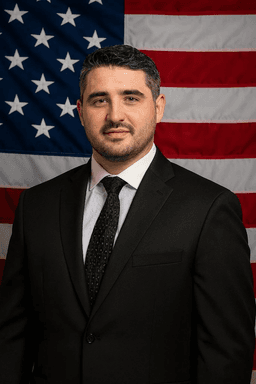 Your attorneyAndranik "Andy" Boyadzhyan, Esq.Founding Attorney. Licensed in Washington, D.C.
Attorney advertising. Services are not available in all states.
By Andranik "Andy" Boyadzhyan, Attorney at Law. Meet the team
In Washington, D.C., the at-fault driver's insurer should pay for a rental during a reasonable repair time, while your own insurer pays only if you bought rental reimbursement. On a total loss, a rental is a courtesy. For car drivers, any fault of your own can bar the claim. Top USA Law offers a free case review.
Key takeaways
The at-fault driver's insurer should pay for a rental during a reasonable repair time. Your own insurer pays only if you bought rental reimbursement.
That is how DISB's consumer guidance puts it: if your car was damaged because of another driver's negligence, the other driver's insurance company should pay your rental car costs for a reasonable length of repair time. The money comes from that driver's property damage liability coverage. Under D.C. Code section 31-2406, every District policy must carry at least $10,000 of it. Past results do not guarantee a similar outcome. A crash on New York Avenue NE or the Southeast Freeway can easily produce repair bills and rental days that test that limit, which is one reason to know your own coverage too.
| Situation | Who pays for the rental | Source |
|---|---|---|
| Other driver at fault, car repairable | Other driver's insurer, for a reasonable repair time | DISB consumer guidance |
| Other driver at fault, car totaled | Other insurer may pay as a courtesy; it is not required | DISB consumer guidance |
| Claim on your own policy | Your insurer, only with rental reimbursement coverage, up to its limits | DISB consumer guidance; your declarations page |
| Uninsured at-fault driver | Your collision or uninsured motorist property damage coverage pays the car; a rental needs rental coverage | D.C. Code 31-2406(f); DISB |
| PIP | Never; PIP pays injury losses only, if elected within 60 days and after other coverage such as health insurance is used up | D.C. Code 31-2404 |
Not by right. DISB says an insurer may pay for a rental on a total loss as a courtesy, but it is not required to.
A total loss changes the rental question. DISB's guidance says that when the car is totaled, insurers may pay for your rental as a courtesy, but they are not required to do so. Once the insurer pays what your car was worth, it will expect the rental to end. Under D.C. Code section 50-1331.01(12), a car is a "salvage vehicle" when rebuilding it would cost more than 75 percent of its pre-damage retail value. That is one sign a total loss is coming. Plan for the gap between the payout and buying a replacement. Our D.C. total loss guide explains how the car's value is set.
Top USA Law. Services are not available in all states.
Fill in four quick fields, and a licensed attorney reviews the facts of your case at no cost.
Only if you paid for rental reimbursement coverage. Check the daily and total limits on your declarations page before you rent anything.
DISB's guidance says a claim with your own insurer covers a rental only if you paid for rental reimbursement coverage. It also tells drivers to check the policy's dollar limit for rentals. Rental coverage is not among the coverages D.C. Code section 31-2406 requires: liability for injury and property, and uninsured motorist coverage. PIP under D.C. Code section 31-2404 is optional, and even when you buy it, it pays medical and rehabilitation costs, work loss and funeral benefits, never the car. Using your own collision and rental coverage can be faster when the other insurer has not yet accepted fault. Your insurer can then pursue the at-fault driver's insurer.
Yes. Under District common law, a driver found even slightly at fault can lose the claim against the other driver, including the car and rental.
Under District of Columbia common law, claims between motorists follow contributory negligence. Say the other insurer shows you contributed to the crash in any degree, such as a late lane change on I-295 or a rolling stop near Dupont Circle. It can then deny the whole property damage claim, rental included. That is when your own collision and rental coverage matters most, since it pays regardless of fault, minus your deductible. Pedestrians, cyclists and motorcyclists are treated differently under D.C. Code section 50-2204.52: their own negligence bars recovery only if it was a proximate cause and greater than the combined negligence of the defendants. Our page on partial fault in D.C. explains both rules.
Your collision or uninsured motorist property damage coverage pays for the car, minus a deductible. Your insurer pays a rental only with rental reimbursement coverage.
Every District policy must include uninsured motorist coverage, including property damage coverage of at least $5,000 with a $200 deductible, under D.C. Code section 31-2406(f). Past results do not guarantee a similar outcome. DISB adds that if an uninsured driver caused the crash, your insurer pays for your car if you have collision or uninsured motorist property damage coverage. Collision repairs still carry your deductible. Neither coverage is rental coverage. The uninsured driver page covers the injury side.
Ask for reasons in writing, keep a log of delay days, and file a complaint with DISB if the insurer will not respond fairly.
D.C. Code section 31-2231.17 lists unfair claim settlement practices, when done often enough to be a general business practice. They include refusing to pay without a reasonable investigation and failing to affirm or deny coverage within a reasonable time. Another is not trying in good faith to settle promptly and fairly when liability is reasonably clear. That section is enforced by the Commissioner, not by a private lawsuit stated in it. DISB takes complaints at disbcomplaints@dc.gov. DISB also says you may choose the body shop, even if the adjuster suggests one; tell the adjuster your choice before work starts. A shop that can start soon shortens the rental.
Your own auto policy, a credit card benefit or the counter coverage you bought may pay. DISB urges checking all three before you rent.
DISB's guidance on rental cars describes the products sold at the counter: a collision damage waiver (or loss damage waiver), extra liability insurance, personal accident insurance for medical bills, and personal effects coverage. It notes that comprehensive and collision coverage on your own car may make the waiver unnecessary, that credit card benefits are generally secondary to your own insurance, and that longer rentals can fall outside your policy. If someone else hit your rented car, the claim against that driver works much like one for your own car. If you were hurt, see what to do after a D.C. crash.
Exchange information, report the claim, get rental terms in writing, keep receipts, sue within three years; a District claim needs Mayor notice in six months.
An injury claim is separate from the car. Its value turns on treatment, lost work, permanency, fault and insurance limits. See how D.C. settlements are valued.
Top USA Law's Washington, D.C. office is at 700 12th St NW, Suite 700. Andranik "Andy" Boyadzhyan, Attorney at Law, licensed in Washington, D.C., wrote this page, and you pay no fee unless we win, and costs may apply. See the Washington, D.C. car accident lawyer page and the District car accident attorney overview.
Related Washington, D.C. questions: pain and suffering, health insurance after a crash, what a lawyer costs.
Sue within three years, or two after a death. District claims need Mayor notice in six months; elect PIP in 60 days.
A licensed Washington, D.C. attorney, Andranik "Andy" Boyadzhyan, Founding Attorney, reviews every Washington, D.C. claim, and our team helps you in English or Spanish.
Andranik "Andy" Boyadzhyan, Esq.
Founding Attorney
Licensed in Alabama, Missouri, New Mexico and Washington, D.C.
Featured in CNN, Forbes, Variety

Paul Perkins, Esq.
Of Counsel
Licensed in New Jersey and New York
Certified by the New Jersey Supreme Court as a Civil Trial Attorney. Lawyer of Distinction in Civil Litigation.
Featured in CNBC, Bloomberg, Forbes, The New York Times
Andranik "Andy" Boyadzhyan is the founding attorney of Top USA Law. His background spans business law, civil litigation, and personal injury, and his practice today focuses on motor vehicle accident claims.
Sundas Shafi, Esq., Attorney at Law, Head of Litigation
Rosette Kalayjian, Attorney at Law
Sandra Alves, Case Manager
Four steps from your first call to the close of your claim. You focus on healing while we deal with the insurers and keep you updated.
Free consultation
Call 24/7 or send the short form. An attorney reviews what happened and tells you where you stand. Free, no obligation.
We deal with the insurers
We deal with the insurance companies, request the police report and medical records, and keep you updated.
We build your case
Evidence, witnesses, experts and the medical picture of your injuries, prepared as if the case will go to trial.
You get paid
Medical bills, lost wages, vehicle damage, and pain and suffering. No fee unless we win; costs may apply.
Reviewed by Andranik "Andy" Boyadzhyan, Esq.
Fill in the four short fields in this form, and a licensed attorney reviews your case for free. We respond day or night.
Top USA Law. Services are not available in all states.
Takes 30 seconds. No obligation.