


Andranik "Andy" Boyadzhyan, Esq.
Founding Attorney
Licensed in Alabama, Missouri, New Mexico and Washington, D.C.
Featured in CNN, Forbes, Variety
Serving Washington, D.C.
Hurt in a crash? The insurance company already has a team working on your claim. You should too. A free call tells you where you stand.
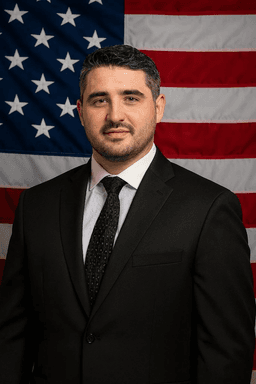 Your attorneyAndranik "Andy" Boyadzhyan, Esq.Founding Attorney. Licensed in Washington, D.C.
Attorney advertising. Services are not available in all states.
By Andranik "Andy" Boyadzhyan, Attorney at Law. Meet the team
In Washington, D.C., a driver turning left must yield to oncoming traffic close enough to be an immediate hazard, so fault starts with the turning driver. But under District common law, a driver or car passenger even slightly at fault can lose the claim. Top USA Law can review yours: (877) 411-5291.
The left-turning driver must yield to oncoming vehicles that are close enough to be an immediate hazard, so fault starts with that driver.
The rule is in the District's traffic regulations. 18 DCMR 2208.2 says the driver of a vehicle intending to turn left shall yield the right-of-way to any vehicle approaching from the opposite direction which is so close as to constitute an immediate hazard. When a driver turns left across Connecticut Avenue or Georgia Avenue in front of an oncoming car and the two collide, that rule is where the fault analysis begins.
A green light does not change it. Under 18 DCMR 2103.3, traffic facing a green signal, including vehicles turning left, must yield to other vehicles and to pedestrians lawfully within the intersection or an adjacent crosswalk. A green arrow is different: 18 DCMR 2103.4 lets traffic enter the intersection only to make the movement the arrow shows, while still yielding to pedestrians lawfully in a crosswalk and other traffic lawfully using the intersection.
The turning driver is not automatically the only one at fault, though. An oncoming driver who was speeding, ran a red light, or entered on yellow when stopping was safe may share the blame, and in the District that shared blame carries a heavy price, as the next sections explain.
Under District common law, a driver or car passenger whose own negligence helped cause the crash can be barred from recovering anything.
For claims between motorists, the District of Columbia follows pure contributory negligence under District of Columbia common law. If the injured driver or passenger is found even slightly at fault, recovery may be barred. That makes a left turn case a contest over small details: how fast the oncoming car was going, whether its light had turned yellow, whether the turning car had already entered the intersection, and whether either driver was distracted.
On a steady yellow, 18 DCMR 2103.5 requires traffic to stop before entering the nearest crosswalk unless it is so close that a stop cannot safely be made. On a steady red, 18 DCMR 2103.7 requires a stop. An insurer for the turning driver will look for any sign the oncoming driver pushed a yellow, sped, or looked away, because in the District a small share of fault on the oncoming driver can defeat that driver's whole claim.
One argument the insurer cannot use: under D.C. Code section 50-1807, a seat belt violation shall not constitute evidence of negligence or contributory negligence, and it shall not be used as a basis for mitigating damages.
Top USA Law. Services are not available in all states.
Fill in four quick fields, and a licensed attorney reviews the facts of your case at no cost.
Pedestrians and vulnerable users such as cyclists are barred only if their own negligence was a proximate cause and greater than the defendants' combined.
A driver watching oncoming cars can miss the person in the crosswalk the car is turning into. The Motor Vehicle Collision Recovery Act changes the rule for those people. Under D.C. Code section 50-2204.52, unless the plaintiff's negligence is a proximate cause of the injury and greater than the aggregated total negligence of all the defendants, the negligence of a pedestrian or vulnerable user of a public highway or sidewalk involved in a collision with a motor vehicle shall not bar recovery. D.C. Code section 50-2204.51 lists vulnerable users, including people using a bicycle, motorcycle, scooter or skateboard.
So a cyclist who entered the intersection a moment late, or a walker who started across as the signal changed, can still recover unless their share was larger than the drivers' combined share. The left turn rule itself also protects walkers: under 18 DCMR 2103.3, turning traffic on green must yield to pedestrians lawfully within the intersection or an adjacent crosswalk.
In 2024 federal fatality data, seven fatal District crashes involved a left-turning vehicle: three in Southeast, three in Northwest, one in Northeast, none in Southwest.
According to our analysis of the 2024 file of the NHTSA Fatality Analysis Reporting System, Washington, D.C. had 46 fatal crashes in 2024. In seven of them, at least one vehicle's movement just before the crash was coded as turning left, and two of those seven killed a pedestrian. The coded locations include Alabama Avenue SE at 25th Street SE, Foxhall Road NW at Q Street NW, New York Avenue NW at 6th Street NW, Martin Luther King Jr. Avenue SE at Halley Place SE, and N Street NE at Florida Avenue NE.
FARS counts only crashes in which someone died within 30 days, so it shows a small slice of left turn crashes. The injury crashes that never make the federal file follow the same rules on this page.
Signal timing, video, the point of impact and witness statements carry these cases, so gather them in the first few days.
Damage location tells part of the story: a turning car struck on its passenger side suggests it was mid-turn, while front-to-front damage points to a turn started too early. Ask nearby businesses for camera footage at once, since some systems record over within days. The District Department of Transportation and Metropolitan Police may hold signal or camera records, and a lawyer can send preservation requests. Get the Metropolitan Police Department report number; our D.C. crash report guide explains how to request it. Write down every witness, especially anyone waiting at the light who saw its color.
Decide within 60 days whether to elect PIP, which affects suits; coverage you are eligible for, like health, pays first, then PIP.
The District has optional no-fault coverage, called personal injury protection. D.C. Code section 31-2404 requires insurers to offer it, and it pays regardless of fault to an insured or an occupant of the insured's vehicle. Under D.C. Code section 31-2406(g), a victim cannot claim PIP, other than to cover a deductible, if the victim is eligible for compensation from another insurer or coverage, until that coverage is exhausted, so coverage you are eligible for, such as health insurance, pays first. Under D.C. Code section 31-2405, you must notify the PIP insurer within 60 days of the crash whether you elect PIP benefits.
Electing PIP limits any suit based on another person's liability: under 31-2405(b) you can sue only if the injury caused substantial permanent scarring or disfigurement, a substantial and medically demonstrable permanent impairment that significantly affected your work or usual daily activities, or an impairment that prevented substantially all of those activities for more than 180 continuous days, or if your medical and rehabilitation expenses or work loss exceed the PIP benefits available. A survivors' death claim is not limited. Talk to a lawyer before you elect.
Three years to sue a private driver; District claims need Mayor notice in six months; elect PIP with your insurer within 60 days.
D.C. Code section 12-301 gives three years from the crash to sue for personal injury. If a District-owned vehicle made the turn, or a broken signal is part of the case, D.C. Code section 12-309 bars the suit unless written notice of the approximate time, place, cause and circumstances reaches the Mayor within six months after the injury; a written Metropolitan Police Department report in regular course of duty is a sufficient notice. A wrongful death action must be brought by the personal representative within two years after the death (D.C. Code section 16-2702).Uninsured motorist coverage is mandatory on District policies and can pay when the at-fault turning driver had none or fled.
Under D.C. Code section 31-2406(f), uninsured motorist coverage is required on every District policy at least 25,000 dollars per person and 50,000 dollars per accident for injury, and an uninsured vehicle includes a hit and run vehicle whose owner or driver cannot be identified. Past results do not guarantee a similar outcome. The same fault rules apply to a UM claim, so the evidence steps above still matter.
Get treated, note the light and lane, request video, weigh the PIP suit limit before electing within 60 days, and see a lawyer.
See a doctor and keep every record. Write down which way each car was going, the lane, and the signal color you saw, while it is fresh. Request business and traffic camera footage. Mark the 60 day PIP election date. Talk to a lawyer before giving the other driver's insurer a recorded statement; your own insurer can require your cooperation under the policy. Call Top USA Law at (877) 411-5291. You pay no fee unless we win, and costs may apply.
Sue within three years, or two after a death. District claims need Mayor notice in six months; elect PIP in 60 days.
A licensed Washington, D.C. attorney, Andranik "Andy" Boyadzhyan, Founding Attorney, reviews every Washington, D.C. claim, and our team helps you in English or Spanish.
Andranik "Andy" Boyadzhyan, Esq.
Founding Attorney
Licensed in Alabama, Missouri, New Mexico and Washington, D.C.
Featured in CNN, Forbes, Variety

Paul Perkins, Esq.
Of Counsel
Licensed in New Jersey and New York
Certified by the New Jersey Supreme Court as a Civil Trial Attorney. Lawyer of Distinction in Civil Litigation.
Featured in CNBC, Bloomberg, Forbes, The New York Times
Andranik "Andy" Boyadzhyan is the founding attorney of Top USA Law. His background spans business law, civil litigation, and personal injury, and his practice today focuses on motor vehicle accident claims.
Sundas Shafi, Esq., Attorney at Law, Head of Litigation
Rosette Kalayjian, Attorney at Law
Sandra Alves, Case Manager
Four steps from your first call to the close of your claim. You focus on healing while we deal with the insurers and keep you updated.
Free consultation
Call 24/7 or send the short form. An attorney reviews what happened and tells you where you stand. Free, no obligation.
We deal with the insurers
We deal with the insurance companies, request the police report and medical records, and keep you updated.
We build your case
Evidence, witnesses, experts and the medical picture of your injuries, prepared as if the case will go to trial.
You get paid
Medical bills, lost wages, vehicle damage, and pain and suffering. No fee unless we win; costs may apply.
Reviewed by Andranik "Andy" Boyadzhyan, Esq.
Fill in the four short fields in this form, and a licensed attorney reviews your case for free. We respond day or night.
Top USA Law. Services are not available in all states.
Takes 30 seconds. No obligation.