


Andranik "Andy" Boyadzhyan, Esq.
Founding Attorney
Licensed in Alabama, Missouri, New Mexico and Washington, D.C.
Featured in CNN, Forbes, Variety
Serving Washington, D.C.
Hurt in a crash? The insurance company already has a team working on your claim. You should too. A free call tells you where you stand.
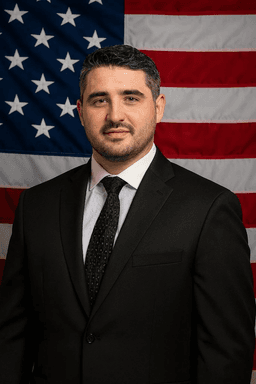 Your attorneyAndranik "Andy" Boyadzhyan, Esq.Founding Attorney. Licensed in Washington, D.C.
Attorney advertising. Services are not available in all states.
By Andranik "Andy" Boyadzhyan, Attorney at Law. Meet the team
In Washington, D.C., your medical bills are usually paid by your health insurance, then optional PIP coverage if you bought and elected it, while the claim against the at-fault driver is pending, because the other driver's insurer pays only once fault is settled. Top USA Law can line up which coverage pays first. Call for a free case review.
Key takeaways
Health coverage pays first, then optional PIP if bought and elected within 60 days; the at-fault driver's insurer does not pay bills as they arrive.
In the District, a crash victim's own coverage carries the early medical costs. D.C. Code section 31-2404 requires insurers to offer personal injury protection, but buying it is optional. If you bought it, PIP pays medical and rehabilitation benefits without regard to fault, and it pays only to a victim who is an insured or an occupant of the insured's vehicle or a vehicle the insured is driving.
The at-fault driver's liability insurer is a different matter. It pays your medical costs only as part of an injury settlement or judgment, after fault and damages are worked out. Someone hurt in a collision on I-295 or at a 14th Street intersection can wait months for that, while ambulance, emergency room and follow-up bills come due. That is why the first question is what coverage you carry yourself.
Health insurance and other coverage you are eligible for come before PIP, which covers what remains if elected; the at-fault driver and UM pay later.
| Source | When it pays | Limits or conditions | Law |
|---|---|---|---|
| Health insurance or other coverage you are eligible for | As treatment happens, under your plan | PIP generally cannot be claimed for the same loss until this is exhausted, except a deductible | D.C. Code 31-2406(g) |
| Optional PIP, if bought and elected | Without regard to fault | Medical and rehabilitation at least $50,000, option of $100,000; election within 60 days | D.C. Code 31-2404, 31-2405 |
| At-fault driver's liability insurer | After settlement or judgment | Required minimum $25,000 per person; fault rules apply | D.C. Code 31-2406(c) |
| Your uninsured or underinsured motorist coverage | When the driver has no insurance or too little | UM mandatory at $25,000 per person; UIM optional | D.C. Code 31-2406(f), (c-1) |
The dollar figures are statutory minimums and options, not values for any claim. Past results do not guarantee a similar outcome. Your declarations page and health plan documents fill in your actual limits.
Top USA Law. Services are not available in all states.
Fill in four quick fields, and a licensed attorney reviews the facts of your case at no cost.
Look at your declarations page for personal injury protection, listing medical and rehabilitation, work loss and funeral benefits and their limits.
Under D.C. Code section 31-2404, the insured may buy any one or any combination of three PIP benefits: medical and rehabilitation (at least $50,000, with options of $50,000 and $100,000), work loss (at least $12,000), and funeral (up to $4,000). Past results do not guarantee a similar outcome. Medical and rehabilitation benefits are "all reasonable charges incurred for reasonably necessary products, services, and accommodations" for your care, and the provider must be licensed or approved under 31-2404(c)(4).
Order matters even with PIP. D.C. Code section 31-2406(g) says a victim "is prohibited from claiming personal injury protection benefits under this chapter, other than to compensate for any deductible, if the victim is eligible for compensation for the loss covered by personal injury protection from another insurer or another insurance coverage, unless the victim has exhausted benefits offered by the insurer or insurance coverage." Give your providers both your health plan and your auto policy details. Our page on the D.C. no-fault option covers the benefit in depth.
Depends. PIP pays bills after health insurance, but electing it limits any suit unless a threshold is met or costs exceed PIP.
D.C. Code section 31-2405 requires you to tell the PIP insurer within 60 days of the crash whether you elect benefits; the insurer must tell you about the 60 day period in writing, and the period can be extended by written agreement. If you elect PIP, you may sue another person only if the injury caused substantial permanent scarring or disfigurement, substantial and medically demonstrable permanent impairment that significantly affected your work or daily activities, or an impairment that prevented substantially all usual daily activities for more than 180 continuous days, or if your medical and rehabilitation costs or work loss exceed the PIP benefits available.
If you make no election in 60 days, the liability coverage applies. The trade-off is personal: fast payment against the full claim. Ask a lawyer before the window closes, and see what the D.C. settlement factors page says about how a claim is valued.
Only through a settlement or judgment, and only if District fault rules let you recover. Drivers and passengers face contributory negligence.
For drivers and passengers, the District follows contributory negligence under District of Columbia common law. If you are found even slightly at fault, recovery from the other driver may be barred, medical bills included. The driver must carry at least $25,000 per person for injuries under D.C. Code 31-2406(c), which can fall short of a hospital stay at MedStar Washington Hospital Center. Past results do not guarantee a similar outcome. Our page on being partly at fault in D.C. explains how insurers raise fault.
Seat belts are not part of that argument. Under D.C. Code section 50-1807, not wearing a seat belt is not evidence of negligence and cannot be used to reduce damages. When the at-fault driver has too little insurance, read how a D.C. UIM claim works; with none, see the D.C. uninsured driver page. For costly injuries, see how this works in a District broken bone claim and a District neck injury claim.
If the driver had no insurance, your own uninsured motorist coverage stands in for the claim the driver would have owed. Under D.C. Code section 31-2406, an unidentified hit and run driver and a driver whose insurer denies coverage both count as uninsured.
Walkers' and cyclists' own health insurance pays first, PIP only if a policy insures them, then the at-fault driver under the Collision Recovery Act.
PIP under 31-2404 pays only a victim who is an insured or an occupant of the insured's vehicle, so a pedestrian without a policy of their own generally relies on health insurance first. The claim against the driver follows the Motor Vehicle Collision Recovery Act. Under D.C. Code section 50-2204.52, a pedestrian, or a cyclist, motorcyclist or other vulnerable user defined in D.C. Code section 50-2204.51 is not barred by their own negligence unless it was a proximate cause and greater than the combined negligence of all defendants. The D.C. pedestrian accident lawyer page and our page on the Collision Recovery Act explain the rule.
Give every provider both your health plan and auto policy details, decide on PIP within 60 days, and keep every bill and explanation of benefits.
A full bill log becomes the medical damages part of the injury claim. Chiropractic and therapy bills count too; see our page on chiropractic care after a D.C. crash. If your own insurer asks for a statement about your injuries, read recorded statements after a D.C. crash first.
Sixty days for the PIP election, six months to notify the Mayor of District claims, and three years to sue the at-fault driver.
The lawsuit deadline is three years under D.C. Code section 12-301. If a District government vehicle or road defect was involved, written notice to the Mayor within six months is required under D.C. Code section 12-309. Medical providers' own billing deadlines and your health plan's claim rules run separately. Our page on the D.C. three year deadline covers the clock.
The Washington, D.C. car accident lawyer page explains how Andranik "Andy" Boyadzhyan's team handles District claims.
Medical bills are only half of the money problem; lost wages after a D.C. crash covers the paycheck side of optional PIP.
If you rode in someone else's car, the D.C. passenger guide sets out which policies answer to you.
District rules for every crash claim are on the Washington, D.C. car accident lawyer hub. Call (877) 411-5291 to sort out who pays your bills. You pay no fee unless we win, and costs may apply.
Sue within three years, or two after a death. District claims need Mayor notice in six months; elect PIP in 60 days.
A licensed Washington, D.C. attorney, Andranik "Andy" Boyadzhyan, Founding Attorney, reviews every Washington, D.C. claim, and our team helps you in English or Spanish.
Andranik "Andy" Boyadzhyan, Esq.
Founding Attorney
Licensed in Alabama, Missouri, New Mexico and Washington, D.C.
Featured in CNN, Forbes, Variety

Paul Perkins, Esq.
Of Counsel
Licensed in New Jersey and New York
Certified by the New Jersey Supreme Court as a Civil Trial Attorney. Lawyer of Distinction in Civil Litigation.
Featured in CNBC, Bloomberg, Forbes, The New York Times
Andranik "Andy" Boyadzhyan is the founding attorney of Top USA Law. His background spans business law, civil litigation, and personal injury, and his practice today focuses on motor vehicle accident claims.
Sundas Shafi, Esq., Attorney at Law, Head of Litigation
Rosette Kalayjian, Attorney at Law
Sandra Alves, Case Manager
Four steps from your first call to the close of your claim. You focus on healing while we deal with the insurers and keep you updated.
Free consultation
Call 24/7 or send the short form. An attorney reviews what happened and tells you where you stand. Free, no obligation.
We deal with the insurers
We deal with the insurance companies, request the police report and medical records, and keep you updated.
We build your case
Evidence, witnesses, experts and the medical picture of your injuries, prepared as if the case will go to trial.
You get paid
Medical bills, lost wages, vehicle damage, and pain and suffering. No fee unless we win; costs may apply.
Reviewed by Andranik "Andy" Boyadzhyan, Esq.
Fill in the four short fields in this form, and a licensed attorney reviews your case for free. We respond day or night.
Top USA Law. Services are not available in all states.
Takes 30 seconds. No obligation.