

Rear End Collision
$2,300,000
Insurer offered$85,000
Spinal cord injury after a rear end crash. The insurer offered $85,000.
Serving Washington, D.C.
Hurt in a crash? The insurance company already has a team working on your claim. You should too. A free call tells you where you stand.
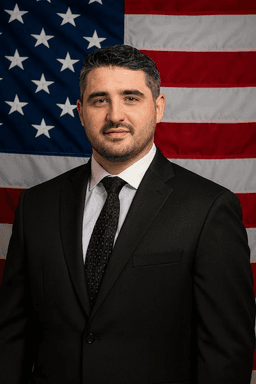 Your attorneyAndranik "Andy" Boyadzhyan, Esq.Founding Attorney. Licensed in Washington, D.C.
Attorney advertising. Services are not available in all states.
By Andranik "Andy" Boyadzhyan, Attorney at Law. Meet the team
In Washington, D.C., D.C. Code 50-2204.52 lets a pedestrian or cyclist hit by a car recover damages unless their own negligence was greater than the driver's, replacing the old rule that any fault barred the claim. Drivers and passengers are still bound by contributory negligence. Top USA Law proves who was at fault. Call (877) 411-5291.
D.C. Code section 50-2204.52 is the codified section of the Motor Vehicle Collision Recovery Act of 2016. Before the Act, the District followed pure contributory negligence in every car accident case: if the injured person was even one percent at fault, the claim was barred entirely. The Act changed that rule for one group of people. Under section 50-2204.52, a pedestrian, bicyclist or other non motorized user of a public highway who is injured in a collision with a motor vehicle is not barred from recovery by their own negligence unless that negligence was greater than the combined negligence of the defendants.
In plain terms, a pedestrian or cyclist in the District recovers unless they were more than 50 percent responsible for the crash. A driver or a passenger in a car does not get the benefit of the Act. For them, the common law rule still applies and any share of fault, however small, can defeat the claim.
The Act also preserved the last clear chance doctrine and the general rule that a person who intentionally causes their own injury cannot recover, so the analysis in every case still turns on the specific evidence of what each person did.
It applies when you were on foot, on a bicycle, on a scooter or otherwise using the roadway without a motor, and a motor vehicle hit you. The Act covers e bikes and personal mobility devices in the categories the statute lists as non motorized or low speed users, and it applies on public highways and sidewalks in the District.
The question is whether your negligence was greater than the aggregated negligence of everyone you are suing. If a driver turned into a crosswalk while you crossed against a flashing hand, an insurer will argue you share fault. The claim survives as long as your share is 50 percent or less. Because the District's rule for drivers remains so harsh, insurers often try to characterize a cyclist or scooter rider as a motorist. The statute's definitions answer that argument, and we raise them early.
A cyclist in a marked bike lane on 14th Street NW is struck by a driver making a right turn without signaling. The insurer says the cyclist was speeding. Even if a jury accepted that the cyclist was 30 percent at fault, section 50-2204.52 allows recovery because 30 percent is not greater than the driver's 70 percent. Under the old rule, and under the rule that still applies to a driver in a car, that same 30 percent finding would have ended the case.
It does not change the three year deadline to file under D.C. Code section 12-301, the six month notice to the District under D.C. Code section 12-309 when a District vehicle is involved, or the two year wrongful death limit under D.C. Code section 16-2702. It also does not create a no fault system: a District pedestrian's medical bills are paid by health insurance and then recovered from the driver's liability insurer as part of the claim.
See if you have a case
Three answers and a phone number. An attorney reviews your situation and calls you back, free.
Rear End Collision
$2,300,000
Insurer offered$85,000
Spinal cord injury after a rear end crash. The insurer offered $85,000.
T Bone Accident
$1,800,000
Insurer offered$120,000
Broken pelvis and internal bleeding at an intersection. The insurer offered $120,000.
Drunk Driver Victim
$1,500,000
Insurer offered$50,000
Traumatic brain injury caused by an impaired driver. The insurer offered $50,000.
Every case is different. Past results do not guarantee, warrant, or predict a similar outcome.
In every pedestrian and cyclist case we gather the evidence that fixes the driver's fault above 50 percent: camera footage from nearby buildings and buses, the crash report, witness statements and the physical layout of the intersection. Andranik "Andy" Boyadzhyan is licensed in the District of Columbia. Read the Washington, D.C. car accident lawyer page or call (877) 411-5291.
We serve Washington, D.C. clients by phone, video and in person appointments arranged case by case.
Hurt in a crash? Talk it through for free.
Washington, D.C. filing deadlines and insurance notice rules can be short. A free call tells you where your clock stands.
Last reviewed by Andranik "Andy" Boyadzhyan, Esq., September 2026.
Three fields. We respond fast, day or night.
Best decision I ever made. My truck accident case settled for $285,000. They were available 24/7 and always kept me updated.
Client testimonials. Testimonials are not a guarantee, warranty, or prediction of the outcome of your case.
Top USA Law. Services are not available in all states.
Takes 30 seconds. No obligation.