


Andranik "Andy" Boyadzhyan, Esq.
Founding Attorney
Licensed in Alabama, Missouri, New Mexico and Washington, D.C.
Featured in CNN, Forbes, Variety
Serving Washington, D.C.
Hurt in a crash? The insurance company already has a team working on your claim. You should too. A free call tells you where you stand.
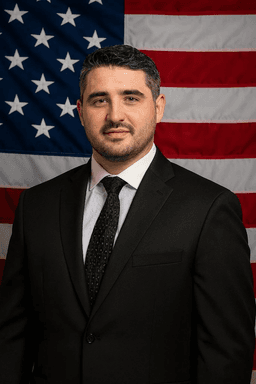 Your attorneyAndranik "Andy" Boyadzhyan, Esq.Founding Attorney. Licensed in Washington, D.C.
Attorney advertising. Services are not available in all states.
By Andranik "Andy" Boyadzhyan, Attorney at Law. Meet the team
In Washington, D.C., a car accident claim that settles without a lawsuit can wrap up within several months to a year after your treatment ends. A case filed in the Superior Court of the District of Columbia can run eighteen to thirty-six months. Your recovery, the fault dispute and the insurance picture set the pace. Call (877) 411-5291.
Your medical recovery sets the pace, the fault dispute adds friction, and the insurance available decides whether a lawsuit becomes necessary.
Your medical recovery sets the floor, the fault dispute sets the friction, and the insurance available decides whether a lawsuit becomes necessary. A claim should not settle until a physician can say what the lasting effect of the injury is, because a release is final and a back injury that needs surgery a year later cannot be reopened.
The District adds a factor of its own. Because contributory negligence lets any share of fault bar a driver's or passenger's claim, insurers here can dispute fault hard and for a long time, and the file cannot move to a demand until the evidence that fixes fault on the other driver is complete. Footage, witnesses and the Metropolitan Police Department report have to be gathered while they still exist.
Then the insurance picture. One at fault driver with clear coverage moves quickly. A hit and run, an underinsured driver with a household policy behind it, a District government vehicle with its six month notice under D.C. Code section 12-309, or a Metrobus with WMATA's own claims process each adds a layer that has to be handled in order.
Evidence and treatment come first, a demand follows the end of care, negotiation takes a few months, and a lawsuit follows if that fails.
The crash report is ordered from the Metropolitan Police Department, footage requests go out before it is overwritten, witnesses are contacted, and every household policy is read for medical payments coverage, uninsured and underinsured motorist limits and any no fault election under D.C. Code section 31-2404. If the District government was involved, the written notice to the Mayor is prepared now.
Treatment runs its course while the records accumulate; when pain persists past six weeks, an MRI or nerve study is ordered. The stage closes when a treating physician can describe what will last and what care is still ahead.
The demand goes to the other driver's insurer: records, bills, proof of lost pay and the evidence that puts fault on its driver. There is no statutory deadline for an offer, and an insurer may answer within thirty to ninety days. A District claim can settle in this window once the adjuster sees that the contributory negligence argument will not hold.
If the offer is inadequate or the three year deadline under D.C. Code section 12-301 approaches, the complaint is filed in the Civil Division of the Superior Court of the District of Columbia. Written discovery and depositions follow, and the court routinely refers injury cases to mediation before trial. A large share of filed cases settle at or after that session.
The rest are tried to a District jury, and the wait from filing to trial can be two years or more.
Top USA Law. Services are not available in all states.
Fill in four quick fields, and a licensed attorney reviews the facts of your case at no cost.
Fault disputes that were never answered with evidence, gaps in treatment, unresolved liens and early low offers accepted in haste all stretch the timeline.
Time is easier to plan when you know each stage ahead. Our guide to how a car accident lawsuit moves through D.C. Superior Court walks through filing, mediation and trial. While the case runs, the D.C. settlement worksheet shows which losses to keep receipts for. The steps to take after a District crash cover the records that are hard to rebuild later.
Fault evidence should be collected in the first week, government notices served early, and the demand sent the month your treatment ends.
The fault evidence should be collected in the first week, government notices served early, and the demand sent the month your treatment ends. A licensed attorney handles every District file, and when negotiation stalls the case is filed in the Superior Court rather than left to age in an adjuster's queue. You can reach our District listing at 700 12th Street NW, the consultation costs nothing, and we are paid only if we win, though costs may apply. Read the Washington, D.C. car accident lawyer page or call (877) 411-5291.
The kind of crash changes the timeline. Our D.C. car accident lawyer page covers Bladensburg Road and New York Avenue, the D.C. pedestrian accident attorney page covers walkers struck on Potomac and Minnesota Avenues, and the D.C. truck crash lawyer page covers I-395 and South Capitol Street, where carrier records can add time.
Sue within three years, or two after a death. District claims need Mayor notice in six months; elect PIP in 60 days.
A licensed Washington, D.C. attorney, Andranik "Andy" Boyadzhyan, Founding Attorney, reviews every Washington, D.C. claim, and our team helps you in English or Spanish.
Andranik "Andy" Boyadzhyan, Esq.
Founding Attorney
Licensed in Alabama, Missouri, New Mexico and Washington, D.C.
Featured in CNN, Forbes, Variety

Paul Perkins, Esq.
Of Counsel
Licensed in New Jersey and New York
Certified by the New Jersey Supreme Court as a Civil Trial Attorney. Lawyer of Distinction in Civil Litigation.
Featured in CNBC, Bloomberg, Forbes, The New York Times
Andranik "Andy" Boyadzhyan is the founding attorney of Top USA Law. His background spans business law, civil litigation, and personal injury, and his practice today focuses on motor vehicle accident claims.
Sundas Shafi, Esq., Attorney at Law, Head of Litigation
Rosette Kalayjian, Attorney at Law
Sandra Alves, Case Manager
Four steps from your first call to the close of your claim. You focus on healing while we deal with the insurers and keep you updated.
Free consultation
Call 24/7 or send the short form. An attorney reviews what happened and tells you where you stand. Free, no obligation.
We deal with the insurers
We deal with the insurance companies, request the police report and medical records, and keep you updated.
We build your case
Evidence, witnesses, experts and the medical picture of your injuries, prepared as if the case will go to trial.
You get paid
Medical bills, lost wages, vehicle damage, and pain and suffering. No fee unless we win; costs may apply.
Reviewed by Andranik "Andy" Boyadzhyan, Esq.
Fill in the four short fields in this form, and a licensed attorney reviews your case for free. We respond day or night.
Top USA Law. Services are not available in all states.
Takes 30 seconds. No obligation.