

Rear End Collision
$2,300,000
Insurer offered$85,000
Spinal cord injury after a rear end crash. The insurer offered $85,000.
Serving Washington, D.C.
Hurt in a crash? The insurance company already has a team working on your claim. You should too. A free call tells you where you stand.
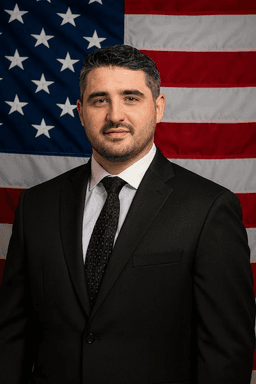 Your attorneyAndranik "Andy" Boyadzhyan, Esq.Founding Attorney. Licensed in Washington, D.C.
Attorney advertising. Services are not available in all states.
By Andranik "Andy" Boyadzhyan, Attorney at Law. Meet the team
In Washington, D.C., stop immediately, call 911 if anyone is hurt, and stay until law enforcement arrives, because D.C. Code 50-2201.05c requires it. Exchange information, photograph everything, admit nothing, and get examined the same day. Request the crash report, open your own insurance claim, and decline the other insurer's recorded statement. You have three years to sue. Call Top USA Law at (877) 411-5291.
Here is the whole sequence in order. If you read nothing else on this page, read the ten lines below.
Four of those ten steps are legal duties in the District, not advice. D.C. Code 50-2201.05c spells them out.
| Duty | What it means in practice | Source |
|---|---|---|
| Stop immediately | If you know or believe your vehicle was in a collision, pull over | D.C. Code 50-2201.05c |
| Call for help if someone is hurt | Call 911 or have someone else call for an ambulance | D.C. Code 50-2201.05c |
| Remain on the scene | Stay until law enforcement arrives | D.C. Code 50-2201.05c |
| Give identifying information | To law enforcement and to the injured person | D.C. Code 50-2201.05c |
| Damage with no owner present | Call 911 with your information and the location | D.C. Code 50-2201.05c |
| Debris or a hazard left in the road | Call 911 and describe the risk to others | D.C. Code 50-2201.05c |
Two things worth knowing: leaving after a collision that injured someone is a crime in the District, and neither being sober nor being blameless is a defense to leaving.
The first twenty minutes decide what evidence exists. None of it can be recreated later.
Turn on your hazard lights. If the cars are drivable and nobody is hurt, move them out of the travel lanes, because a second impact on a road like the Anacostia Freeway or South Capitol Street is a real risk. If they are not drivable, stay belted inside rather than standing in traffic.
Call 911, say where you are and whether anyone is hurt, and ask for an ambulance if there is any doubt. If an officer responds, get the name and badge number. If no officer comes, the entire record of the scene is whatever you gathered yourself.
Collect the other driver's name, address, phone number, license number, plate, insurance company and policy number, and the vehicle owner's name if it is not the driver. Photograph the documents rather than copying them by hand. If the driver refuses, photograph the plate and tell the officer.
Take far more photos than feel necessary: both vehicles from every corner, the damage close up, the resting positions before anything moves, skid marks, debris, the signal facing each direction, the lane markings, the weather, your injuries. Then record a voice memo. You will not remember the signal sequence in eight months.
Get the name and mobile number of anyone who saw it, including passengers in other cars. Then look up. Corner stores, apartment lobbies, garages and office entrances all have cameras, and most overwrite within days. Write down the exact addresses so a preservation letter can go out that week.
Do not apologize, do not guess at speeds, and do not say you are fine. In the District, where contributory negligence can bar a claim over any share of fault, a polite "I didn't see him" is the most expensive sentence you can say. Give the officer only what you know: direction, lane, signal color.
Two days decide whether you have a medical record, coverage and a report. None of it happens automatically.
Go to an emergency department or urgent care the day of the crash, then to your own doctor within a few days. Concussions and disc injuries often feel worse on day three, and a gap before the first visit is the most common causation argument an adjuster makes. MedStar Washington Hospital Center, George Washington University Hospital and Howard University Hospital all take walk in crash patients.
Report the crash to your own carrier promptly, as the policy requires, even if the other driver was clearly at fault. Late notice can forfeit your own coverage, including the uninsured motorist benefits you may need. Give your providers the claim number. You do not owe the other driver's carrier anything.
The District allows an optional no fault election under D.C. Code 31-2404. If your policy includes personal injury protection, the election has to be made within a window of days after the crash, and electing those benefits limits the right to sue the other driver unless the injury is serious enough or costs run past the benefits. Ask before the window closes.
Request the crash report in the first two weeks. The adjuster reads it first, and if it contains an error you want to know in week two, not year two.
The Metropolitan Police Department calls it a PD-10. You request it from the Public Documents Section, and only the people involved or their lawyer can.
The request goes to the Metropolitan Police Department Public Documents Section at 441 4th Street NW, by email or mail, with the accident report application form and a copy of a government issued photo ID. A first party, meaning someone involved or their attorney, can request it directly and is usually not charged; anyone else goes through the public records process. Mail requests take about six weeks. Follow the current instructions at mpdc.dc.gov.
Read it the day it arrives. Check the direction of travel, the lane assignments, the narrative, the witness list and any citation. A wrong arrow on a diagram gets repeated in every adjuster letter for two years unless somebody corrects it.
Almost nothing is paid by the at fault driver up front. Your own coverage carries the bills while the claim is built.
| Loss | Pays first | Then | Keep |
|---|---|---|---|
| Emergency and follow up care | Health insurance or medical payments coverage | The at fault driver's liability insurer | Every bill and benefits statement |
| Care if you elect no fault benefits | Your personal injury protection benefits | Liability claim, within the election's limits | The election paperwork |
| Lost wages | Sick leave or short term disability | The at fault driver's liability insurer | Pay stubs, a written work note |
| Vehicle repair | Your collision coverage, less the deductible | The at fault driver's property insurer | Estimates and photos |
| Rental car | Your rental coverage | The at fault driver's insurer | The rental agreement |
| Everything, if the driver is uninsured | Your uninsured motorist coverage | Nobody else, usually | The declarations page |
| Pain and suffering | Nobody, along the way | Only the liability or uninsured claim | A daily symptom journal |
The District still uses contributory negligence for drivers and passengers, so a share of blame is not a discount. It can be the end of the claim.
That one rule is why the photographs, the witnesses and the camera addresses matter more here than almost anywhere. Pedestrians, cyclists and other non motorized users get a friendlier standard under D.C. Code 50-2204.52. Everyone in a car is governed by the older rule. Read the Washington, D.C. contributory negligence page before you discuss the crash with any adjuster.
Six scenarios change the steps. Each adds a different deadline or a different defendant.
Call 911 with the plate, make, color and direction of travel. Leaving after a collision is a crime in the District under D.C. Code 50-2201.05c. Open a claim under your own uninsured motorist coverage and start the camera canvass the same week. See Washington, D.C. hit and run claims.
Your own uninsured and underinsured motorist coverage is the answer, and it carries its own notice and consent terms. Never settle with the at fault carrier before checking them, because a release signed without consent can void the claim. See uninsured driver claims in Washington, D.C.
If a District government vehicle hit you, or a District maintained signal or roadway defect contributed, written notice to the Mayor is due within six months under D.C. Code 12-309, stating the time, place, cause and circumstances. That deadline expires while you are still in physical therapy.
Metro is run by WMATA, an interstate compact agency rather than the District government, so its own claim process governs instead of the six month notice. Identify who owned the bus on day one. See Washington, D.C. bus accident claims.
Photograph the company name, the door numbers, the DOT number and any trailer number. A commercial policy and a corporate risk department are now involved, so the preservation letter goes to the company, not the driver. See Washington, D.C. truck accident claims.
The same scene steps apply, and the comparative rule in D.C. Code 50-2204.52 governs instead of the driver rule. Get the plate first. See Washington, D.C. pedestrian accident claims.
Several clocks start the day of the crash, and the shortest is measured in days.
| Claim or step | Deadline | Source |
|---|---|---|
| Notice to your own insurer | Promptly, as the policy requires | Your auto policy |
| Electing optional no fault benefits | A window of days after the crash | Your policy and D.C. Code 31-2404 |
| Written notice to the District government | Six months from the injury | D.C. Code 12-309 |
| Wrongful death action | Two years from the death | D.C. Code 16-2702 |
| Injury lawsuit against the driver | Three years from the crash | D.C. Code 12-301 |
| Metrobus or Metrorail claim | WMATA's own claim procedures | WMATA interstate compact |
Our D.C. Code 12-301 deadline guide covers tolling, minors and the exceptions in detail.
These five show up again and again, and all of them are avoidable in the first month.
See if you have a case
Three answers and a phone number. An attorney reviews your situation and calls you back, free.
Rear End Collision
$2,300,000
Insurer offered$85,000
Spinal cord injury after a rear end crash. The insurer offered $85,000.
T Bone Accident
$1,800,000
Insurer offered$120,000
Broken pelvis and internal bleeding at an intersection. The insurer offered $120,000.
Drunk Driver Victim
$1,500,000
Insurer offered$50,000
Traumatic brain injury caused by an impaired driver. The insurer offered $50,000.
Every case is different. Past results do not guarantee, warrant, or predict a similar outcome.
The first two weeks are evidence, not paperwork. We work backward from what is gone by month two.
On a new District file we order the crash report, canvass every camera with a view of the block and send written preservation demands the same week, record witnesses, photograph the scene in the same light as the crash, and arrange a data download where the vehicle still exists. We audit every household auto policy for medical payments, uninsured motorist and rental coverage, and answer the no fault election question before the window closes.
Then we set the deadlines in writing: the three year date under D.C. Code 12-301, any six month notice under D.C. Code 12-309, and WMATA's process where Metro is involved. We handle the adjusters, and no recorded statement happens without us on the line.
Andranik "Andy" Boyadzhyan is licensed in the District of Columbia and handles these claims. Top USA Law has a Washington, D.C. office at 700 12th St NW, Suite 700. The consultation is free, there is no fee unless we win, and costs may apply. Call (877) 411-5291 before you give any statement about the crash.
These pages pick up where the first month ends.
We serve Washington, D.C. clients by phone, video and in person appointments arranged case by case.
Hurt in a crash? Talk it through for free.
Washington, D.C. filing deadlines and insurance notice rules can be short. A free call tells you where your clock stands.
Last reviewed by Andranik "Andy" Boyadzhyan, Esq., September 2026.
Three fields. We respond fast, day or night.
Hit by a semi truck on the highway. Top USA Law knew exactly how to deal with the trucking company. Got me $425,000 after they initially offered $30,000.
Client testimonials. Testimonials are not a guarantee, warranty, or prediction of the outcome of your case.
Top USA Law. Services are not available in all states.
Takes 30 seconds. No obligation.