

Rear End Collision
$2,300,000
Insurer offered$85,000
Spinal cord injury after a rear end crash. The insurer offered $85,000.
Serving Washington, D.C.
Hurt in a crash? The insurance company already has a team working on your claim. You should too. A free call tells you where you stand.
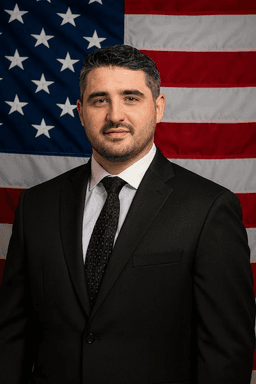 Your attorneyAndranik "Andy" Boyadzhyan, Esq.Founding Attorney. Licensed in Washington, D.C.
Attorney advertising. Services are not available in all states.
By Andranik "Andy" Boyadzhyan, Attorney at Law. Meet the team
In Washington, D.C., the first offer from the other driver's insurer almost always comes before anyone knows the full extent of your injury, and it is priced on the District's contributory negligence rule, which the adjuster hopes you have not read about. Signing the release ends the claim forever. Top USA Law reviews any offer for free before you decide. Call (877) 411-5291.
Because settling before the injury is diagnosed and before you understand the District's fault rule is the cheapest way to close the file. In the first weeks after a collision on K Street NW or I-295 you do not know whether the pain in your neck is a strain that will fade or a disc injury that will need an injection or surgery. The adjuster does not know either, and the offer prices that uncertainty in the insurer's favor.
The District gives the early offer a second edge. Under contributory negligence, a driver or passenger who is found even slightly at fault can lose the entire claim. Adjusters raise that possibility early, sometimes in the same call as the offer, so that a few thousand dollars looks safer than a fight you might lose. Whether the fault argument has any evidence behind it is a question they hope you will not ask.
What the offer buys is your right to claim pain and suffering, wages beyond the first weeks, and future medical care. The release you sign to collect it is permanent. There is no cooling off period and no way to reopen the claim when a later MRI shows what the early offer assumed was not there.
Check your medical status, the fault evidence, every policy limit, your total losses, any liens, and whether you elected no fault benefits.
Be polite, say no to the recorded statement and to the open ended medical authorization, and tell the adjuster your lawyer will respond. Continue treatment. Do not post about the crash or your weekend. Nothing in District law requires you to answer an offer by the insurer's deadline; the only deadline that matters is the three years to file suit under D.C. Code section 12-301, and, for a claim involving the District government, the six month notice under D.C. Code section 12-309.
When your injury has fully resolved, every loss and lien is covered, fault is not in dispute, and the number approaches full value. That combination is rare in the first months, and rarer in the District, where the fault question alone deserves a second look. A free review takes an hour; a signed release is permanent.
See if you have a case
Three answers and a phone number. An attorney reviews your situation and calls you back, free.
Rear End Collision
$2,300,000
Insurer offered$85,000
Spinal cord injury after a rear end crash. The insurer offered $85,000.
T Bone Accident
$1,800,000
Insurer offered$120,000
Broken pelvis and internal bleeding at an intersection. The insurer offered $120,000.
Drunk Driver Victim
$1,500,000
Insurer offered$50,000
Traumatic brain injury caused by an impaired driver. The insurer offered $50,000.
Every case is different. Past results do not guarantee, warrant, or predict a similar outcome.
Send us the offer letter, your declarations page and your records, and we tell you plainly what the offer leaves out. If the offer is fair we will say so. If it is not, a licensed attorney takes over the file, answers the fault argument with evidence, and files in the Civil Division of the Superior Court when the insurer will not move. Our District listing is at 700 12th Street NW. The review is free, and we are paid only when we recover for you. Read the Washington, D.C. car accident lawyer page or call (877) 411-5291 before you sign anything.
We serve Washington, D.C. clients by phone, video and in person appointments arranged case by case.
Hurt in a crash? Talk it through for free.
Washington, D.C. filing deadlines and insurance notice rules can be short. A free call tells you where your clock stands.
Last reviewed by Andranik "Andy" Boyadzhyan, Esq., September 2026.
Three fields. We respond fast, day or night.
I was in an Uber that got T boned. Both insurance companies were pointing fingers. Top USA Law cut through the mess and got me $875,000.
Client testimonials. Testimonials are not a guarantee, warranty, or prediction of the outcome of your case.
Top USA Law. Services are not available in all states.
Takes 30 seconds. No obligation.