

Drunk Driver Victim
$1,500,000
Insurer offered$50,000
Traumatic brain injury caused by an impaired driver. The insurer offered $50,000.
Serving Washington, D.C.
Hurt in a crash? The insurance company already has a team working on your claim. You should too. A free call tells you where you stand.
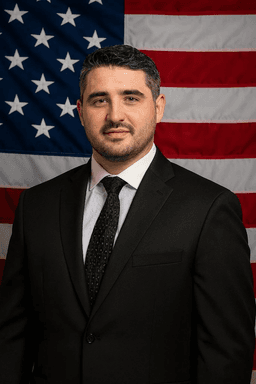 Your attorneyAndranik "Andy" Boyadzhyan, Esq.Founding Attorney. Licensed in Washington, D.C.
Attorney advertising. Services are not available in all states.
By Andranik "Andy" Boyadzhyan, Attorney at Law. Meet the team
In Washington, D.C., a brain injury or concussion claim against the at-fault driver rests on medical proof, witness accounts of changes in thinking and mood, and clear fault. If PIP was elected, the injury must meet the District threshold. Top USA Law can help your family. Call for a free case review.
Key takeaways
A blow to the head, or a jolt that moves the brain inside the skull, can injure it even when the head never strikes anything.
The National Institute of Neurological Disorders and Stroke, on its traumatic brain injury page, describes a TBI as a brain injury caused by an outside force, such as a forceful bump, blow or jolt to the head or body, and lists motor vehicle crashes among the causes of closed head injuries, where the force moves the brain within the skull. NINDS also says some damage is immediate while secondary injury can develop over hours, days or weeks.
In a District crash, that force can come from a head striking a window during a T-bone at a 14th Street intersection, a sudden stop on the Southeast Freeway, or a pedestrian thrown to the pavement on H Street. MedlinePlus, in its traumatic brain injury article (reviewed 2025), says jarring movement of the brain can make it bounce or twist in the skull, cause chemical changes and damage brain cells.
Mild TBI, also called concussion, moderate TBI and severe TBI. Severity shapes the treatment, the proof and the long-term needs a claim must cover.
MedlinePlus lists three types of TBI: mild TBI, also called a concussion; moderate TBI; and severe TBI. It says moderate to severe TBIs can cause life-long health problems. The table shows how each level can appear in a claim file.
| Level | What the records may show | What the claim focuses on |
|---|---|---|
| Mild TBI (concussion) | ER notes on confusion or memory gaps, symptom checklists, follow-up visits | Duration of symptoms, missed work or school, witness accounts |
| Moderate TBI | Longer loss of alertness, abnormal imaging, hospital stay, therapy | Cognitive testing, rehab, return to work limits |
| Severe TBI | Trauma center admission, surgery or intensive care, long rehab | Lifetime care, lost earning capacity, family caregiving |
| TBI with neck or spine injury | Combined head and spine findings | Each injury proved and valued; see neck and back guides |
MedlinePlus notes that head injuries causing a TBI often occur with an injury to the neck and spine. Our D.C. neck injury guide covers that part of a combined claim.
Headaches, dizziness, fogginess, memory and focus problems, mood changes and sleep changes can start later, and the injured person may not notice them.
The CDC, on its mild TBI and concussion symptoms page (September 15, 2025), says some symptoms appear right away while others may not appear for hours or days, and that symptoms may affect how a person feels, thinks, acts or sleeps. It lists headaches, dizziness, light or noise sensitivity, feeling foggy or slowed down, memory problems, irritability, sadness and sleeping more or less than usual. It also says the person may not recognize or admit the problems, and that problems may be overlooked by the person, family or health care provider.
The same CDC page lists danger signs that call for 911 or an emergency department: a headache that gets worse and does not go away, weakness, numbness or seizures, repeated vomiting, slurred speech, one pupil larger than the other, confusion or agitation, and loss of consciousness or being unable to wake up. MedlinePlus adds that most people with a mild TBI never pass out, so not losing consciousness does not rule out a brain injury.
Top USA Law. Services are not available in all states.
Fill in four quick fields, and a licensed attorney reviews the facts of your case at no cost.
An exam of the nervous system, head CT or MRI when needed, follow-up visits and, for lasting problems, rehabilitation and cognitive testing.
MedlinePlus says a provider checks the nervous system, including pupil size, thinking, coordination and reflexes, and may order a head CT, a brain MRI, X-rays, blood tests or an EEG. For a mild injury, no treatment may be needed beyond guidance on rest, symptoms and return to activity, but symptoms can show up later. A hospital stay is likely with emergency symptoms, a skull fracture or bleeding in or around the brain.
Serious District head injuries can go to MedStar Washington Hospital Center, George Washington University Hospital or Howard University Hospital, each a designated Level 1 trauma center on DC Health's list, which also names Children's National Hospital for children. Every record from the first visit forward matters: the ambulance run sheet noting confusion, the ER's neurological checks, and each later visit where symptoms are listed. MedlinePlus says recovery can take days, weeks or months, and that in a small number of people symptoms do not go away, with higher risk after more than one TBI.
Health or other coverage the injured person is eligible for pays first; optional PIP, if elected within 60 days, covers the deductible and the rest.
Under D.C. Code section 31-2406(g), a victim may not claim PIP benefits, other than for a deductible, for a loss that another insurer or coverage would pay, unless the victim has exhausted that coverage. For a long brain injury recovery, that means the health plan carries the hospital and rehab bills first.
PIP is optional under D.C. Code section 31-2404; PIP medical and rehabilitation coverage, where bought, is at least $50,000 (with a $100,000 option), and PIP work loss coverage at least $12,000 (with a $24,000 option); each can be bought separately. Past results do not guarantee a similar outcome. Rehabilitation is part of that benefit. How the health-first rule and a PIP election interact for bills your plan paid is a question for your lawyer. See who pays District medical bills and health insurance after a D.C. crash.
The next closest relative, or if there is none, a person taking responsibility for the victim's affairs, may make the 60 day PIP election.
Under D.C. Code section 31-2405, a victim must tell the PIP insurer within 60 days of the crash whether they elect PIP benefits, and the insurer must give written notice of that period. Subsection (f) says that if a victim is incapacitated or otherwise unable to make the election, the next closest relative may make it, or if there is no relative, an individual taking responsibility for the victim's affairs. The period can be extended by written agreement with the insurer, and no election within 60 days leaves the liability coverage in place.
For a family watching over someone in a hospital bed, this is easy to miss. Open every letter from the insurer, write down the crash date and the 60th day, and get advice before electing, because the election can limit a later lawsuit. The D.C. Code 31-2404 card explains the PIP option itself.
Yes, with a substantial permanent impairment that significantly affected work or daily life, a long period unable to do usual activities, or costs above PIP.
If PIP was elected, 31-2405(b) allows a lawsuit against the at-fault driver only in the situations below. If PIP was not elected, these limits do not apply.
| Threshold | Brain injury example | Proof that helps |
|---|---|---|
| Substantial permanent scarring or disfigurement | Scarring from head wounds or surgery | Photos, surgical records |
| Substantial, medically demonstrable permanent impairment significantly affecting work or usual activities | Lasting memory, attention or balance problems after a moderate or severe TBI | Neurological findings, cognitive testing, treating doctor's opinion |
| Medically demonstrable impairment preventing substantially all usual activities for more than 180 continuous days | A long rehabilitation with no return to work | Rehab records, employer letters, family statements |
| Medical and rehabilitation expenses or work loss above available PIP | Hospital and rehab costs beyond the PIP limit | Itemized bills, PIP payment history |
A concussion that clears in a couple of weeks may not meet the first three lines; the CDC page says most people with a mild TBI or concussion feel better within a couple of weeks. Medical or work-loss costs above PIP can still allow a suit.
Severity, how long symptoms last, the effect on work and family life, future care needs, fault and the insurance available. No formula fixes the figure.
| Factor | Raises value | Lowers value |
|---|---|---|
| Medical findings | Imaging changes, abnormal neurological exam, testing results | Symptoms recorded only by the patient |
| Duration | Symptoms documented for months, a permanence opinion | Quick recovery with no follow-up |
| Daily life | Family, teacher or coworker accounts of change | No one outside the patient describes changes |
| Work and earning capacity | Job loss, reduced duties, vocational assessment | Return to full duty without limits |
| Future care | A rehab or life care plan | No plan beyond the first visits |
| Coverage | Adequate liability limits and underinsured coverage | A $25,000 minimum policy alone |
Past results do not guarantee a similar outcome. Our pages on what decides a D.C. settlement and pain and suffering in the District explain how those factors are weighed.
In each case, the insurance company made a first offer. Here is what our clients received instead. Past results do not guarantee a similar outcome.
Drunk Driver Victim
$1,500,000
Insurer offered$50,000
Traumatic brain injury caused by an impaired driver. The insurer offered $50,000.
Every case is different. Past results do not guarantee, warrant, or predict a similar outcome.
Under District common law, a car's driver or passenger slightly at fault may be barred; pedestrians, cyclists, motorcyclists and other vulnerable users have added protection.
Contributory negligence is the District's common law rule for claims between drivers and passengers of cars. A person with a brain injury may not remember the crash, which makes outside evidence vital: video from businesses or traffic cameras, witness names, the MPD crash report and the vehicles themselves. Our partly at fault guide and the D.C. T-bone fault guide explain how fault is proved at intersections.
Under D.C. Code 50-2204.52, the negligence of a pedestrian, cyclist, motorcyclist or other vulnerable user does not bar recovery unless it was a proximate cause and greater than the combined negligence of all defendants; see the Collision Recovery Act card. Seat belt use cannot be offered as evidence of negligence or to reduce damages under D.C. Code 50-1807.
Early medical notes, follow-up records, testing, and accounts from people who knew the injured person before and after the crash.
Because the CDC notes the injured person may not recognize the problems, the people around them can supply proof the injured person cannot. Write down specific examples with dates: missed appointments, repeated questions, trouble following a conversation. If the PIP insurer requests an examination, D.C. Code 31-2411(b) requires it under the policy terms and gives a free copy of each written report on request.
Recovery takes months to judge; a suit adds time. Sue within three years; notify the Mayor within six months if the District was involved.
Under D.C. Code section 12-301, the lawsuit must be filed within three years. A claim involving a District-owned vehicle needs written notice to the Mayor within six months under D.C. Code 12-309. Settling a brain injury claim before the long-term picture is clear can leave future care unpaid. See how long a District case takes.
If a lawsuit is filed, the injured person may be deposed; a family member can help prepare. Our D.C. deposition guide explains what happens, and our demand letter guide covers the earlier claim stage.
Make sure care continues, track symptoms, handle the PIP election deadline, collect records, and keep the insurer from taking a statement too soon.
MedlinePlus notes head injuries that cause a TBI often occur with neck and spine injuries, and severe crashes raise other questions; these guides cover them.
Injury guides: back injuries, broken bones and whiplash. If a crash took a loved one's life, our D.C. wrongful death settlement guide explains the family's claim. Local pages: the Washington, D.C. car accident lawyer page and the D.C. pedestrian accident lawyer page.
Call or send records. A lawyer reviews the medical file, fault, the PIP election and every policy that may pay, at no cost to start.
Find out what your case may be worth. A review looks at the medical findings, how long symptoms have lasted, work and school effects, and future care. No one can predict a result, but your family can learn where the claim stands. Our District car accident lawyer overview explains how the firm works. Call (877) 411-5291. You pay no fee unless we win, and costs may apply.
Sue within three years, or two after a death. District claims need Mayor notice in six months; elect PIP in 60 days.
A licensed Washington, D.C. attorney, Andranik "Andy" Boyadzhyan, Founding Attorney, reviews every Washington, D.C. claim, and our team helps you in English or Spanish.

Andranik "Andy" Boyadzhyan, Esq.
Founding Attorney
Licensed in Alabama, Missouri, New Mexico and Washington, D.C.
Featured in CNN, Forbes, Variety

Paul Perkins, Esq.
Of Counsel
Licensed in New Jersey and New York
Certified by the New Jersey Supreme Court as a Civil Trial Attorney. Lawyer of Distinction in Civil Litigation.
Featured in CNBC, Bloomberg, Forbes, The New York Times
Andranik "Andy" Boyadzhyan is the founding attorney of Top USA Law. His background spans business law, civil litigation, and personal injury, and his practice today focuses on motor vehicle accident claims.
Sundas Shafi, Esq., Attorney at Law, Head of Litigation
Rosette Kalayjian, Attorney at Law
Sandra Alves, Case Manager
Four steps from your first call to the close of your claim. You focus on healing while we deal with the insurers and keep you updated.
Free consultation
Call 24/7 or send the short form. An attorney reviews what happened and tells you where you stand. Free, no obligation.
We deal with the insurers
We deal with the insurance companies, request the police report and medical records, and keep you updated.
We build your case
Evidence, witnesses, experts and the medical picture of your injuries, prepared as if the case will go to trial.
You get paid
Medical bills, lost wages, vehicle damage, and pain and suffering. No fee unless we win; costs may apply.
Reviewed by Andranik "Andy" Boyadzhyan, Esq.
Fill in the four short fields in this form, and a licensed attorney reviews your case for free. We respond day or night.
Top USA Law. Services are not available in all states.
Takes 30 seconds. No obligation.