


Andranik "Andy" Boyadzhyan, Esq.
Founding Attorney
Licensed in Alabama, Missouri, New Mexico and Washington, D.C.
Featured in CNN, Forbes, Variety
Serving Washington, D.C.
Hurt in a crash? The insurance company already has a team working on your claim. You should too. A free call tells you where you stand.
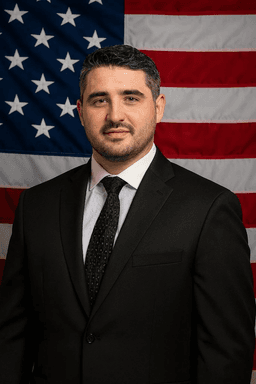 Your attorneyAndranik "Andy" Boyadzhyan, Esq.Founding Attorney. Licensed in Washington, D.C.
Attorney advertising. Services are not available in all states.
By Andranik "Andy" Boyadzhyan, Attorney at Law. Meet the team
In Washington, D.C., a back injury claim against the at-fault driver turns on fault, medical proof and whether you elected PIP. Electing PIP limits any suit against another person unless the injury meets the District threshold or your costs exceed PIP. Value depends on imaging, treatment and lost work. Call Top USA Law for a free case review.
Key takeaways
The belt holds your hips while your upper body keeps moving, so the spine bends, twists and compresses in a fraction of a second.
Your back is a column of vertebrae stacked with soft disks between them, held by muscles and ligaments. A rear-end hit at a light on New York Avenue throws the torso forward and back. A side impact at a Connecticut Avenue intersection bends the spine sideways. A crash on I-295 or the Southeast Freeway at highway speed can load the spine hard enough to crack a vertebra. Any of these can strain muscles, tear ligaments, push a disk out of place or fracture bone.
The National Library of Medicine's MedlinePlus, in its acute low back pain article (reviewed 2026), lists causes of sudden low back pain that include a fracture of a spine bone, a ruptured or herniated disk, muscle spasm, and strains or tears of the muscles and ligaments that support the back. Your doctor decides which applies to you; the claim follows the diagnosis.
Strains and sprains, bulging or herniated disks, and vertebra fractures, plus crashes that make an earlier back condition worse. Each builds a different claim.
The table matches the injury named in your chart with the care a doctor may order and the part of a District claim it affects. It is a reading aid, not a diagnosis. If your chart names a disk injury, our D.C. herniated disc guide goes further.
| Injury in the chart | Care a doctor may order | What it does to the claim |
|---|---|---|
| Muscle strain or ligament sprain | Rest, heat or ice, medicine, physical therapy | Value rests on documented limits and time lost; may not pass the 31-2405 threshold if PIP was elected |
| Bulging or herniated disk | Therapy, MRI, epidural injection, sometimes surgery | MRI tied to nerve symptoms; a surgeon's recommendation raises stakes |
| Vertebra fracture | Brace, imaging follow-up, sometimes surgery | Objective injury; healing time and lasting limits matter |
| Worsened earlier back condition | Same paths, compared with earlier records | Needs before and after proof |
| Injury leading to spine surgery | Discectomy, fusion or other surgery, then rehab | Future care, permanence and work limits come to the front |
A dull ache, sharp pain, tingling or burning, and pain or weakness in a leg are symptoms MedlinePlus lists for acute low back pain.
The MedlinePlus acute low back pain article (reviewed 2026) describes tingling or burning, a dull achy feeling or sharp pain, pain in the leg, hip or bottom of the foot, and weakness in the legs and feet. Keep a note of the day each symptom began; it helps your doctor and closes a gap the insurer may point to.
The same article says to contact your provider right away for loss of control over urine or stool, unexplained fever with back pain, weakness or numbness in a leg, or trouble walking. If you cannot reach a provider, go to an emergency room. In the District, DC Health lists four designated Level 1 trauma centers: MedStar Washington Hospital Center, George Washington University Hospital, Howard University Hospital and, for children, Children's National Hospital. Your health comes first; a claim can wait for care.
Top USA Law. Services are not available in all states.
Fill in four quick fields, and a licensed attorney reviews the facts of your case at no cost.
Each step, from therapy to injections to surgery, shows how serious the injury is and leaves records an adjuster and a jury will read.
MedlinePlus, in its chronic low back pain article (reviewed 2025), says care for lasting back pain can include a brace, cold and heat, traction, physical therapy, counseling, chiropractic or osteopathic manipulation, and medicine, with an epidural injection if pain does not improve. Surgery is considered when nerve or bone damage does not heal after a long time. Those steps are medical decisions for you and your doctors, never for the claim.
The records matter. A therapy plan lists measured range of motion. An injection note names the spinal level. A surgeon's note explains why surgery was advised. Read together, they show what the injury did. If chiropractic care is part of your plan, our page on chiropractic care after a District crash covers how it is paid.
Health coverage you are eligible for pays first; PIP, if you have it and elect it within 60 days, pays the deductible and what remains.
PIP is optional in the District. Under D.C. Code section 31-2404, insurers must offer it and the insured may buy medical and rehabilitation benefits of at least $50,000, work loss benefits of at least $12,000, and funeral benefits up to $4,000. Past results do not guarantee a similar outcome. PIP pays without regard to fault, and only to an insured or an occupant of the insured's vehicle or a vehicle the insured is driving.
Under D.C. Code section 31-2406(g), a victim may not claim PIP benefits, other than to cover a deductible, for a loss another insurer or coverage would pay, unless that coverage has been exhausted. So your health plan pays back treatment first, and PIP picks up the deductible and what remains. How that rule interacts with your PIP election for bills your health plan paid is a question for your lawyer. Our guides on who pays District medical bills and health insurance after a District crash explain the order.
Yes, if the injury passes the 31-2405 threshold or your medical costs or work loss exceed available PIP. Without an election, no limit applies.
Under D.C. Code section 31-2405, you have 60 days after the crash to tell the PIP insurer whether you elect PIP. The insurer must tell you about that window in writing, it can be extended by written agreement, and no election within 60 days leaves you under the liability coverage. Electing PIP limits a lawsuit against the other driver to the situations in the table.
| Threshold in the statute | How a back injury can line up |
|---|---|
| Substantial permanent scarring or disfigurement | A surgical scar on the back, if substantial and permanent |
| Substantial, medically demonstrable permanent impairment that significantly affected work or usual activities | A fracture or disk injury with lasting limits a doctor measures and calls permanent |
| Medically demonstrable impairment preventing substantially all usual activities for more than 180 continuous days | A long recovery, such as after spine surgery, documented day by day |
| Medical and rehabilitation expenses or work loss above the PIP benefits available | Therapy, injections or surgery costing more than your PIP medical limit, or wages lost beyond PIP work loss |
A back strain that heals in weeks may not pass the first three lines, but medical and rehabilitation expenses or work loss above PIP can still open the door. Read the D.C. Code 31-2404 card before you answer the PIP insurer's election letter.
No one can name a figure in advance. Value depends on imaging, treatment, permanence, lost income, fault and the insurance available.
A District back claim has an economic part, the bills and wages you can count, and a non-economic part for pain and the loss of normal life. No formula sets either one. Insurers and juries look at the same factors, shown below.
| Factor | Raises value | Lowers value |
|---|---|---|
| Imaging | MRI, CT or X-ray findings that match symptoms | Normal imaging, or changes that look old |
| Treatment | Steady care, injections or surgery a doctor advised | Long gaps or stopping early |
| Permanence | A treating doctor's written opinion | No opinion on lasting limits |
| Work | Pay records and an employer letter | No proof of missed work |
| Fault | Clear proof the other driver caused it | Any fault on a car's driver or passenger, under contributory negligence |
| Coverage | Higher liability limits, your underinsured coverage | A minimum policy only |
District liability minimums are $25,000 per person under D.C. Code 31-2406(c), and some drivers carry only that. Past results do not guarantee a similar outcome. Our page on what decides a D.C. settlement and the District settlement worksheet show how the pieces fit.
A car's driver or passenger even slightly at fault may be barred; pedestrians, cyclists, motorcyclists and other vulnerable users have a statutory exception.
For claims between drivers and passengers of cars, the District follows pure contributory negligence. An insurer that can show you were a little fast, a little late to brake, or changing lanes without a clear view may deny the claim outright. That makes the crash evidence as important as the MRI. Our partly at fault guide for the District explains the rule, and rear-end crash claims in D.C. covers rear impacts.
A pedestrian, cyclist, motorcyclist or other vulnerable user hit by a car is covered by the Motor Vehicle Collision Recovery Act. Under D.C. Code 50-2204.52, their negligence does not bar recovery unless it was a proximate cause and greater than the combined negligence of all defendants; see the Collision Recovery Act card. And under D.C. Code 50-1807, not wearing a seat belt is not evidence of negligence and cannot be used to reduce damages.
Early medical records, imaging reports, measured limits, therapy notes, work records and crash evidence build the proof an adjuster has to answer.
Start with the first record that mentions your back, whether the ambulance run sheet or the emergency note. The MedlinePlus chronic low back pain article (reviewed 2025) lists X-ray, CT, MRI and a myelogram among tests a provider may order. Ask for each report and the images on a disc.
If your PIP insurer requests an exam, D.C. Code 31-2411(b) requires a claimant whose condition is material to submit to examinations under the policy terms, and you get a free copy of each written report on request. Go, and bring your symptom list.
Gaps in care, an earlier back problem without before and after proof, a statement given to the other insurer, and any fault on your side.
An earlier back problem does not end a claim. A crash that makes an old condition worse can still be compensated, but the proof must compare before and after. Give your lawyer every earlier record. Hiding a prior injury the insurer can find does more harm than the injury itself.
Gaps in treatment let the defense argue you healed. If care stopped because of cost or a denied bill, write down why. A recorded statement to the other driver's insurer can be quoted back at you, and posts on social media can be read against your account of daily life.
Treatment, then talks, set the pace. Suits are due in three years, and claims against the District need Mayor notice within six months.
Under D.C. Code section 12-301, an injury lawsuit must be filed within three years. A crash with a District-owned vehicle also needs written notice to the Mayor within six months under D.C. Code 12-309. A suit for unpaid PIP benefits has its own three year window under D.C. Code 31-2411(a). See the D.C. Code 12-301 page.
Settling before doctors know whether you need surgery can leave future care unpaid. Our page on how long a District case takes walks through each stage, from the demand to mediation and trial.
Get care, answer the PIP election question on time, gather records and your policy, and hold off on any recorded statement until you have advice.
Read should I accept the first insurance offer in D.C. before you answer a settlement call, and our D.C. demand letter guide for how the claim is presented.
Back injuries can come with neck, head or bone injuries, and these District guides cover each one along with local roads and courts.
Related injury guides: neck injuries, whiplash, broken bones and brain injury and concussion. Local pages: the Washington, D.C. car accident lawyer page, the D.C. truck accident lawyer page for heavier impacts, and the D.C. pedestrian accident lawyer page.
Send your records or call. A lawyer reviews fault, the PIP election, the threshold and the coverage with you, at no cost to start.
Find out what your case may be worth. A free review looks at your imaging, treatment, missed work and the policies in play. No one can predict a result, but you can learn which parts of your claim are strong and which need more proof. Our District car accident lawyer overview explains how the firm works. Call (877) 411-5291. You pay no fee unless we win, and costs may apply.
Sue within three years, or two after a death. District claims need Mayor notice in six months; elect PIP in 60 days.
A licensed Washington, D.C. attorney, Andranik "Andy" Boyadzhyan, Founding Attorney, reviews every Washington, D.C. claim, and our team helps you in English or Spanish.
Andranik "Andy" Boyadzhyan, Esq.
Founding Attorney
Licensed in Alabama, Missouri, New Mexico and Washington, D.C.
Featured in CNN, Forbes, Variety

Paul Perkins, Esq.
Of Counsel
Licensed in New Jersey and New York
Certified by the New Jersey Supreme Court as a Civil Trial Attorney. Lawyer of Distinction in Civil Litigation.
Featured in CNBC, Bloomberg, Forbes, The New York Times
Andranik "Andy" Boyadzhyan is the founding attorney of Top USA Law. His background spans business law, civil litigation, and personal injury, and his practice today focuses on motor vehicle accident claims.
Sundas Shafi, Esq., Attorney at Law, Head of Litigation
Rosette Kalayjian, Attorney at Law
Sandra Alves, Case Manager
Four steps from your first call to the close of your claim. You focus on healing while we deal with the insurers and keep you updated.
Free consultation
Call 24/7 or send the short form. An attorney reviews what happened and tells you where you stand. Free, no obligation.
We deal with the insurers
We deal with the insurance companies, request the police report and medical records, and keep you updated.
We build your case
Evidence, witnesses, experts and the medical picture of your injuries, prepared as if the case will go to trial.
You get paid
Medical bills, lost wages, vehicle damage, and pain and suffering. No fee unless we win; costs may apply.
Reviewed by Andranik "Andy" Boyadzhyan, Esq.
Fill in the four short fields in this form, and a licensed attorney reviews your case for free. We respond day or night.
Top USA Law. Services are not available in all states.
Takes 30 seconds. No obligation.