


Andranik "Andy" Boyadzhyan, Esq.
Founding Attorney
Licensed in Alabama, Missouri, New Mexico and Washington, D.C.
Featured in CNN, Forbes, Variety
Serving Washington, D.C.
Hurt in a crash? The insurance company already has a team working on your claim. You should too. A free call tells you where you stand.
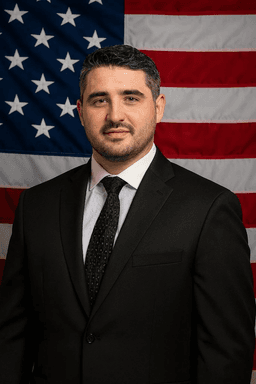 Your attorneyAndranik "Andy" Boyadzhyan, Esq.Founding Attorney. Licensed in Washington, D.C.
Attorney advertising. Services are not available in all states.
By Andranik "Andy" Boyadzhyan, Attorney at Law. Meet the team
In Washington, D.C., a car accident demand letter is the written claim to the at-fault driver's insurer that proves fault, documents the injury and losses, and states a demand. Because District law can bar a driver who shares any fault, the liability proof comes first. Top USA Law can prepare it. Call for a free case review.
Key takeaways
It is a written request asking the at-fault driver's insurer to settle your claim for a stated sum, backed by the crash report and records.
A demand letter is persuasion on paper, written for the adjuster who must justify paying. It explains what happened, who caused it, how you were hurt and what it cost, then names the sum you will accept and a response date. There is no court form for it. The attached proof matters more than the prose: the Metropolitan Police Department crash report, photos, medical records, bills and wage proof. Our guide to getting your PD-10 from MPD explains the report.
The District's insurance rules shape what the letter can ask for. PIP is optional under D.C. Code 31-2404, so some victims have PIP and some do not, and a victim who has PIP must decide within 60 days whether to take it. If you already have an offer, read should I accept the first insurance offer in D.C. before you reply.
Under District common law, a driver or passenger even slightly at fault may be barred, so an adjuster who argues shared fault may offer nothing.
For claims between motorists, the District follows pure contributory negligence. That gives an insurer a strong reason to look for any fault on your side: a few miles over the limit on New York Avenue, a late brake on I-295, a lane change on Constitution Avenue. The liability section should close those doors with evidence: dashcam or traffic camera video, witness names, the officer's notes, photos of where the cars came to rest, and the other driver's statements. Our partly at fault guide for the District explains the rule.
Pedestrians and cyclists are treated differently. Under the Motor Vehicle Collision Recovery Act, D.C. Code section 50-2204.52, a pedestrian's or vulnerable user's negligence does not bar recovery unless it was a proximate cause and greater than the combined negligence of all defendants. Seat belt arguments are limited too: under D.C. Code 50-1807, not wearing a belt is not evidence of negligence and cannot be used to reduce damages. Our D.C. pedestrian accident lawyer page covers that rule for people on foot.
Top USA Law. Services are not available in all states.
Fill in four quick fields, and a licensed attorney reviews the facts of your case at no cost.
Electing PIP limits any suit against another person to injuries meeting the 31-2405 threshold or costs above PIP benefits; without an election, no limit.
Under D.C. Code section 31-2405, a victim must tell the PIP insurer within 60 days of the crash whether they elect PIP benefits, and no election within 60 days means the mandatory liability coverage applies. A victim who elects PIP may sue another person only if the injury caused substantial permanent scarring or disfigurement, a substantial and medically demonstrable permanent impairment that significantly affected work or usual activities, or an impairment that prevented all or substantially all of the material acts and duties of usual daily activities for more than 180 continuous days, or if medical and rehabilitation expenses or work loss exceed the PIP benefits available.
| Your situation | What the demand must show | Source |
|---|---|---|
| No PIP, or PIP not elected within 60 days | Fault, injury and losses; no 31-2405 threshold | D.C. Code 31-2405(a), (g) |
| PIP elected: serious or lasting injury | Substantial permanent scarring or disfigurement, a substantial and medically demonstrable permanent impairment that significantly affected work or usual daily activities, or an impairment preventing all or substantially all of the material acts and duties of usual daily activities for more than 180 continuous days | D.C. Code 31-2405(b)(1) |
| PIP elected: losses above PIP | Medical and rehabilitation expenses or work loss above the PIP benefits available | D.C. Code 31-2405(b)(2) |
| A death claim | Survivors may sue whether or not the victim elected PIP | D.C. Code 31-2405(c) |
Health coverage matters too. Under D.C. Code section 31-2406(g), a victim may not claim PIP benefits, other than for a deductible, for a loss another insurer or coverage would pay until that coverage is exhausted. So health insurance you are eligible for pays first, and PIP covers the deductible and what remains. How that rule and the 31-2405 election interact for bills your health plan paid is a question for your lawyer. Our pages on who pays District medical bills and the D.C. Code 31-2404 card explain the coverage.
A cover letter plus the PD-10 report, photos, medical records and bills, wage records, your PIP election papers, a damages summary and the demand.
No formula or multiplier sets the demand, and no one can predict what an insurer will pay. The figure comes from your records: the injury, treatment, permanence, lost income, future care, fault and the policy limits. Our pages on what decides a D.C. settlement and pain and suffering in the District explain how adjusters weigh those factors.
A District hospital that treated you can claim a lien after filing notice, and an uninsured motorist insurer that paid you may seek repayment.
Under D.C. Code section 40-201, a hospital in the District that treats a person hurt in an accident, other than an injury covered by workers' compensation, has a lien on that person's recovery, whether by judgment, settlement or compromise, for its reasonable and necessary charges. Under D.C. Code section 40-202, the lien is effective only if the hospital files a written notice with the Recorder of Deeds before any payment, and mails a copy to the people alleged to be liable, and to their insurer if known. A demand package should list any hospital lien notice so the settlement accounts for it.
Other payers can have rights too. Under D.C. Code 31-2406(f)(5), an uninsured motorist insurer that paid you is entitled to the proceeds of your recovery against the responsible person to the extent of its payment. Federal programs and employer health plans can have their own repayment rules, so confirm every payer's claim before a release is signed.
Your own underinsured motorist coverage, if you bought it, can pay when the at-fault limits fall short, subject to set-off and the policy's terms.
District minimum liability limits are $25,000 per person and $50,000 per accident under D.C. Code 31-2406(c). Past results do not guarantee a similar outcome. Under D.C. Code 31-2402(32A), an underinsured vehicle is one whose liability limits are not enough to pay the loss up to the limit of your uninsured motorist coverage. Under 31-2406(c-1), insurers must offer underinsured coverage except on motorcycles, and its benefits are subject to the same set-off and subrogation terms as uninsured coverage. Tell your own insurer in writing before you accept the at-fault driver's limits. Our D.C. underinsured motorist guide covers that claim.
Once doctors can say where the injury is headed, early enough to sue within three years; a District claim needs Mayor notice within six months.
Under D.C. Code section 12-301, an injury lawsuit must be filed within three years, and a demand letter does not pause that clock. A crash involving a District-owned vehicle also needs written notice to the Mayor within six months under D.C. Code 12-309. The 60 day PIP election clock under 31-2405 runs from the crash and can end before a demand goes out. See the D.C. Code 12-301 deadline page.
The adjuster reviews it, may request records or a statement, then offers, counters or denies; failed talks lead to a Superior Court suit.
Insurers must handle claims fairly. Under D.C. Code section 31-2231.17, practices such as refusing to pay without a reasonable investigation, or not attempting in good faith a prompt, fair and equitable settlement when liability is reasonably clear, are unfair when done often enough to be a general business practice. The section is enforced by the Commissioner, and complaints go to the Department of Insurance, Securities and Banking.
If the claim does not settle, the case moves to the Superior Court Civil Division, then discovery, including your D.C. deposition, then mandatory alternative dispute resolution (ADR), such as mediation through the Multi-Door Dispute Resolution Division. Top USA Law handles District claims from Capitol Hill to Anacostia; our Washington, D.C. car accident lawyer page covers local roads and courts, and the District car accident lawyer overview explains how the firm works. Call (877) 411-5291. You pay no fee unless we win, and costs may apply.
Sue within three years, or two after a death. District claims need Mayor notice in six months; elect PIP in 60 days.
A licensed Washington, D.C. attorney, Andranik "Andy" Boyadzhyan, Founding Attorney, reviews every Washington, D.C. claim, and our team helps you in English or Spanish.
Andranik "Andy" Boyadzhyan, Esq.
Founding Attorney
Licensed in Alabama, Missouri, New Mexico and Washington, D.C.
Featured in CNN, Forbes, Variety

Paul Perkins, Esq.
Of Counsel
Licensed in New Jersey and New York
Certified by the New Jersey Supreme Court as a Civil Trial Attorney. Lawyer of Distinction in Civil Litigation.
Featured in CNBC, Bloomberg, Forbes, The New York Times
Andranik "Andy" Boyadzhyan is the founding attorney of Top USA Law. His background spans business law, civil litigation, and personal injury, and his practice today focuses on motor vehicle accident claims.
Sundas Shafi, Esq., Attorney at Law, Head of Litigation
Rosette Kalayjian, Attorney at Law
Sandra Alves, Case Manager
Four steps from your first call to the close of your claim. You focus on healing while we deal with the insurers and keep you updated.
Free consultation
Call 24/7 or send the short form. An attorney reviews what happened and tells you where you stand. Free, no obligation.
We deal with the insurers
We deal with the insurance companies, request the police report and medical records, and keep you updated.
We build your case
Evidence, witnesses, experts and the medical picture of your injuries, prepared as if the case will go to trial.
You get paid
Medical bills, lost wages, vehicle damage, and pain and suffering. No fee unless we win; costs may apply.
Reviewed by Andranik "Andy" Boyadzhyan, Esq.
Fill in the four short fields in this form, and a licensed attorney reviews your case for free. We respond day or night.
Top USA Law. Services are not available in all states.
Takes 30 seconds. No obligation.