


Andranik "Andy" Boyadzhyan, Esq.
Founding Attorney
Licensed in Alabama, Missouri, New Mexico and Washington, D.C.
Featured in CNN, Forbes, Variety
Serving Washington, D.C.
Hurt in a crash? The insurance company already has a team working on your claim. You should too. A free call tells you where you stand.
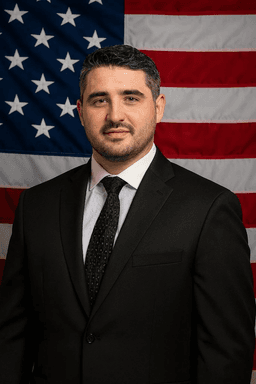 Your attorneyAndranik "Andy" Boyadzhyan, Esq.Founding Attorney. Licensed in Washington, D.C.
Attorney advertising. Services are not available in all states.
By Andranik "Andy" Boyadzhyan, Attorney at Law. Meet the team
In Washington, D.C., you cannot keep a lawsuit against the District government over a crash unless written notice was given to the Mayor within six months after the injury. A District vehicle or a District road defect can trigger it. Top USA Law can check whether the notice applies. Call (877) 411-5291.
Before suing the District for injury or property damage, you, your agent or your attorney must give the Mayor written notice within six months.
D.C. Code section 12-309 subsection (a) reads: "Except as provided in subsection (b) of this section, an action may not be maintained against the District of Columbia for unliquidated damages to person or property unless, within six months after the injury or damage was sustained, the claimant, his agent, or attorney has given notice in writing to the Mayor of the District of Columbia of the approximate time, place, cause, and circumstances of the injury or damage. A report in writing by the Metropolitan Police Department, in regular course of duty, is a sufficient notice under this section."
Unliquidated damages are amounts a court or jury has to set, such as pain, medical bills, lost pay and car repairs after a crash. Subsection (b) takes two kinds of claims out of the rule, both outside car crash cases: claims under the District's Human Rights Act and its whistleblower law. The notice of claim page of the District's attorney general (OAG) adds claims under a federal statute, constitutional claims, claims for liquidated damages such as a contract amount, and claims seeking only equitable relief.
The notice is not the lawsuit. It is a letter, or one of the Office of Risk Management's claim forms, that tells the District what happened while the facts are fresh.
Any crash where you may sue the District of Columbia itself, such as a District government vehicle or a road defect the District maintains.
Examples: a Department of Public Works trash truck that backs into a car in Columbia Heights, a Metropolitan Police Department cruiser that runs a light on Benning Road NE, a District fleet van that turns into a cyclist on 14th Street NW, or a District-maintained signal or pothole that contributes to a crash on Alabama Avenue SE. Each is a possible action "against the District of Columbia," so the six months apply.
Not by its terms. Section 12-309 covers actions against the District of Columbia. Metrobus is run by WMATA, a separate authority created by an interstate compact; see our WMATA Metrobus claim guide. If a District vehicle or signal shared the blame with a bus, the 12-309 notice still applies to the claim against the District.
On the date "the injury or damage was sustained." For a crash, that is the day of the collision. A crash on April 10, 2026 needs the notice given by October 10, 2026, even if treatment is still going on. The OAG page says notice of claim letters "must be RECEIVED by the Office of Risk Management within six months of the date of the incident," so allow mailing time.
The statute says a Metropolitan Police Department written report made in the regular course of duty "is a sufficient notice." The Office of Risk Management says such reports "may also satisfy the notice requirement provided that they contain all of the information required by the statute." A crash report can leave out the cause and circumstances, so send your own notice too.
No. In the District, the three year period for an injury action under D.C. Code section 12-301 still runs from the crash. For a death, the wrongful death action has two years after the death under D.C. Code section 16-2702; see our D.C. Code 16-2702 card.
Top USA Law. Services are not available in all states.
Fill in four quick fields, and a licensed attorney reviews the facts of your case at no cost.
Send it to the Office of Risk Management, which accepts notice for the Mayor, by eFiling portal, first-class mail or hand delivery, and keep proof.
The Office of Risk Management says the Mayor delegated to it the authority to accept notice of claim letters, effective January 20, 2004. The Risk Management page gives its address as One Judiciary Square, 441 4th Street NW, Suite 800 South, Washington, DC 20001, phone (202) 727-8600, and the OAG page asks that mailed notices go to Office of Risk Management, ATTN: Claims, at that street address. Risk Management lists three ways to file: its eFiling portal, mailing its forms by first-class mail, or hand delivery. It says claims are not accepted by email, fax or phone.
The OAG page lists what a notice letter must include: who the claimant is and how to reach them, the date and approximate time, the location, the cause of the damage or injury, and the circumstances, explaining in detail why the District should be liable. It asks for police reports, repair estimates, ownership papers and medical bills if available. Risk Management's forms include an Automobile Accident Reporting Form and a Personal Injury Damage Form. The OAG page says an acknowledgement letter with a claim number and investigator follows within approximately 30 days.
Fault still matters. Under District of Columbia common law, contributory negligence can bar a driver or passenger of a car who was even slightly at fault, while pedestrians, cyclists, motorcyclists and other vulnerable users are barred only under the test in D.C. Code section 50-2204.52. Our D.C. deadline card and Washington, D.C. car accident lawyer page cover the rest. Call (877) 411-5291. No Fee Unless We Win (Costs May Apply).
Sue within three years, or two after a death. District claims need Mayor notice in six months; elect PIP in 60 days.
A licensed Washington, D.C. attorney, Andranik "Andy" Boyadzhyan, Founding Attorney, reviews every Washington, D.C. claim, and our team helps you in English or Spanish.
Andranik "Andy" Boyadzhyan, Esq.
Founding Attorney
Licensed in Alabama, Missouri, New Mexico and Washington, D.C.
Featured in CNN, Forbes, Variety

Paul Perkins, Esq.
Of Counsel
Licensed in New Jersey and New York
Certified by the New Jersey Supreme Court as a Civil Trial Attorney. Lawyer of Distinction in Civil Litigation.
Featured in CNBC, Bloomberg, Forbes, The New York Times
Andranik "Andy" Boyadzhyan is the founding attorney of Top USA Law. His background spans business law, civil litigation, and personal injury, and his practice today focuses on motor vehicle accident claims.
Sundas Shafi, Esq., Attorney at Law, Head of Litigation
Rosette Kalayjian, Attorney at Law
Sandra Alves, Case Manager
Four steps from your first call to the close of your claim. You focus on healing while we deal with the insurers and keep you updated.
Free consultation
Call 24/7 or send the short form. An attorney reviews what happened and tells you where you stand. Free, no obligation.
We deal with the insurers
We deal with the insurance companies, request the police report and medical records, and keep you updated.
We build your case
Evidence, witnesses, experts and the medical picture of your injuries, prepared as if the case will go to trial.
You get paid
Medical bills, lost wages, vehicle damage, and pain and suffering. No fee unless we win; costs may apply.
Reviewed by Andranik "Andy" Boyadzhyan, Esq.
Fill in the four short fields in this form, and a licensed attorney reviews your case for free. We respond day or night.
Top USA Law. Services are not available in all states.
Takes 30 seconds. No obligation.