


Andranik "Andy" Boyadzhyan, Esq.
Founding Attorney
Licensed in Alabama, Missouri, New Mexico and Washington, D.C.
Featured in CNN, Forbes, Variety
Serving Washington, D.C.
Hurt in a crash? The insurance company already has a team working on your claim. You should too. A free call tells you where you stand.
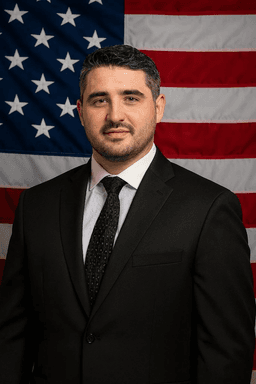 Your attorneyAndranik "Andy" Boyadzhyan, Esq.Founding Attorney. Licensed in Washington, D.C.
Attorney advertising. Services are not available in all states.
By Andranik "Andy" Boyadzhyan, Attorney at Law. Meet the team
In Washington, D.C., a Metrobus crash claim is made against WMATA, the regional transit authority, not the District government. Its interstate compact makes WMATA answer for torts in its proprietary functions but not its governmental ones. Top USA Law can review the bus details and dates with you. Call (877) 411-5291.
Yes, if the claim fits the Compact: section 80 makes WMATA liable for torts in proprietary functions and not for torts in governmental functions.
A Metrobus that brakes hard on 16th Street NW throws a standing rider against a pole. A bus pulling away from a stop on H Street NE clips a car. A bus turning from U Street NW onto 14th Street strikes a pedestrian in the crosswalk. Each involves the Washington Metropolitan Area Transit Authority (WMATA), the agency created by an interstate compact between the District and its two neighboring states. Congress consented to the Compact and enacted it for the District, and the District code publishes it at D.C. Code section 9-1107.01.
Section 80 of the Compact reads: "The Authority shall be liable for its contracts and for its torts and those of its Directors, officers, employees and agent committed in the conduct of any proprietary function, in accordance with the law of the applicable signatory (including rules on conflict of laws), but shall not be liable for any torts occurring in the performance of a governmental function. The exclusive remedy for such breach of contracts and torts for which the Authority shall be liable, as herein provided, shall be by suit against the Authority."
Two points follow from the text. The claim is against WMATA, not against the bus operator personally. And the Compact does not list which activities are proprietary and which are governmental, so each claim has to be checked against that line.
Health insurance pays first, PIP covers a deductible or what remains, and a WMATA claim can seek the rest when WMATA's negligence caused the crash.
Personal injury protection is optional in the District. D.C. Code section 31-2404 pays PIP only to a victim who is an insured or an occupant of the insured's vehicle or a vehicle the insured is driving. Under D.C. Code section 31-2406, subsection (g), you cannot claim PIP, other than for a deductible, when you are eligible for the same benefits from other insurance such as health insurance, unless those benefits are exhausted. If you do have PIP, D.C. Code section 31-2405 gives you 60 days to elect it, and a victim who elects PIP may maintain a civil action based on liability of another person only if the injury meets a threshold or the medical or work loss exceeds the PIP benefits available.
Section 80 applies the law of the applicable signatory, including its conflict of laws rules, so District fault rules are the starting point for a crash on a District street. Under District of Columbia common law, contributory negligence can bar a bus rider, or a driver or passenger of a car, who was even slightly at fault. Pedestrians, cyclists, motorcyclists and other vulnerable users are barred under D.C. Code section 50-2204.52 only when their negligence was a proximate cause and greater than the combined negligence of all defendants.
Section 81 of the Compact gives "The United States District Courts" "original jurisdiction, concurrent with the courts of" the two neighboring signatory states "and the District of Columbia, of all actions brought by or against the Authority." It adds: "Any such action initiated in a State or District of Columbia court shall be removable to the appropriate United States District Court," under the federal removal statute, 28 U.S.C. 1446. A case filed in the Superior Court of the District of Columbia can end up in federal court.
Sections 80 and 81 name no filing deadline of their own. Because section 80 points to the law of the applicable signatory, check the District periods with a lawyer at the start: three years for an injury action under D.C. Code section 12-301 and two years after a death under D.C. Code section 16-2702. Do not rely on any longer period.
D.C. Code section 12-309 is written for actions "against the District of Columbia," and nothing in sections 80 or 81 refers to it. WMATA is a separate authority. If a District vehicle or a District-maintained signal also played a part, the six month notice applies to the claim against the District; see our D.C. Code 12-309 card.
Top USA Law. Services are not available in all states.
Fill in four quick fields, and a licensed attorney reviews the facts of your case at no cost.
Write down the bus number, route and time, get the police report, ask WMATA to keep any video, and confirm WMATA's current claim form directly.
A WMATA records notice for its "Third Party Liability Files" describes a Third Party Liability office that tracks, evaluates and resolves claims for money damages for injury, death or property damage said to be caused by WMATA or its employees. The records it lists include claim forms, investigative reports, witness statements, medical records, independent medical examination reports, photographs and police reports. The notice also says the files help trial attorneys present evidence "in the event that claims cannot be administratively resolved." We could not find a current claim filing page on WMATA's website when this page was written, so call WMATA to confirm the form and address before relying on either.
For a street crash, request the Metropolitan Police Department report through our D.C. crash report guide; WMATA also has its own Metro Transit Police. Ask in writing that WMATA preserve any bus video and the operator's records. Photograph the bus number and the stop.
Metrobus routes share 16th Street NW, 14th Street NW, H Street NE, Benning Road NE and Alabama Avenue SE with cars, bikes and pedestrians. Crash patients in the District are treated at hospitals including MedStar Washington Hospital Center, George Washington University Hospital and Howard University Hospital.
Top USA Law's Washington, D.C. office is at 700 12th St NW, Suite 700, and Andranik "Andy" Boyadzhyan is licensed in the District. Read the D.C. passenger claim guide and who pays District medical bills. Call (877) 411-5291. No Fee Unless We Win (Costs May Apply).
A Metrobus claim follows the WMATA Compact, not the six month notice to the Mayor. You have three years to sue a private driver.
A licensed Washington, D.C. attorney, Andranik "Andy" Boyadzhyan, Founding Attorney, reviews every Washington, D.C. claim, and our team helps you in English or Spanish.
Andranik "Andy" Boyadzhyan, Esq.
Founding Attorney
Licensed in Alabama, Missouri, New Mexico and Washington, D.C.
Featured in CNN, Forbes, Variety

Paul Perkins, Esq.
Of Counsel
Licensed in New Jersey and New York
Certified by the New Jersey Supreme Court as a Civil Trial Attorney. Lawyer of Distinction in Civil Litigation.
Featured in CNBC, Bloomberg, Forbes, The New York Times
Andranik "Andy" Boyadzhyan is the founding attorney of Top USA Law. His background spans business law, civil litigation, and personal injury, and his practice today focuses on motor vehicle accident claims.
Sundas Shafi, Esq., Attorney at Law, Head of Litigation
Rosette Kalayjian, Attorney at Law
Sandra Alves, Case Manager
Four steps from your first call to the close of your claim. You focus on healing while we deal with the insurers and keep you updated.
Free consultation
Call 24/7 or send the short form. An attorney reviews what happened and tells you where you stand. Free, no obligation.
We deal with the insurers
We deal with the insurance companies, request the police report and medical records, and keep you updated.
We build your case
Evidence, witnesses, experts and the medical picture of your injuries, prepared as if the case will go to trial.
You get paid
Medical bills, lost wages, vehicle damage, and pain and suffering. No fee unless we win; costs may apply.
Reviewed by Andranik "Andy" Boyadzhyan, Esq.
Fill in the four short fields in this form, and a licensed attorney reviews your case for free. We respond day or night.
Top USA Law. Services are not available in all states.
Takes 30 seconds. No obligation.